
The cult club that transformed New York’s art world

By 1978, the East Village art scene was coming into its own, and a new movement began to take hold in the basement of New York’s Holy Cross Polish National Church at 57 St. Marks Place.
Club 57, as it was known, was home to a group of young artists including Keith Haring, Kenny Scharf, Fred Brathwaite aka Fab 5 Freddy, Klaus Nomi, Tseng Kwong Chi, Joey Arias, John Sex, and Marcus Leatherdale – all of whom were redefining art and photography, fashion and design, film and video, performance and theatre.
The no-budget venue and social club broke all the rules, transforming the ways in which we experience art to the present day. In celebration, the Museum of Modern Art, New York, presents Club 57: Film, Performance, and Art in the East Village, 1978–1983, a major exhibition and catalogue organised by Ron Magliozzi, Curator and Sophie Cavoulacos, Assistant Curator, Department of Film, with guest curator Ann Magnuson.
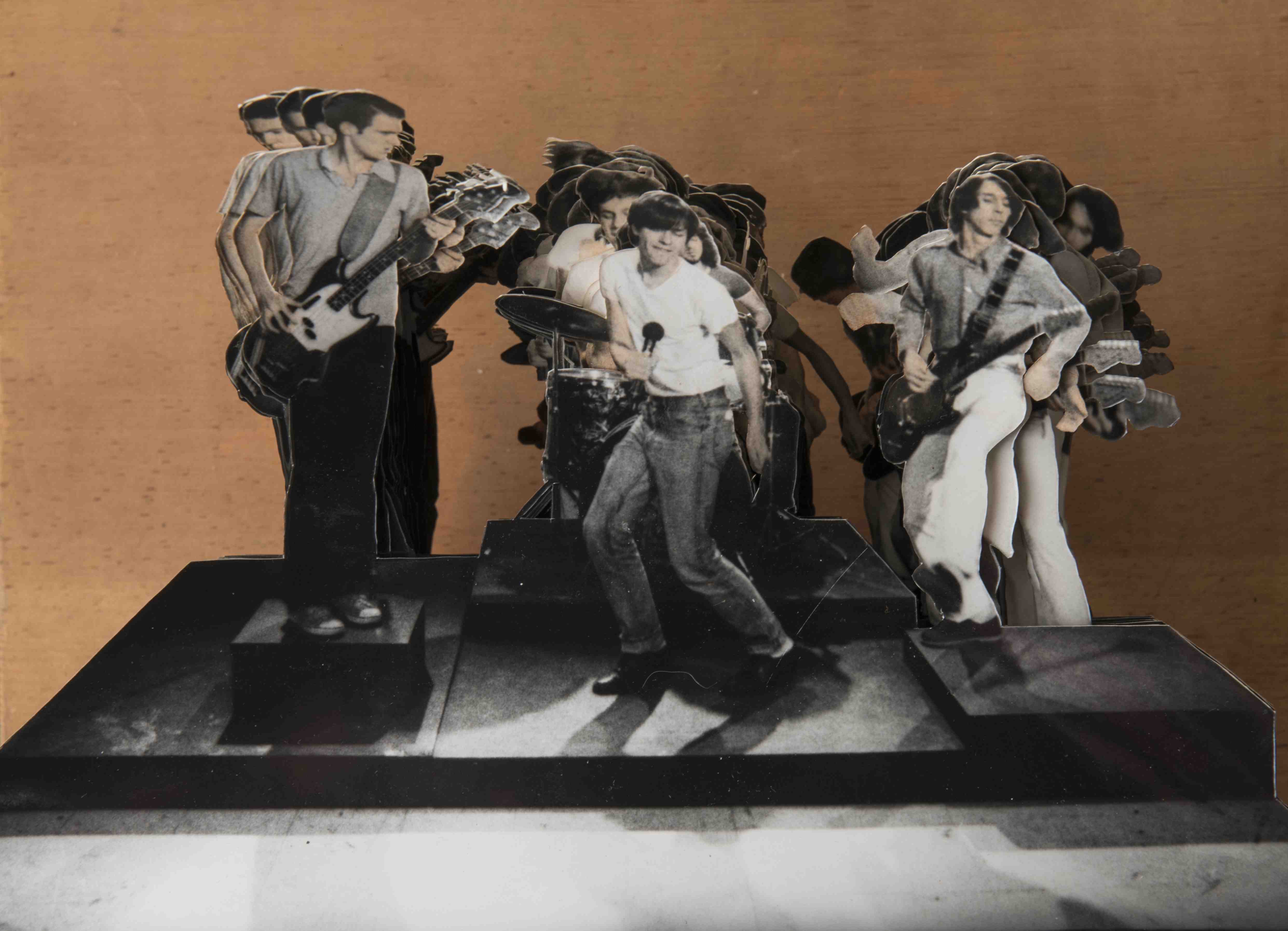
Henry Jones (American, born 1957). Soul City Animation Art (The Fleshtones), 1977–79. Hand-coloured photo-cutout sequence. Courtesy the artist
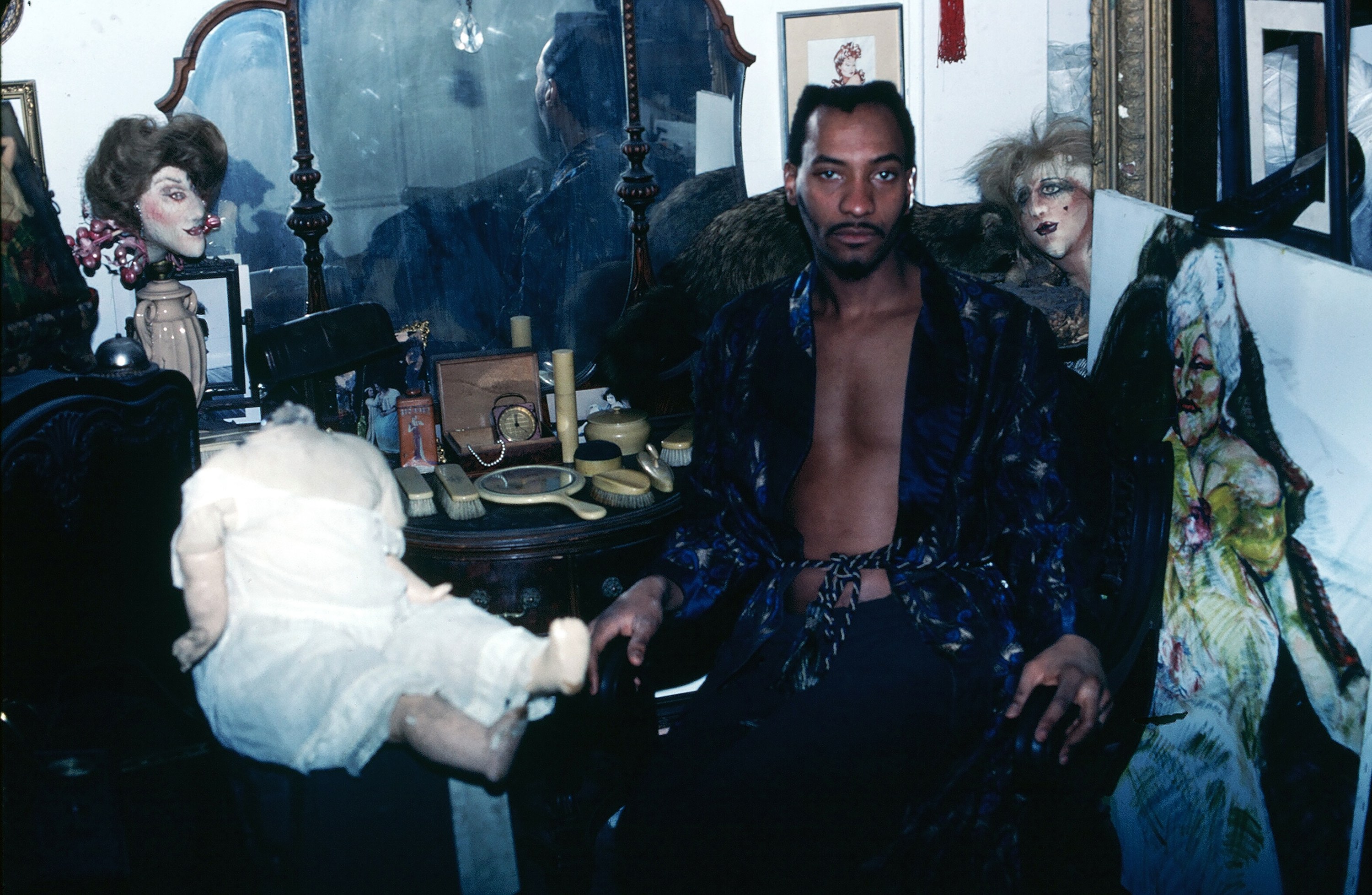
Gerard Little. 1980. Photograph by Robert Carrithers. Courtesy the artist.
“The founders of Club 57 were a group of young artists who couldn’t get into the Soho galleries or the museums uptown, so they created their own scene in the East Village because the access to everything was inexpensive: housing, venues, and art supplies on the street,” Magliozzi explains.
Club 57 erased the formal boundaries established by the art world, creating a space ripe for self-discovery, originality, and innovation. “The notion of having to be there and be present was very important,” Magliozzi observes. “There were other clubs and collectives taking place across the downtown scene. They called themselves ‘The Downtown 500’ because it was a relatively small community.”
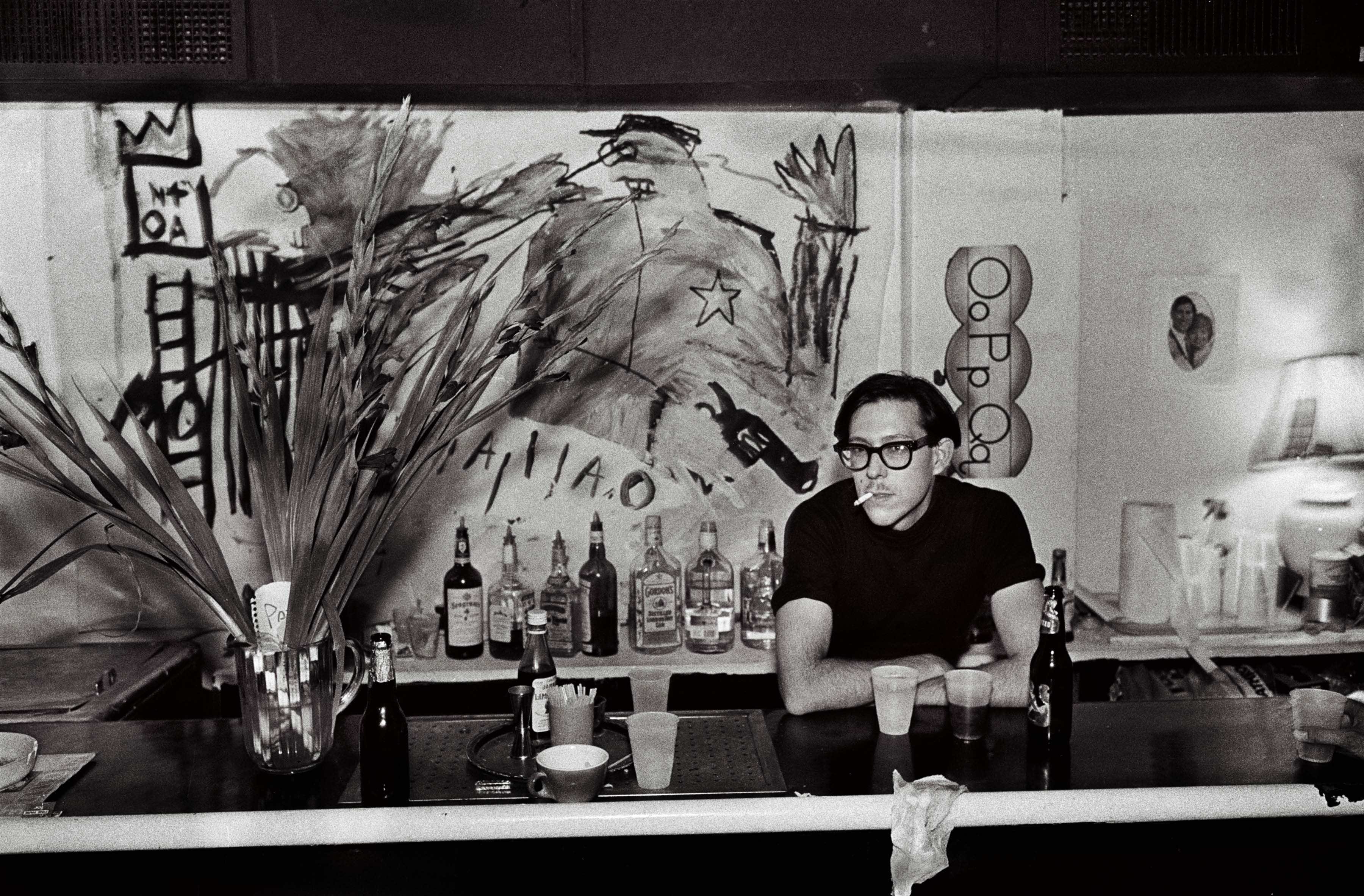
Club 57 bar, 1981. Pictured: Ira Abramowitz. Photograph by and courtesy Lina Bertucci
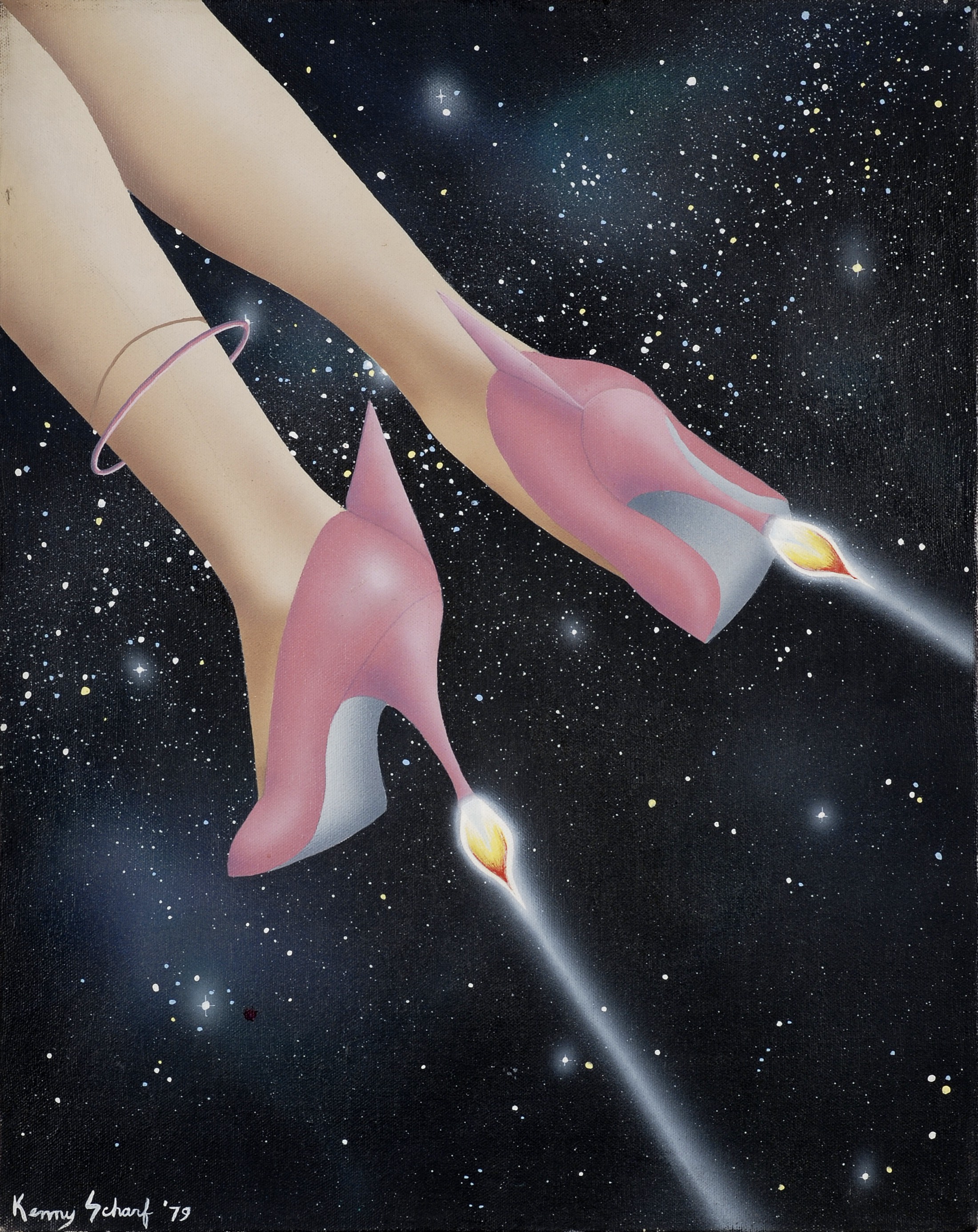
Kenny Scharf (American, born 1958). Having Fun. 1979. Acrylic on canvas. Collection Bruno Testore Schmidt, courtesy the artist and Honor Fraser Gallery, Los Angeles
What set Club 57 apart from its peers was the intimacy of the locale, which created a lack of separation between the artist and the audience. This proximity nurtured collaboration and experimentation naturally. With a founding curatorial staff that included film programmers Susan Hannaford and Tom Scully, exhibition organiser Keith Haring, and performance curator Ann Magnuson, there was always an opportunity for artists to try something new.
The exhibition and catalogue are historical markers of their own. “When we started researching, so much of it was anecdotal: people recollecting things, events, or moments,” Magliozzi reveals. “We were determined to reconstruct what happened every single night. It started with flyers and ephemeral materials. Any documentation that we found, we would then follow up and try to find the artist and the works.”
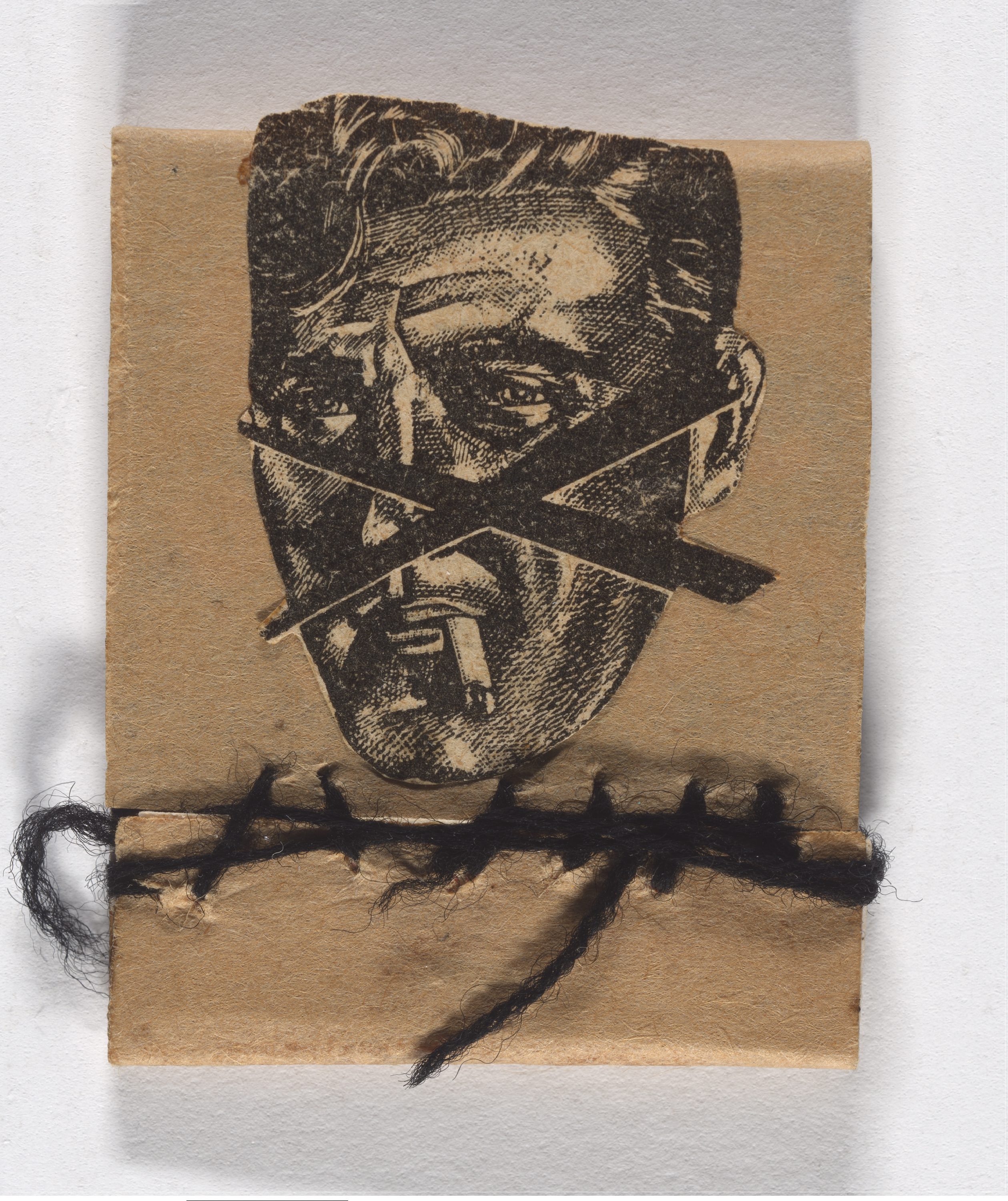
Matchbook art by Melanie Monios, exhibited at Club 57 in 1983. The Museum of Modern Art, New York. Department of Film Special Collections
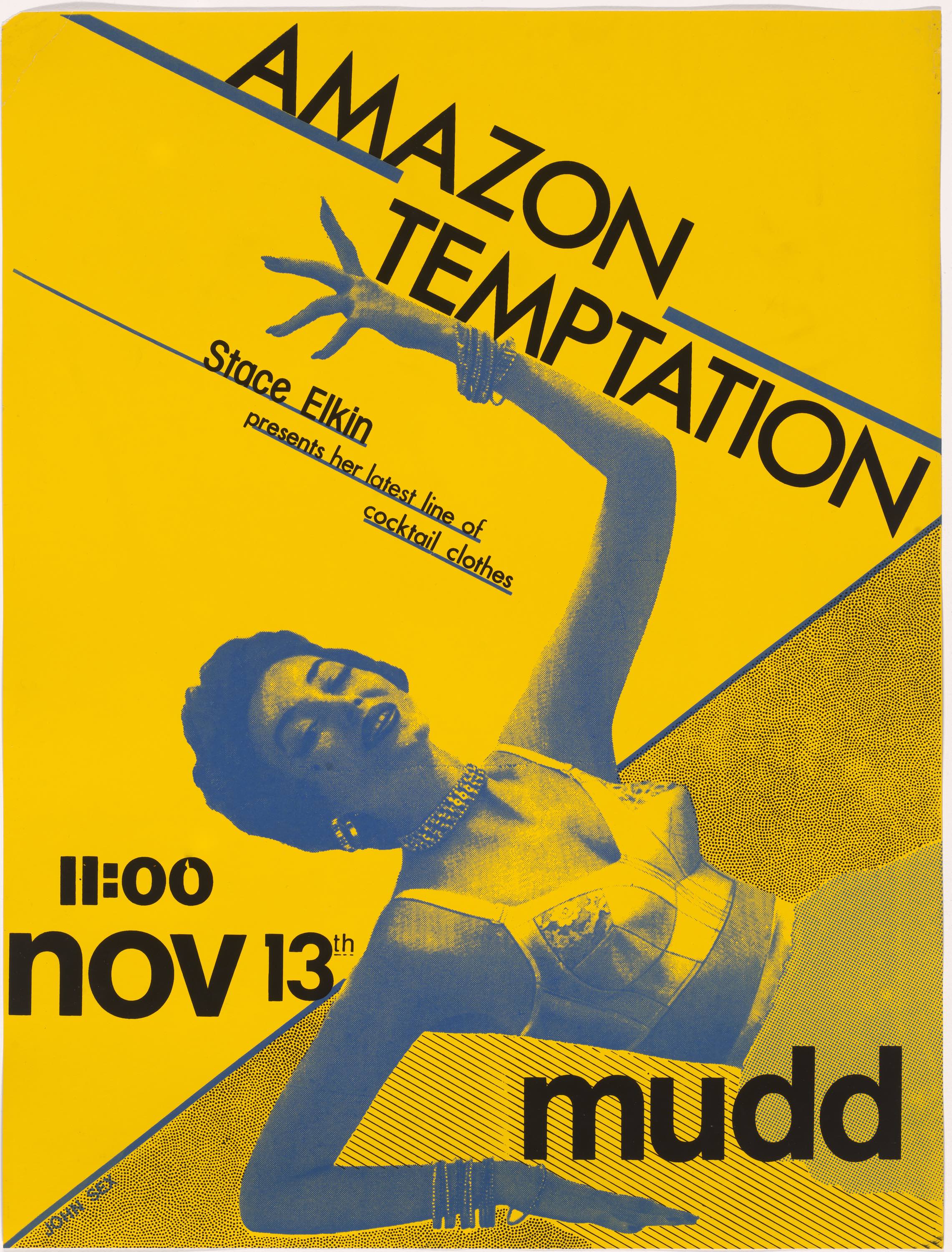
John Sex (American, 1956–1990). Amazon Temptation, 1980. Silkscreen. The Museum of Modern Art, New York. Department of Film Special Collections
“There was not only this ephemeral history but a whole unseen layer of artwork that hadn’t pierced through so many years later,” Cavoulacos adds. “Many of the works in the show haven’t been shown since the ’80s. So many [current] threads go back to this period: androgyny, male burlesque, and drag all intersect.”
Club 57 was a place for personal discovery in the search for identity and the expression of sexuality and gender. “So much of what has happened has been absorbed into mainstream culture,” Magliozzi notes. “Things that were edgy are taken for granted now, but it started in this period.”
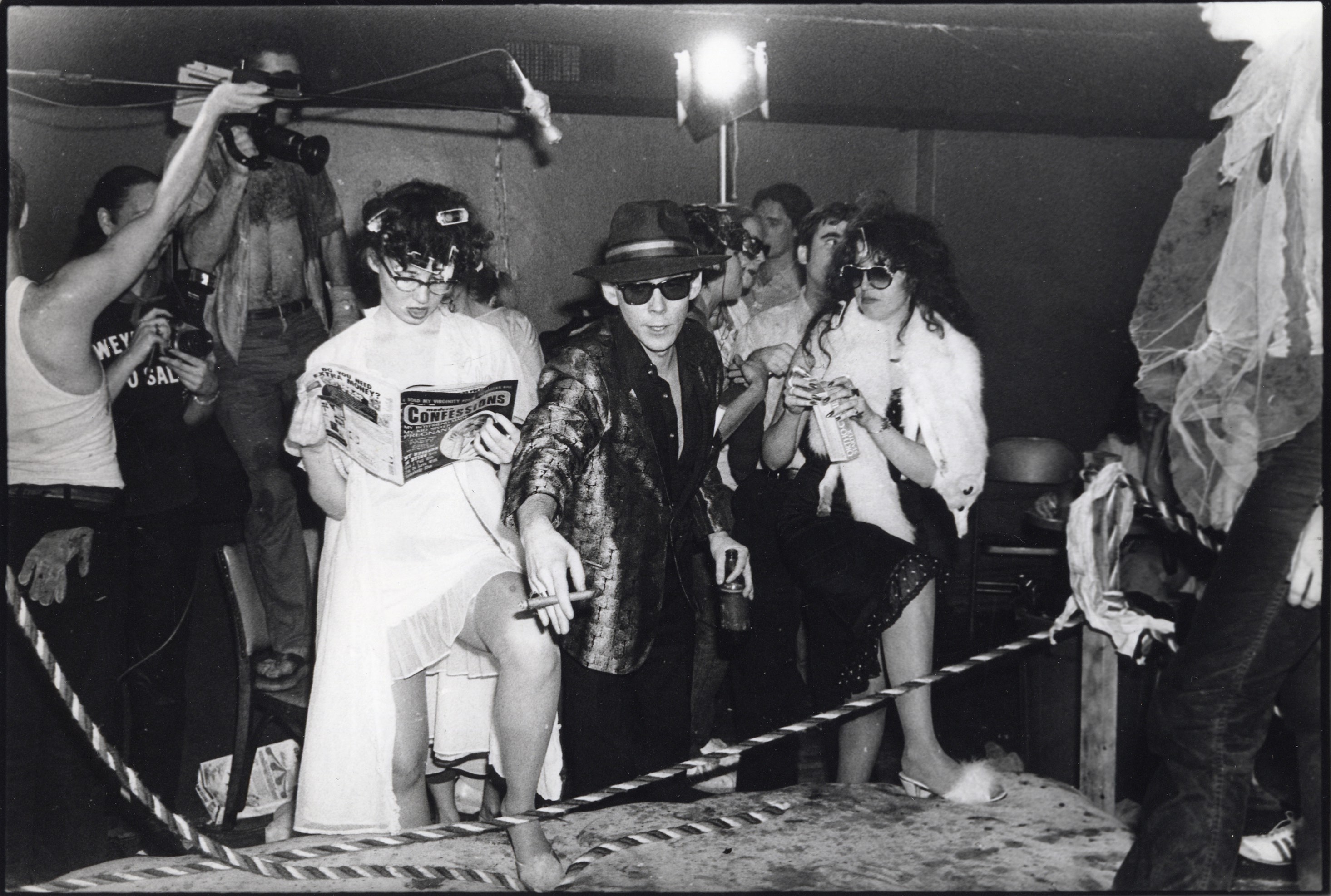
Lady Wrestling at Club 57. Pictured: Tom Scully, Tish and Snooky Bellomo. 1980. Photograph by and courtesy Harvey Wang
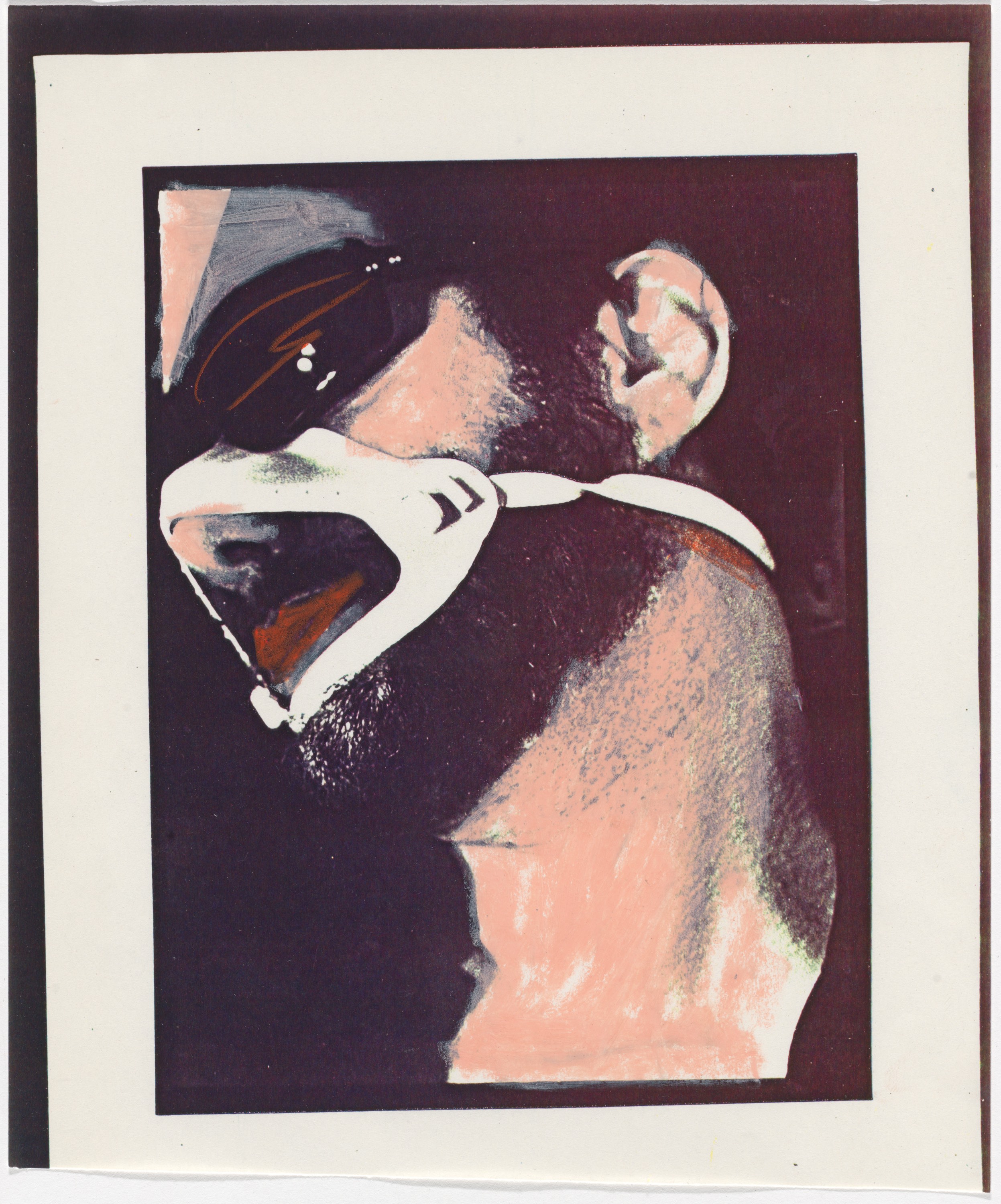
Anney Bonney (American, born 1949). Process art from Shattered (Male Bondage: Carl Apfelschnitt), 1978–79. Xerox collage. The Museum of Modern Art, New York. Department of Film Special Collections
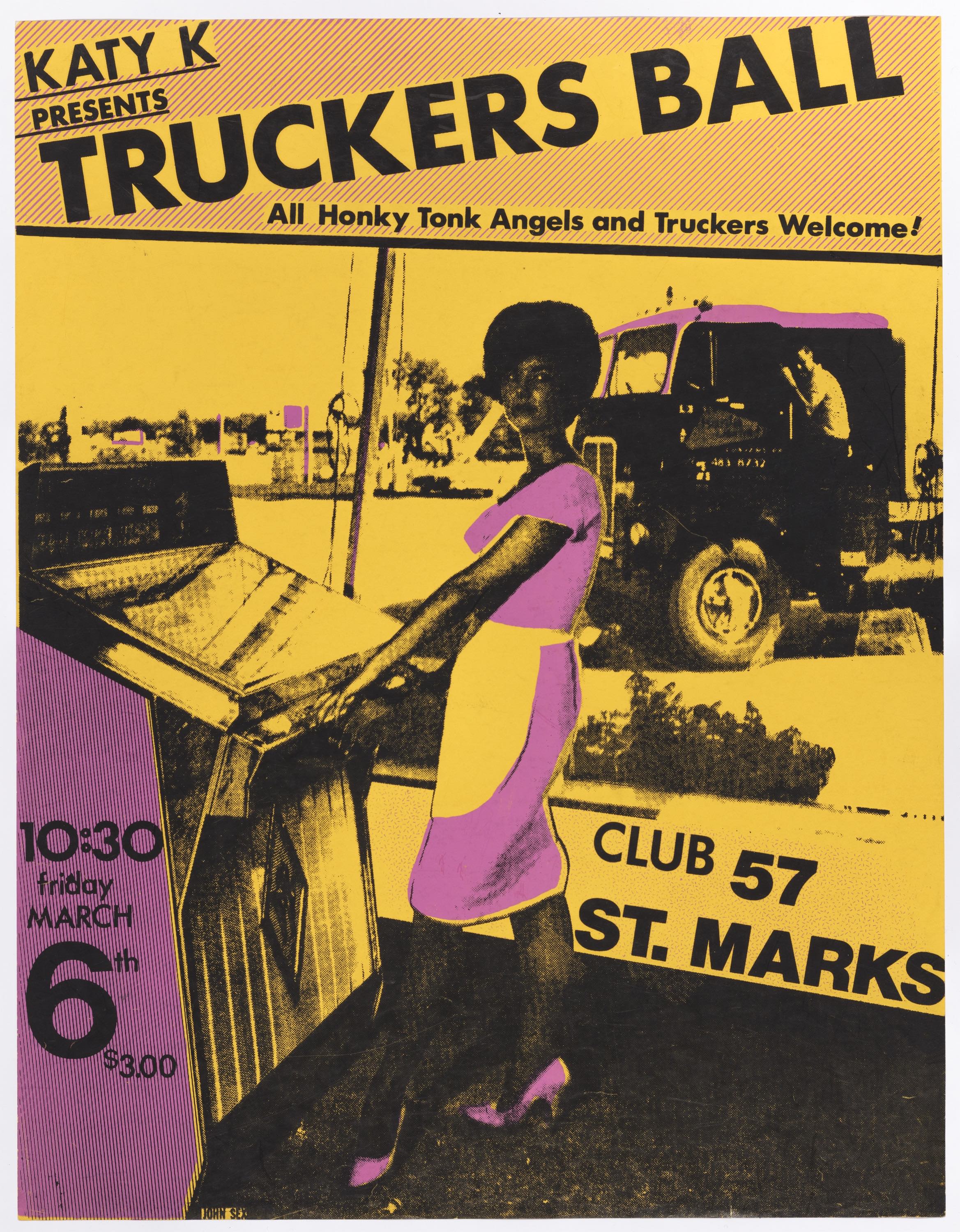
John Sex (American, 1956–1990). Truckers Ball, 1981. Silkscreen. The Museum of Modern Art, New York. Department of Film Special Collections
Club 57: Film, Performance, and Art in the East Village, 1978–1983 runs at New York’s MOMA until April 1, 2018. An accompanying book is also available.
Follow Miss Rosen on Twitter.
Enjoyed this article? Like Huck on Facebook or follow us on Twitter.
You might like

Photographing America’s 20th century rebels
Rebels With a Cause — A new monograph looks back at Jean-Pierre Laffont’s extensive archive documenting counterculture, art, activism and more, shaping the country as it is today.

The raw, fledgling intimacy of Peter Hujar’s contact sheets
Hujar:Contact — A new photobook highlights the process of the legendary queer photographer, and his process of growing into the artist he ultimately became.

Kristina Rozhkova’s scatty, confronting portrait of captivity
Gut Feeling — The Russian artist’s 2024 arrest and subsequent detention opened her eye towards the omnipresent dynamics of power and control. Her new photobook is a stark exploration of being trapped.

Julian Cashwan Pratt: “We fought security until the cops showed up”
Hard Feelings — The lead singer of Show Me the Body joins Rob Kazandjian’s column on fatherhood and masculinity to talk about mentors, scrapping Zionists at shows, and finally making his father proud.

Shawn Walker’s layered, psychedelic vision of Harlem’s streets
From BeBop to Illusion — Using glass as a means to illuminate the city’s different layers, the longtime photographer and filmmaker is publishing his first monograph at the age of 86.

Washing strangers’ feet at Houghton Festival
Pedilavium — As part of artist Henry Krokatsis’s performance piece at the weekender, we sat down with over 30 others to clean the dusty digits of passersby, while reflecting on the power of collective ritual and human connection.


