Unearthing the old business cards of Chicago gangs
- Text by Miss Rosen
- Photography by Brandon Johnson, Courtesy Almighty, Insane Books

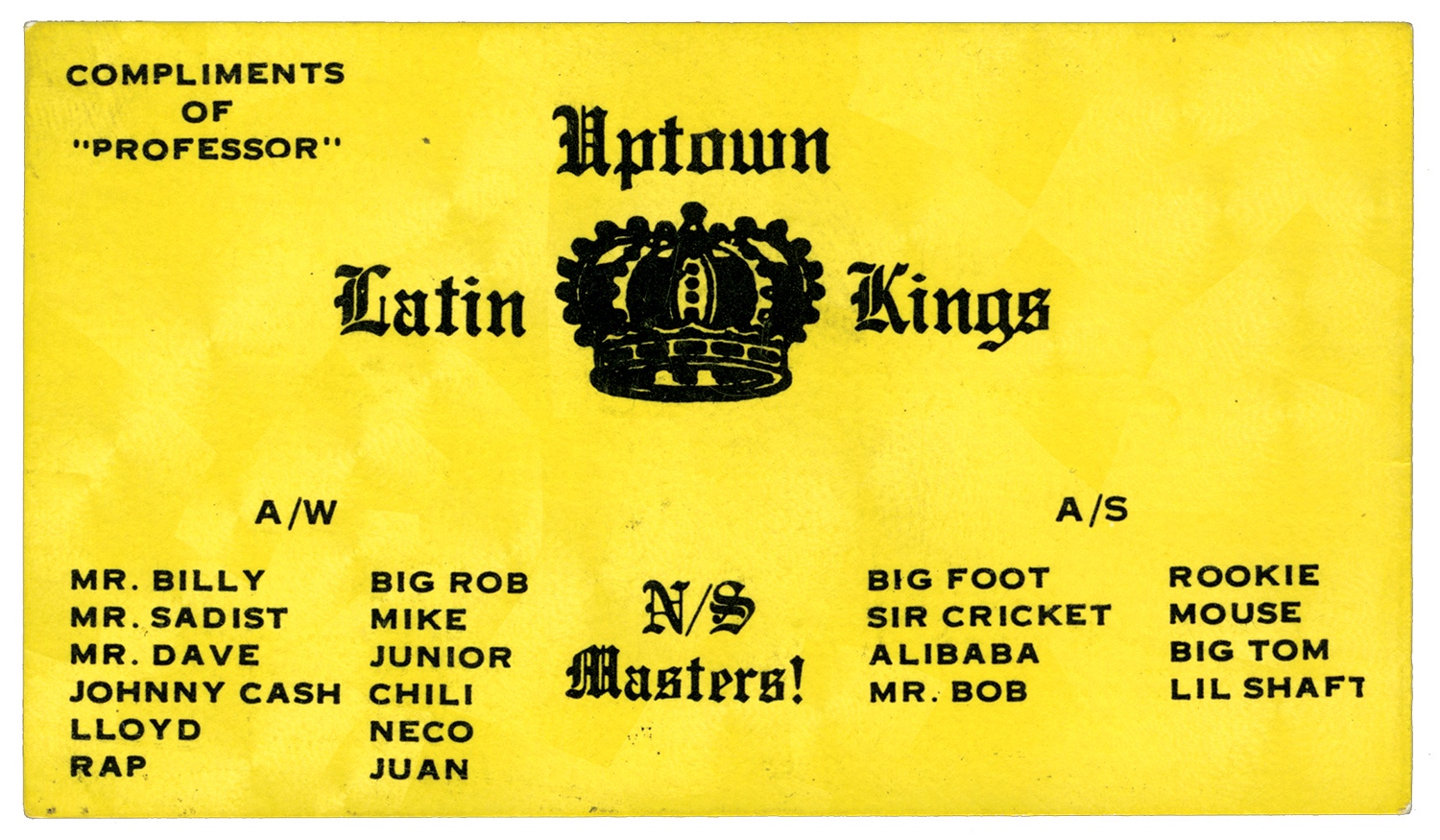
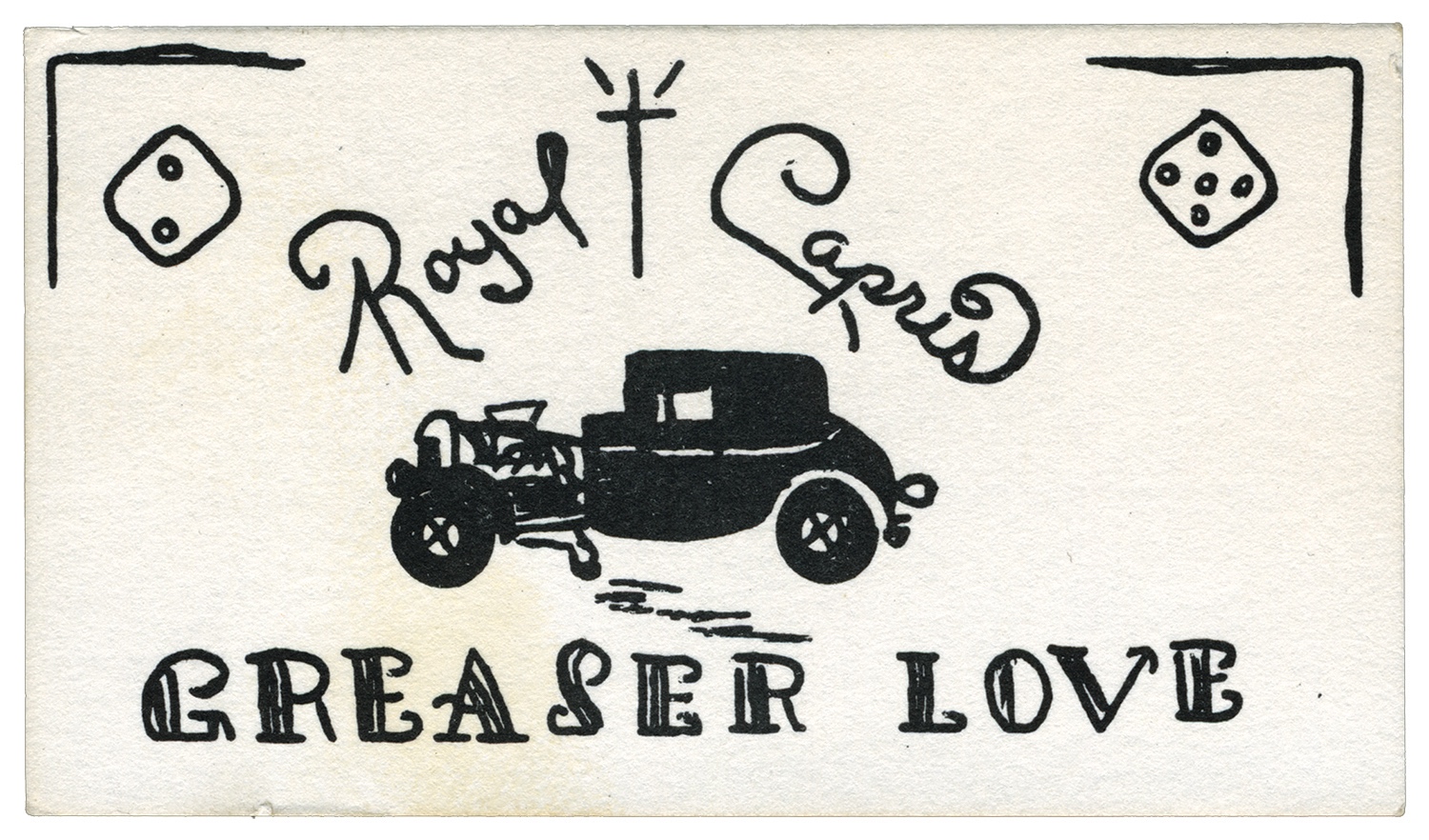
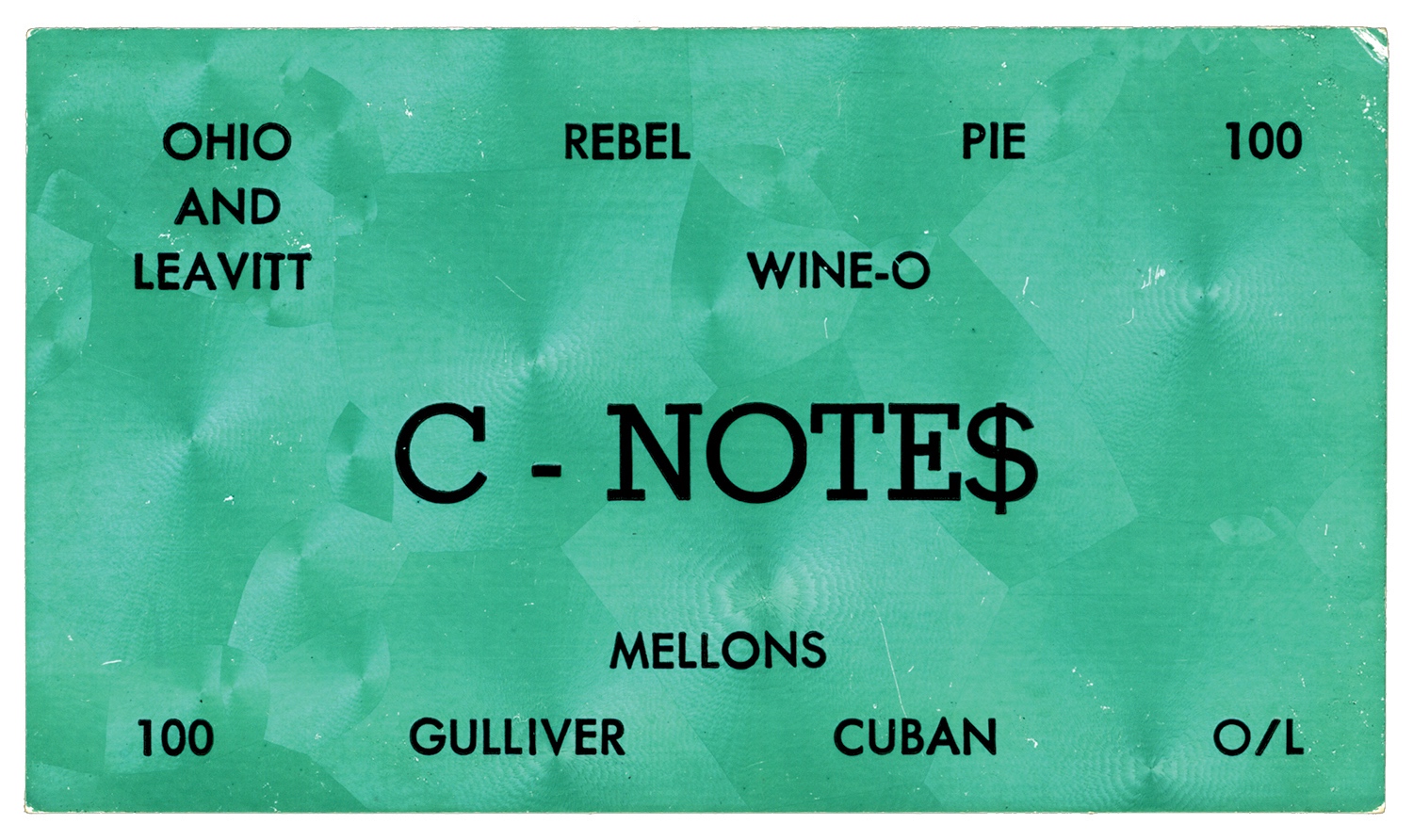
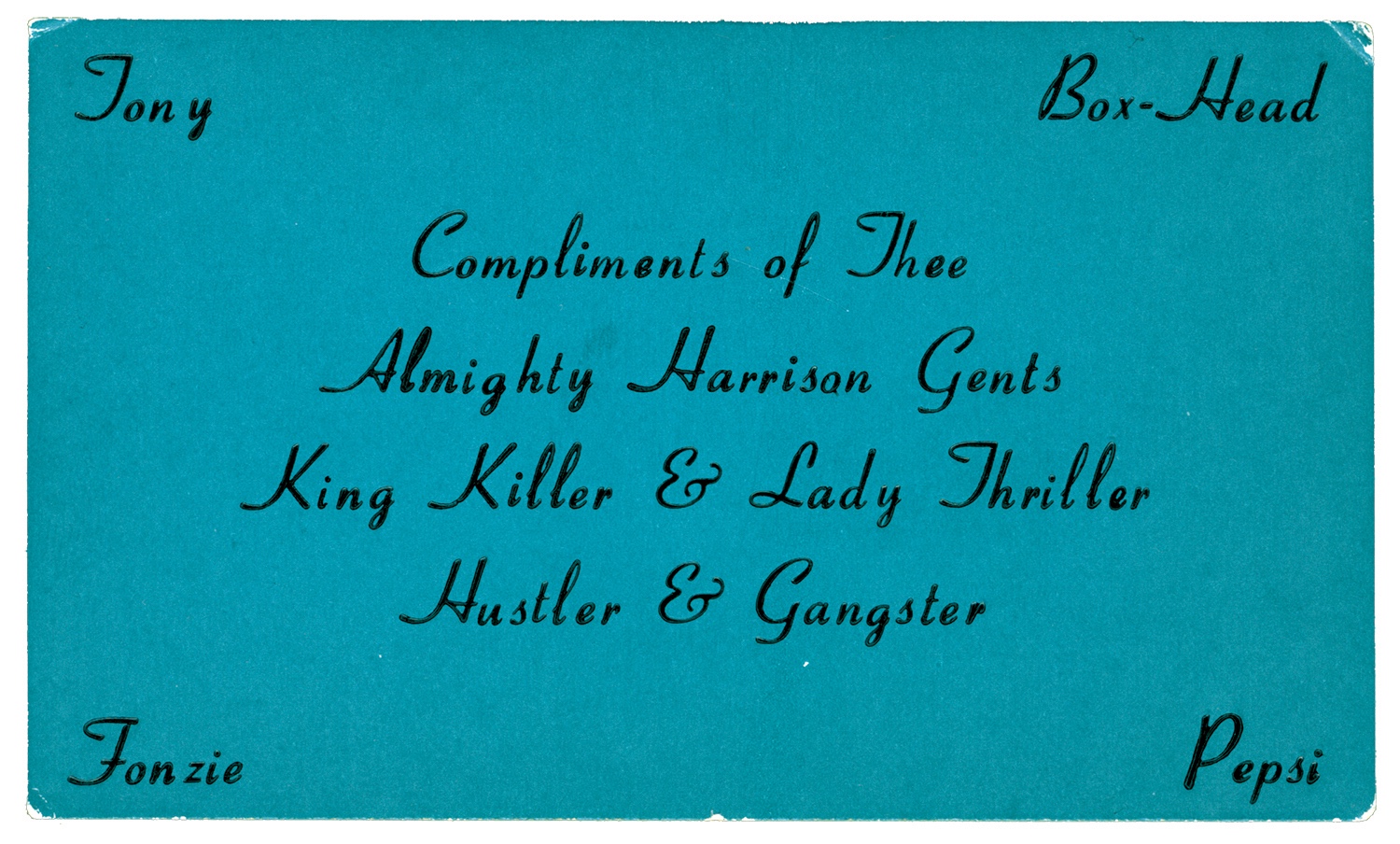
Long before digital media took hold, people built their reputations through business cards. Offering the perfect balance of professionalism and panache, these cards communicated the holder’s identity to friends, associates, and enemies with bold, blackletter typefaces.
On Chicago’s North and West Sides during the 1960s and 70s, business cards were one of the ultimate status symbols for gangs like the Royal Capris, the Almighty Playboys, and the Imperial Gangsters, who used these discreet slips of paper to rep their set.
“The practice carried over from membership cards of social athletic clubs in Chicago that many gangs evolved from,” says Brandon Johnson, author of Thee Almighty & Insane: Chicago Gang Business Cards From the 1960s & 1970s – his second in-depth volume documenting the long-underground culture. “In my opinion, these cards offered the gangs a sense of validation as official organisations.”
The book features over 70 reproductions of original cards drawn from Johnson’s spectacular, decade-in-the-making collection. At the time, they were used to establish a gang’s name, territory, and members – but they also speak of a time where political leanings were displayed without fear or remorse so that you knew what you were up against if you ended up on foreign turf.
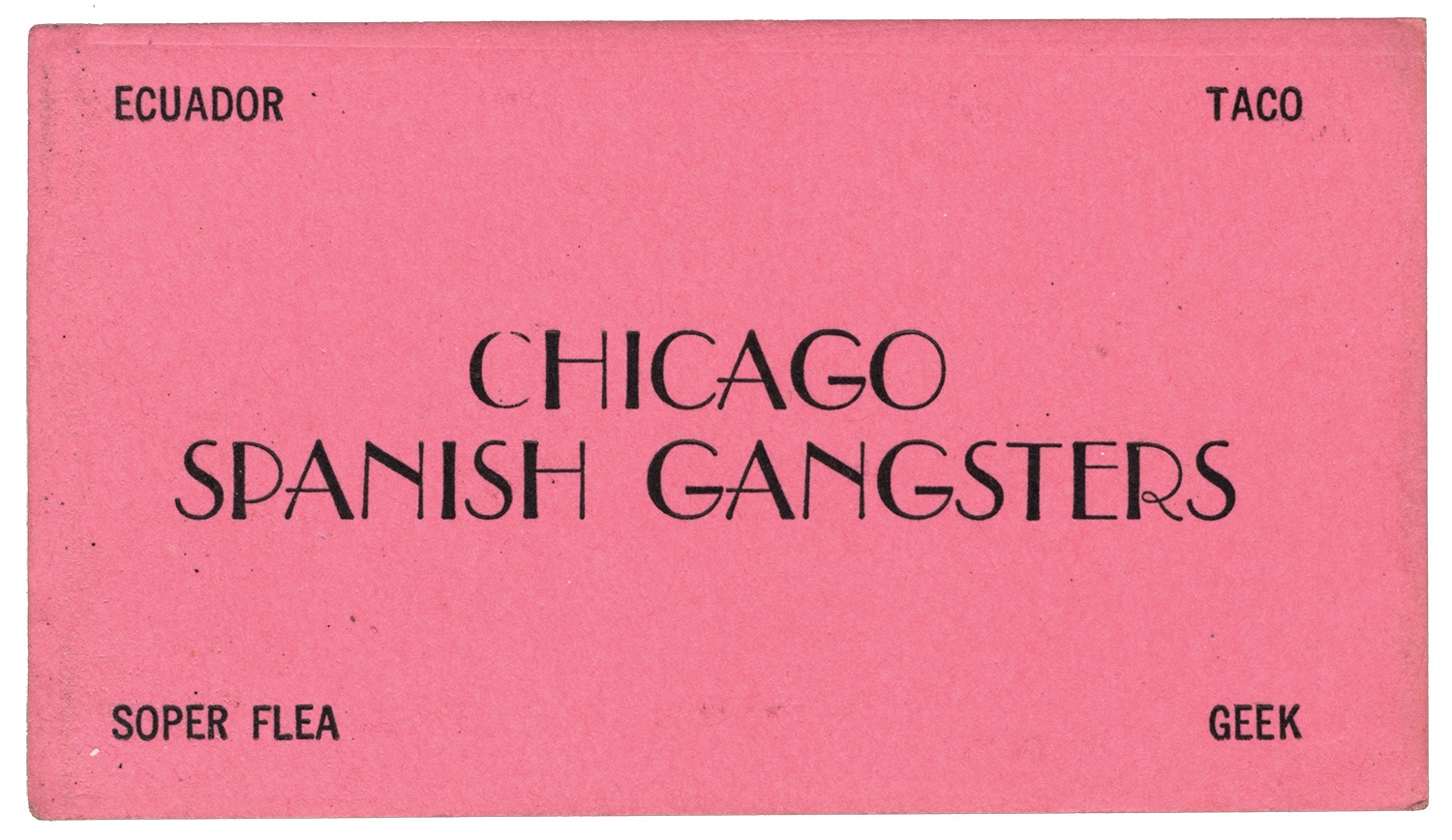
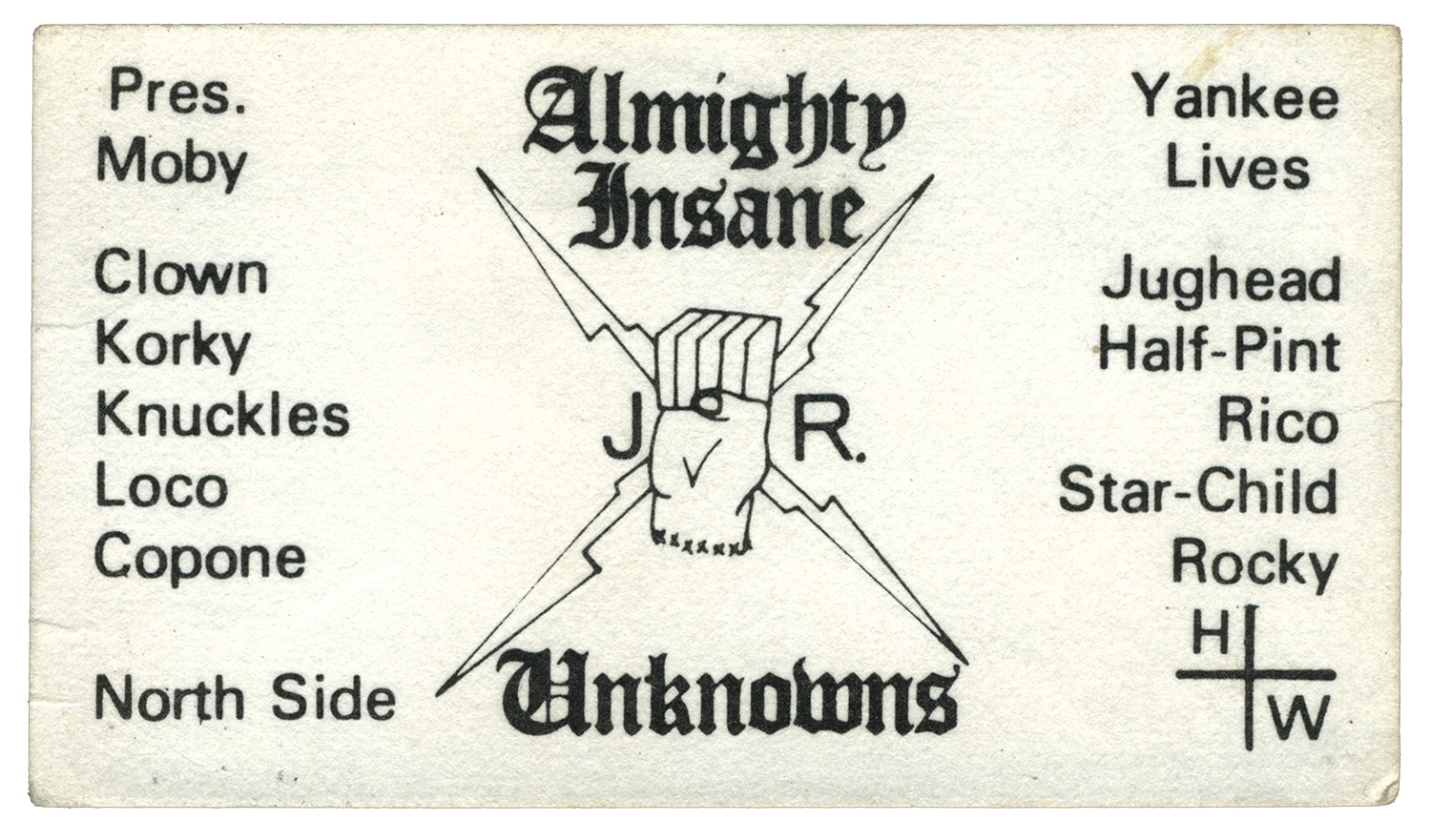
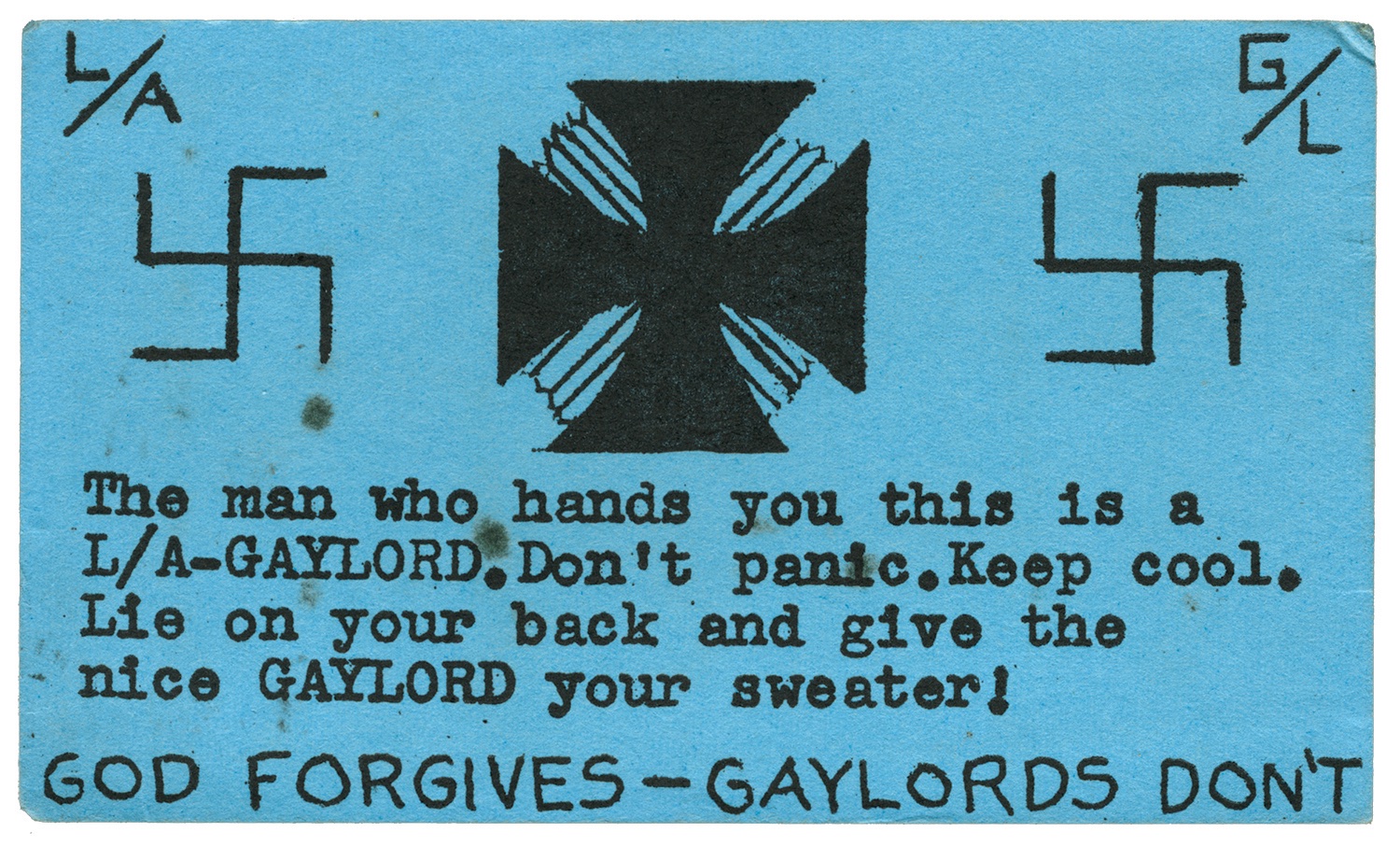
“Cards from the 1970s often reflected the strife and cultural nationalism, with slogans of racial pride and racial slurs,” Johnson says. “For example, the widespread Almighty Gaylords, who opposed newcomers and utilised hateful words and symbols on their cards to do so.”
The Gaylords emblazoned their cards with swastikas and the warning: “The man who hands you this is a L/A GAYLORD. Don’t panic. Keep cool. Lie on your back and give the nice GAYLORD your sweater!” – a reference to the cardigan-style sweaters with embroidered patches of the names and symbols of their clubs that gangsters proudly wore.
“I’ve definitely been in contact with some interesting characters from this world,” Johnson says of the various retired gang members, card designers, record shop owners he has met over the years. “I think the first book made people see more historical value in them, and be less likely to let anything go.”
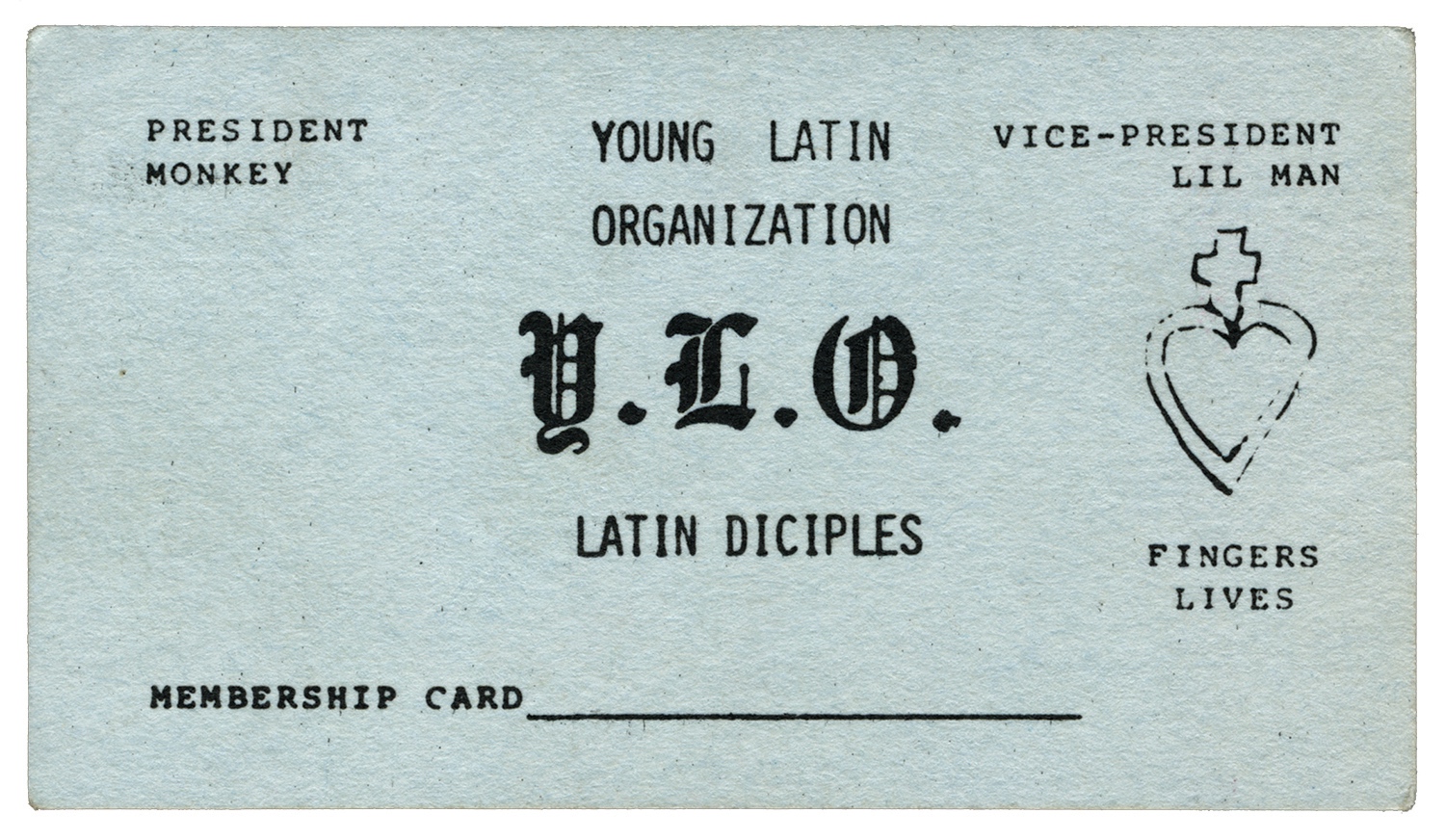
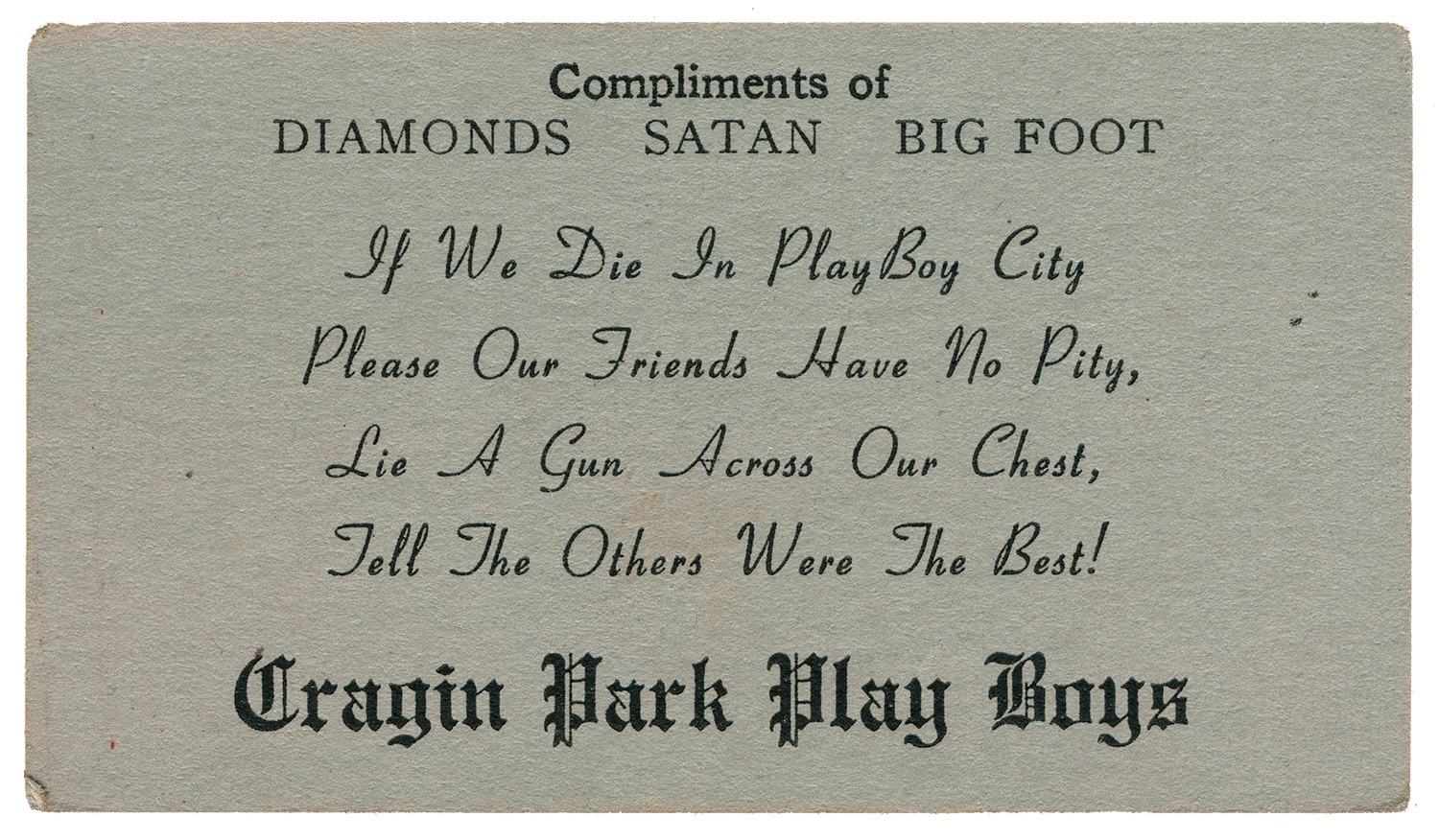
Thee Almighty & Insane: Chicago Gang Business Cards From the 1960s & 1970s is out now.
Follow Miss Rosen on Twitter.
Enjoyed this article? Like Huck on Facebook or follow us on Twitter.
You might like

Nick Haymes’s intimate portrait of his family’s life
Chronograph — Over 25 years, the photographer documented his son’s lives as they grew into adults. The resulting photobook is an exploration of the passage of time, as well as the optimism of youth.
Written by: Miss Rosen

Kristina Rozhkova’s scatty, confronting portrait of captivity
Gut Feeling — The Russian artist’s 2024 arrest and subsequent detention opened her eye towards the omnipresent dynamics of power and control. Her new photobook is a stark exploration of being trapped.
Written by: Isaac Muk

Washing strangers’ feet at Houghton Festival
Pedilavium — As part of artist Henry Krokatsis’s performance piece at the weekender, we sat down with over 30 others to clean the dusty digits of passersby, while reflecting on the power of collective ritual and human connection.
Written by: Isaac Muk

The anti-tourism guides revealing Lisbon’s true, radical heart
We Hate Tourism Tours — The Portuguese capital sees millions of people visit a year, against a backdrop of political turbulence and a housing crisis fuelled by short term holiday lets. Jack Burke meets the crew subverting their city’s perception, while bringing lesser seen stories and monuments to light.
Written by: Jack Burke

Defiance and pride in Chicano Camera Culture
A Photographic History — A new major exhibition surveys Mexican American photography over six decades, platforming Chicano artists at a Chicano museum for the first time.
Written by: Miss Rosen

The art of paying attention: How Austria’s Alps reward slowing down
Lebensgefühl — With a growing movement of art and music rooted in the area’s mountains, trees and waterfalls, the region is showcasing the importance of the human relationship to nature.
Written by: Sophie Lou Wilson


