Why I shred: The creative power of destruction
- Text by Rudy O'Brien
Cara Mills was staring down a deadline when a flash of inspiration struck. With her art degree at London’s Central Saint Martin’s coming to an end, pressure was building to let people see her work – the first significant opportunity for any young artist.
The only problem was that Cara’s imagination teemed with ideas. She’d dart between creative avenues: getting excited by some, growing bored with others, but never quite sure which one to pursue and which one to leave behind.
So instead of committing to one idea half-heartedly, she decided to make a work of art about the entire process: an artist’s journey between thinking and making.

After documenting every idea she had, Cara fed them all into a giant machine which methodically rated and then shredded each one – spitting them out like a shower of snowflakes.
The five-foot pile of plans that amassed at her feet effectively democratised Cara’s creativity. Reduced to little pieces, all ideas had become equal: the good and the bad, the practical and the unfeasible, the polished and the incomplete.
“I feel like I’ve created an ecosystem where I’ve turned my digital ideas into something tangible, which are then put back onto the online platform for other artists to be inspired by,” says Cara.
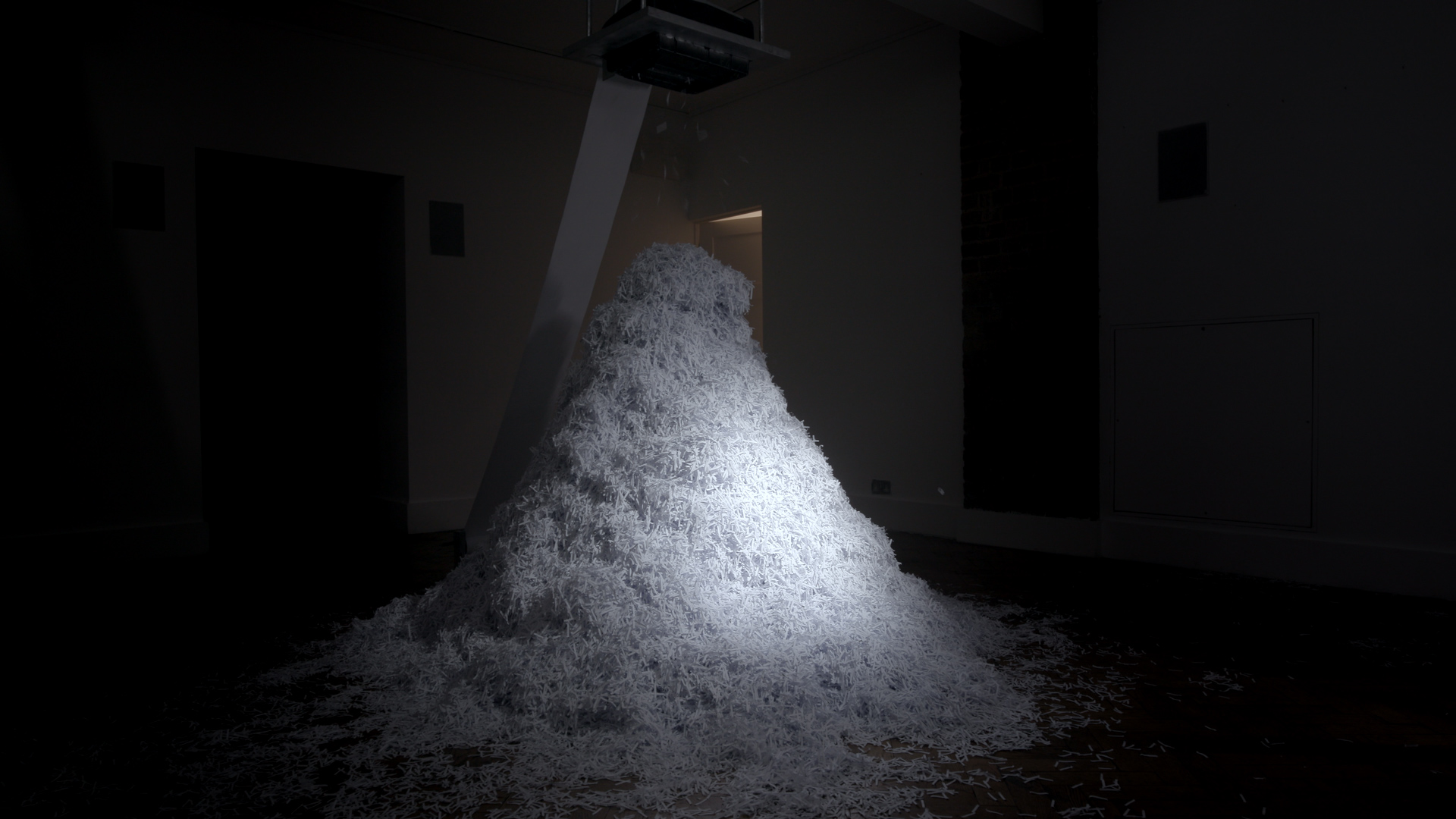
The shredding machine is a form of auto-destructive art: drawing from the concept that something can be destructive as well as creative.
At a time when our attention spans are being bombarded, when even a fertile imagination can feel overwhelmed or stumped, Cara’s work serves as a reminder that there are endless opportunities to hit the creative ‘reset’ button and start again.
Watch part 1 of Heightened Senses.
Canvas is a channel funded by the Arts Council dedicated to inspire young people through the arts. Find out more.
Enjoyed this article? Like Huck on Facebook or follow us on Twitter.
You might like

Louis Theroux’s ‘Manosphere’ shows men aren’t the problem, platforms are
No Ws for Good Men — The journalist’s new documentary sees him dive headfirst into the toxicities and machinations of the male influencer economy. But when young creators are monetarily incentivised to make more and more outrageous content, who really is to blame?
Written by: Emma Garland

In the 1960s, African photographers recaptured their own image
Ideas of Africa — An exhibition at the Museum of Modern Art explores the 20th century’s most important lensers, including Seydou Keïta, Malick Sidibé and Kwame Brathwaite, and their impact on challenging dominant European narratives.
Written by: Miss Rosen

Reynaldo Rivera’s intimate portrait of queer Latino love
Propiedad Privada — Growing up during the AIDS pandemic, the photographer entered a world where his love was not only taboo, but dangerous. His new monograph presents inward-looking shots made over four decades, which reclaim the power of desire.
Written by: Miss Rosen

In photos: The newsagents keeping print alive
Save the stands — With Huck 83 hitting shelves around the world, we met a few people who continue to stock print magazines, defying an enduringly tough climate for physical media and the high street.
Written by: Ella Glossop

Inside Bombay Beach, California’s ‘Rotting Riviera’
Man-made decay — The Salton Sea was created by accident after a failed attempt to divert the Colorado River in the early 20th century. Jack Burke reports from its post-apocalyptic shores, where DIY art and ecological collapse meet.
Written by: Jack Burke

The quiet, introspective delight of Finland’s car cruising scene
Pilluralli — In the country’s small towns and rural areas, young people meet up to drive and hang out with their friends. Jussi Puikkonen spent five years photographing its idiosyncratic pace.
Written by: Josh Jones


