
Why I shred: The creative power of destruction
Cara Mills was staring down a deadline when a flash of inspiration struck. With her art degree at London’s Central Saint Martin’s coming to an end, pressure was building to let people see her work – the first significant opportunity for any young artist.
The only problem was that Cara’s imagination teemed with ideas. She’d dart between creative avenues: getting excited by some, growing bored with others, but never quite sure which one to pursue and which one to leave behind.
So instead of committing to one idea half-heartedly, she decided to make a work of art about the entire process: an artist’s journey between thinking and making.

After documenting every idea she had, Cara fed them all into a giant machine which methodically rated and then shredded each one – spitting them out like a shower of snowflakes.
The five-foot pile of plans that amassed at her feet effectively democratised Cara’s creativity. Reduced to little pieces, all ideas had become equal: the good and the bad, the practical and the unfeasible, the polished and the incomplete.
“I feel like I’ve created an ecosystem where I’ve turned my digital ideas into something tangible, which are then put back onto the online platform for other artists to be inspired by,” says Cara.
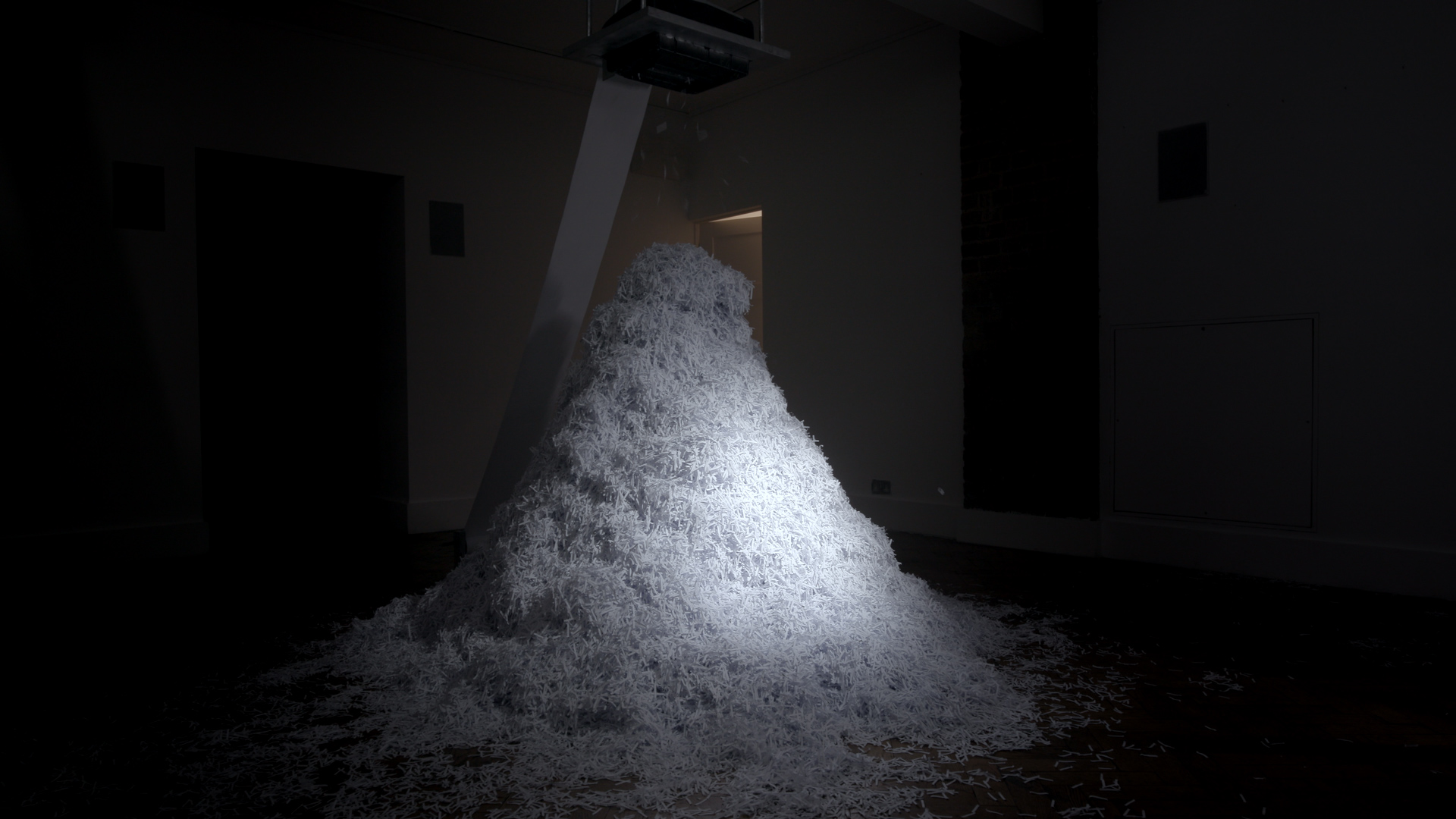
The shredding machine is a form of auto-destructive art: drawing from the concept that something can be destructive as well as creative.
At a time when our attention spans are being bombarded, when even a fertile imagination can feel overwhelmed or stumped, Cara’s work serves as a reminder that there are endless opportunities to hit the creative ‘reset’ button and start again.
Watch part 1 of Heightened Senses.
Canvas is a channel funded by the Arts Council dedicated to inspire young people through the arts. Find out more.
Enjoyed this article? Like Huck on Facebook or follow us on Twitter.
You might like

Introducing ‘The Chaos Isles’, a new photozine by Huck and Yushy
Normal Island — From unlicensed raves to the solstice at Stonehenge, furries to giant vegetable growers, Yushy is one of the UK’s best lensmen of its wild side. ‘The Chaos Isles’ will be sent out exclusively to Club Huck+ members.

Join Club Huck+ to get the most from Huck
Dispatches from the sharp edge of culture — Members get our print magazine, special photozines, The Huck Long Read newsletter, discounts from our friends and partners, digital versions of back issues and priority access to events.

Landmark new exhibition is celebrating 50 years of female punk
God Save the Queens — The Museum of Youth Culture is bringing together rare photography, archive material and a one-night-only supergroup featuring members of X-Ray Spex, The Slits and The Raincoats.

Halcyon, end of summer days in ’80s Massachusetts
Bell Pond — Stephen DiRado’s new photobook is a nostalgic look at blissed out moments of young love, family and coming of age at a swimming pond in Worcester, Massachusetts.

The groundbreaking photography of Gordon Parks
Voices in the Mirror — A new exhibition dives deep into the legendary lensman’s archive, who captured the Civil Rights Movement and Black America like no other.

A chaotic portrait of an ’80s American farming family
Holy Cow! — Melonie Bennett grew up on a farm in Maine in the ’80s, and documented her family’s idiosyncratic daily life. She presents those humorous, everyday memories in a new exhibition and photobook.


