How to quit your job and make beer for a living
- Text by Tom Coggins
- Photography by Wim Steijven

It was back in 2013, while working at an Amsterdam tech start-up, that Do de Heij realised her passion for brewing. There, every Friday afternoon, she would see a colleague from the US bring bottles of his home-brew to the office to share among co-workers. “‘This was before you could buy home brewing kits at supermarkets,” she remembers. “So, I went to this big store in Almere where they sell Breaking Bad style fermentation tanks, and spent €200 on equipment.”
Eventually, Do’s younger sister Tessel – who worked in retail – joined her DIY operation, and the pair began to hone their skills, brewing batches of beer for friends, family and their own parties.
But it was only when nursing hangovers from their own beers on New Year’s Day 2015 that they decided to launch Gebrouwen door Vrouwen. “It means brewed by women,” Do tells Huck. “We chose the name because it rhymes in Dutch and explains exactly what we are doing. Even though friends working in marketing told us it was too long, we stuck with it. We had other names, but they seemed artificial.”
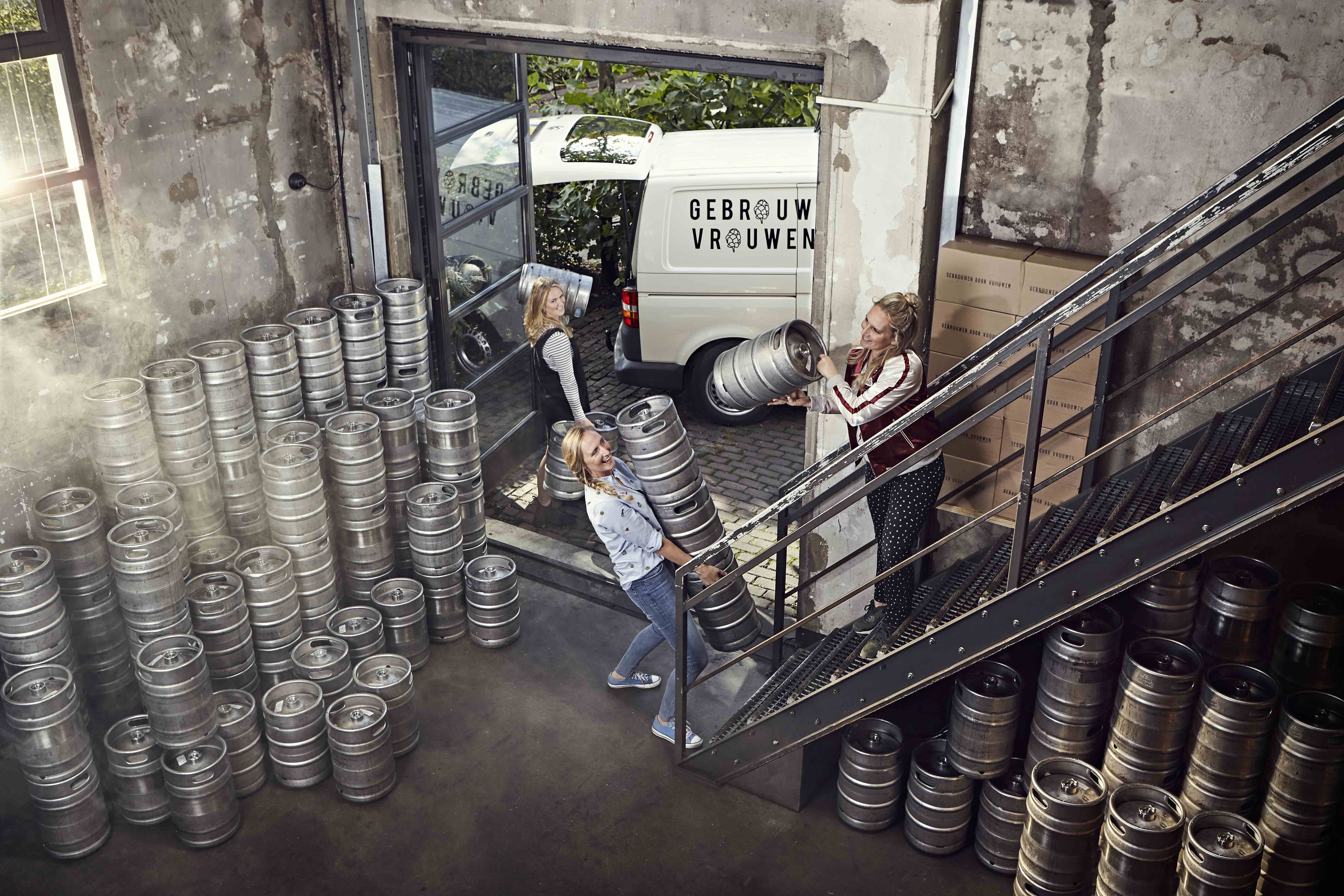
Rather than buying their own facilities, Do and Tessel rented out tanks at another brewery. At first, they wanted to make 200 litres – but when they were offered space for 1000, they took the opportunity and ran with it. “We had to pay everything in advance,” Tessel says.“We spent all of our vacation money on brewing that year.”
Luckily, the investment paid off – and within 12 months the pair left their jobs to brew full-time.
So far, Gebrouwen door Vrouwen has released seven lines of beer that are available throughout the Netherlands and Belgium. Their recipes often involve somewhat surprising ingredients, such as juniper berries or elderflower, which are added to classic beers to enhance their flavours.
Though they are eager to expand their business, Do and Tessel still want to keep Gebrouwen door Vrouwen relatively small-scale, partly to preserve the company’s grassroots, female-led ethic. “We really want to launch a brewpub in Amsterdam,” Do explains. “A place where people can try our beers and hang out. We’re looking for somewhere with a big terrace, that is small enough for us to run ourselves.”
HOW TO START YOUR OWN BREWING COMPANY
FIND A GOOD BUSINESS PARTNER
“Starting any business is tough and it’s even harder when you’re working alone. So find someone you can rely on – preferably your sister. In the beginning, things don’t always work and it’s really rewarding to learn from those experiences with someone else. You also get to celebrate everything together and when you want to step back for a little while, your partner is there to take over.”
BREW A BEER THAT YOU LIKE
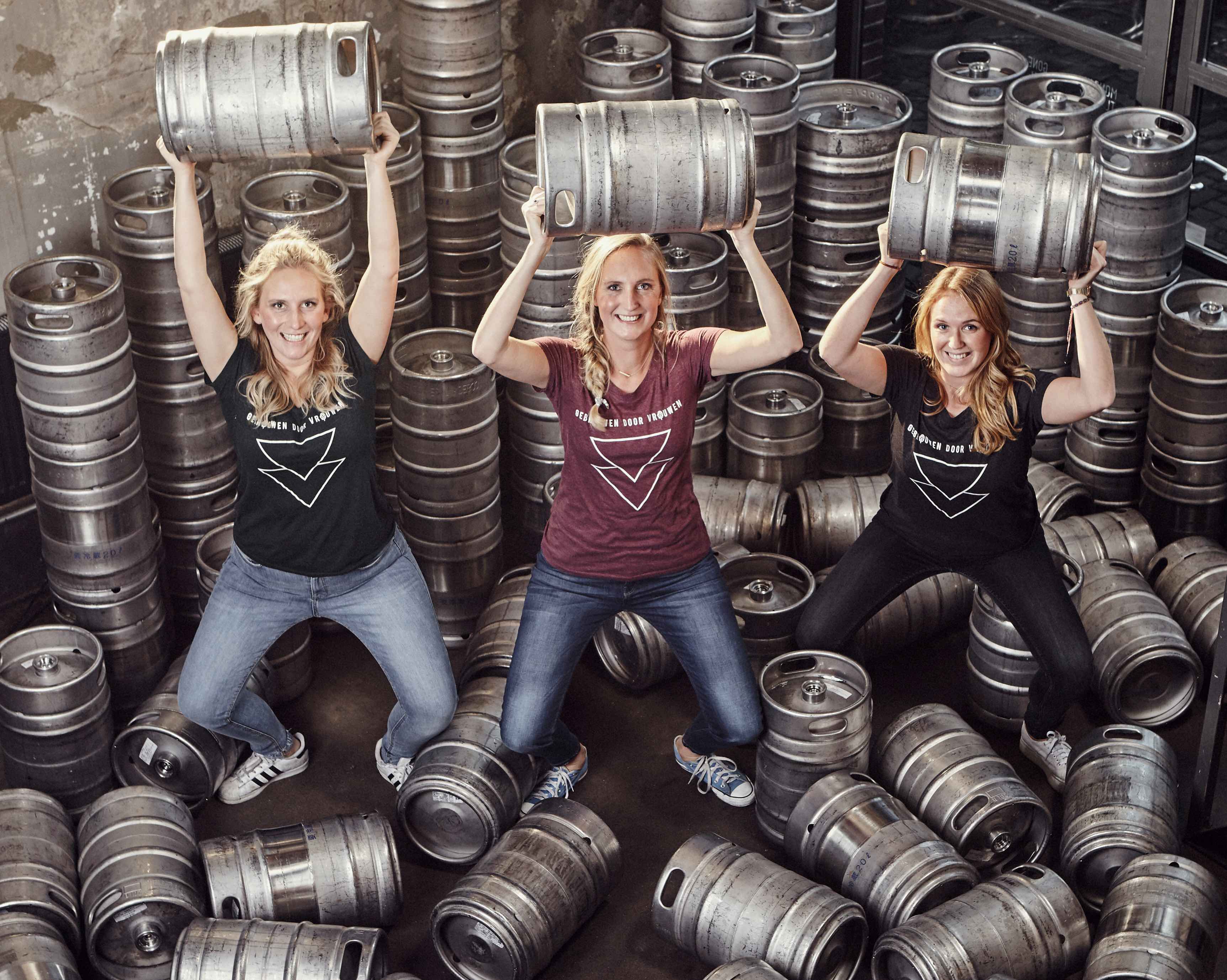
“Start brewing at home and drink a lot of beer to figure out what you like. Keep brewing and experimenting until you find something that you would drink all the time. You have to be 100 per cent behind your beer and behind your recipe, otherwise it’s almost impossible to sell it. Don’t take criticism too seriously. We learnt very quickly that you can’t make everyone happy. There’s always someone that doesn’t like your beer, so you have to like it yourself.”
DON’T QUIT YOUR DAY JOB (RIGHT AWAY)
“Brewing takes time and you have to pay your suppliers before paying yourself. In the beginning, we worked almost an entire year at other companies and didn’t rely on brewing for money. You really need to plan that first year carefully and either keep your day job or save enough money to survive without a stable income. Beer takes at least two months to brew, then sell, and in the meantime, you still have to your pay bills.”
DO IT FOR THE BEER, NOT THE MONEY
“This applies to any new company really. Before you start, make sure you actually enjoy what you’re doing. If you like your work, it will give you energy. It almost becomes natural and you’ll happily keep going after business hours or at the weekend. But if you’re just there for the money, it probably won’t work.”
MAKE MERCH
“Although we don’t really have a marketing strategy, we have printed sweaters with our logo. Friends tell us that people constantly ask them about the brewery when they wear the sweaters. So, if you want some affordable, ‘underground’ marketing for your new brewery, make some branded clothing.”
Learn more about Gebrouwen door Vrouwen on their official website.
Enjoyed this article? Like Huck on Facebook or follow us on Twitter.
You might like

Sepia splashed memories of Britain’s ’90s squatting and free party scene
Bygones — Moving into a Hackney squat at the age of 19, Tom Hunter spent years living on London’s edges, while documenting the vibrant, creative community and culture that it enabled. Huck’s art director Sam White chats to him about the freedom that existed, the collectivism and what’s been lost over the decades since.
Written by: Samuel White

A melancholic portrait of youth, rebellion and womanhood in Iran
And They Laughed At Me — Newsha Tavakolian has worked as a photographer all her adult life, as Iran underwent change, upheaval and conflict. Her new photobook explores the formative years of her eye and art amid generational strife, hope and disappointment.
Written by: Miss Rosen

The real life mermaids of Florida’s Weeki Wachee Springs
Old Florida — A relic of pre-Disney tourism in the state, the show – which sees women perform athletic underwater tricks in a natural spring – has been running since 1947. Jack Burke attends, while reflecting on the fragility and fantasy of old America.
Written by: Jack Burke

The intricate, clandestine art of Japan’s traditional tattoos
Irezumi — Having emerged during the Edo Period centuries ago, inking skin has long been associated the country’s working class, and particularly Yakuza. A new book by Manami Okazaki explores the history and deep meaning of the practice, as well as the horishi who dedicate their lives to the needle.
Written by: Isaac Muk

Road tripping across 1970s America
73 Trip West — In 1973, Larry Racioppo set out from Brooklyn to California, armed with a medium format camera. For the first time in over half a century, roadside photographs from his trip have been unearthed.
Written by: Miss Rosen

New exhibition spotlights the ongoing impact of Japanese Women Photographers
1950s to Now — Taking place at The Photographers’ Gallery in London, it showcases work by 27 artists from the past seven decades including Mikiko Hara, Yurie Nagashima and Mao Ishikawa.
Written by: Isaac Muk


