
Divided land: a portrait of Apartheid South Africa

As a Jewish man born in South Africa, David Goldblatt (1930-2018) was an insider and an outsider at the same time. Born to parents who fled Lithuania to escape persecution, Goldblatt was possessed with a profound sensitivity to the exploited and oppressed. He took up photography as a teenager and began working full time in 1963 after selling the family store following the death of his father to document South Africa at the height of apartheid.
“David Goldblatt was a very political person and believed strongly in documenting the injustices that he saw around him. But he didn’t think of what he was doing as activism and he certainly didn’t want it to be propaganda,” says Pace Gallery curator Oliver Schultz.
Reflecting on what he describes as Goldblatt’s “compassion and dispassion”, Schultz discussed how the photographer’s matter of fact approach maintains its own profound emotional force. Although straightforward in its presentation, Goldblatt’s images can be unpacked like Russian nesting dolls, offering layers of meaning aligned with the viewer’s proximity to the subject of his work.
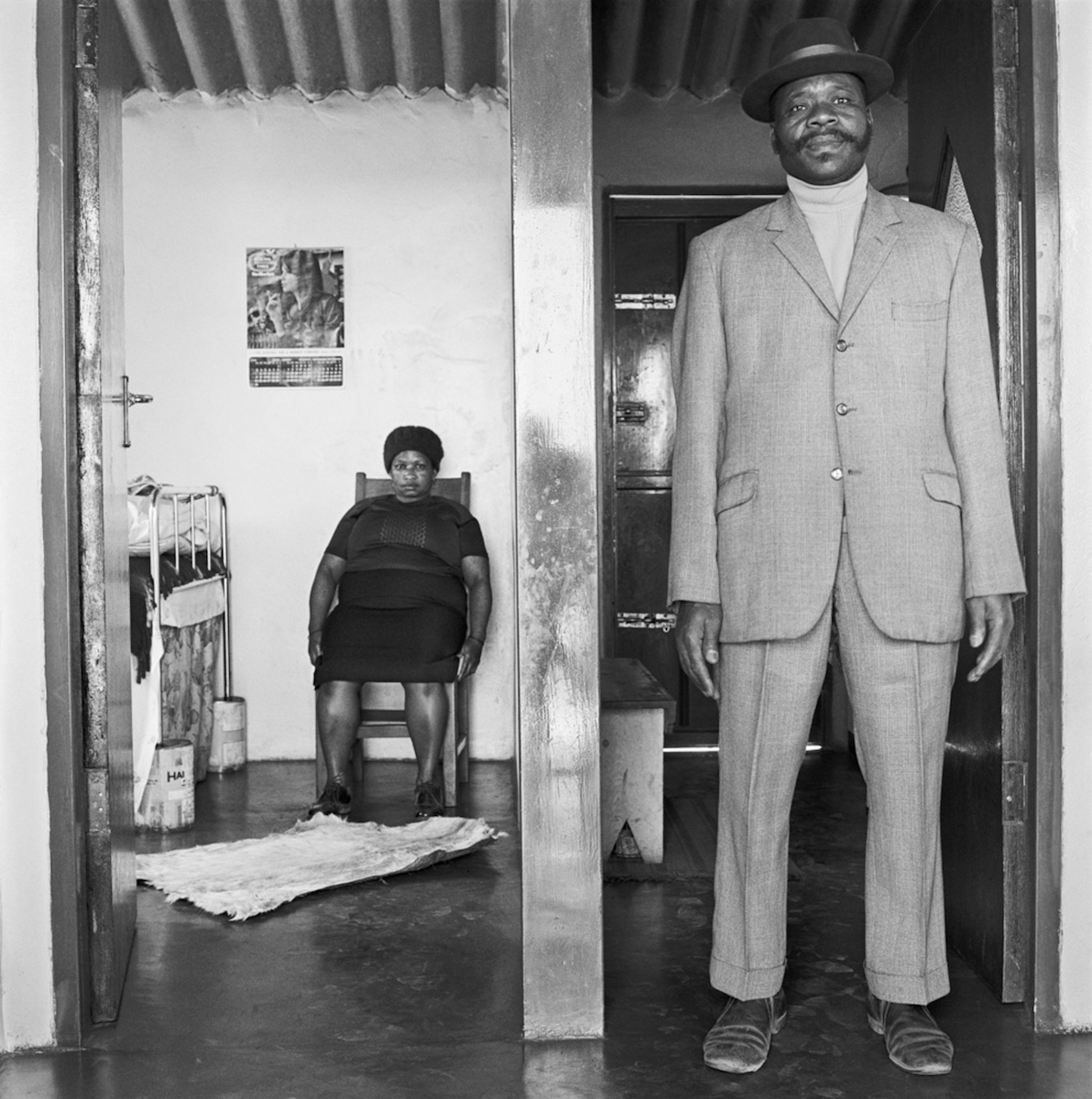
George and Sarah Manyane, 3153 Emdeni Extension, August 1972
As curator of the new exhibition David Goldblatt: Strange Instrument, South African photographer Zanele Muholi, a close friend and mentee of Goldblatt, illustrates just this in a series of 23 idiosyncratic categories such as “Nurturing”, “Sleep”, “Friendships”, “Textures”, “Poverty”, and “Pulse”. Created in “the living memory of David”, the exhibition offers deeply personal meditation born out of Muholi’s experiences as a Black person living through apartheid who saw in Goldblatt a father figure.
Muholi doesn’t tell specific stories about Goldblatt’s photographs but offers new lenses through which to view them. The exhibition takes its title from a quote by Goldblatt that crystallises this understanding of the power of photography: “The camera is a strange instrument. It demands, first of all, that you see coherently. It makes it possible for you to enter into worlds, and places, and associations that would otherwise be very difficult to do.”
The works are extraordinarily effective in exploring and exposing what lies in plain sight, but they might not be readily understood without the benefit of personal experience. Strange Instrument is a conversation between artists and friends about life under a horrific regime, and the insurmountable strength required to survive apartheid.
Muholi renders this brilliantly in the placement of the photograph Couple at The Wilds, Johannesburg, 1975, from the series “Particulars” in the category titled “Freedom to Be Gendered”.
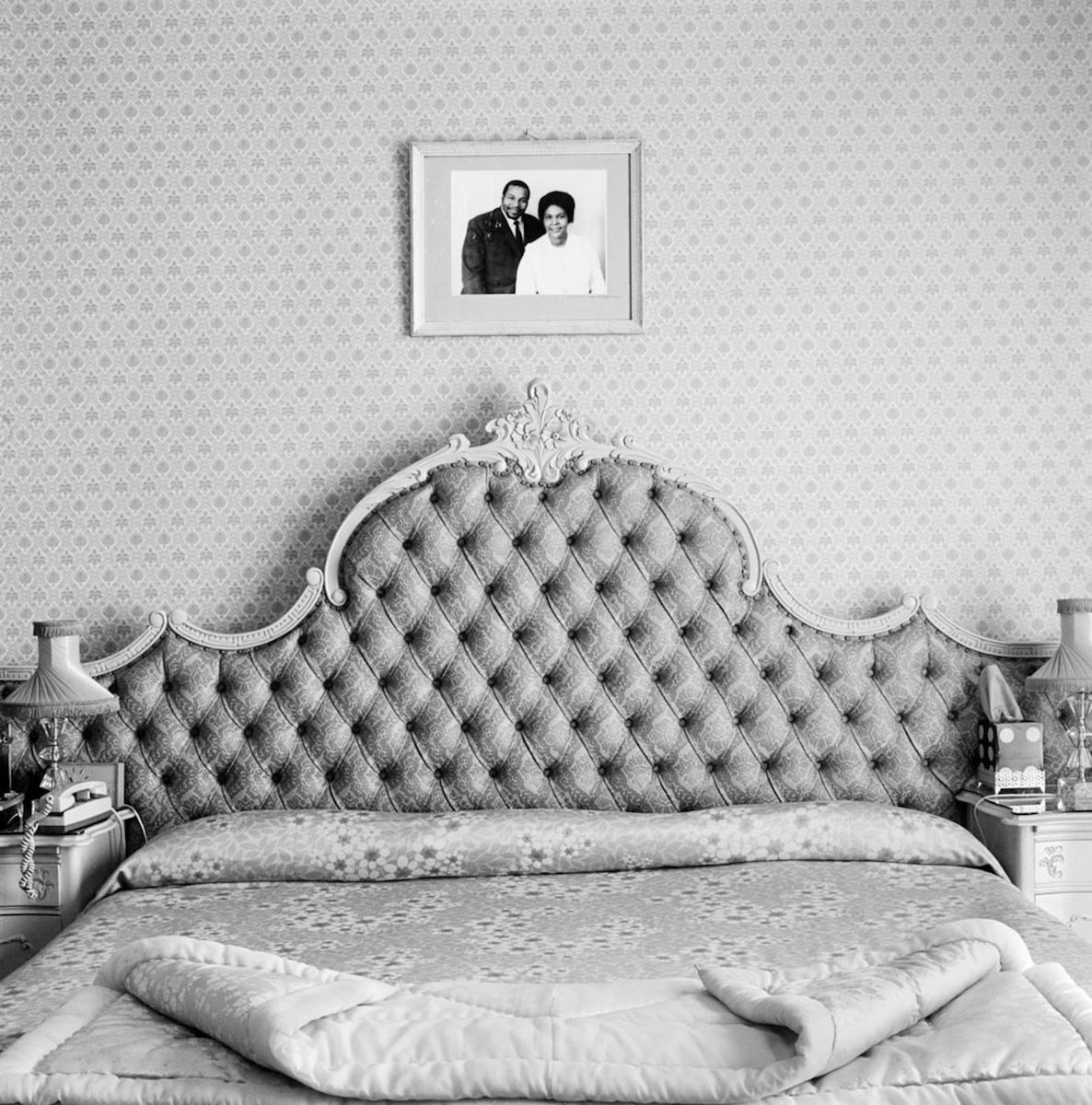
Richard and Marina Maponya, Dube., 1972
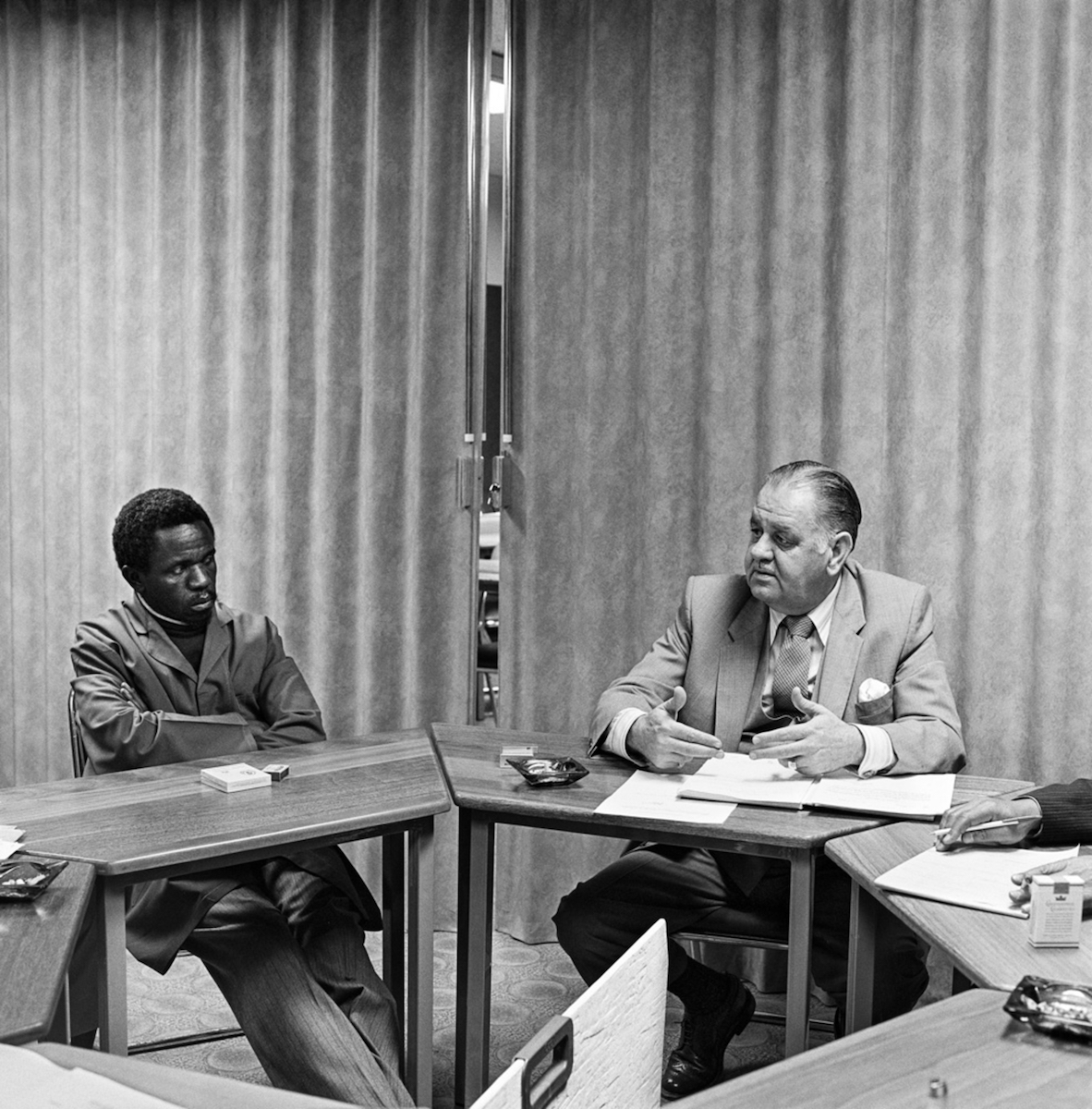
Meeting of the worker management Liaison Committee of the Colgate Palmolive Company, 1980
“The close-up body parts of The Particulars are a study of posture and position, and a question of the body you’re in. There is a performance of gender in that choice of footwear and the crossed legs. For Muholi, they become about the question of gender identity and you realize that was always in these photographs even though Goldblatt himself may not have thought about it that way,” Shultz says.
“The ‘Particulars’ might seem to be an exercise in formalist photography when they are exactly the opposite. When Goldblatt was asked, ‘Where’s the apartheid in these photographs?’ he said, ‘It’s in the grain of the image.’”
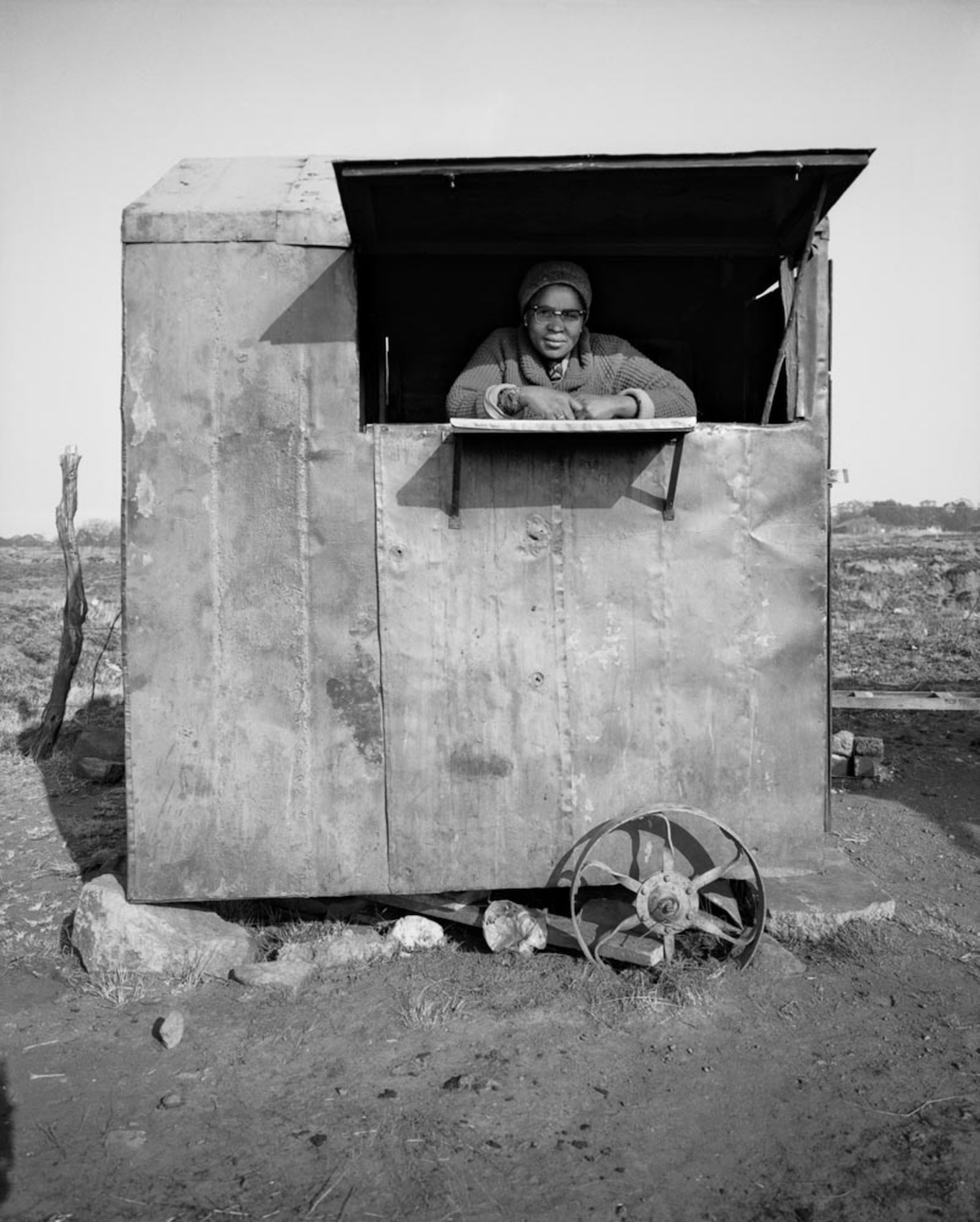
Café-de-Move-On (coffee cart), Croesus, 1964
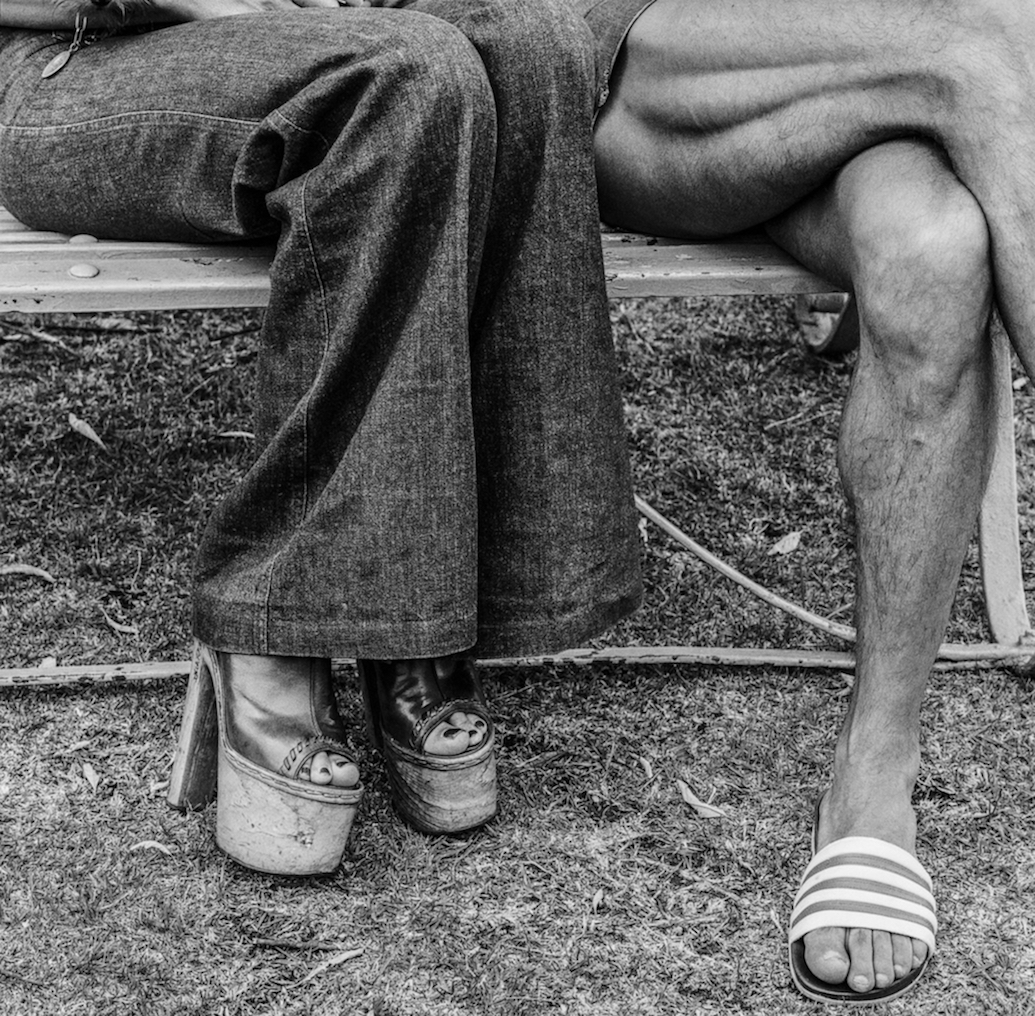
Couple at The Wilds. Johannesburg., 1975
David Goldblatt: Strange Instrument curated by Zanele Muholi in collaboration with Yancey Richardson Gallery, is on view at Pace Gallery, New York, through March 27, 2021.
Follow Miss Rosen on Twitter.
Enjoyed this article? Like Huck on Facebook or follow us on Twitter.
You might like

The sharp rise of video game photography
Point, shoot — As the entertainment medium’s fidelity levels increase and developers build more powerful tools, a growing community of gamers are pushing the boundaries of image making in virtual worlds. Vicky Jessop meets people at the forefront of the emerging artform.

Joyous photos from the heart of the UK’s radical free festival movement
Common Grounds — The photographer has been capturing British counterculture for the past half century. A new exhibition looks at his archive sitting at the intersection of music, community and grassroots protest.

The lasting community legacy of a legendary Californian boxing gym
Moretón — Since opening in the ’80s, the Coachella Valley Boxing Club has trained multiple world champions, while providing a vital hub for local youth. In his new photobook, Darren Vargas documents its tight-knit, Chicano-led community, while also weaving a deeply personal story.

Inside the grunge golden age with Hole’s former bassist
My ’90s Rock Photographs — Melissa Auf der Maur’s new photobook is a sprawling visual memoir of her time at the heart of the US scene, from Tinker to The Smashing Pumpkins.

Introducing ‘The Chaos Isles’, a new photozine by Huck and Yushy
Normal Island — From unlicensed raves to the solstice at Stonehenge, furries to giant vegetable growers, Yushy is one of the UK’s best lensmen of its wild side. ‘The Chaos Isles’ will be sent out exclusively to Club Huck+ members.

Join Club Huck+ to get the most from Huck
Dispatches from the sharp edge of culture — Members get our print magazine, special photozines, The Huck Long Read newsletter, discounts from our friends and partners, digital versions of back issues and priority access to events.


