Harry Benson’s gripping portrait of 1960s America
- Text by Miss Rosen
- Photography by Harry Benson

In early 1964, Harry Benson received a call that would change his life: the photo editor of London’s Daily Express wanted to commission the Scottish photographer to cover The Beatles’s trip to Paris. From this auspicious encounter, a strong bond was formed, with Benson accompanying the Fab Four on their U.S. debut soon thereafter.
Benson arrived in America that February and never looked back, getting an extraordinary view of the nation at the height of Beatlemania. He documented their historic performance of The Ed Sullivan Show, which was seen by a record-breaking 73 million viewers.

John Lewis, Dr. Martin Luther King, Jr., & Ralph Abernathy singing “We Shall Overcome” on the James Meredith March Against Fear, Mississippi, June 1966
Benson’s longing to be at the centre of the action served him well as he continued his work in the United States, photographing some of the most pivotal events of the 1960s. The new exhibition, Harry Benson: Four Stories—co-curated by Addison Gallery of American Art Director Allison Kemmerer and curatorial fellow Tessa Hite—brings together works from the 92-year-old photographer’s archive that shaped the political, social, and cultural landscape.
The exhibition spotlights Benson’s time with The Beatles as well as his photographs of the 1961 construction of the Berlin Wall and Checkpoint Charlie; Martin Luther King Jr. and John Lewis at the 1966 James Meredith March Against Fear; and Robert F. Kennedy’s 1968 ill-fated presidential campaign and subsequent assassination.
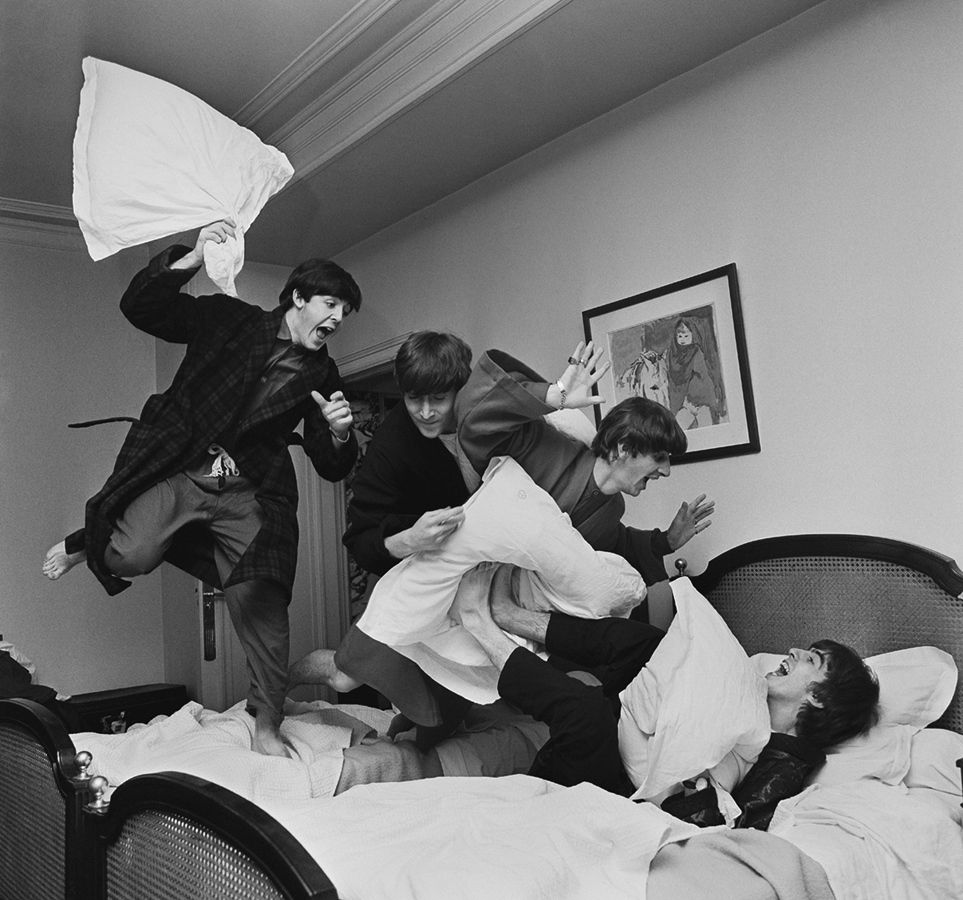
Pillow Fight, Paris, 1964
“These photographs not only catapulted Benson’s career, but also indelibly capture defining moments of this tumultuous period in history,” says Alison Kemmerer, Director of the Addison Gallery of American Art. “We were impressed by Benson’s nimbleness in navigating the very different worlds of hard-hitting news and celebrity life. Whether documenting a Civil Rights protest or a costume ball, Benson’s sharp and empathetic eye reveals our shared humanity.”
Benson’s gift as a raconteur is highlighted throughout the exhibition, with his stories narrating the images and providing viewers with his firsthand accounts of his encounters with triumph and tragedy alike.
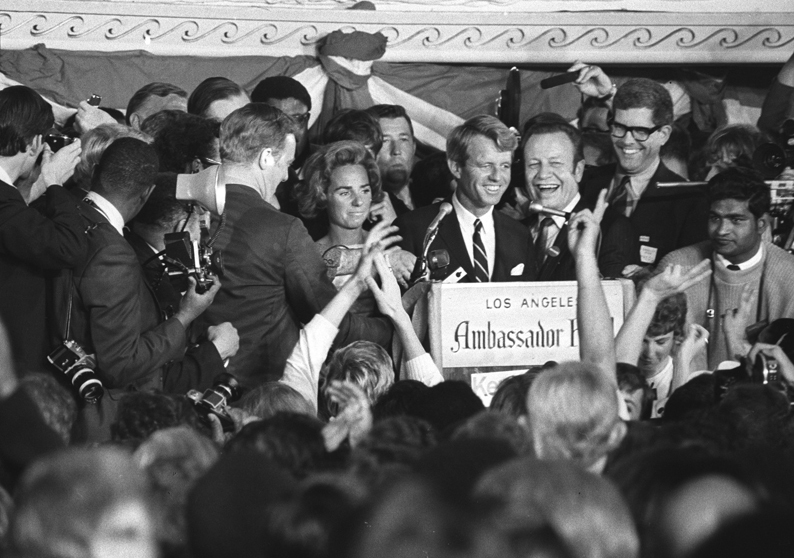
Bobby, Los Angeles, 1968

Bobby, Los Angeles, 1968
“One of our favorite stories is his account of the RFK assassination as it reveals his extraordinary ability to remain composed amid total chaos. No one would blame him if, after realising the presidential candidate had been shot, he succumbed to the ensuing mayhem and stopped making photographs,” Kemmerer says.
“However, recognising the significance of the moment, he somehow managed to keep his wits about him and continued to take pictures while telling himself, ‘This is for history. Bobby would understand. Don’t let me mess up’. That calm and clear-headed persistence resulted in some of the most moving and important photographs of our time.”

Robert F. Kennedy, St. Patrick’s Day Parade, New York City (Announcing his bid for Presidency), 1968

Meredith March, Nearing Canton, Mississippi, June 1966
Although the images capture the emotional extremes of the era, Kemmerer notes how closely the four stories are interrelated by virtue of fate and circumstance. “Benson’s portrait of John F. Kennedy was a perfect way to tie these stories together,” she says.
“JFK had been at the Berlin Wall and his memory loomed large in the aftermath of the assassination of his brother, and of Martin Luther King, Jr., who was present at the Meredith March. Even the Beatles’ inaugural tour was only eleven weeks after JFK’s assassination, and Beatlemania helped lift the spirits of a country in mourning. The photographs reflect an emotional rollercoaster that resonates today.”

Russian tanks lined up in the Eastern Sector, Berlin, Germany, August 13, 1961

Berlin, Germany, August 13, 1961

Blood on the Floor, Ambassador Hotel, Los Angeles, 1968
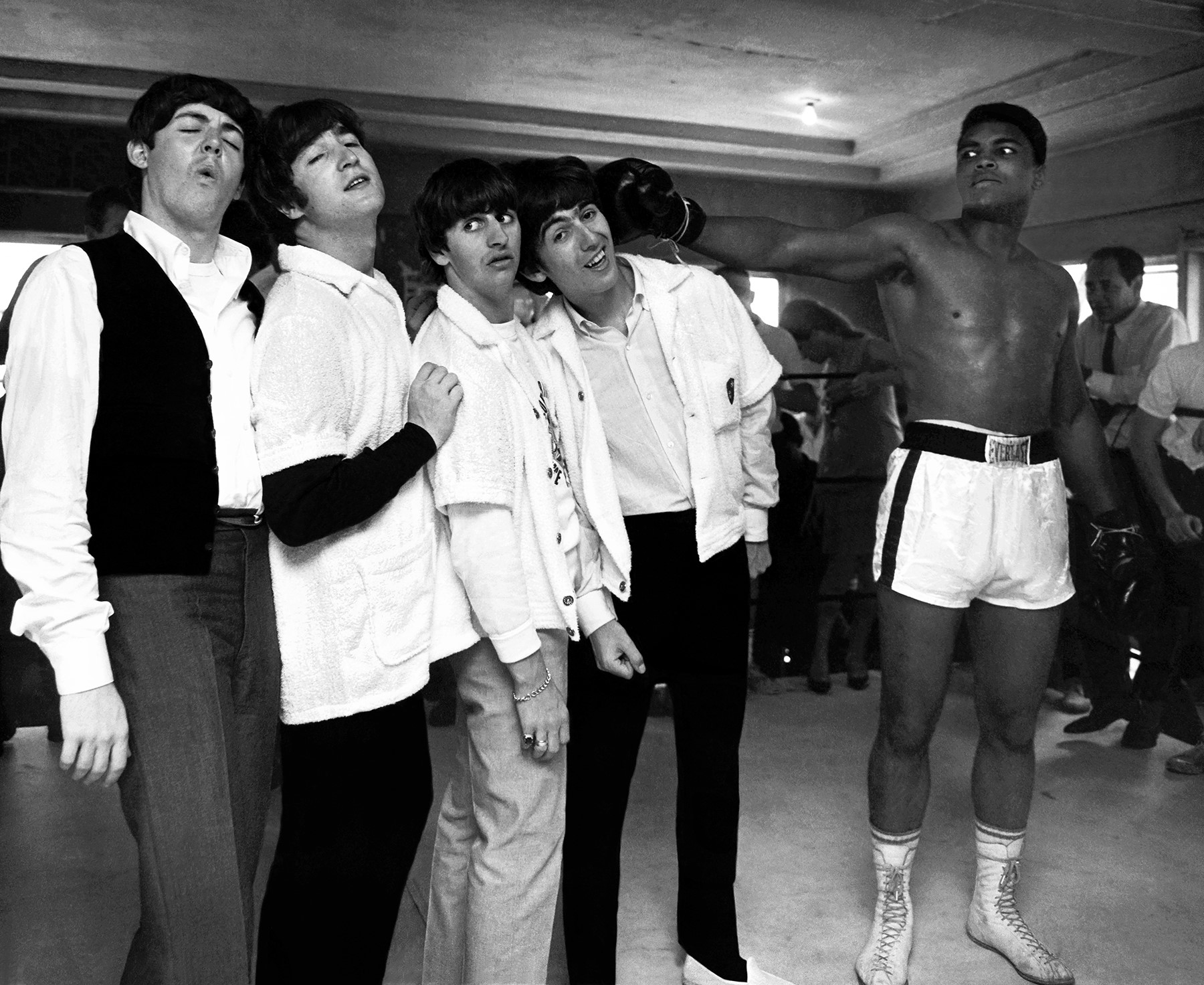
Ali Hits George, Miami, 1964
Harry Benson: Four Stories is on view through January 29, 2023, the Addison Gallery of American Art in Andover, MA.
Enjoyed this article? Like Huck on Facebook or follow us on Twitter and Instagram.
You might like

On the set of ‘La Bamba’, lost Latino legend Ritchie Valens’s biopic
The overnight rockstar — The Chicano rock & roll star exploded overnight in the late ’50s, but just as quickly he was gone, killed in a plane crash along with Buddy Holly. An ’80s biopic saw him immortalised on the big screen, which photographer Merrick Morton captured behind the scenes.
Written by: Miss Rosen

Louis Theroux’s ‘Manosphere’ shows men aren’t the problem, platforms are
No Ws for Good Men — The journalist’s new documentary sees him dive headfirst into the toxicities and machinations of the male influencer economy. But when young creators are monetarily incentivised to make more and more outrageous content, who really is to blame?
Written by: Emma Garland

In the 1960s, African photographers recaptured their own image
Ideas of Africa — An exhibition at the Museum of Modern Art explores the 20th century’s most important lensers, including Seydou Keïta, Malick Sidibé and Kwame Brathwaite, and their impact on challenging dominant European narratives.
Written by: Miss Rosen

Reynaldo Rivera’s intimate portrait of queer Latino love
Propiedad Privada — Growing up during the AIDS pandemic, the photographer entered a world where his love was not only taboo, but dangerous. His new monograph presents inward-looking shots made over four decades, which reclaim the power of desire.
Written by: Miss Rosen

In photos: The newsagents keeping print alive
Save the stands — With Huck 83 hitting shelves around the world, we met a few people who continue to stock print magazines, defying an enduringly tough climate for physical media and the high street.
Written by: Ella Glossop

Inside Bombay Beach, California’s ‘Rotting Riviera’
Man-made decay — The Salton Sea was created by accident after a failed attempt to divert the Colorado River in the early 20th century. Jack Burke reports from its post-apocalyptic shores, where DIY art and ecological collapse meet.
Written by: Jack Burke


