A visual guide to the hidden history of hip hop
- Text by Miss Rosen

“Rap is something you do. Hip hop is something you live,” KRS One memorably said, reminding fans that the culture of hip hop is more than just an MC on the mic. Hip hop is a style, an attitude, and a way of life that transcends all boundaries, be it cultural or political, and brings people together in celebration of black power, pride, and principles.
At the foundation of hip hop are DJs, MCs, B-boys and B-Girls, and graffiti – which represent the music, literature, dance, and visual arts. Although MCing (aka rapping) has become the most famous element, it’s the fruit of a tree with much deeper roots, one that Rhea Combs, curator of photography and film, and director of CAAMA, explores in the new exhibition, Represent: Hip-Hop Photography.
Represent takes work from Bill Adler’s Eyejammie Hip Hop Photography Collection as its departure point, visually sampling from the seminal archive that includes more than 400 iconic photographs by 60 leading artists including Charlie Ahearn, Harry Allen, Janette Beckman, Al Pereira, and Jamel Shabazz. For the exhibition, Combs has paired these works with historical photographs and other objects from the museum’s permanent collection, to illustrate the ways in which the innovative practices can be found in African-American history decades before hip hop was born in the Bronx.

WOMEN RAPPERS © Janette Beckman
For example, a portrait of Queen Latifah appears alongside ’20s blues singer Gladys Bentley, drawing a striking parallel between the two women who have endured public scrutiny and media speculation about their appearances independent of their work. These pairings add new layers of context and depth in order to show how hip hop is a natural continuation of the black experience in America over centuries.
Bill Adler, a music historian and former publicist for Def Jam, started the collection, which continues to bear and preserve the name of the Eyejammie Gallery, which he ran in New York City from 2003 through 2007. “I was running this gallery and putting together these shows, but in effect, I was creating the collection,” he explains. “I did my best not just to exhibit the photos but to also sell the prints. I might have been a little too early with this.”
“In 2003, I did a show devoted to images of Run-DMC and I pegged it to the 20th-anniversary release of their first single. I had people come to see the show and they dug a lot of the photos but no one was buying anything. I imagine the thought process might have been, ‘Wait a minute. I saw this photograph for the first time in Right On magazine in 1984 and I paid $2.95 for the magazine and now Bill Adler wants me to pay $200 for a print?’”

Collection of the Smithsonian National Museum of African American History and Culture, Gift of Chris DAZE Ellis, © DAZE
Although Adler didn’t sell many prints while the gallery was open, he created a solid collection of work that defined hip hop as it made its way on to the world stage. The collection, which was born out of Adler’s love for preserving music history and culture, was acquired by the museum in 2015.
“It has been tremendously gratifying to me for the museum to acquire the Eyejammie Collection because it confirmed my feelings about this material: that it was capital ‘A’ Art, capital ‘H’ History, and capital ‘C’ Culture and would continue to be of values in those ways,” Adler adds.
“Rhea had a really creative idea about what to do with my collection, and I was knocked out by it. Represent is a gem that speaks to the larger collection that the museum has – and it is nothing short of phenomenal.”

Collection of the Smithsonian National Museum of African American History and Culture, © Janette Beckman

KRS1 & Ms Melodie © Janette Beckman

Collection of the Smithsonian National Museum of African American History and Culture, © Janette Beckman

Collection of the Smithsonian National Museum of African American History and Culture, Photo by Al Pereira, © Al Pereira

Collection of the Smithsonian National Museum of African American History and Culture, Photo by Al Pereira, © Al Pereira

Collection of the Smithsonian National Museum of African American History and Culture, Gift of Antwan Patton
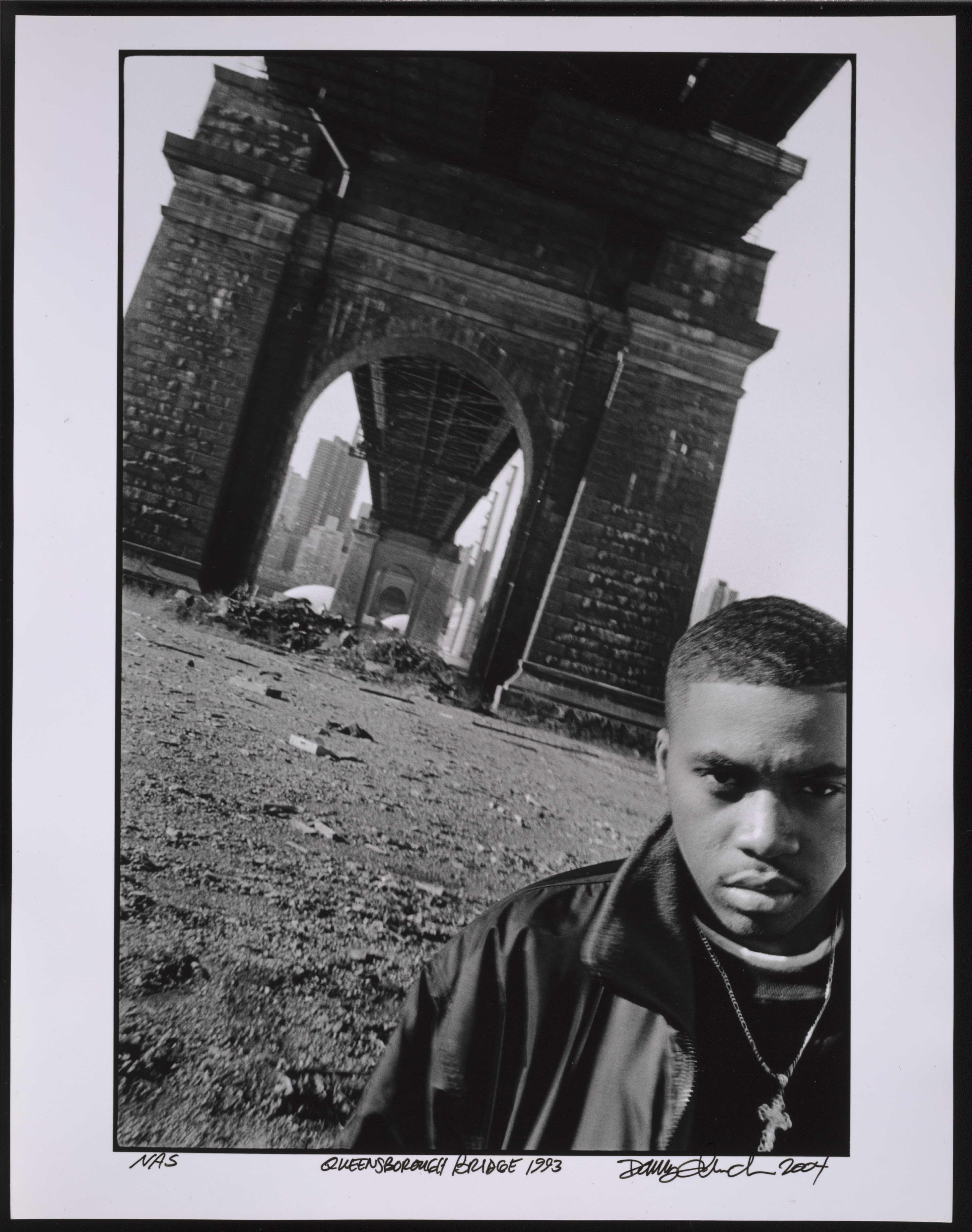
Collection of the Smithsonian National Museum of African American History and Culture, Courtesy of Sony Music Entertainment. Photograph by Danny Clinch. © Sony Music
Represent: Hip-Hop Photography is on view at the National Museum of African American History & Culture in Washington, D.C., through May 3, 2019
Follow Miss Rosen on Twitter.
Enjoyed this article? Like Huck on Facebook or follow us on Twitter.
You might like

Reynaldo Rivera’s intimate portrait of queer Latino love
Propiedad Privada — Growing up during the AIDS pandemic, the photographer entered a world where his love was not only taboo, but dangerous. His new monograph presents inward-looking shots made over four decades, which reclaim the power of desire.
Written by: Miss Rosen

In photos: The newsagents keeping print alive
Save the stands — With Huck 83 hitting shelves around the world, we met a few people who continue to stock print magazines, defying an enduringly tough climate for physical media and the high street.
Written by: Ella Glossop

The quiet, introspective delight of Finland’s car cruising scene
Pilluralli — In the country’s small towns and rural areas, young people meet up to drive and hang out with their friends. Jussi Puikkonen spent five years photographing its idiosyncratic pace.
Written by: Josh Jones

The last days of St Agnes Place, London’s longest ever running squat
Off the grid — Photographer Janine Wiedel spent four years documenting the people of the Kennington squat, who for decades made a forgotten row of terraced houses a home.
Written by: Isaac Muk

How Japan revolutionised art & photography in the ’60s and ’70s
From Angura to Provoke — A new photobook chronicles the radical avant-garde scene of the postwar period, whose subversion of the medium of image making remains shocking and groundbreaking to this day.
Written by: Miss Rosen

Artifaxing: “We’ve become so addicted to these supercomputers in our hands”
Framing the future — Predominantly publishing on Instagram and X, the account is one of social media’s most prominent archiving pages. We caught up with the mysterious figure behind it to chat about the internet’s past, present and future, finding inspiration and art in the age of AI.
Written by: Isaac Muk


