
Back in the day: photos of Liverpool in the 1980s

The 1980’s are widely regarded as Liverpool’s lowest ebb. A time when work in the city was scarce, alienation from the rest of the country was peaking, and newfangled drugs were tightening their grip on the city’s housing estates.
During this period Rob Bremner, 54 – then a shaggy-haired student from Wick, Scotland – was photographing the region’s inner-city wards, as they came to terms with a Conservative government whose policies appeared to deliberately degrade them. Although Bremner observed hardships and suffering, he recalls a Liverpool not completely defined by its problems.
“Because nobody had any money, everyone was in the same boat,” he tells Huck. “It wasn’t just you in this position, it was entire communities.”
“Liverpool people generally got on with it. In many ways, they adapted well to their circumstances.”


Bremner studied photography at the Wallasey College of Art, and found himself working under prominent UK photographers Martin Parr and David Hurn. At that time, photography was becoming increasingly popular not only in Liverpool’s art community, but in more peripheral places such as Everton and Toxteth.
“I always used photography as a means of meeting people,” Bremner says. “People in Everton would invite me into their homes. There was an old man who used to take me for a pint, if I was hanging around or it was raining.”
“Once I’d gotten to know one or two people, they’d talk about me to their neighbours. I just found it really easy to do that in those places.”
What’s most striking about Bremner’s work is the level of naturalness he achieves in his subjects. The Scot puts this down to not merely observing the individuals he’s photographing, but connecting with them on a personal level and developing relationships: “I was unemployed at the time so I spent a lot of time with these people. A lot of them became my friends.”

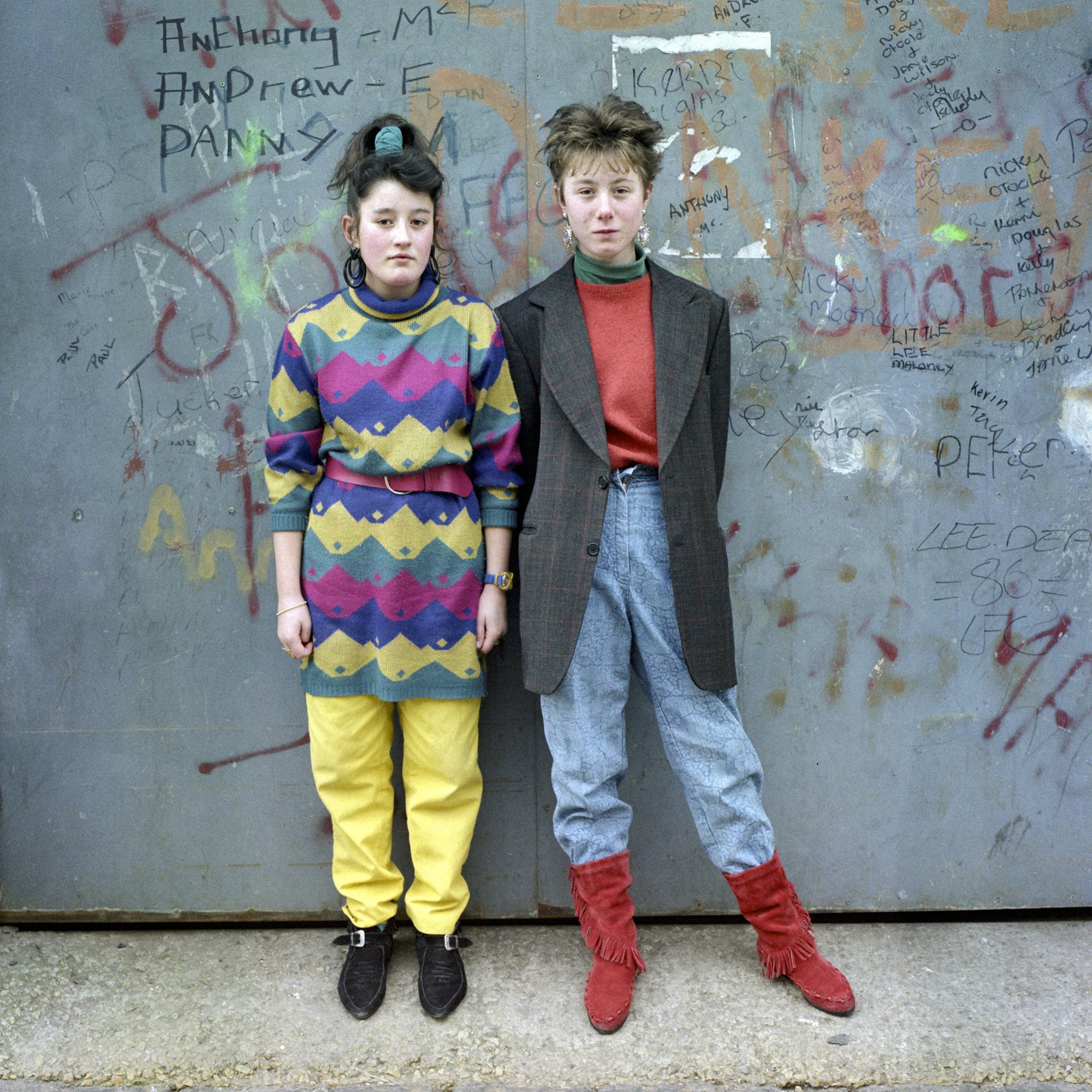
In recent months there has been growing interest in Bremner’s work; his organic portrait style resonating with fashion and media brands who now endeavour to replicate that ‘real’ look. As a result, in January, he’ll be releasing his first book, The Dash Between.
“It’s funny, people didn’t like my work so much at the time,” he remembers. “Galleries viewed it as everyday and bland. But that’s what documentary photography is: it’s about trying to capture a time and a place.”
At the time, mainstream press often characterised Liverpool as bereft of pretty much anything positive. Yet Bremner’s body of work captures a city brimming with character and style; it’s people living defiantly in the face of difficulty.
“It really is a great city,” he says, fondly. “Scousers like talking, and I quite liked listening. It’s friendly down there.”
“We’re all just passing through history, and if we don’t record these things then they’re gone. The movies, the books, the music. It’s about wanting to contribute to all that, in some way. As a photographer or subject, you’re just a witness to the times.”


Rob Bremner’s The Dash Between is released in January.
Follow Jonathan Turton on Twitter.
Enjoyed this article? Like Huck on Facebook or follow us on Twitter.
You might like

Ahilya Bamroo is Gen Z India’s authentic ambassador
Reel relatable — The influencer turned actor speaks about trolls, beauty standards and youth activism.

What went down at Huck’s 20th birthday party
84 issues and counting — We took over east London’s Jaguar Shoes with friends old and new to celebrate two decades and our new issue, with Tony Bontana taking the decks for a special set.

Photos of friends, lovers and afters in Berlin’s party scene
Dreams and How to Keep Them – Vincent Wechselberger’s new monograph documents a decade of hedonism in the German capital, and the people he met along the way.

Inside the Los Angeles scene kid revival
The Rawring ’20s — For the cover of Huck 84, photographer Alexis Gross and writer Anna Zanes meet the latest faces of scene, who are finding freedom to express themselves through its technicolour, unafraid aesthetic.

Introducing our new issue of Huck Magazine: It Starts With Us
Huck 84 — For our second 20th anniversary issue, we spotlight 20 people and groups providing the world with a hopeful future.

The sharp rise of video game photography
Point, shoot — As the entertainment medium’s fidelity levels increase and developers build more powerful tools, a growing community of gamers are pushing the boundaries of image making in virtual worlds. Vicky Jessop meets people at the forefront of the emerging artform.


