
Black and white photos of pre-gentrification Hackney

Neil Martinson was still at school when he first picked up the camera. Growing up in Hackney during the ’70s, he saw it as an opportunity to engage with a world much larger than the one immediately available to him – one that felt, at times, fairly unforgiving.
“It was a cultural wasteland,” he says, describing his neighbourhood back then. “There were no bookshops, derelict houses littered the streets, and the cinemas were closing one by one. It was a depressing place to be. Many people just got out.”
Photography, though, provided respite. Not only did his surroundings open up, but people – interactions – did too. The “magic” that came with developing and printing his own photos kept him hooked, even when he was still finding his feet as a storyteller.
 “It was very hit and miss at the beginning. My first camera was a Russian Zenit-E – built like a tank. It wasn’t an easy camera to use compared to how they developed. I couldn’t afford much film so I had to be careful in thinking about what photos to take.”
While he was primarily documenting what he could see around him, Martinson was always particularly concerned with social action. As he grew older, much of his work began to centre around campaigns and activism: from the occupation of Hackney Town Hall in 1981, to a long-term project on the housing crisis that played a role in successfully convincing the local council to change its policy on putting up homeless families in squalid, run-down hotels.
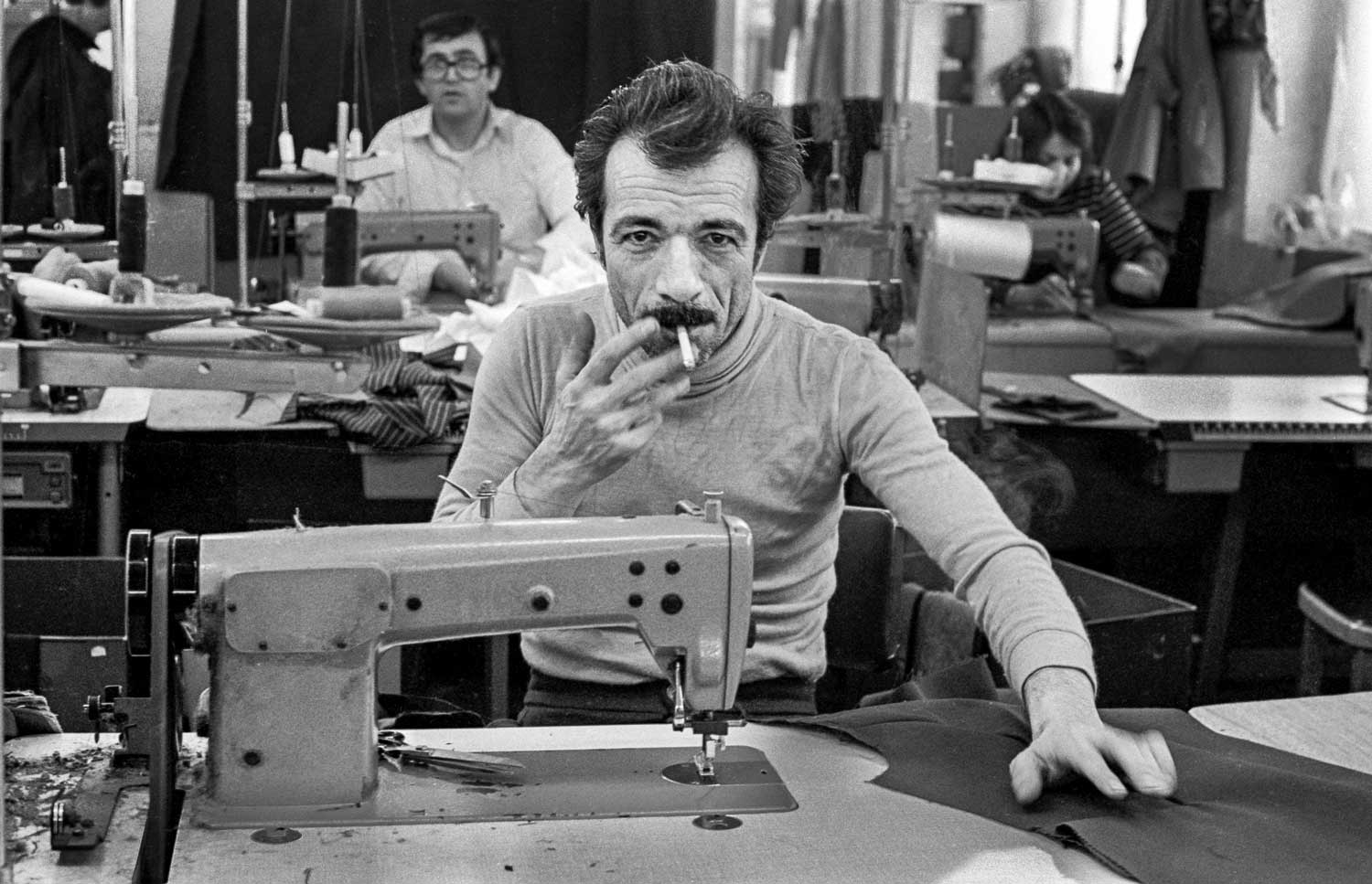
 Now, all of that work features together in Hackney Archive: Work and Life 1971 – 1985, the seventh instalment in Hoxton Mini Press’ Vintage Britain series. Taking the reader on a 14-year journey, it begins with Martinson’s first pictures, before concluding with Hackney on the cusp of sweeping gentrification.
“Cities and places within them have always changed,” Martinson says. “My grandparents came from Holland and Russia to make new lives. Many of the factories I documented [during the ’70s] lay empty for 15-20 years. But some are now loft apartments, or have been taken over by the digital industry.”
“Immigration always brought new energy and ideas. The empty houses and cheap rents in the ’70s and ’80s created the space for artists, radicals and diversity. That’s changed and it’s only people with money that can afford to move to Hackney. So… it’s a mixed blessing.”


 Hackney Archive: Work and Life 1971 – 1985 is available now from Hoxton Mini Press.
Enjoyed this article? Like Huck on Facebook or follow us on Twitter.
You might like

The sharp rise of video game photography
Point, shoot — As the entertainment medium’s fidelity levels increase and developers build more powerful tools, a growing community of gamers are pushing the boundaries of image making in virtual worlds. Vicky Jessop meets people at the forefront of the emerging artform.

Joyous photos from the heart of the UK’s radical free festival movement
Common Grounds — The photographer has been capturing British counterculture for the past half century. A new exhibition looks at his archive sitting at the intersection of music, community and grassroots protest.

The lasting community legacy of a legendary Californian boxing gym
Moretón — Since opening in the ’80s, the Coachella Valley Boxing Club has trained multiple world champions, while providing a vital hub for local youth. In his new photobook, Darren Vargas documents its tight-knit, Chicano-led community, while also weaving a deeply personal story.

Inside the grunge golden age with Hole’s former bassist
My ’90s Rock Photographs — Melissa Auf der Maur’s new photobook is a sprawling visual memoir of her time at the heart of the US scene, from Tinker to The Smashing Pumpkins.

How the Home Counties took over UK rap

Introducing ‘The Chaos Isles’, a new photozine by Huck and Yushy
Normal Island — From unlicensed raves to the solstice at Stonehenge, furries to giant vegetable growers, Yushy is one of the UK’s best lensmen of its wild side. ‘The Chaos Isles’ will be sent out exclusively to Club Huck+ members.


