Celebrating style in post-industrial South Wales
- Text by Eva Clifford
- Photography by Clementine Schneidermann and Charlotte James

When a group of kids catch sight of five young girls dressed in all-black with lace gowns and extravagant hats crossing an estate in South Wales, their initial reaction is bemusement.“What are you wearing?! You look like you’re dressed for a funeral!” Unfazed by their comments, one of the girls – Sassy Keely – replies: “It’s called fashion, look it up!”
Collaborating with local children, photographer Clementine Schneidermann and stylist Charlotte James’ ongoing project It’s Called Ffasiwn merges fashion, performance and documentary photography to present a contemporary vision of the post-industrialised landscape of the south Wales Valleys.
Since they both live in Wales, it seemed a natural place for the pair to make work. Visually, the region offers variety: “we can shoot on an estate, then drive 10 minutes and shoot a countryside landscape, or drive half an hour to a seaside town,” says Charlotte. “It’s also important for us to show creative practices happening outside of the big cities.”
While the disappearance of the coal mining industry in the 1980s has had a long-lasting impact on opportunities in the region, Schneidermann and James were keen to show the area in a different light. They wanted to move away from mainstream representations of working class community life that focuses predominantly on hardship and deprivation. “Without denying the reality, the playfulness of the photos break with the traditional distance that you often see between the people behind the cameras and their subjects,” says Clementine.

Demi, Bryn Farm 2018

Nia (Valentine Disco Party), Gurnos 2018
Before any shoot takes place, the pair decide on a theme and then organise fashion workshops with local youth centres. Most of the children involved belong to two separate youth clubs in two different towns, and responses to the project have so far been positive. “When they pose for the photos, they really take it seriously,” says Clementine. “They’re also able to forget the judgement from people on the street, and walk into their own estate with extremely unusual costumes without caring too much about what people will think. It’s like an experimental drama play and the street is turned into a stage.”
For the workshops, Charlotte sources clothing and materials, gathers visual inspiration for the children to look at, and then allocates them various tasks, so that they too are actively involved in the creative process.
“It could be ruffle making, painting onto the clothes, adding gems, or working on the set design,” explains Charlotte. “For the summer school, we gave the young people a budget so they could source clothing from charity shops as well. I’m there to help and advise them, but I like them to have as much input as they want.”
“This process has been a learning curve for us too, because running a workshop for lots of kids with time and money constraints (we self-funded the project for three years) hasn’t been easy, but I think the summer school cemented our practice on how we’ll continue to work with youth.”

Spring, Gurnos, 2017

Summer Street Party, Merthyr Vale, 2018
Although they tend to have a fixed idea on the costumes and location, shooting outside brings its own challenges. “It rains more than it shines in this part of the world,” Clementine says, so costumes can quickly get damaged which this means they often have to shoot in a rush. Also, the energy and dynamic of the group has an impact on the final photographs. “The photos never end up the way we expect them to be,” she admits.
One constant element in the photos is colour. As their first colour co-ordinated shoot involved the black costumes for Halloween, they’ve since “tried to base each colour and shoot on a season or celebration, such as red for Valentine’s day, pastel green for spring and yellow for summer, etc.” explains Charlotte.
The result is a striking deviance from the typical visual representations of the region. “The communities in the Valleys have been beautifully photographed during the mining days,” says Clementine. “Although in appearance the Valleys haven’t changed that much, we’re interested in moving away from these iconic photos of Industrial Wales and finding an original way of representing the contemporary Valleys.”

Valentine Disco Party, Gurnos Social Club 2018

Ghosts, Merthyr, 2018
Approaching the project from two distinct backgrounds (Clementine studied documentary photography and Charlotte studied fashion), the collaboration has been beneficial in many ways. “Charlotte and I are very complimentary,” says Clementine. “Because the work is multidisciplinary, having two brains allows us to go further in our ideas and take more risks.”
“Clementine takes the photographs but we have fluid roles within the collaboration,” adds Charlotte. “The project only exists due to the creative partnership we have built over the years.”
Recalling their first Halloween shoot on the estate, the two decided to name the project after Sassy Keely’s comeback, replacing ‘fashion’ with the Welsh translation “Ffasiwn”. Charlotte says: “It’s a play on the word and how even though we’re introducing the girls to fashion in a creative way, the project couldn’t be further away from your typical fashion shoot.”
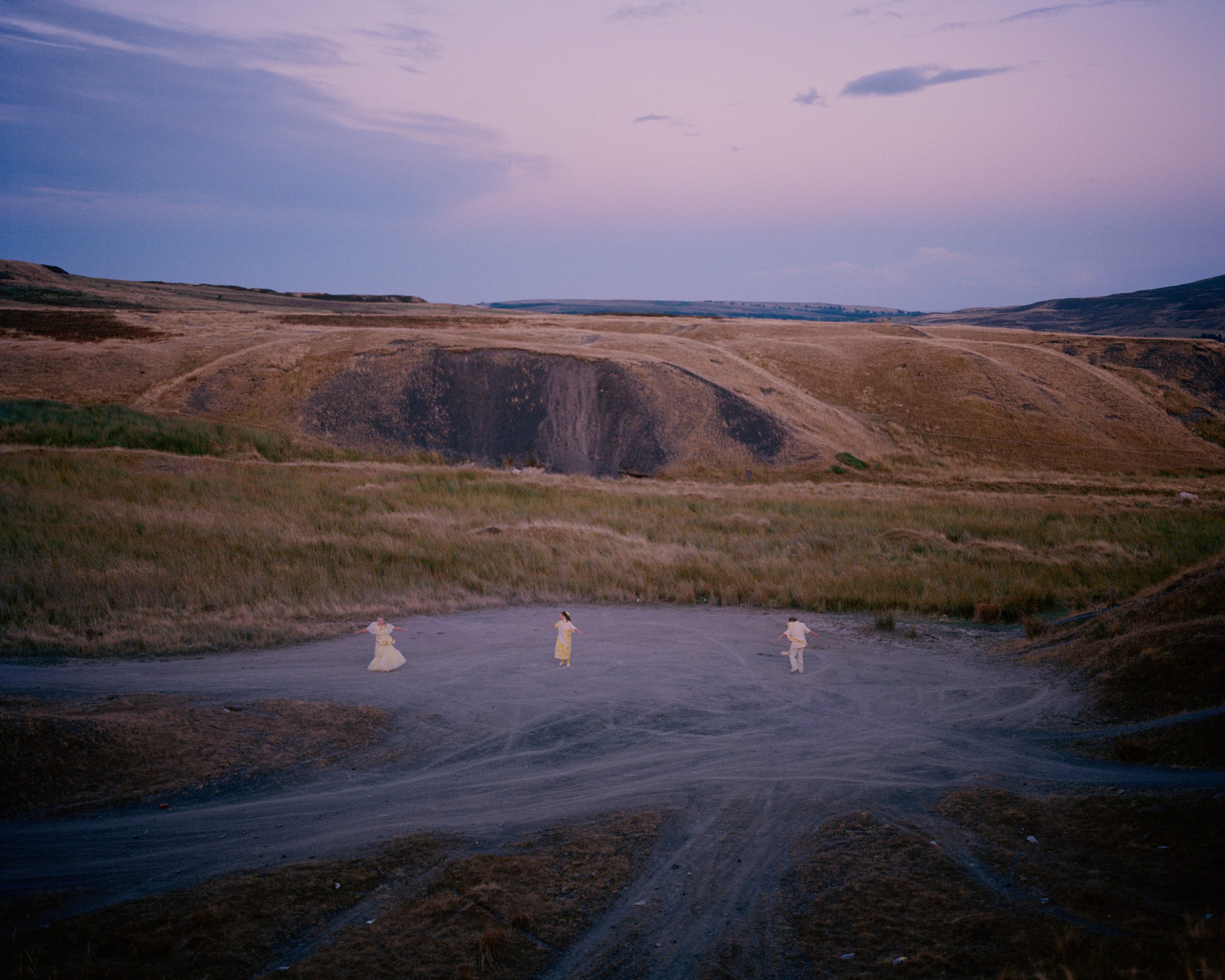
Last Days of Summer, Blaenavon 2018

Autumn, Coed Cae, 2016
It’s Called Ffasiwn will be exhibited for the first time at the Martin Parr Foundation in March.
Enjoyed this article? Like Huck on Facebook or follow us on Twitter.
You might like

Louis Theroux’s ‘Manosphere’ shows men aren’t the problem, platforms are
No Ws for Good Men — The journalist’s new documentary sees him dive headfirst into the toxicities and machinations of the male influencer economy. But when young creators are monetarily incentivised to make more and more outrageous content, who really is to blame?
Written by: Emma Garland

In the 1960s, African photographers recaptured their own image
Ideas of Africa — An exhibition at the Museum of Modern Art explores the 20th century’s most important lensers, including Seydou Keïta, Malick Sidibé and Kwame Brathwaite, and their impact on challenging dominant European narratives.
Written by: Miss Rosen

Reynaldo Rivera’s intimate portrait of queer Latino love
Propiedad Privada — Growing up during the AIDS pandemic, the photographer entered a world where his love was not only taboo, but dangerous. His new monograph presents inward-looking shots made over four decades, which reclaim the power of desire.
Written by: Miss Rosen

In photos: The newsagents keeping print alive
Save the stands — With Huck 83 hitting shelves around the world, we met a few people who continue to stock print magazines, defying an enduringly tough climate for physical media and the high street.
Written by: Ella Glossop

Inside Bombay Beach, California’s ‘Rotting Riviera’
Man-made decay — The Salton Sea was created by accident after a failed attempt to divert the Colorado River in the early 20th century. Jack Burke reports from its post-apocalyptic shores, where DIY art and ecological collapse meet.
Written by: Jack Burke

The quiet, introspective delight of Finland’s car cruising scene
Pilluralli — In the country’s small towns and rural areas, young people meet up to drive and hang out with their friends. Jussi Puikkonen spent five years photographing its idiosyncratic pace.
Written by: Josh Jones


