Portraits of America’s ‘plain ordinary working people’
- Text by Niall Flynn
- Photography by Daniel Kraus

In 2012, photographer Daniel Kraus was working for an organisation that ran projects in communities with high poverty rates. As part of the role, he’d take different youth groups to stay with families in isolated areas around Williamsburg, Kentucky, where they’d lend a hand with upkeep and general service work.
Over the course of the summer, he became close with a couple – Martha and Arnold – who lived in an old secluded cabin which they needed help taking care of. One day, when he was helping the pair reorganise their home, he stumbled upon a sleeve of old negatives discarded on the floor, discarded among “decades worth” of plastic bags and newspapers. After picking them up and confirming with Arnold that they weren’t family photos, he decided to keep hold of them.
 “The first quality which drew my curiosity was how withered and destroyed they were,” Kraus remembers. “There was a sense of mystery as well, because I could see they were portraits – but didn’t have any way to look at them for several weeks. [It] was almost like I had found a treasure that had been waiting for me.”
That sense of mystery only deepened when he was finally able to scan them in, revealing what the pictures actually were: Walmart employee headshots from 1986. How they’d come to arrive in the cabin, he had no idea. What he did know, however, was that he needed to do something with them.
 “I tried to make work with them for a few years, never really taking them to their full potential. However, after starting graduate school, I showed them during my second critique, and from that point on I started a new approach. Some of my colleagues asked if I had every tried to find out more about the photographs – who was in them, where did they come from, and why they were made.”
“I wasn’t so inspired initially by this idea at first. I loved these images because of their ambiguity, but I felt like I should try and see what I could dig up. It was during this time and research that I really honed my ideas for the project and settled on the fact that my interests did in fact lie in solving the mystery rather than perpetuating it.”
 After two years of letters, phone calls, searching archives and embarking on cross-country drives, Kraus was eventually able to find, interview and photograph five of the 14 Walmart employees depicted in the original images. The result is Plain Ordinary Working People, a project that explores identity, origin and small-town life in America – through the prism of one of its most recognisable institutions.
“Socially, Walmart store parking lots are where teenagers in small town pass the nights and socialise. For a busy family it means that all their needs, from getting new tires on the car to buying baby formula, can be bought in one place,” he says. “To describe the significance of Walmart to someone outside the US today might be something akin to a brick and mortar Amazon store. Walmart sold everything for less than anybody – and you had easy access to it.”
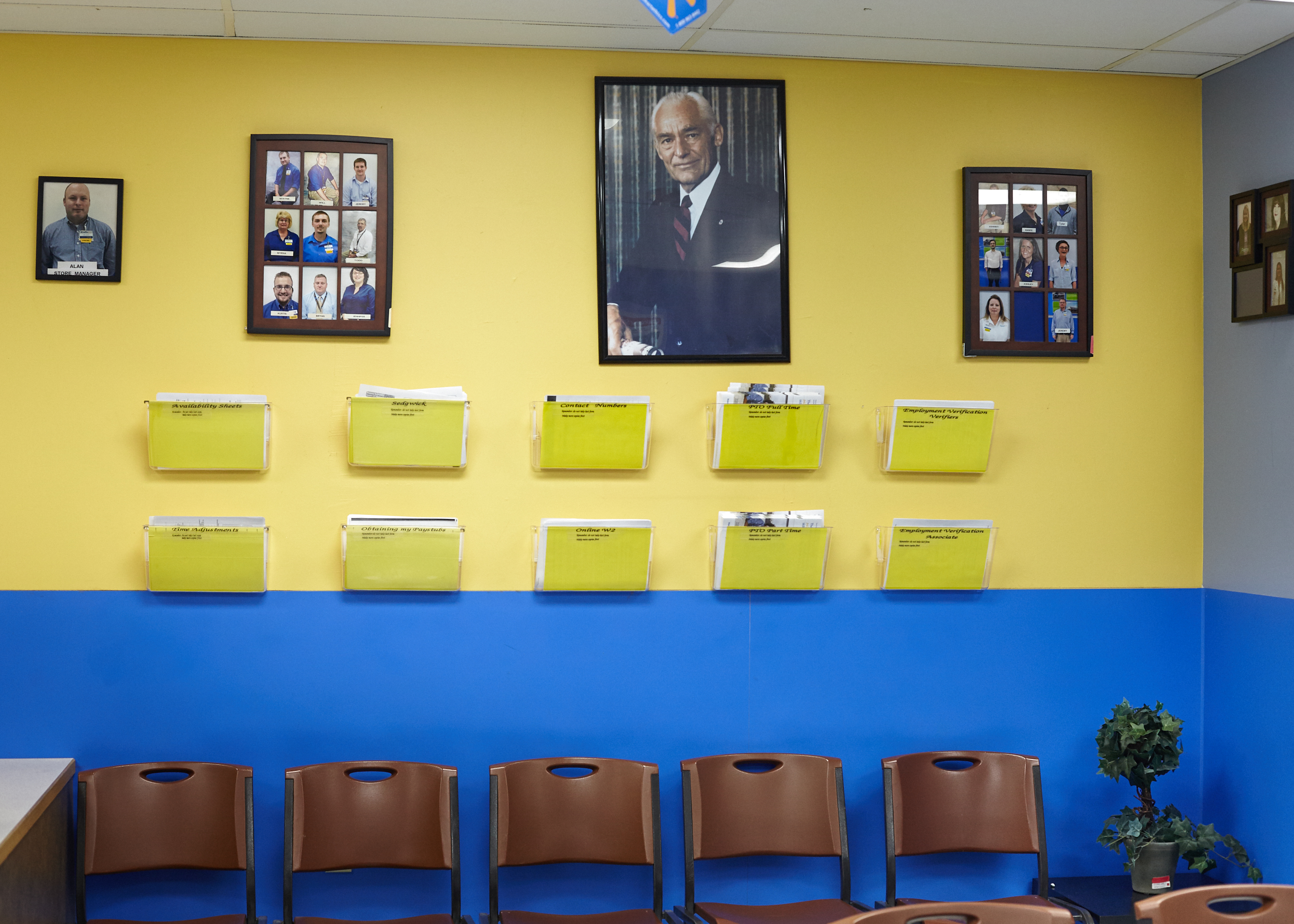 The project’s title comes courtesy of founder Sam Walton, who wrote of how they were “no limit” to what “plain ordinary working people” could accomplish when given the opportunity. It’s a sentiment that’s interrogated in the work, through both the images and the subsequent interviews he conducted. In its early days, that altruism remained largely sheltered; but as the company grew, Kraus discovered, benefits and incentives (such as profit sharing) began to dry up In that sense, the Walmart narrative is entangled with the American one.
“Sam Walton wrote an autobiography entitled Made in America which elaborated on his story of starting Walmart and what early habits and philosophies made him so successful. At it’s best it’s a story of frugality and pulling oneself out of an impoverished place. At its worst, it’s suspiciously nostalgic and slick. I think those two aspects make its history complex – and perfectly American.”


 Learn more about Plain Ordinary Working People, and see more of Daniel Kraus’ work, on his official website.
Enjoyed this article? Like Huck on Facebook or follow us on Twitter.
You might like

On the set of ‘La Bamba’, lost Latino legend Ritchie Valens’s biopic
The overnight rockstar — The Chicano rock & roll star exploded overnight in the late ’50s, but just as quickly he was gone, killed in a plane crash along with Buddy Holly. An ’80s biopic saw him immortalised on the big screen, which photographer Merrick Morton captured behind the scenes.
Written by: Miss Rosen

Louis Theroux’s ‘Manosphere’ shows men aren’t the problem, platforms are
No Ws for Good Men — The journalist’s new documentary sees him dive headfirst into the toxicities and machinations of the male influencer economy. But when young creators are monetarily incentivised to make more and more outrageous content, who really is to blame?
Written by: Emma Garland

In the 1960s, African photographers recaptured their own image
Ideas of Africa — An exhibition at the Museum of Modern Art explores the 20th century’s most important lensers, including Seydou Keïta, Malick Sidibé and Kwame Brathwaite, and their impact on challenging dominant European narratives.
Written by: Miss Rosen

Reynaldo Rivera’s intimate portrait of queer Latino love
Propiedad Privada — Growing up during the AIDS pandemic, the photographer entered a world where his love was not only taboo, but dangerous. His new monograph presents inward-looking shots made over four decades, which reclaim the power of desire.
Written by: Miss Rosen

In photos: The newsagents keeping print alive
Save the stands — With Huck 83 hitting shelves around the world, we met a few people who continue to stock print magazines, defying an enduringly tough climate for physical media and the high street.
Written by: Ella Glossop

Inside Bombay Beach, California’s ‘Rotting Riviera’
Man-made decay — The Salton Sea was created by accident after a failed attempt to divert the Colorado River in the early 20th century. Jack Burke reports from its post-apocalyptic shores, where DIY art and ecological collapse meet.
Written by: Jack Burke


