Shooting the Graffiti Trucks of Paris
- Text by Dr. Oli Mould
- Photography by Marc Vallée

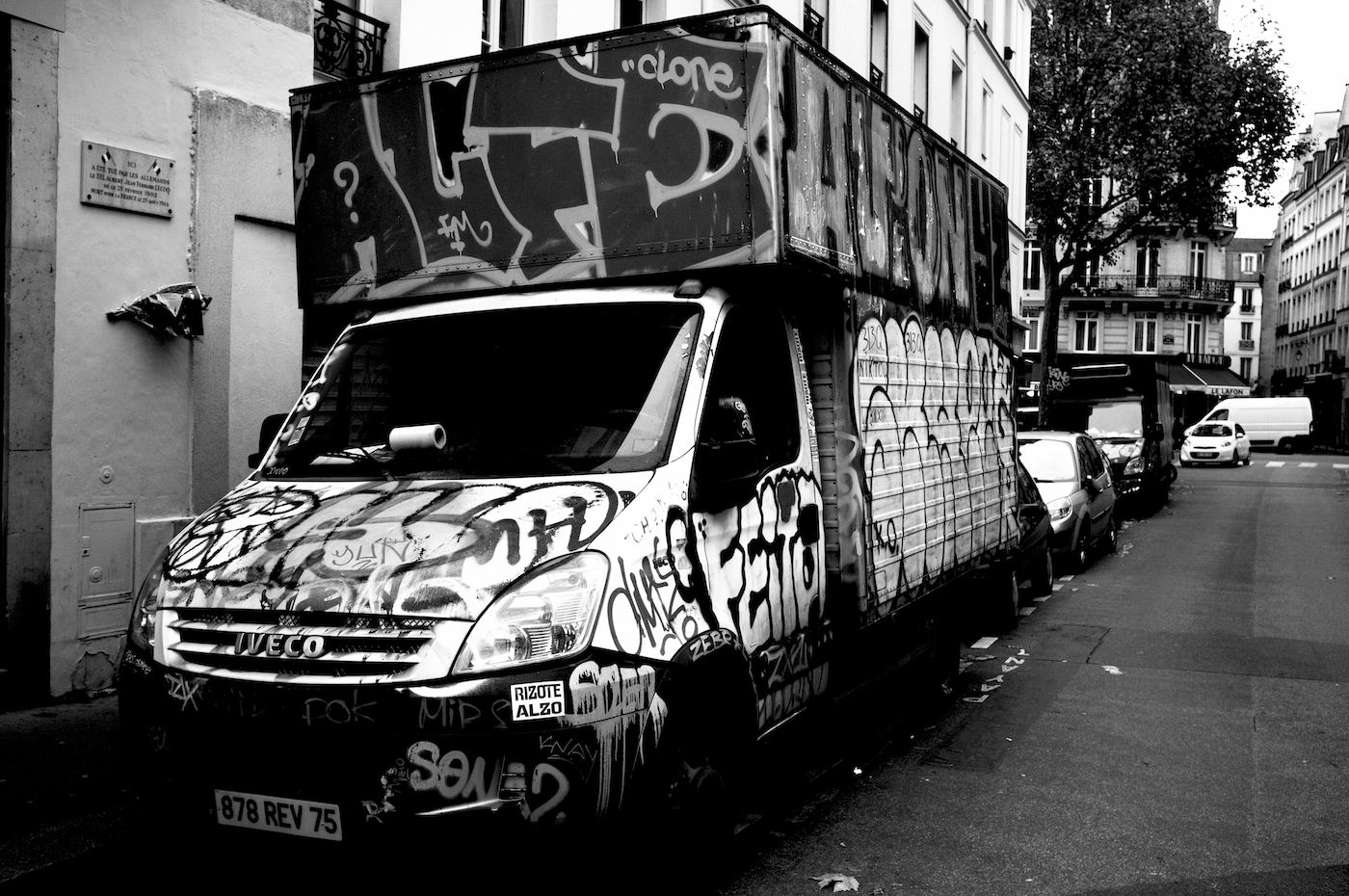
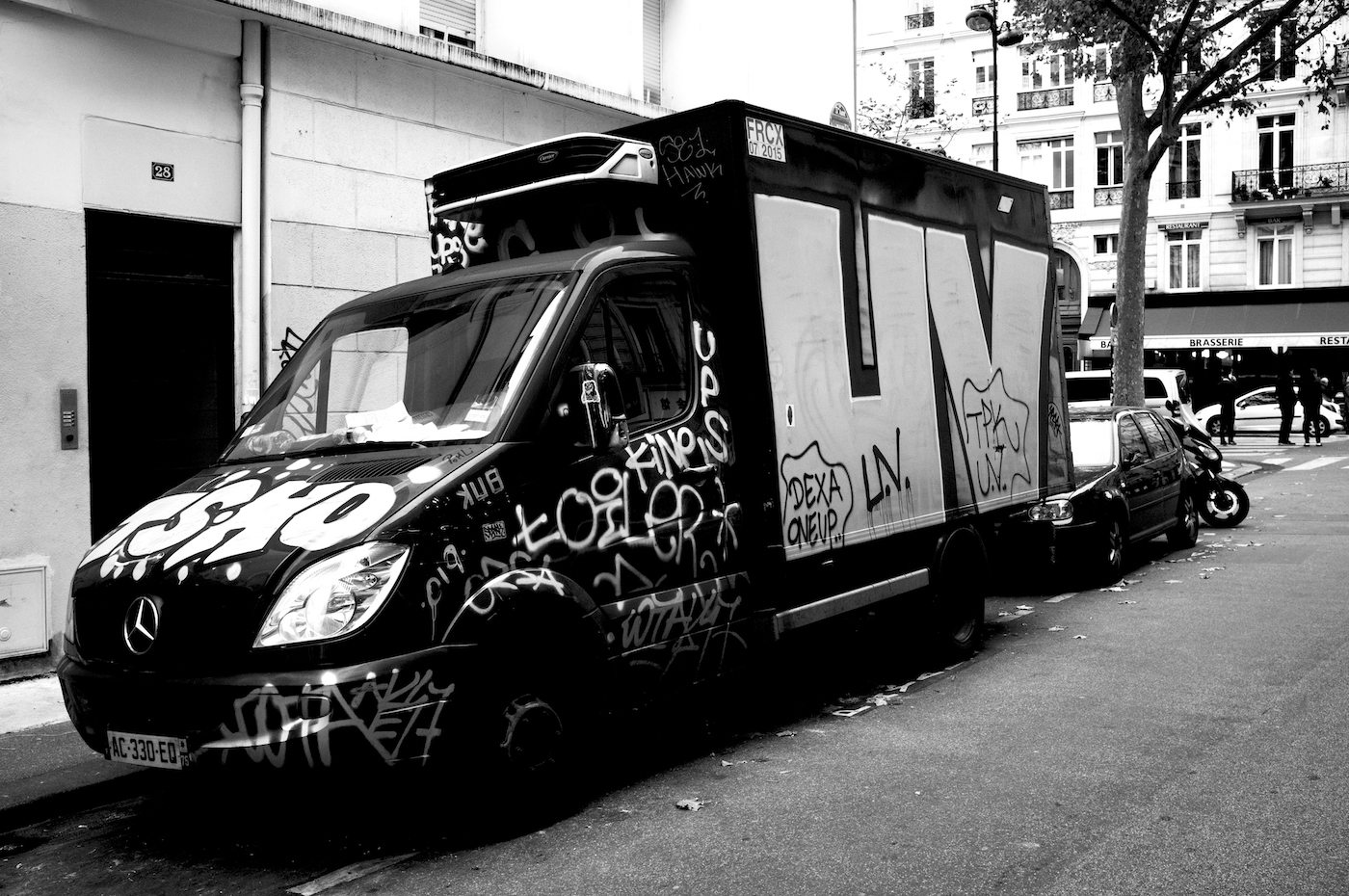
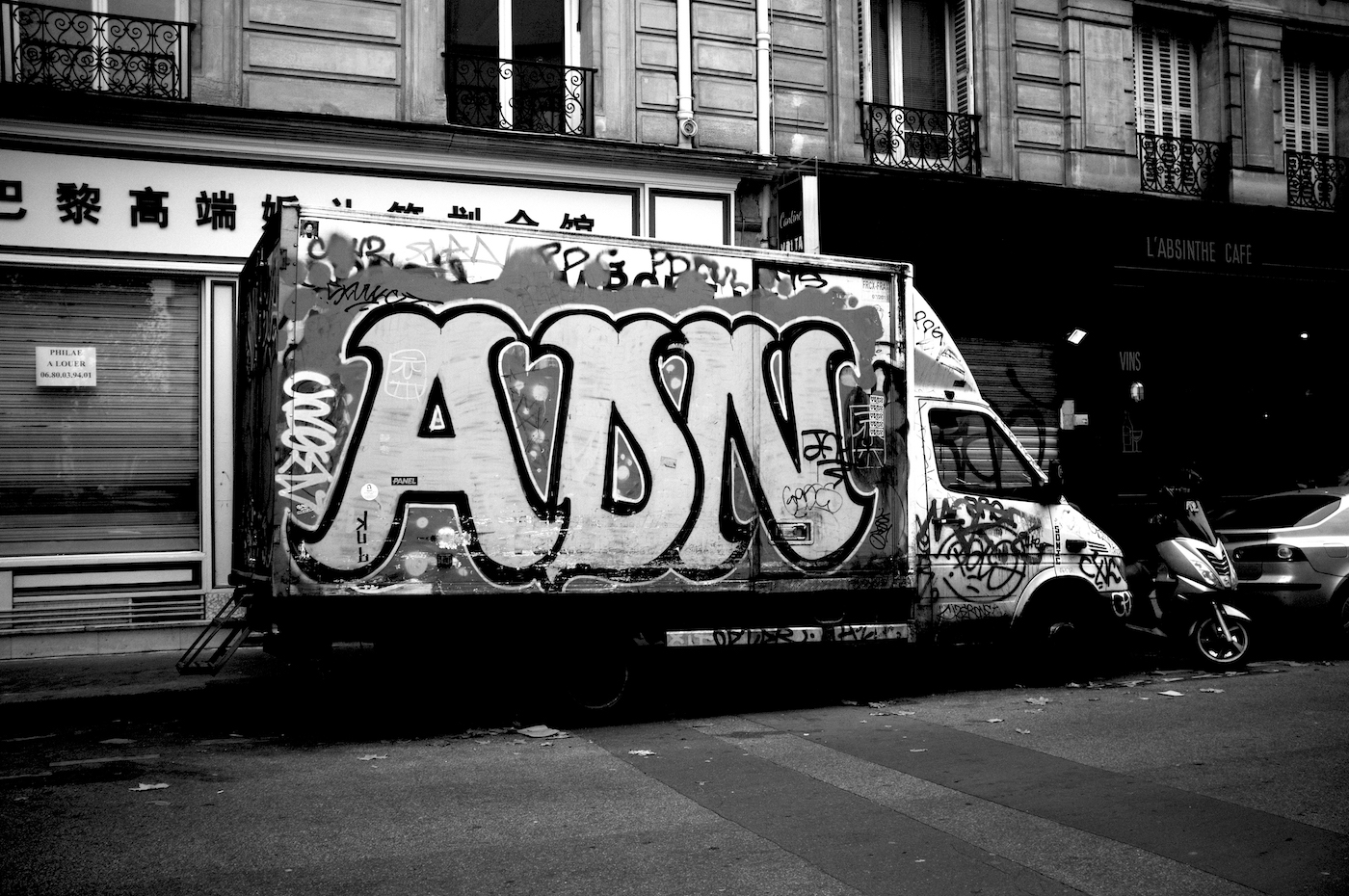
The modern day metropolis is so often pictured as smooth, glossy, fluid, clean and mobile. In high-end time lapse films, airline magazine spreads and endless commercials, the city is pictured as a place where you can move friction-free. Of course, this smooth mobility is only achievable by those rich enough to be able to afford it. Urban infrastructures are elite spaces, and so like the static spaces of the neoliberal city, they attract subversive re-appropriation.
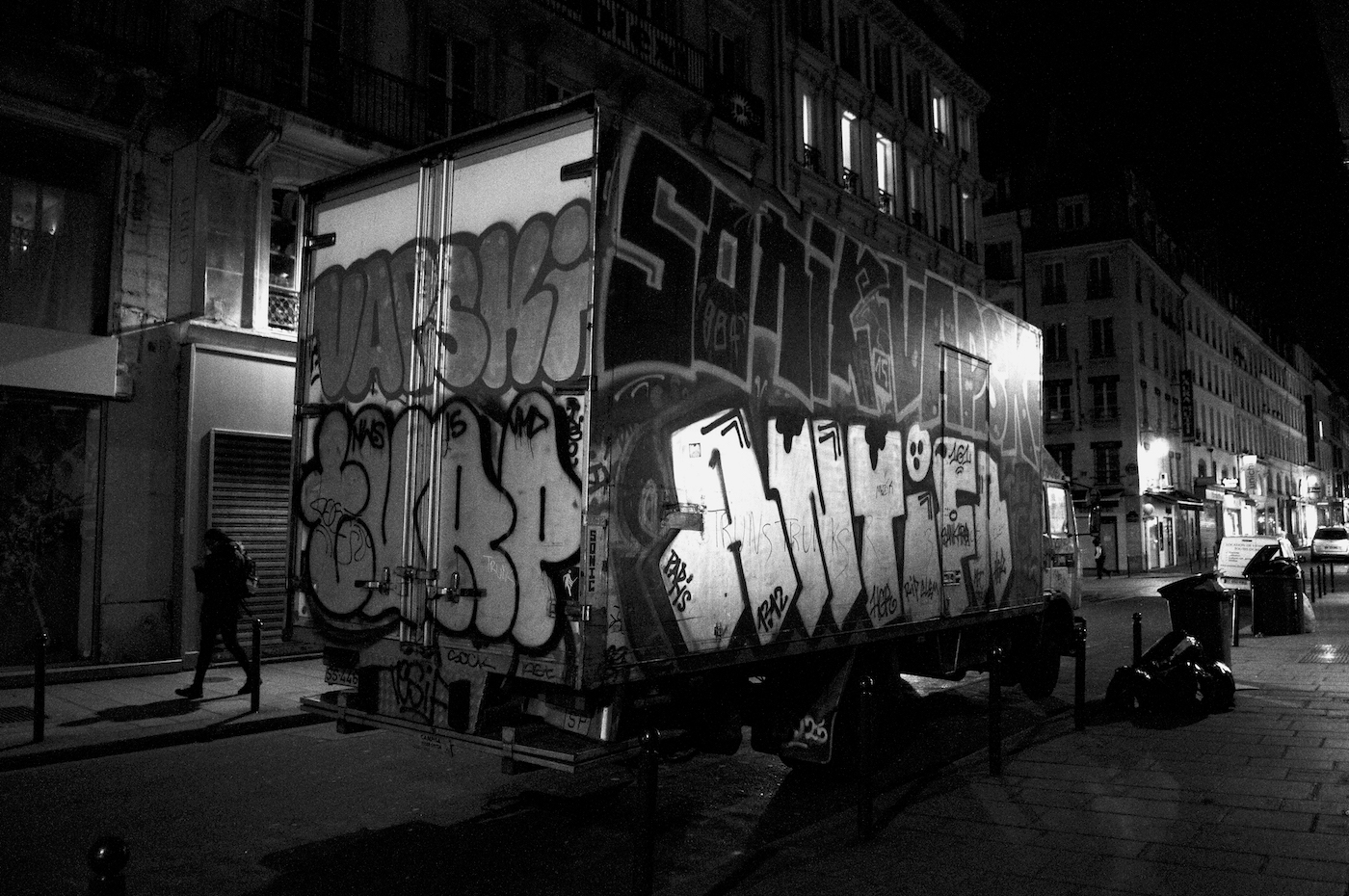
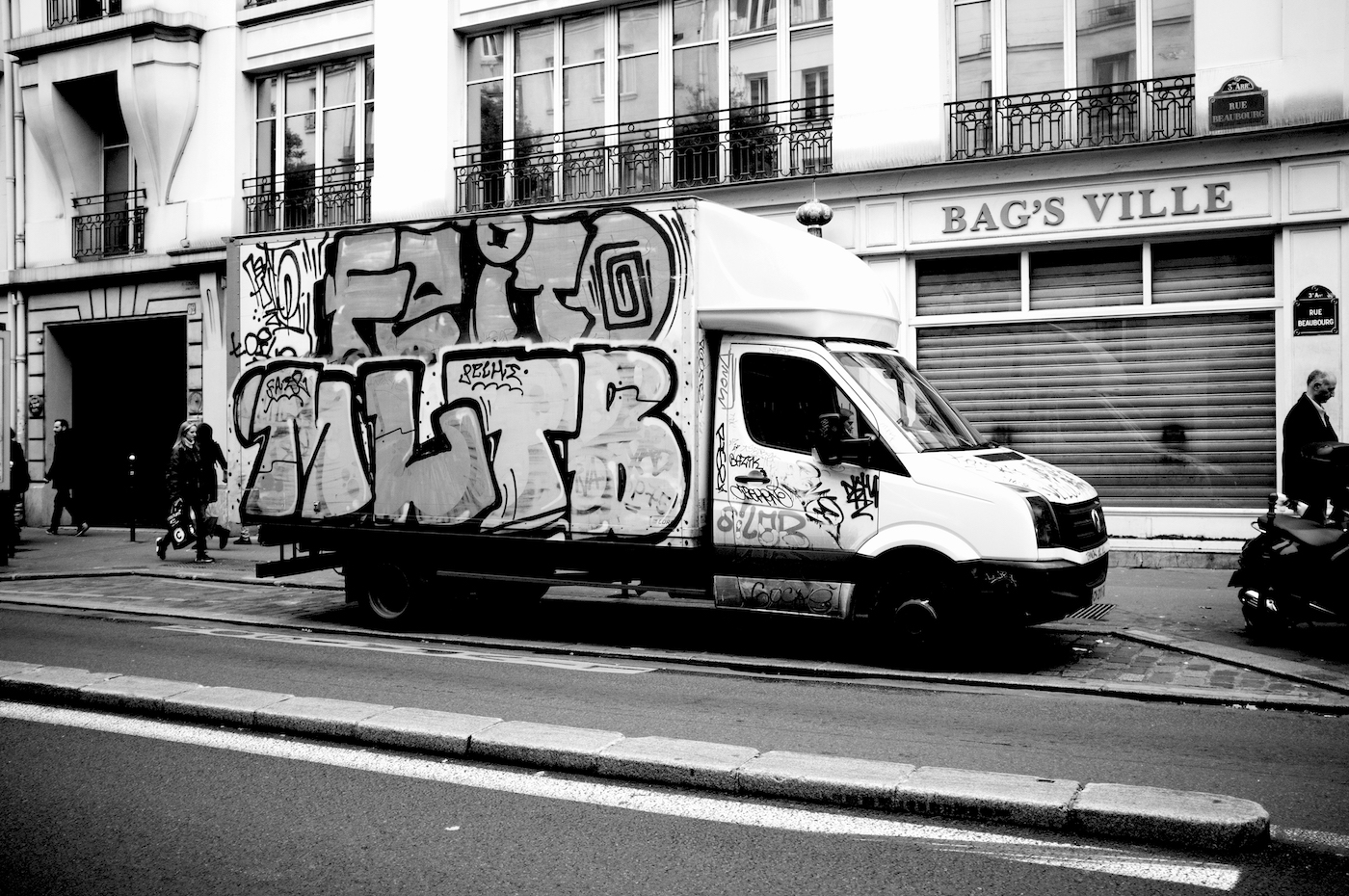
The pictures here highlight how artists have brought the creative activism of subversive graffiti into (or onto) these commercialised infrastructures of urban mobility. As trucks and vans move consumable goods of the elite urban economy around the city, they carry with them the viruses of activism. Like the New York subway trains in the 1970s, the graffiti trucks of Paris are a mobile gallery of graffiti and its affront to the sterile spaces of urban commodity movement.
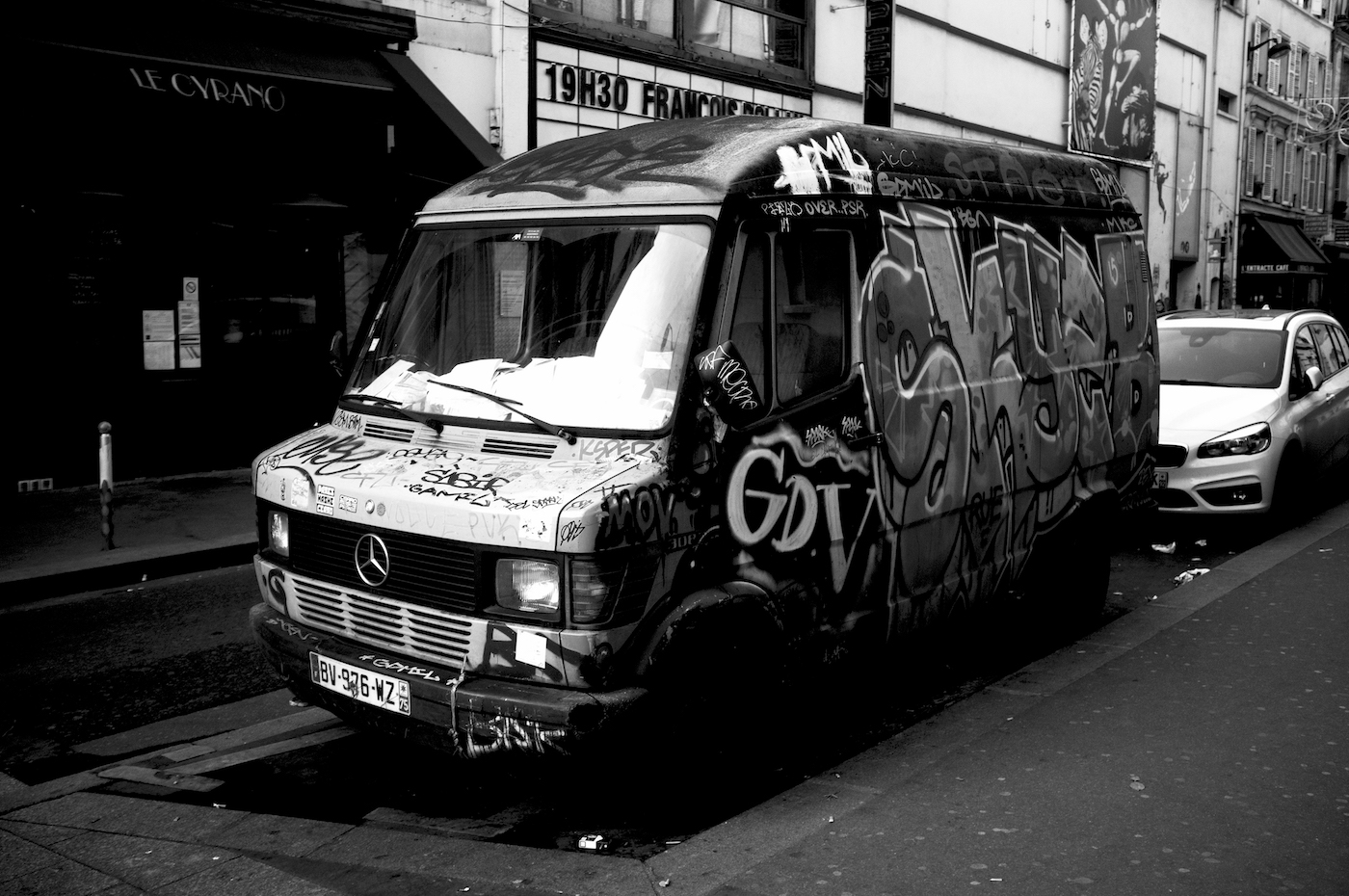
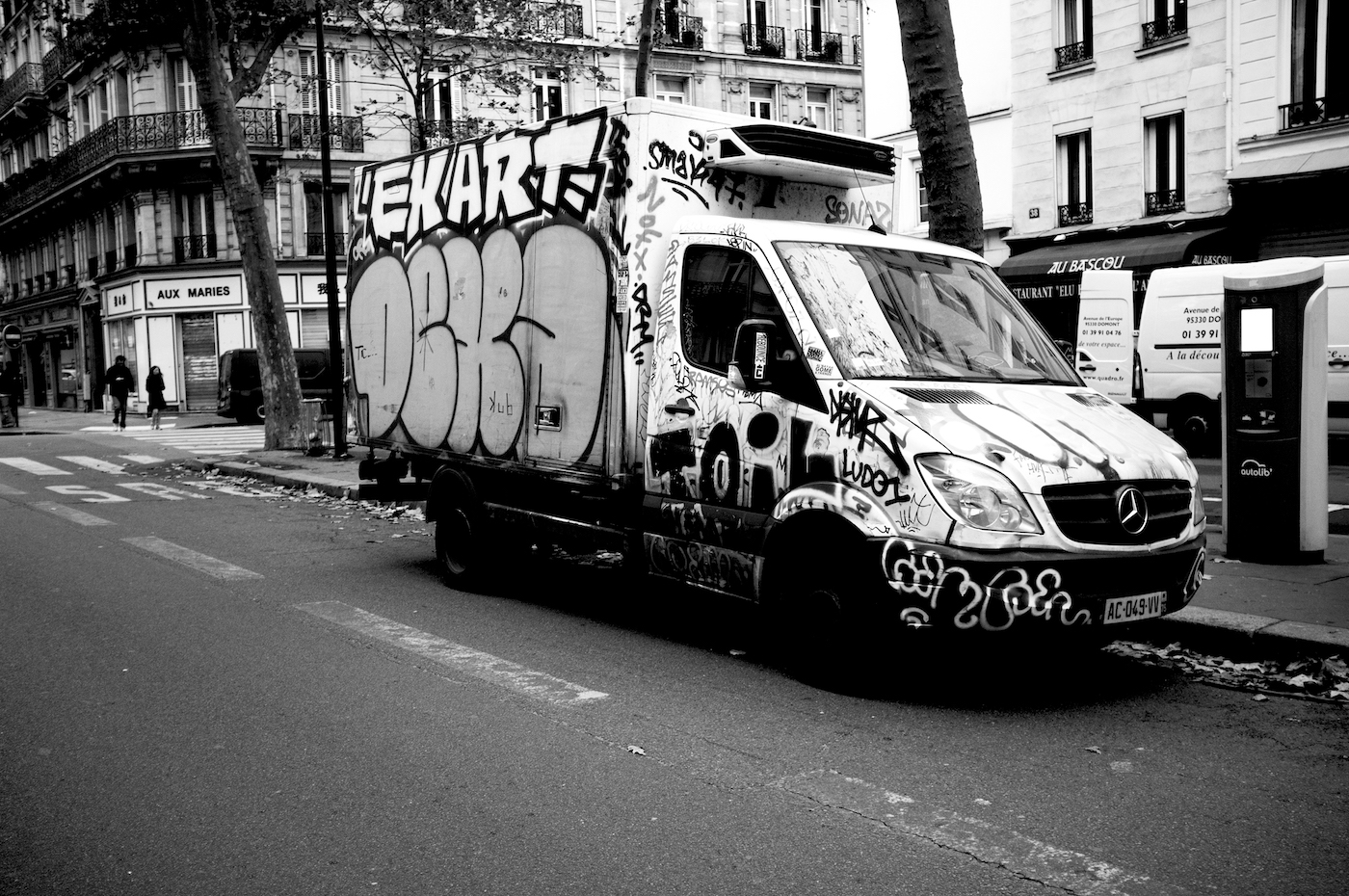
Graffiti on walls and static spots, as much as they are reclaiming the right to the city, under the rubric of urban neoliberal logics will become ‘no-go’ areas; places that are fiercely marginalised by agents of real estate capital. But graffiti trucks parade the subversive reclamation of space throughout the city, bringing the political act of graffiti to the people.
Marc Vallée is a London-based documentary photographer whose work explores the tension between public and private space in the context of contemporary youth culture. Marc’s pictures, self-published photography zines and photobooks have been published and exhibited worldwide. Grab a copy of The Graffiti Trucks of Paris zine.
Enjoyed this article? Like Huck on Facebook or follow us on Twitter.
You might like

Reynaldo Rivera’s intimate portrait of queer Latino love
Propiedad Privada — Growing up during the AIDS pandemic, the photographer entered a world where his love was not only taboo, but dangerous. His new monograph presents inward-looking shots made over four decades, which reclaim the power of desire.
Written by: Miss Rosen

In photos: The newsagents keeping print alive
Save the stands — With Huck 83 hitting shelves around the world, we met a few people who continue to stock print magazines, defying an enduringly tough climate for physical media and the high street.
Written by: Ella Glossop

The quiet, introspective delight of Finland’s car cruising scene
Pilluralli — In the country’s small towns and rural areas, young people meet up to drive and hang out with their friends. Jussi Puikkonen spent five years photographing its idiosyncratic pace.
Written by: Josh Jones

The last days of St Agnes Place, London’s longest ever running squat
Off the grid — Photographer Janine Wiedel spent four years documenting the people of the Kennington squat, who for decades made a forgotten row of terraced houses a home.
Written by: Isaac Muk

How Japan revolutionised art & photography in the ’60s and ’70s
From Angura to Provoke — A new photobook chronicles the radical avant-garde scene of the postwar period, whose subversion of the medium of image making remains shocking and groundbreaking to this day.
Written by: Miss Rosen

Artifaxing: “We’ve become so addicted to these supercomputers in our hands”
Framing the future — Predominantly publishing on Instagram and X, the account is one of social media’s most prominent archiving pages. We caught up with the mysterious figure behind it to chat about the internet’s past, present and future, finding inspiration and art in the age of AI.
Written by: Isaac Muk


