Shooting the Graffiti Trucks of Paris
- Text by Dr. Oli Mould
- Photography by Marc Vallée

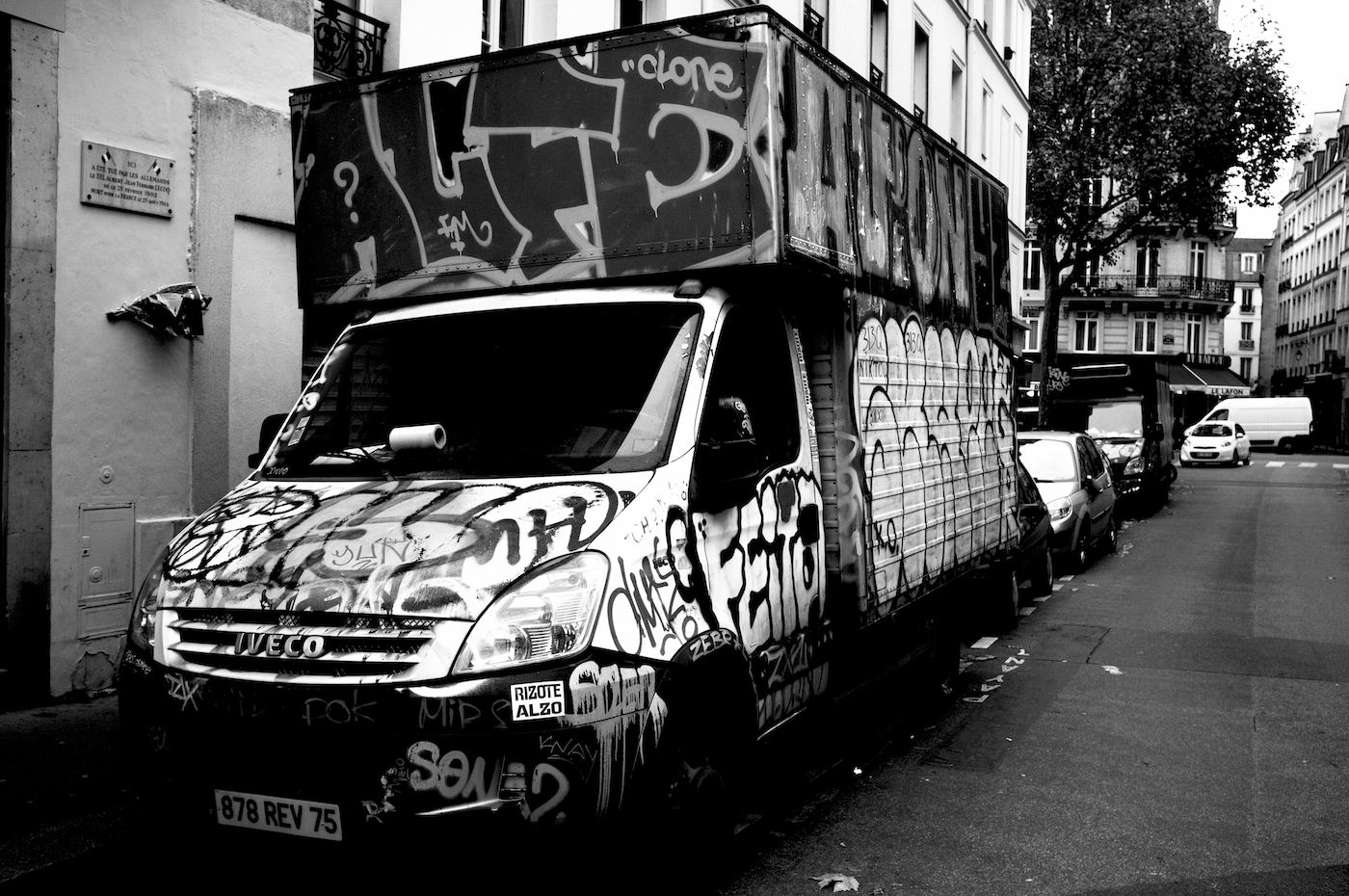
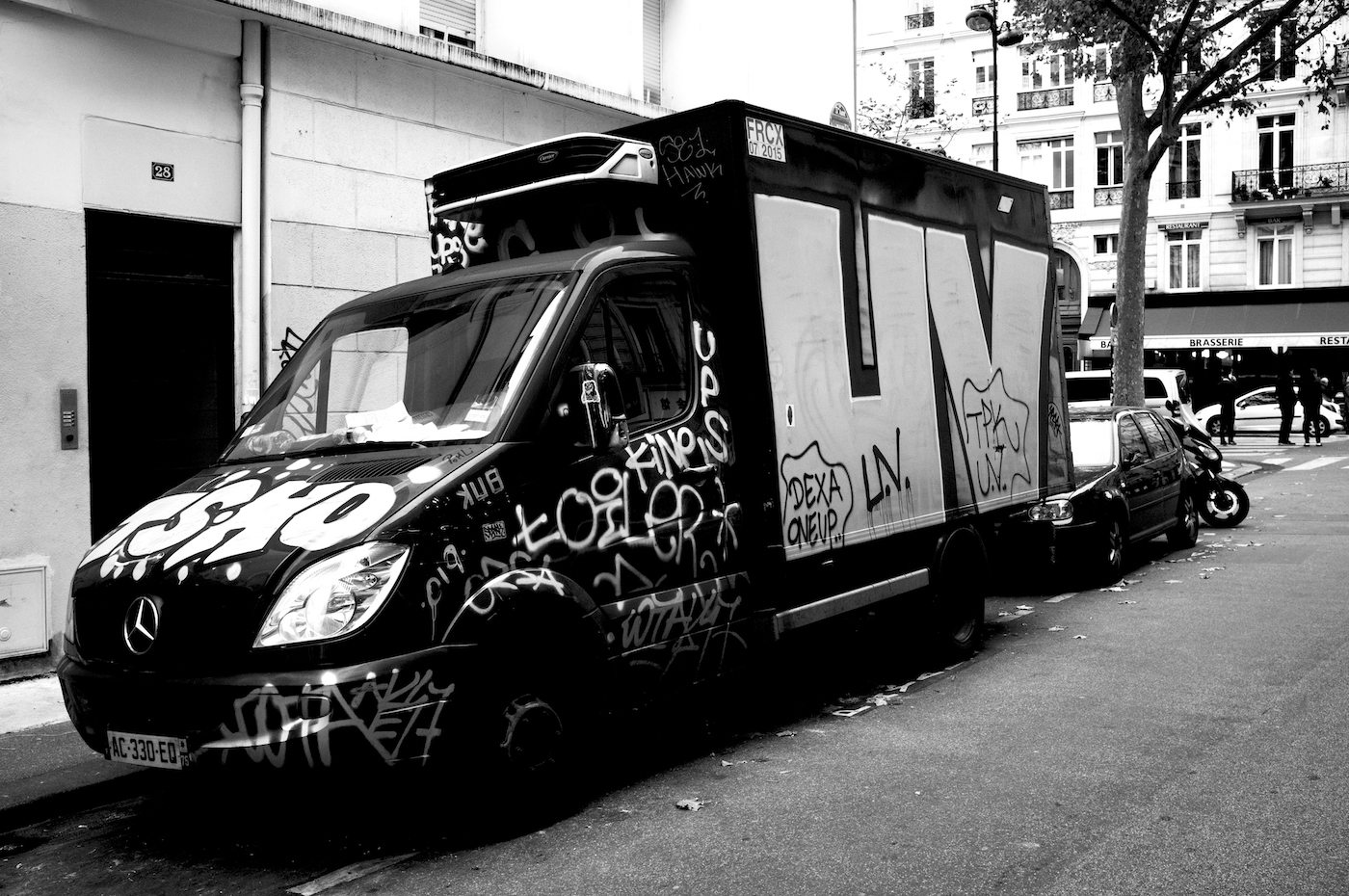
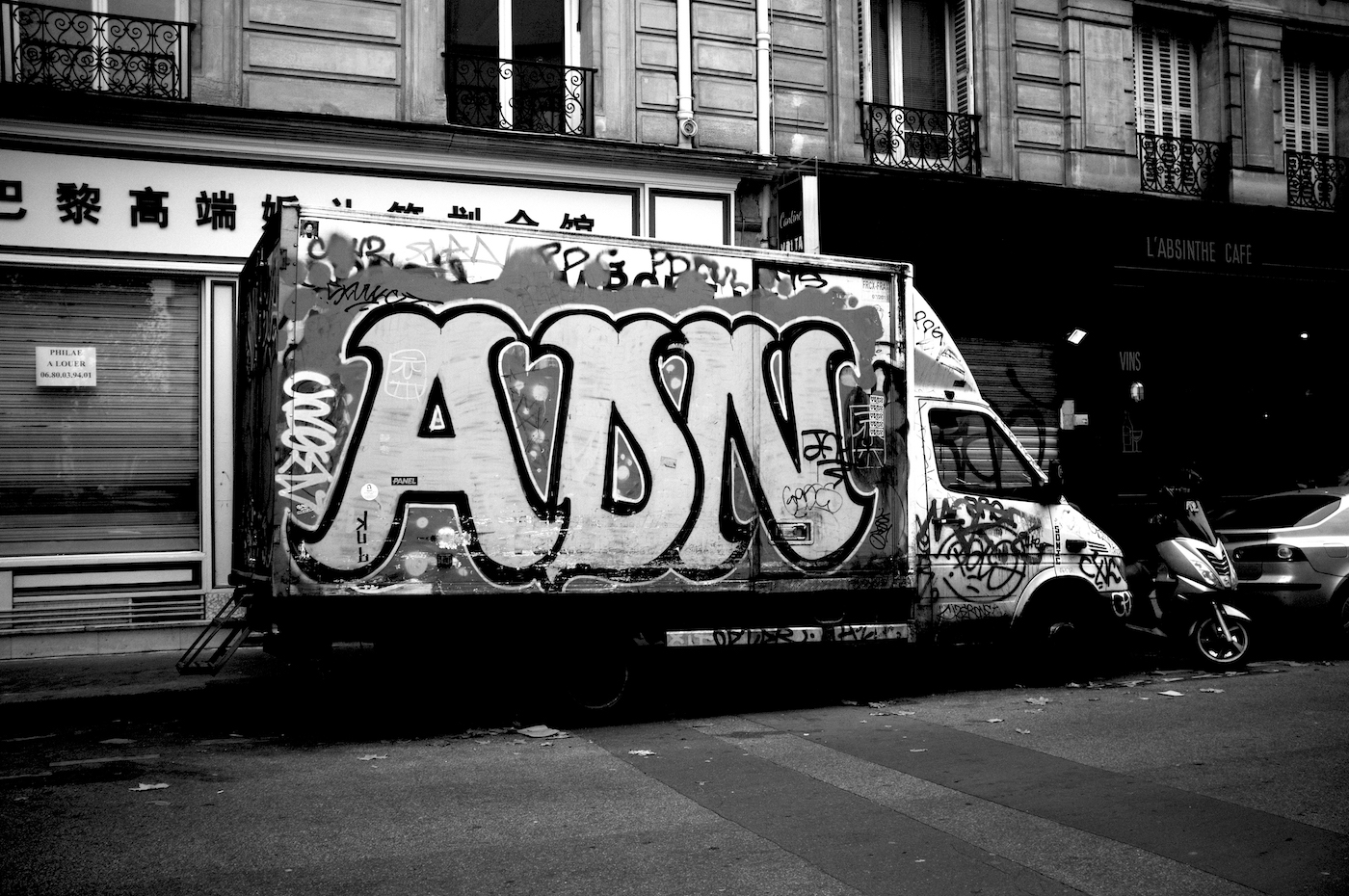
The modern day metropolis is so often pictured as smooth, glossy, fluid, clean and mobile. In high-end time lapse films, airline magazine spreads and endless commercials, the city is pictured as a place where you can move friction-free. Of course, this smooth mobility is only achievable by those rich enough to be able to afford it. Urban infrastructures are elite spaces, and so like the static spaces of the neoliberal city, they attract subversive re-appropriation.
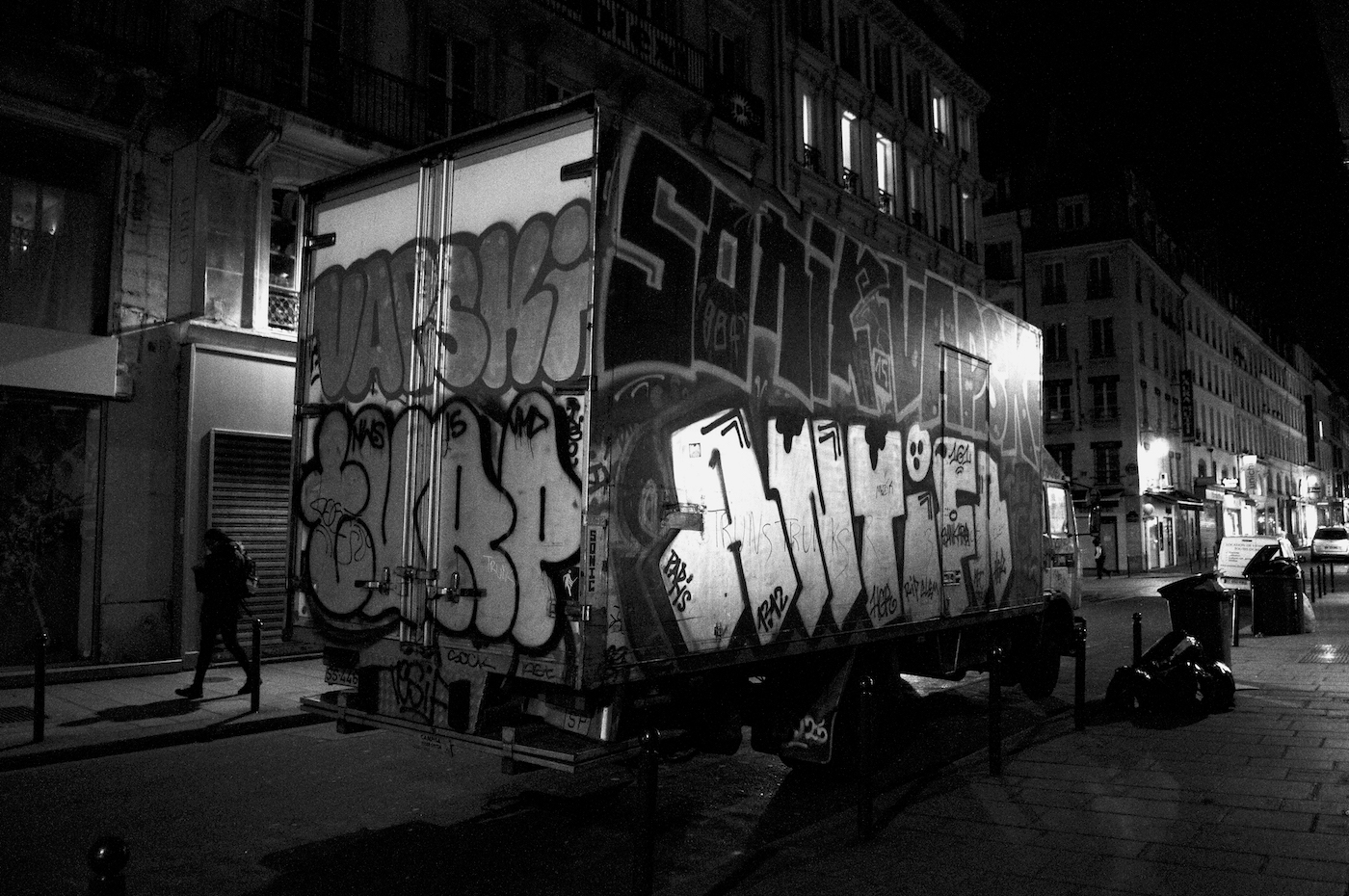
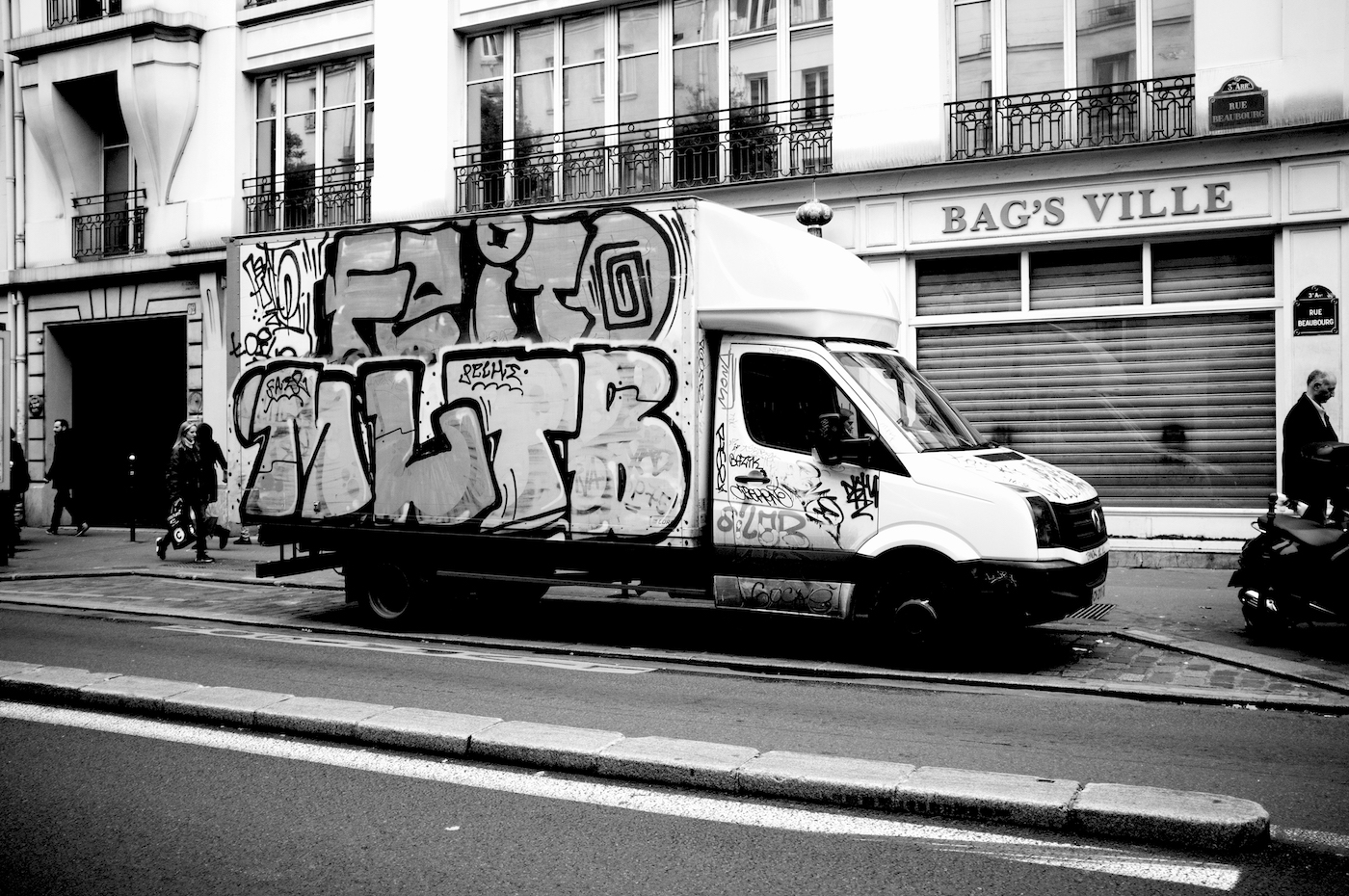
The pictures here highlight how artists have brought the creative activism of subversive graffiti into (or onto) these commercialised infrastructures of urban mobility. As trucks and vans move consumable goods of the elite urban economy around the city, they carry with them the viruses of activism. Like the New York subway trains in the 1970s, the graffiti trucks of Paris are a mobile gallery of graffiti and its affront to the sterile spaces of urban commodity movement.
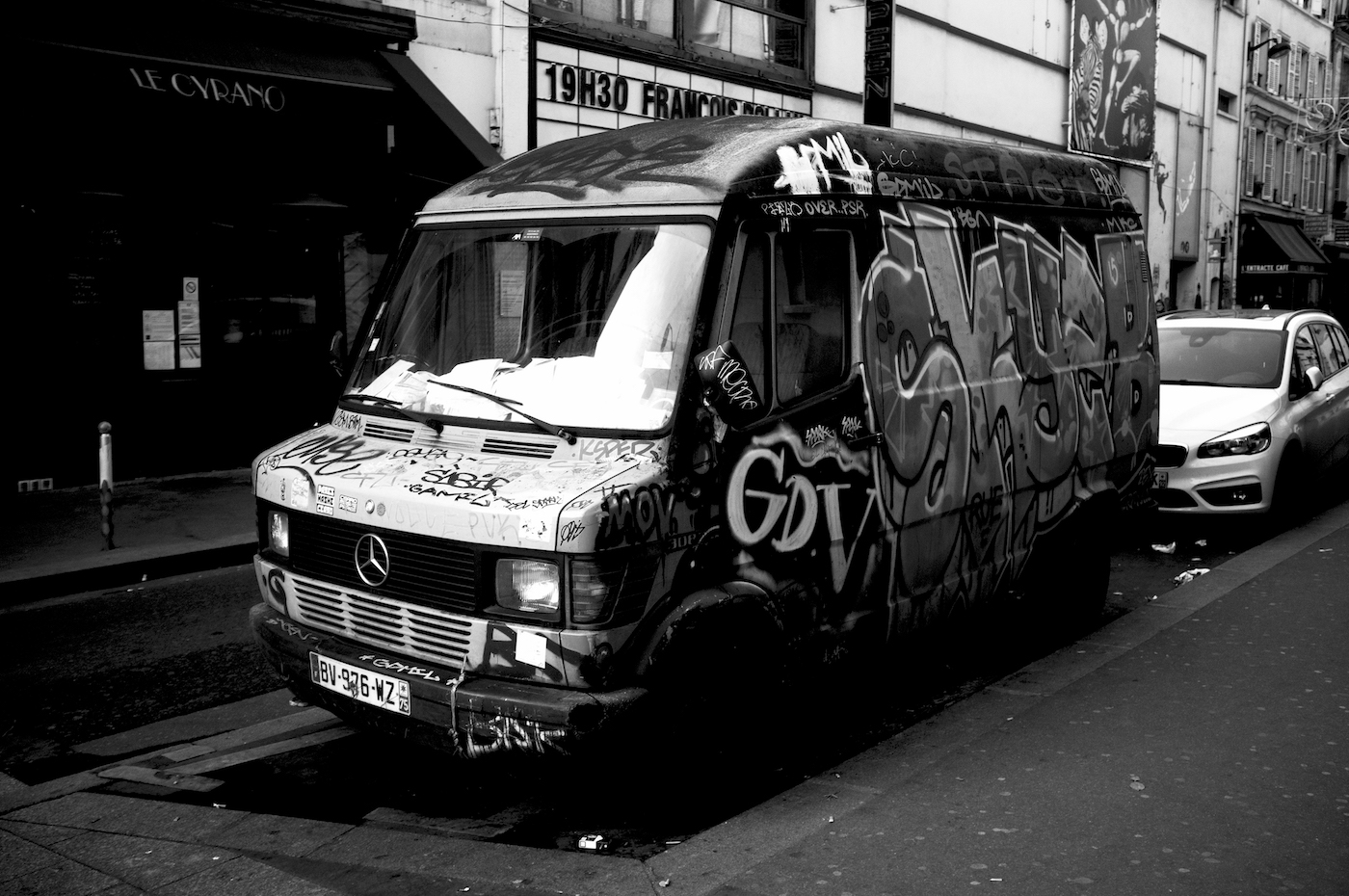
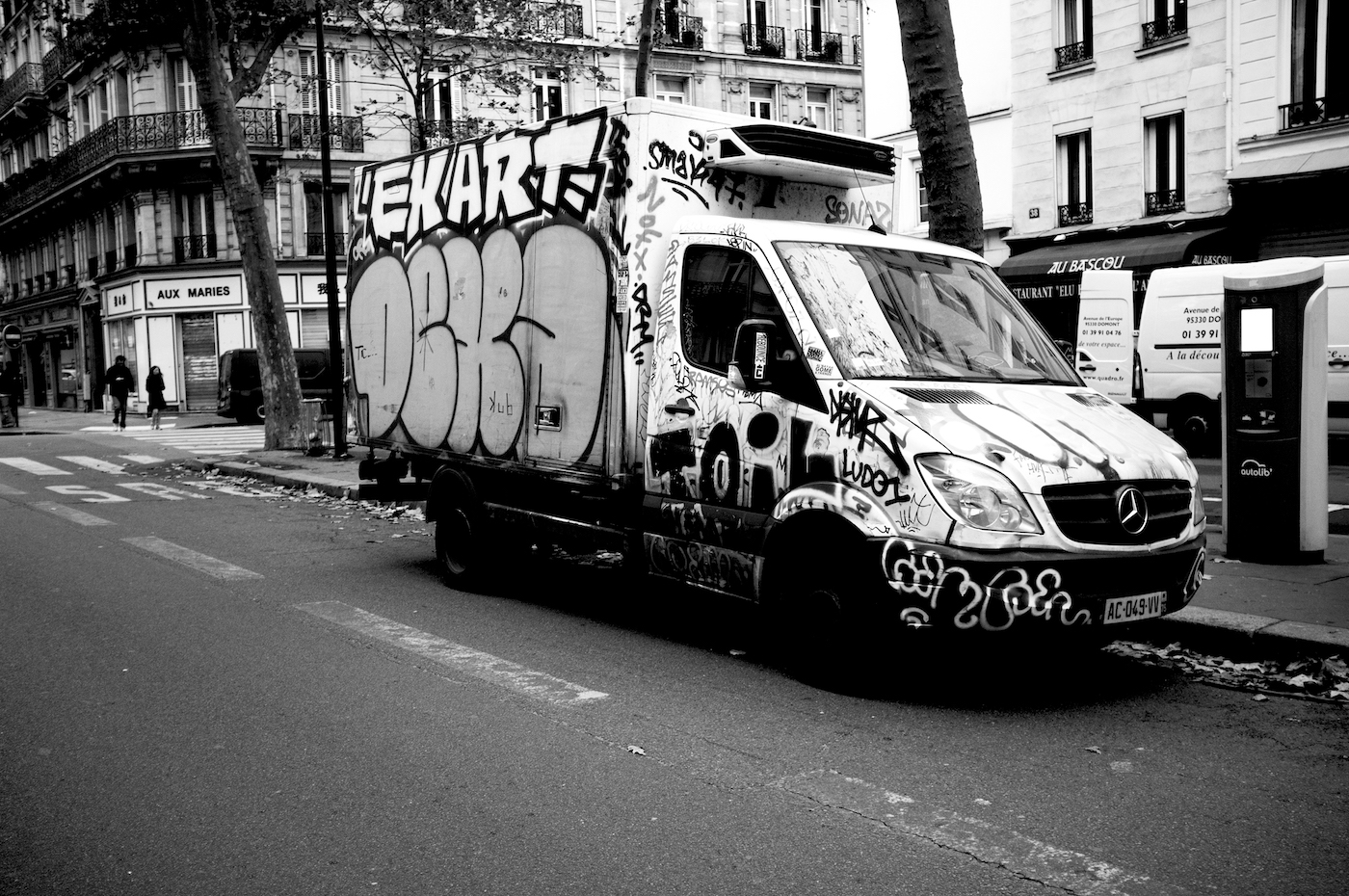
Graffiti on walls and static spots, as much as they are reclaiming the right to the city, under the rubric of urban neoliberal logics will become ‘no-go’ areas; places that are fiercely marginalised by agents of real estate capital. But graffiti trucks parade the subversive reclamation of space throughout the city, bringing the political act of graffiti to the people.
Marc Vallée is a London-based documentary photographer whose work explores the tension between public and private space in the context of contemporary youth culture. Marc’s pictures, self-published photography zines and photobooks have been published and exhibited worldwide. Grab a copy of The Graffiti Trucks of Paris zine.
Enjoyed this article? Like Huck on Facebook or follow us on Twitter.
You might like

Photographing America’s 20th century rebels
Rebels With a Cause — A new monograph looks back at Jean-Pierre Laffont’s extensive archive documenting counterculture, art, activism and more, shaping the country as it is today.
Written by: Isaac Muk

A chaotic portrait of an ’80s American farming family
Holy Cow! — Melonie Bennett grew up on a farm in Maine in the ’80s, and documented her family’s idiosyncratic daily life. She presents those humorous, everyday memories in a new exhibition and photobook.
Written by: Miss Rosen

Exploring girlhood and land ancestry in Sudan’s cotton fields
Cotton Queen – A new feature debut from filmmaker Suzannah Mirghani explores the legacy of colonialism and the fight for self-determination through the tender eyes of a teenage girl.
Written by: Roxana Diba

Portraits of gay bears through a rooftop hatch
Big Boys On My Roof™ — Growing up, Anthony Stockdale struggled with his love for bigger men. His new photo series celebrates the bear community.
Written by: Anthony Stockdale

In photos: Lives of solitude at the world’s edge
Coirón — Pie Aerts’s new photobook documents years spent in close quarters with puesteros in Patagonia – a group of aging gauchos who live almost completely isolated existences.
Written by: Isaac Muk

The raw, fledgling intimacy of Peter Hujar’s contact sheets
Hujar:Contact — A new photobook highlights the process of the legendary queer photographer, and his process of growing into the artist he ultimately became.
Written by: Miss Rosen


