Half a century of photography with Joel Meyerowitz
- Text by Miss Rosen
- Photography by Joel Meyerowitz

At 80 years old, American photographer Joel Meyerowitz is still going strong, forging a singular path that has taken him around the globe several times over. Hailing from East Bronx, Meyerowitz began his career as a street photographer, capturing the curious, quirky moments that reveal themselves as quickly as they disappear.
Today, Meyerowitz now finds himself living on a farm in Tuscany, amassing an archive of 50,000 photographs in just about every genre imaginable. “How come I found myself here, living in Italy and making still lifes when I am a street photographer Jew form New York City? What am I doing here?” Meyerowitz laughs.
He set out to answer this question in Where I Find Myself (Laurence King), a career retrospective presented in reverse chronological order. Here, Meyerowitz takes us on a magical journey from the present into the past, guiding us through the many chapters of his well-lived life.

The Caldwells, Truro, Massachusetts, 1976
Rather than make a collection of greatest hits, he set out to show what he describes as “the twists and turns, the failures and the cul de sacs, all the things that happened along the way: the story of a life in photography. When you look back through all of the different passages in your life, they all seem to line up in very interesting ways. If you start from the beginning when you are a young artist, you can’t see what your path is going to be.”
Where I Find Myself reveals Meyerowitz’s path from still lifes, landscapes, cityscapes, and scenes of Ground Zero immediately following 9/11 to portraits, road trips, street photographs, and a body of colour work long ahead of most anyone else.

New York City, 1974
“I love this medium,” the photographer exudes. “Everything I know about the world around me and myself has really come from serving it.” Meyerowitz got his start as a printer and a graduate student in art history at a time when most of his friends were action painters and Abstract Expressionists.
“When I said I was going to be a photographer, they looked [at me] like I was crazy,” he remembers. “We were the untouchables because we used a machine, but it didn’t matter. I understood something about the risk of photographing, about time and movement, the instantaneity of things, and how it was about perception in the fraction of a second, consciousness in a fraction of a second, and these things were of incredible value to me. My innocence was to work with colour because I didn’t have a prejudice.”

New York City, 1975
The artist describes the early years of his career as “like riding the rollercoaster.”
“It was a thrilling challenging rid because the time was so open-ended because there was no commercial or celebrity fame around photography,” he recalls. “It was a free system. You did it for love of medium – and if you serve the medium the lessons come to you. It’s Zen in a way. The medium is the guru and you get the message from the medium itself.”

New York City, 1963
This message revealed itself in the physicality of the form, of the tempo and rhythm of the photographer’s hand-eye coordination. “I am very physical, I play ball, I dance, I knew how to move, and photography is about movement,” he explains.
For Meyerowitz, photography “was like a leap into a new time, space realm where you could watch the reality play in front of you like a film but you’re always looking at the high moments where the action is exquisitely told and the action lasts for a few hundredths of a second: BOOM! BOOM! BOOM! Everything was disappearing and only the camera and its perception of the moment could hold on to it.”
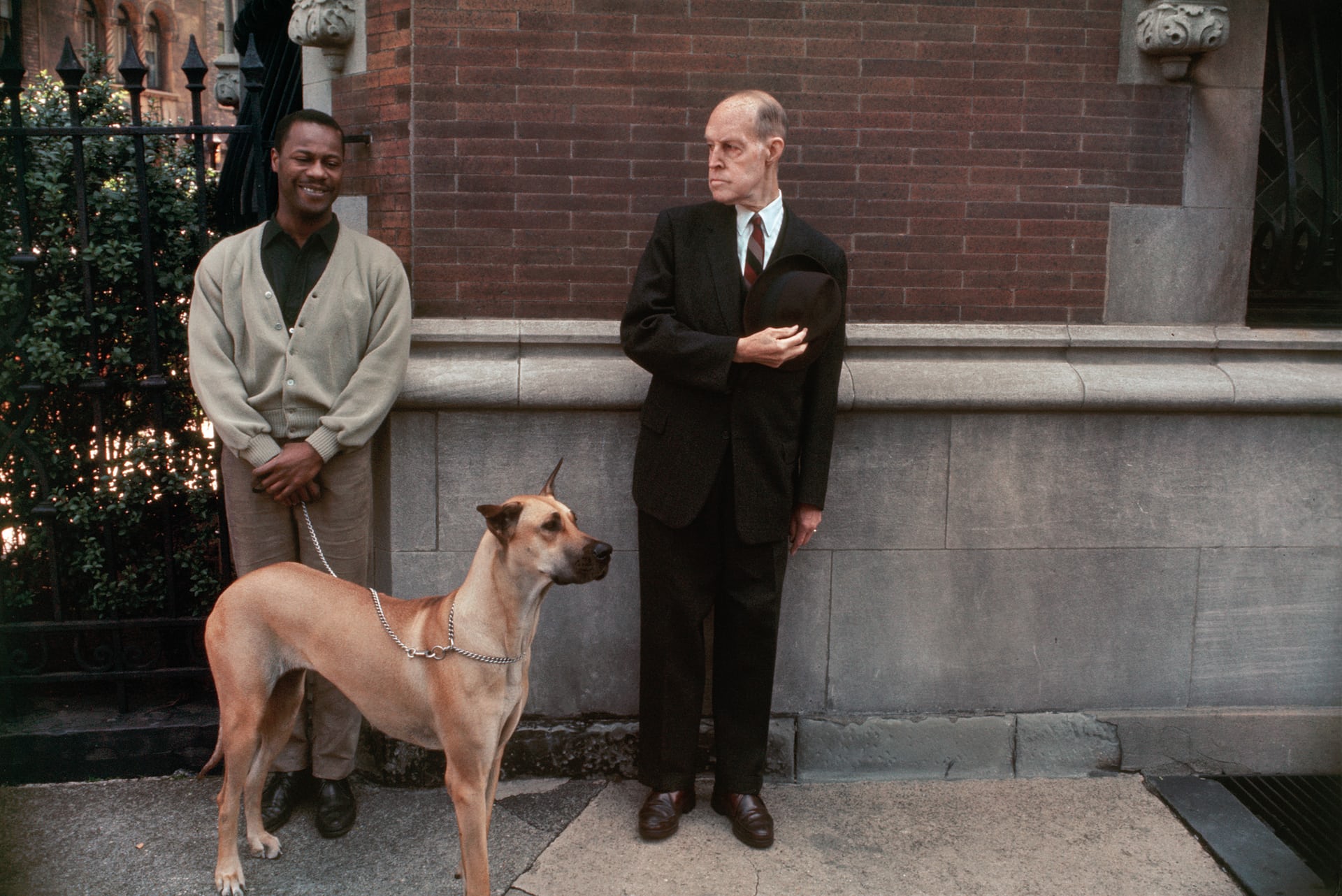
New York City, 1963

Elias, Provincetown, Massachusetts, 1981

New Jersey, 1966

New York City, 1965

New York City, 1978

New York City, 1963
Joel Meyerowtiz is currently teaching a Masters of Photography course.
Follow Miss Rosen on Twitter.
Enjoyed this article? Like Huck on Facebook or follow us on Twitter.
You might like

Nick Haymes’s intimate portrait of his family’s life
Chronograph — Over 25 years, the photographer documented his son’s lives as they grew into adults. The resulting photobook is an exploration of the passage of time, as well as the optimism of youth.
Written by: Miss Rosen

Kristina Rozhkova’s scatty, confronting portrait of captivity
Gut Feeling — The Russian artist’s 2024 arrest and subsequent detention opened her eye towards the omnipresent dynamics of power and control. Her new photobook is a stark exploration of being trapped.
Written by: Isaac Muk

UK’s first ever Latino film festival is coming to London
LoLaFF — Taking place between October 2-6, it will feature 55 filmmakers from Latin America, with an opening night at the Barbican.
Written by: Isaac Muk

Shawn Walker’s layered, psychedelic vision of Harlem’s streets
From BeBop to Illusion — Using glass as a means to illuminate the city’s different layers, the longtime photographer and filmmaker is publishing his first monograph at the age of 86.
Written by: Miss Rosen

In photos: The enduring resistance of Notting Hill Carnival
Carnival of Resistance — A new photobook by Wayne Campbell and Wayne Crichlow reflects on the protest beginnings of Europe’s biggest street festival, along with the traditions keeping its original spirit alive today.
Written by: Isaac Muk

Washing strangers’ feet at Houghton Festival
Pedilavium — As part of artist Henry Krokatsis’s performance piece at the weekender, we sat down with over 30 others to clean the dusty digits of passersby, while reflecting on the power of collective ritual and human connection.
Written by: Isaac Muk


