How hip hop took over and transformed fashion
- Text by Miss Rosen

“Rap is something you do! Hip hop is something you live!” rapper KRS-One memorably said. Born in the Bronx in 1973, hip hop is not just music, dance, and art; it is a way of being in the world.
“I am a child of hip hop,” says Lee Stuart, Brand Director of Patta, a Dutch streetwear brand, who has curated the new exhibition Street Dreams: How Hip Hop Took Over Fashion. Organised chronologically, the exhibition presents the visual legacy of hip hop through a series of 30 songs and illustrates them with the art, fashion, and photography that defined the era.
“We’re not trying to be historians,” Stuart says. “We are trying to immerse people in these images, show them and make them part of this energy.”
To select the songs, Stuart did what all heads love: he gathered his team and debated the merits of each track. He then chose corresponding work by artists including Nick Cave, Kehinde Wiley, Jamel Shabazz, Janette Beckman, Dana Lixenberg, Hank Willis Thomas, Kambui Olujimi, and Earlie Hudnall.

Untitled (Navajo Nation), 1998, 2019, Archival pigment print mounted on dibond, maple frame, museum glass, 50 x 40 cm, Dana Lixenberg, Courtesy of the artist and GRIMM Amsterdam, New York
As Street Dreams shows, hip hop has transformed fashion through customising, sampling, and remixing what was there before. From Dapper Dan’s iconic “Africanisation” of luxury brands in the 1980s to the invention on streetwear by PNB, a collective of former graffiti writers, hip hop took the fashion industry by storm.
“Streetwear is big logos, democratic pricing, all these no-brainer ideas,” Stuart says. “It’s the printed t-shirt or hoodie, a hat with logo embroidery. For these fashion houses, it’s easy to print and the margins are huge because they have this luxury tax and everyone can wear it.”
Hip hop is an inherently populist art form that comes from the streets, a nod to its DIY roots in the 1970s. While it has grown to become a billion-dollar global industry, the streets still call the shots, whether creating new music or inventing new looks.

Earlie Hudnall, Gucci Brothers, 3rd Ward, Houston, TX, 1990 Courtesy PDNB Gallery, Dallas, Texas
“In every ghetto around the world, there are people coming up with the innovations that will be worldwide trends in two years,” says Stuart. “I have seen it happen over and over and over.”
“We need to nurture these groups and see them for the power that they possess. I think that’s why I fell in love with hip hop. I didn’t have much growing up. I am the youngest of ten kids and it as just my mom raising us. I got a lot of attention from my family but money-wise, we didn’t have a lot so I had to be creative.”
Making something out of nothing is the ethos of hip hop, and it underscores why and how the culture continues to inspire, influence, and shape mainstream fashion houses. Today, Dapper Dan has a new Harlem atelier in collaboration with Gucci, while Virgil Abloh heads Louis Vuitton, a company that has collaborated with Supreme.
“This is the new normal,” Stuart says joyously. “This is what it should be.”

Florian Joahn, 2018, model Tino Kamal, styling JeanPaul Paula photo ©Florian Joahn

Janette Beckman Slick Rick, Manhattan, NYC, 1989, foto Janette Beckman Courtesy of Fahey-Klein Gallery, Los Angeles

Jamel Shabazz Young Boys, East Flatbush, Brooklyn, NYC 1981, foto Jamel Shabazz

Kehinde Wiley, Saint Amelie, 2014, 251,2 x 115,4 cm, Courtesy of Templon, Paris & Brussels

Christopher Wallace (Biggie) & Sean Combs (Puff Daddy), 1996, cover image VIBE September 1996 issue, Dana Lixenberg, Courtesy of the artist and GRIMM Amsterdam, New York
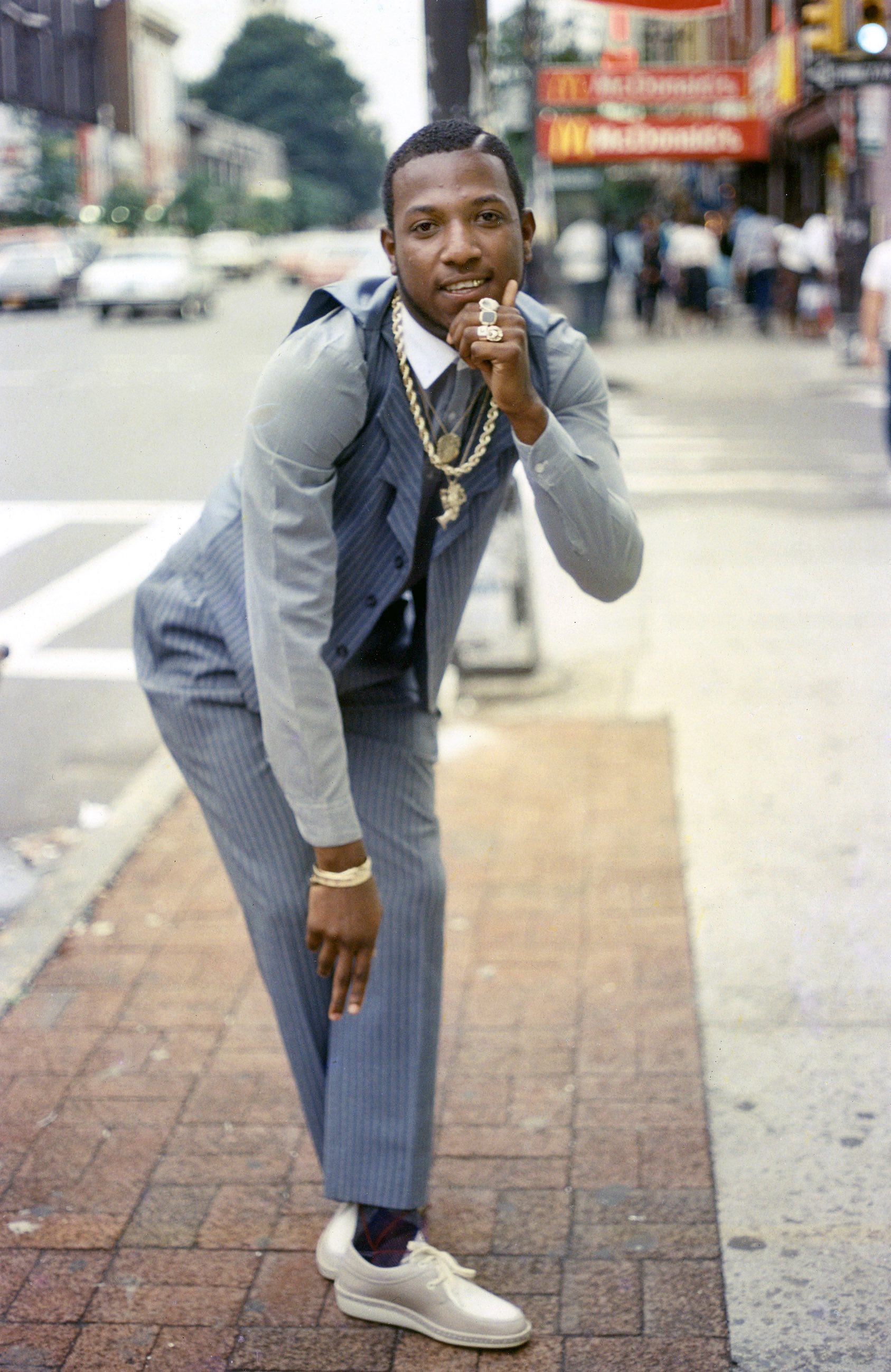
Jamel Shabazz Rude Boy, Brooklyn, NYC 1981, foto Jamel Shabazz
Street Dreams: How Hip Hop Took Over Fashion is on view ar Kunsthal Rotterdam through September 15, 2019.
Follow Miss Rosen on Twitter.
Enjoyed this article? Like Huck on Facebook or follow us on Twitter.
You might like

In the 1960s, African photographers recaptured their own image
Ideas of Africa — An exhibition at the Museum of Modern Art explores the 20th century’s most important lensers, including Seydou Keïta, Malick Sidibé and Kwame Brathwaite, and their impact on challenging dominant European narratives.
Written by: Miss Rosen

Reynaldo Rivera’s intimate portrait of queer Latino love
Propiedad Privada — Growing up during the AIDS pandemic, the photographer entered a world where his love was not only taboo, but dangerous. His new monograph presents inward-looking shots made over four decades, which reclaim the power of desire.
Written by: Miss Rosen

In photos: The newsagents keeping print alive
Save the stands — With Huck 83 hitting shelves around the world, we met a few people who continue to stock print magazines, defying an enduringly tough climate for physical media and the high street.
Written by: Ella Glossop

Inside Bombay Beach, California’s ‘Rotting Riviera’
Man-made decay — The Salton Sea was created by accident after a failed attempt to divert the Colorado River in the early 20th century. Jack Burke reports from its post-apocalyptic shores, where DIY art and ecological collapse meet.
Written by: Jack Burke

The quiet, introspective delight of Finland’s car cruising scene
Pilluralli — In the country’s small towns and rural areas, young people meet up to drive and hang out with their friends. Jussi Puikkonen spent five years photographing its idiosyncratic pace.
Written by: Josh Jones

The last days of St Agnes Place, London’s longest ever running squat
Off the grid — Photographer Janine Wiedel spent four years documenting the people of the Kennington squat, who for decades made a forgotten row of terraced houses a home.
Written by: Isaac Muk


