In photos: the glorious heyday of the Empire Roller Disco
- Text by Isaac Muk
- Photography by Patrick D. Pagnano from the book ‘Empire Roller Disco’ published by Anthology Editions

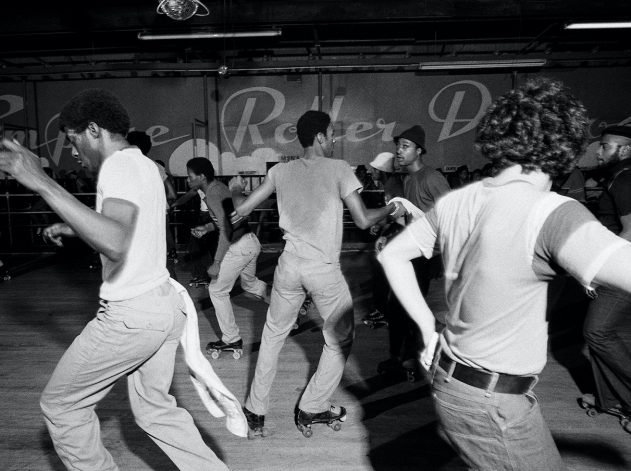
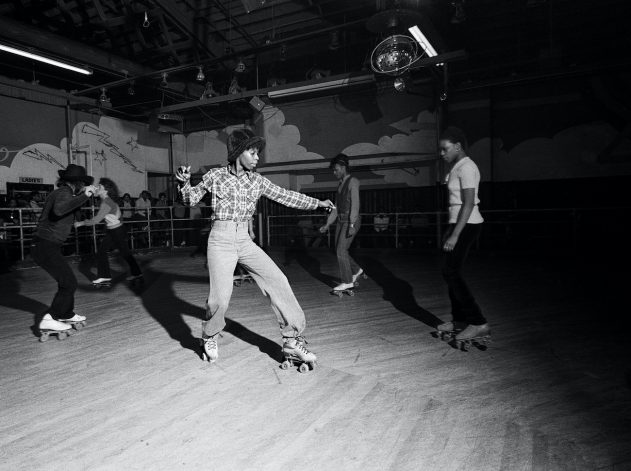
In February 1980, photographer Patrick D. Pagnano received an intriguing commission from Forbes magazine – one of the USA’s premier publications. Travelling across New York City, he was to take pictures of the Empire Roller Disco in Brooklyn – a 36,000 square foot, quad-skating heaven, where on any given weekend hundreds of fun-seekers would go to skate, socialise and shake their hips to disco music blasted out of Empire’s state of the art sound system.
“I always sort of refer to it as the [legendary nightclub] Studio 54 of Brooklyn,” says Casey Whalen of Anthology Editions, the publishing house who are now presenting Pagnano’s photographs in a new photobook, Empire Roller Disco. “Because [it had] a similar clientele, same sort of scene and just as much energy.”
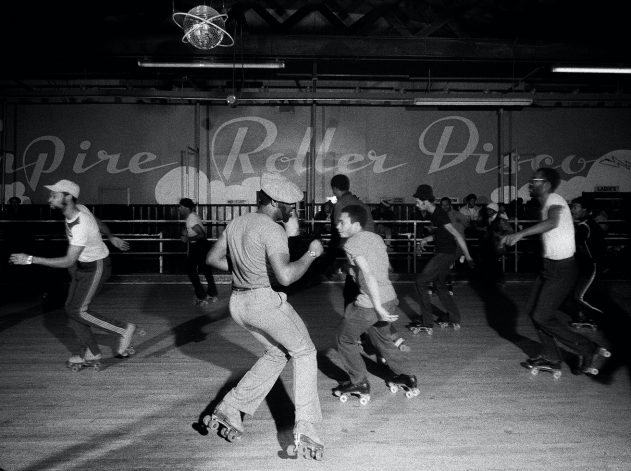
The Empire Roller Disco first opened its doors in 1941 as the Empire Rollerdrome, and quickly became a popular nightspot for New Yorkers, with its silken-smooth maple wood floor. But it was once the venue installed a giant, 20,000-watt sound system in 1980 when it really became the cultural institution that it’s remembered by today, with DJs spinning the best in disco, funk, soul and more late into the evenings.
© Patrick D. Pagnano from the book ‘Empire Roller Disco’ published by Anthology Editions
© Patrick D. Pagnano from the book ‘Empire Roller Disco’ published by Anthology Editions
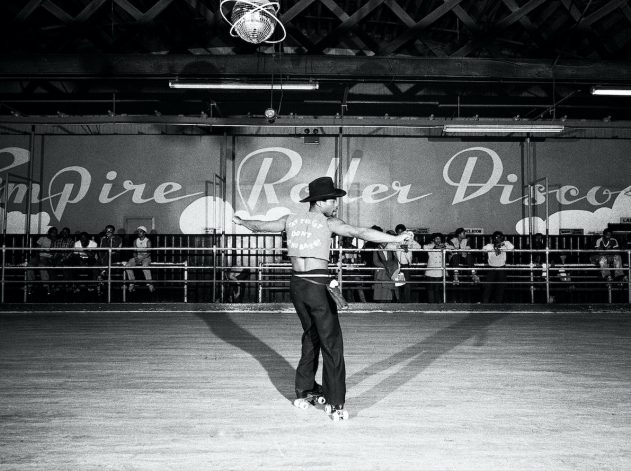
As Pagnano walked into the cavernous roller rink for the first time, he was immediately captivated. “It was the first time I had been to Crown Heights, Brooklyn,” Pagnano wrote in an artist statement for a 2018 exhibition at New York’s Benrubi Gallery displaying pictures now in the book, shortly before he passed away that year. “Once I entered the rink I was transported to another world and I was in my element.”
Taking picture after picture, his index finger repeatedly triggering the shutter, Pagnano took a wealth of photographs, capturing skaters in full flow. “The joy, exuberance and talent of the skaters was so inspirational that it drove my own creative energy,” he continued. “The skaters were thrilled to be photographed and their energy infected me.”
The pictures – taken across a single night in the rink – are a dynamic and joyous snapshot of early 80s New York. Local Brooklyners would skate and mingle alongside graceful professionals, and it was also known to attract the occasional celebrity.
For many New Yorkers, particularly those from African American communities, it became an important place where they could express themselves, in a nightlife climate where there were increasingly few. “As the club scene in New York became a little more elitist, a little more fussy, in the late 70s,” explains Jesse Pollock, the editor of Empire Roller Disco. “People started feeling like there weren’t as may places to go and be themselves – and this was that kind of place.”
© Patrick D. Pagnano from the book ‘Empire Roller Disco’ published by Anthology Editions
© Patrick D. Pagnano from the book ‘Empire Roller Disco’ published by Anthology Editions
But for unknown reasons, the article never ran in the pages of Forbes, and Pagnano’s photographs wouldn’t be published. Instead, they sat in his archive for decades, untouched until they were dug out for the 2018 exhibition, with thousands more gems yet to be presented. “He was shooting street photography in New York City throughout the 70s and 80s – his archive is really intense and really deep” Pollock says, pleased that Pagnano’s work is finally gaining recognition. “One of the cool things about New York City is that there’s a ton of street photographers always shooting amazing projects, but that sometimes means their names hover under the surface, and I think that’s what happened with Patrick.”
The Empire would close its doors to skaters for the final time in 2007, as roller disco culture and roller skating fell out of fashion, compared to its heyday in the 1980s. “In retrospect, the assignment turned out to be very special – it became an essay that represented an era that cannot be recreated,” wrote Pagnano. “I feel privileged to have been witness to this part of the American experience.”
Empire Roller Disco by Patrick D. Pagnano will be published by Anthology Editions on April 4.
Follow Isaac on Twitter.
Enjoyed this article? Like Huck on Facebook or follow us on Twitter.
You might like

Portraits of gay bears through a rooftop hatch
Big Boys On My Roof™ — Growing up, Anthony Stockdale struggled with his love for bigger men. His new photo series celebrates the bear community.
Written by: Anthony Stockdale

In photos: Lives of solitude at the world’s edge
Coirón — Pie Aerts’s new photobook documents years spent in close quarters with puesteros in Patagonia – a group of aging gauchos who live almost completely isolated existences.
Written by: Isaac Muk

The raw, fledgling intimacy of Peter Hujar’s contact sheets
Hujar:Contact — A new photobook highlights the process of the legendary queer photographer, and his process of growing into the artist he ultimately became.
Written by: Miss Rosen

Jesse Glazzard’s messy portrait of queer friends, lovers and chosen family
The Sound of Dirt and Beauty — The photographer’s debut monograph explores tender, unpolished moments shaped by the people who he surrounds himself with, while offering a window into the UK’s working-class LGBTQ+ community.
Written by: Sunny Sunday

Behind the curtain at Alternative Miss World 1981
Olympia glamour — Running a subversive take on the traditional beauty pageant, the Andrew Logan organised event prioritised underground creativity and invention. Photographer David Corio went behind the scenes at its biggest edition.
Written by: Miss Rosen

New exhibition highlights British radical living over 200 years
Earthly Paradise — Taking place at the William Morris Gallery, it explores the homes and lives of artists, writers, musicians and more, as well as the conditions that allowed them to thrive.
Written by: Isaac Muk


