
Intimate shots of life in ’80s Massachusetts

In 1979, Judith Black enrolled in the Creative Photography Lab at MIT to pursue her MFA in photography. A single mother of four living on limited means, Black moved her brood into a dilapidated apartment into Cambridgeport, Massachusetts: a multi-ethnic working-class neighbourhood that had been part of the industrial, port area of the Charles River just 15 minutes from the school.
“It was a very hard time in my life,” Black remembers. “We were lucky to find the apartment and to be able to afford it. It was then that I realised how the chance of birth gives one privilege… or denies it.”
Amid the relentless demands of being a working mother and student, Black turned to photography to create a space to record the lives of her loved ones long before family-based work was taken seriously by the art world. “It was seen as too ‘confessional,” Black says.


But these judgments did not deter Black from pursuing her dream, a story that unfolds with sensitivity and grace in the new book, Pleasant Street (Stanley/Barker). Here, we see Black’s young children Laura, Johanna, Erik and Dylan in a series of intimate portraits capturing moments of life that might otherwise go unnoticed.
Black saw beauty and grace in the simplicity of daily life. It was an understanding gleaned from her studies of Julia Margaret Cameron, Gertrude Kasebier, Imogen Cunningham and Elsa Dorfman: women who were both mothers and working photographers.
“Having my home be my studio meant everything,” says Black. “The kids were collaborators in that they knew what the pictures would be used for public display. We didn’t talk about it much – we just did it. I started making the self-portraits as a therapeutic exercise. Including the children and [my partner] Rob was an extension of that exercise. We were all in it together.”


Black applied the lessons she received from professors such as Robert Frank and Lee Friedlander to her personal work, both of whom offered one shared piece of advice: “Don’t think about it too much, just keep working.”
Black describes Frank as “gentle, honest but not cutting, and encouraging”, taking his mission to heart. “Frank’s assignment was to ‘make a photographic statement about where you are with photography, all about who you are and where you’ve been and how you feel.”
Her photographs became a visual diary and a family album, a series of images that speak to the necessity of making work for one’s self rather than for the art market.
“Today, I see that the larger culture has totally accepted ‘personal’ work as a legitimate genre that has universal appeal. Family is a very rich vein of emotional inquiry. I watch us grow up and grow old. We probably have differing memories attached to the photos, but there is some truth in each one. I think that is the important part.”


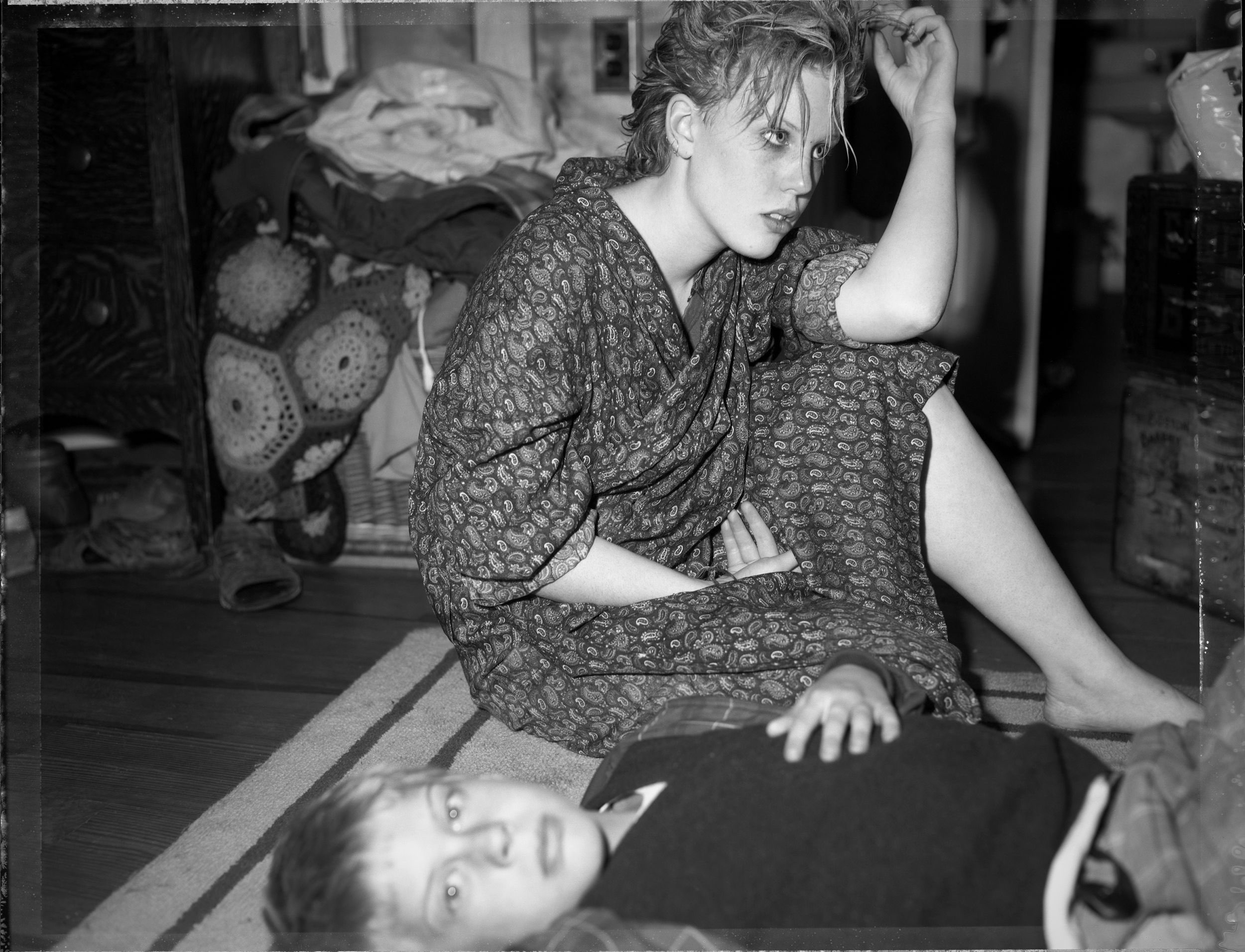


Pleasant Street is available now on Stanley/Barker.
Follow Miss Rosen on Twitter.
Enjoyed this article? Like Huck on Facebook or follow us on Twitter.
You might like

Joyous photos from the heart of the UK’s radical free festival movement
Common Grounds — The photographer has been capturing British counterculture for the past half century. A new exhibition looks at his archive sitting at the intersection of music, community and grassroots protest.

The lasting community legacy of a legendary Californian boxing gym
Moretón — Since opening in the ’80s, the Coachella Valley Boxing Club has trained multiple world champions, while providing a vital hub for local youth. In his new photobook, Darren Vargas documents its tight-knit, Chicano-led community, while also weaving a deeply personal story.

Inside the grunge golden age with Hole’s former bassist
My ’90s Rock Photographs — Melissa Auf der Maur’s new photobook is a sprawling visual memoir of her time at the heart of the US scene, from Tinker to The Smashing Pumpkins.

Introducing ‘The Chaos Isles’, a new photozine by Huck and Yushy
Normal Island — From unlicensed raves to the solstice at Stonehenge, furries to giant vegetable growers, Yushy is one of the UK’s best lensmen of its wild side. ‘The Chaos Isles’ will be sent out exclusively to Club Huck+ members.

Join Club Huck+ to get the most from Huck
Dispatches from the sharp edge of culture — Members get our print magazine, special photozines, The Huck Long Read newsletter, discounts from our friends and partners, digital versions of back issues and priority access to events.

Signs of solidarity as London marks three years of genocide in Palestine
Never forget — 250,000 people gathered on Saturday as Israeli attacks have continued in Gaza and the West Bank. Daisy Schofield photographed the diverse people and placards in attendance.


