Documenting LGBTQ hedonism in ’80s Czechoslovakia
- Text by Geralda Cela
- Photography by Libuše Jarcovjáková

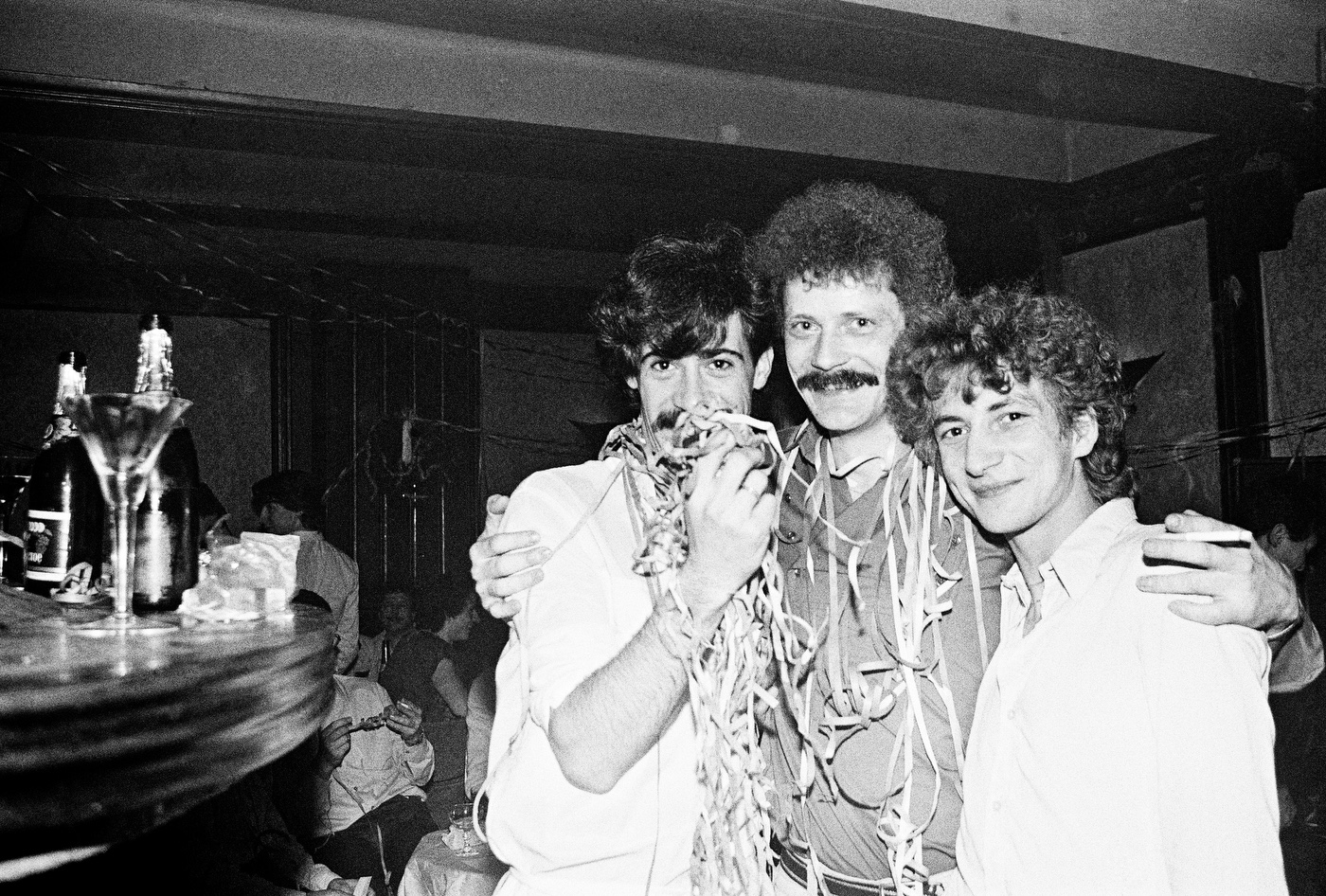
Libuše Jarcovjáková has never taken nice pictures. Her photography is deeply personal, raw and uncompromising – and, as a result, one of the most eye-opening insights into life behind the iron curtain. It is a portrait of sex, desire and hedonism in ’80s communist Czechoslovakia.
“People tend to have a completely distorted image of what everyday life was like in a totalitarian society,” she explains. “People were extremely surprised by the lack of restraint in these photos, by how wildly we lived.”
“People don’t change that much. We’re still the same human species with the same worries and the same pleasures. Perhaps this is the universal message of my work: that people are always the same.”
Much of the 67-year-olds photography has remained hidden away until this year, when it was finally celebrated in a reflective exhibition at the Rencontres d’Arles festival 2019. The show, titled Evokativ, was the first time her extensive archive was shared with the rest of the world.
Some of Libušes most captivating work was taken during her nights in the T-club (one of the two underground gay clubs in Prague) in the ’80s. The photographer says that she visited almost every night from 1983 to 1985. “A friend took me there,” she recalls. “The moment I arrived I fell in love with the whole environment. I just knew that I had to take photos of the place and that one day I would.”


“Everything was so incredibly vivid, colourful, in contrast to the drab greyness outside.”
Although being openly LBGTQ+ was decriminalised in 1962, homophobia was still widespread in Czechoslovakia. Many gay people would still be faced with “gross indecency” charges, a term used liberally and loosely by state police. Despite that, people continued to risk their freedom while attending T-club – which was only a few minutes walk away from the Security Services headquarters.
“People were at risk of being blackmailed by the secret police because of their sexual proclivities,” says Libuše. “The entrance was guarded by a bouncer who was master of the fate of everyone trying to get into the club. He made absolutely sure that nobody entered who simply wanted to gawp at the gays or who might be aggressive. Anyone causing a disturbance could expect to be banned for a considerable period of time. It took a short while before I was able to visit the club on my own without a chaperone, but things soon settled down.”
Although Libuše describes growing up in communist Czechoslovakia as a “schizophrenic” time; she and the people whom she met, partied with and loved still lived in hope. “We knew without a shadow of a doubt that we were living in a perverse society in which the basic moral principles did not apply, and upon which the will of a foreign power was being imposed. In spite of all of this, we had hope. Quite illogically we hoped that everything would one day change.”




See more of Libuše Jarcovjáková’s work on her official website.
Enjoyed this article? Like Huck on Facebook or follow us on Twitter.
You might like

On the set of ‘La Bamba’, lost Latino legend Ritchie Valens’s biopic
The overnight rockstar — The Chicano rock & roll star exploded overnight in the late ’50s, but just as quickly he was gone, killed in a plane crash along with Buddy Holly. An ’80s biopic saw him immortalised on the big screen, which photographer Merrick Morton captured behind the scenes.
Written by: Miss Rosen

Louis Theroux’s ‘Manosphere’ shows men aren’t the problem, platforms are
No Ws for Good Men — The journalist’s new documentary sees him dive headfirst into the toxicities and machinations of the male influencer economy. But when young creators are monetarily incentivised to make more and more outrageous content, who really is to blame?
Written by: Emma Garland

In the 1960s, African photographers recaptured their own image
Ideas of Africa — An exhibition at the Museum of Modern Art explores the 20th century’s most important lensers, including Seydou Keïta, Malick Sidibé and Kwame Brathwaite, and their impact on challenging dominant European narratives.
Written by: Miss Rosen

Reynaldo Rivera’s intimate portrait of queer Latino love
Propiedad Privada — Growing up during the AIDS pandemic, the photographer entered a world where his love was not only taboo, but dangerous. His new monograph presents inward-looking shots made over four decades, which reclaim the power of desire.
Written by: Miss Rosen

In photos: The newsagents keeping print alive
Save the stands — With Huck 83 hitting shelves around the world, we met a few people who continue to stock print magazines, defying an enduringly tough climate for physical media and the high street.
Written by: Ella Glossop

Inside Bombay Beach, California’s ‘Rotting Riviera’
Man-made decay — The Salton Sea was created by accident after a failed attempt to divert the Colorado River in the early 20th century. Jack Burke reports from its post-apocalyptic shores, where DIY art and ecological collapse meet.
Written by: Jack Burke


