The Malian photographer who shot Africa’s post-independence flow
- Text by Alex King
- Photography by Malick Sidibé - courtesy Galerie MAGNIN-A, Paris

A childhood accident left Malick Sidibé blind in one eye, but that didn’t stop him seeing – and documenting – the energy of post-independence Mali. Before his death aged 80 in April 2016, he picked up the title “the eye of Bamako” and left a priceless record of African youth culture.

Les Retrouvailles au bord du fleuve Niger, 1974
Mali declared its independence from France in 1960, joining a wave of African countries that successfully freed themselves from their colonial oppressors during the 1950s and 1960s.
After founding Studio Malick in 1958, Sidibé established himself as Mali’s only travelling documentary photographer in the early 1960s. Travelling by bike, he was uniquely positioned to capture the burgeoning youth culture that accompanied independence.
He shot graduation celebrations, dances and beach parties across the country, but it was his images of well-dressed youths in the nightclubs of Mali’s capital, Bamako, that really captured the new post-independence groove.
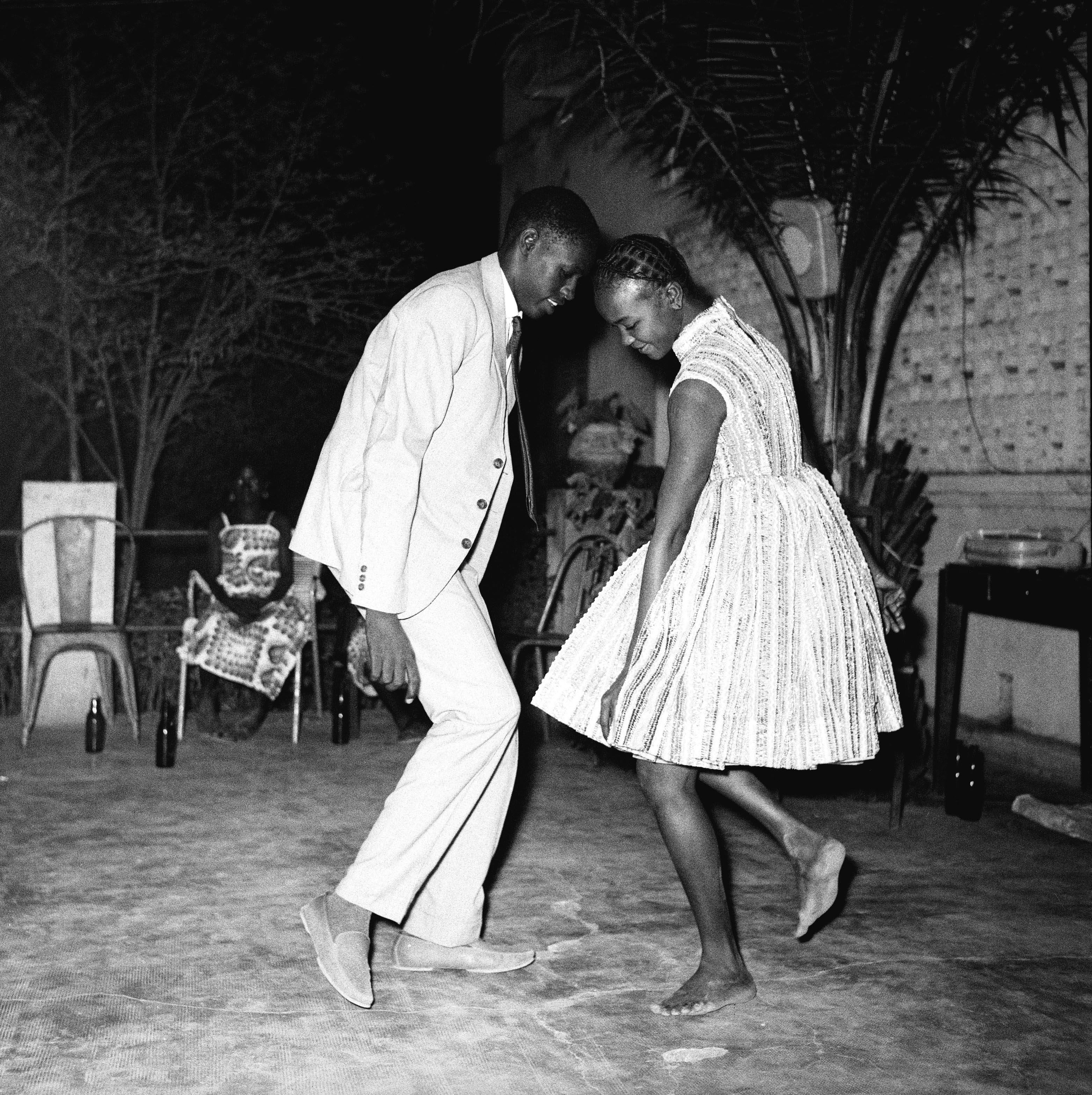
Nuit de Noël (Happy Club), 1963

Nuit du 31 Décembre, 1969
Immersing himself in the beat, often at the centre of the dance floor, his images of young, fun-loving couples reflected the newfound confidence of the nation and its soundtrack – imported pop, soul and rock’n’roll.
“Music was the real revolution,” Sibidé once reflected. “We were entering a new era, and people wanted to dance. Music freed us. Suddenly, young men could get close to young women, hold them in their hands. Before, it was not allowed. And everyone wanted to be photographed dancing up close.”
Sibidé is also remembered for his studio photography. “[Studio Malick] was like a place of make-believe,” he said. “People would pretend to be riding motorbikes, racing against each other. It was not like that at the other studios.”
Trained in drawing at the School of Sudanese Craftsmen (now the Institut National des Arts) in Bamako, Sidibé brought an artist’s eye for composition to his studio portraits, encouraging his subjects to bring energy and their own props, from new motorbikes to James Brown records or donkeys and goats.

A moi seul, 1978

Les jeunes bergers peulhs, 1972
Sibidé’s work was “discovered” by the art world in the early ‘90s after Malian musicians such as Salif Keïta and Ali Farka Touré put Mali on the map for Western audiences. His photography has since been shown worldwide, but his posthumous show at 1:54 Contemporary African Art Fair in London represents his first UK solo exhibition.

Combat des amis avec pierres, 1976
Malick Sidibé: The Eye of Modern Mali is at Somerset House until 15 January 2017.
Enjoyed this article? Like Huck on Facebook or follow us on Twitter.
You might like

The raw, fledgling intimacy of Peter Hujar’s contact sheets
Hujar:Contact — A new photobook highlights the process of the legendary queer photographer, and his process of growing into the artist he ultimately became.
Written by: Miss Rosen

Jesse Glazzard’s messy portrait of queer friends, lovers and chosen family
The Sound of Dirt and Beauty — The photographer’s debut monograph explores tender, unpolished moments shaped by the people who he surrounds himself with, while offering a window into the UK’s working-class LGBTQ+ community.
Written by: Sunny Sunday

Behind the curtain at Alternative Miss World 1981
Olympia glamour — Running a subversive take on the traditional beauty pageant, the Andrew Logan organised event prioritised underground creativity and invention. Photographer David Corio went behind the scenes at its biggest edition.
Written by: Miss Rosen

New exhibition highlights British radical living over 200 years
Earthly Paradise — Taking place at the William Morris Gallery, it explores the homes and lives of artists, writers, musicians and more, as well as the conditions that allowed them to thrive.
Written by: Isaac Muk

What life on the Strait of Hormuz is really like
Southern Winds — Bandar Abbas based photographer Morteza Niknahad has been capturing the diverse communities and stories of his local region since he first picked up a camera. His new series highlights the human impact of war.
Written by: Isaac Muk

Nick Haymes’s intimate portrait of his family’s life
Chronograph — Over 25 years, the photographer documented his son’s lives as they grew into adults. The resulting photobook is an exploration of the passage of time, as well as the optimism of youth.
Written by: Miss Rosen


