
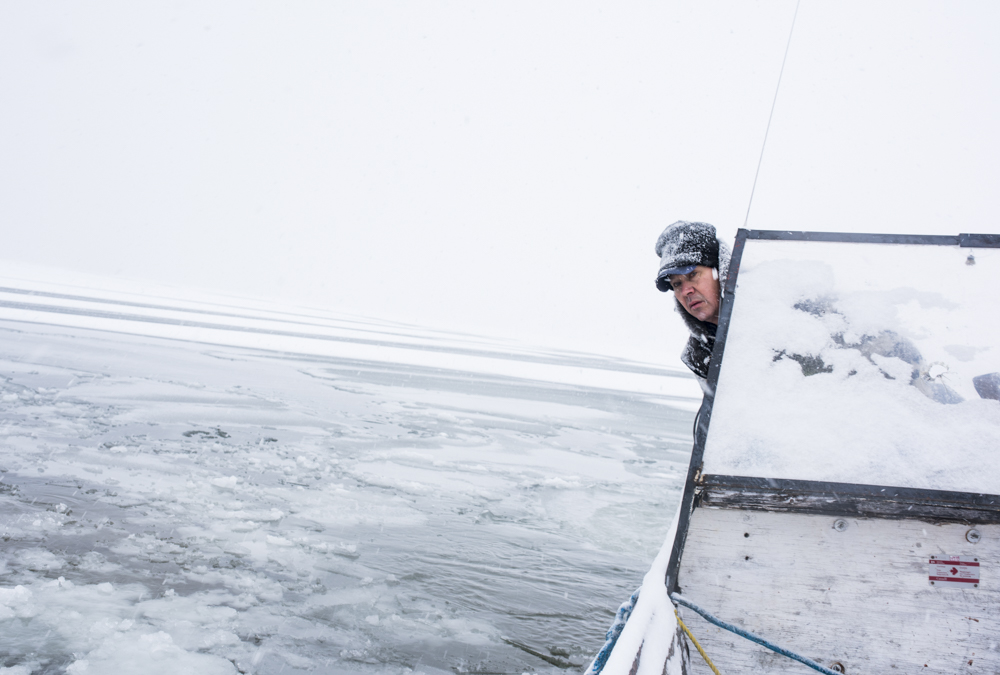
Yellowknife is the capital of Canada’s Northwest Territories. The city was colonised by settlers from the south back in the 1930s, who came to the area looking for gold. Those first prospectors set up shacks and shanties on the edge of Great Slave Lake and a nearby island, and those dwellings remained even as the city grew around it over the years.
Today, the shacks and houseboats are still used by prospectors of a different sort – namely people who’ve come here in search of adventure and high paying jobs. Many are young, educated professionals who simply like the novelty of it, others want a simple lifestyle, and a few having been living here for many years and just want to be left alone. They are a colourful collection of bureaucrats, musicians, artists and a handful of curmudgeons.
I moved to Yellowknife in 2005 and was quickly introduced to people in the off-grid community. It’s a very social place, and many people who live here are involved in the local arts, music and media scene, so as a visual artist myself, I became friends with many of them right away.


At first, I thought the people here were all essentially the same kind of person: adventurous hippies who want their own space. I was wrong. The people are a mix from all walks of life, who live off-grid for wildly different reasons. There are bureaucrats, engineers, electricians, lawyers and all sorts of professionals. But there are also some old-timers who simply love the quality of life, and people just looking for a great experience and cheap rent.
While the shacks and houseboats themselves are a big draw for tourists and historians, nobody has really ever photographed the people here. I wanted to give an accurate representation of who they are and where they live. The off-grid community has been covered in film and television before, but those representations have often been very one-dimensional and misleading. I wanted to capture everyone in a way that is honest and accurate.


While working on this project, I learned that you don’t need a lot of space or luxury items to have a great quality of life. I also learned how important it is to look after your home (many people in the off-grid community have to maintain their homes in extreme conditions), so it’s important to not take things like plumbing, structure, and energy for granted.
More than anything, I learned that off-gridders are probably among the largest contributors to the culture and character of Yellowknife. Most of them volunteer and perform at local events, they serve on various boards in the city, they run small businesses and welcome curious tourists into their homes. In my opinion, the people in the off-grid community are probably the best ambassadors for Yellowknife – and they rarely get credit for it.




See more of Pat Kane’s work on his official website, or follow him on Instagram.
Enjoyed this article? Like Huck on Facebook or follow us on Twitter.
You might like

The raw, fledgling intimacy of Peter Hujar’s contact sheets
Hujar:Contact — A new photobook highlights the process of the legendary queer photographer, and his process of growing into the artist he ultimately became.
Written by: Miss Rosen

Jesse Glazzard’s messy portrait of queer friends, lovers and chosen family
The Sound of Dirt and Beauty — The photographer’s debut monograph explores tender, unpolished moments shaped by the people who he surrounds himself with, while offering a window into the UK’s working-class LGBTQ+ community.
Written by: Sunny Sunday

Behind the curtain at Alternative Miss World 1981
Olympia glamour — Running a subversive take on the traditional beauty pageant, the Andrew Logan organised event prioritised underground creativity and invention. Photographer David Corio went behind the scenes at its biggest edition.
Written by: Miss Rosen

New exhibition highlights British radical living over 200 years
Earthly Paradise — Taking place at the William Morris Gallery, it explores the homes and lives of artists, writers, musicians and more, as well as the conditions that allowed them to thrive.
Written by: Isaac Muk

What life on the Strait of Hormuz is really like
Southern Winds — Bandar Abbas based photographer Morteza Niknahad has been capturing the diverse communities and stories of his local region since he first picked up a camera. His new series highlights the human impact of war.
Written by: Isaac Muk

Nick Haymes’s intimate portrait of his family’s life
Chronograph — Over 25 years, the photographer documented his son’s lives as they grew into adults. The resulting photobook is an exploration of the passage of time, as well as the optimism of youth.
Written by: Miss Rosen


