Philippe Lopez’s photography is an ode to handcrafted India
- Text by D’Arcy Doran
- Photography by Philippe Lopez

What happens when you put in your 10,000 hours and slip into a rhythm in your craft?
For photographer Philippe Lopez, after a decade of shooting in India, China and Cambodia, he decided that to keep evolving, he’d force himself to relearn shooting by stripping everything down to basics.
“What was happening is you reach a point where you know how to be efficient, using all the different tools and focal lens and techniques,” says Lopez, who won a World Photo Award for his painterly image of a procession of Typhoon Haiyuan survivors.
“And in the process, you are often dependent on the subject and not the other way around. It’s a submissive way of doing your photography because you go somewhere and you need to get something out of it. You format yourself.”
Lopez’s answer was to pick up a manual-focus camera with a simple 35mm millimetre lens and shooting in black and white and to take to the streets – inspired in part by his hero Magnum legend Raymond Depardon.


“It’s very different because you just go out to practice your art and you are not constrained by any format, or prerogatives. So it really became about falling in love with photography again. You become the primary tool – not the lens you use, not the camera you use.”
The results of this approach are on display this week at our own 71a Gallery this week in Lopez’s first solo exhibition Resonance: Screen to Street in India. For the project, Lopez returned to India nearly a decade after he lived there to capture the disappearing art of hand-painted Bollywood billboards.
Over successive trips, between 2010-2016, Lopez saw the same hand-painted style adapted to promote everything from Coca-Cola to politicians often using the same visual codes as the movie art. As he explored on foot, the project grew into a wider reflection on how handcrafted images shaped India’s kaleidoscopic street life.
“If you get good advice from photographers who have been doing this longer than you, they say there’s nothing better than using your feet and moving, moving to frame your subject in that 35mm, or whatever.”
“It builds a kind of tension. You’re moving around to get this thing organised and feeling the frame to get it the way you want it. When it’s there, it pops – and click. You don’t have to go back later and look at 120 pictures because you think something might be in there. You know you’ve got something.”

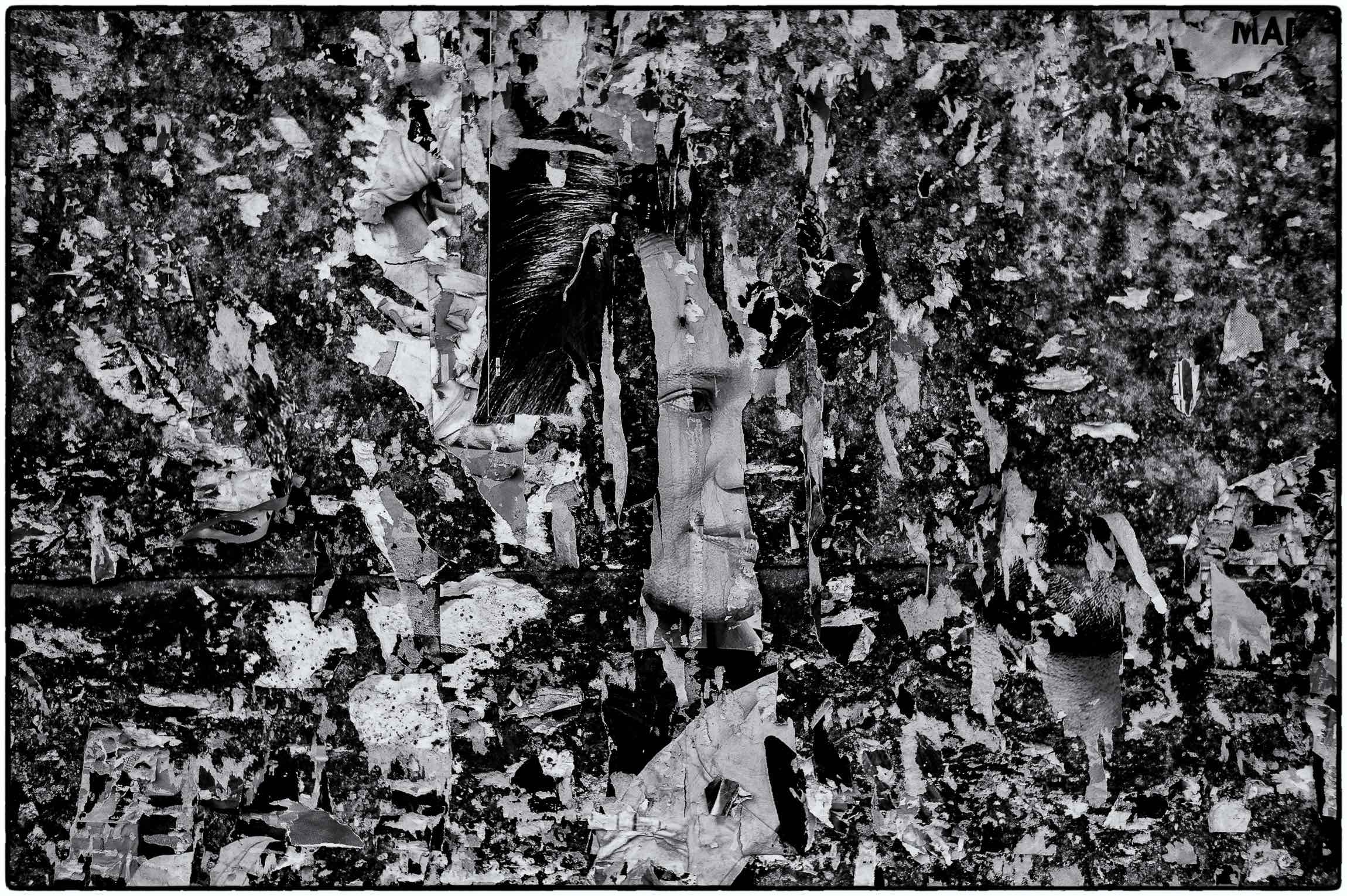
Resonance: Screen to Street in India is open at our own 71a Gallery from November 7 to November 10, 2019.
Enjoyed this article? Like Huck on Facebook or follow us on Twitter.
You might like

In photos: The newsagents keeping print alive
Save the stands — With Huck 83 hitting shelves around the world, we met a few people who continue to stock print magazines, defying an enduringly tough climate for physical media and the high street.
Written by: Ella Glossop

The quiet, introspective delight of Finland’s car cruising scene
Pilluralli — In the country’s small towns and rural areas, young people meet up to drive and hang out with their friends. Jussi Puikkonen spent five years photographing its idiosyncratic pace.
Written by: Josh Jones

The last days of St Agnes Place, London’s longest ever running squat
Off the grid — Photographer Janine Wiedel spent four years documenting the people of the Kennington squat, who for decades made a forgotten row of terraced houses a home.
Written by: Isaac Muk

How Japan revolutionised art & photography in the ’60s and ’70s
From Angura to Provoke — A new photobook chronicles the radical avant-garde scene of the postwar period, whose subversion of the medium of image making remains shocking and groundbreaking to this day.
Written by: Miss Rosen

Artifaxing: “We’ve become so addicted to these supercomputers in our hands”
Framing the future — Predominantly publishing on Instagram and X, the account is one of social media’s most prominent archiving pages. We caught up with the mysterious figure behind it to chat about the internet’s past, present and future, finding inspiration and art in the age of AI.
Written by: Isaac Muk

The lacerating catharsis of body suspension in Hong Kong
Self-Ferrying — In one of the world’s most densely packed cities, an underground group of young people are piercing their skin and hanging their bodies with hooks in a shocking exploration of pain and pleasure. Sophie Liu goes to a session to understand why they partake in the extreme underground practice.
Written by: Sophie Liu


