Photographer documents man’s destruction of the natural world
- Text by Alex King
- Photography by all images Nick Brandt, Courtesy Atlas Gallery

Photographing wildlife is a bittersweet career. Since 2001, fine art photographer Nick Brandt has been documenting the natural world and animals of East Africa – while seeing them disappear before his eyes. During the course of his career, he’s watched countless species driven from their homes and had their habitats destroyed.
His African trilogy, completed three years ago, On This Earth, A Shadow Falls, Across the Ravaged Land, ended with a somber conclusion: the process of devastation across the continent continues to escalate.
Brandt’s latest project, Inherit The Dust takes wild animals back to the landscapes where they used to roam free. But this is no triumphant return, animals from his own wildlife photographs are printed on panels and left to compete with – or be ignored by – the garbage pickers, street children and concrete infrastructure, that have taken their place. The once mighty beasts of the wild are reduced to ghosts in the urban landscape.
Huck spoke to Nick about using photography to provoke change and his experiences documenting disappearance.
What drew you to documenting animals and led you to East Africa?
Spending time in East Africa, in the wilds, I realised that photography was the way to express my lifelong feelings about animals and the endangered natural world, in a way that I thought had not been done before. Animals and nature were my first love, not photography. Photography was merely the best medium for me to express my feelings about the disappearing natural world.
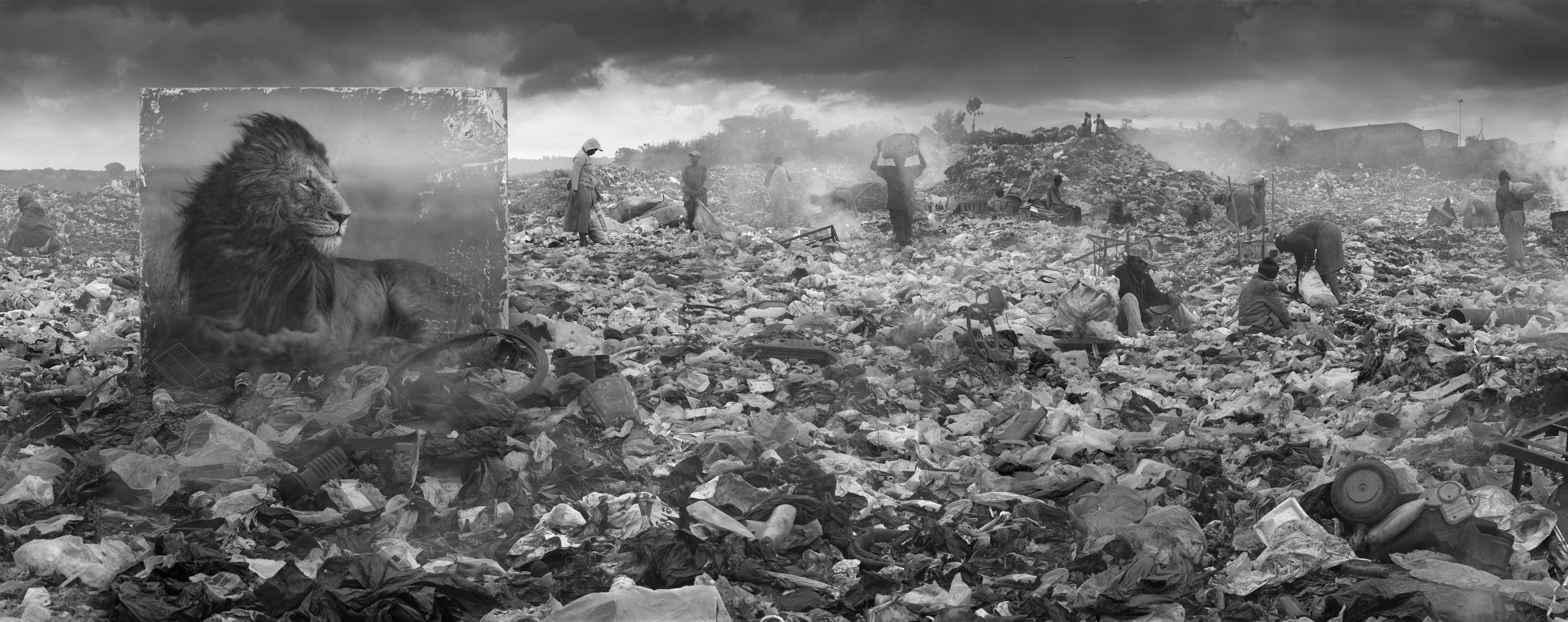
‘Wasteland With Lion’
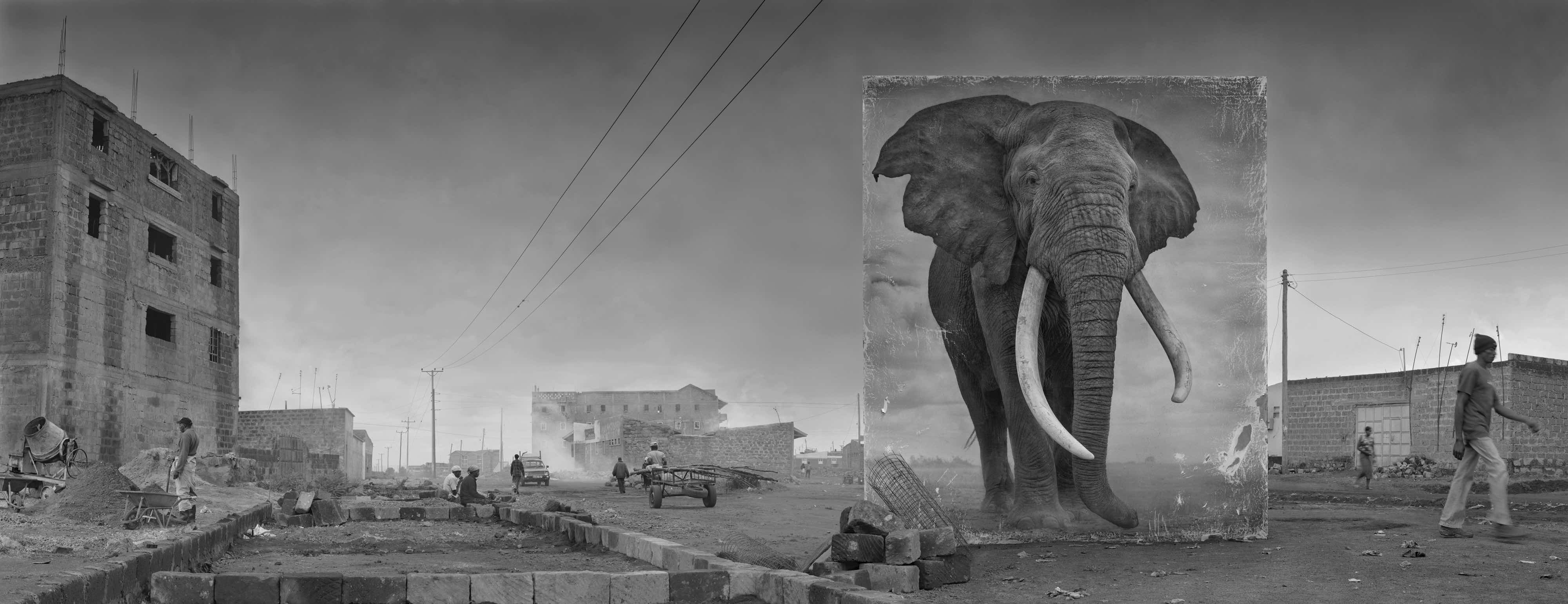
‘Road With Elephant’
What are the biggest threats to wildlife in East Africa today?
I, like many, used to believe that the biggest threat was poaching, feeding the insatiable demand for animal parts from the Far East.
Actually, it’s much more complex and monumental than that. Mainly, it’s about all of us. The terrifying number of us, and the impact of the very finite amount of space and resources for so many humans.
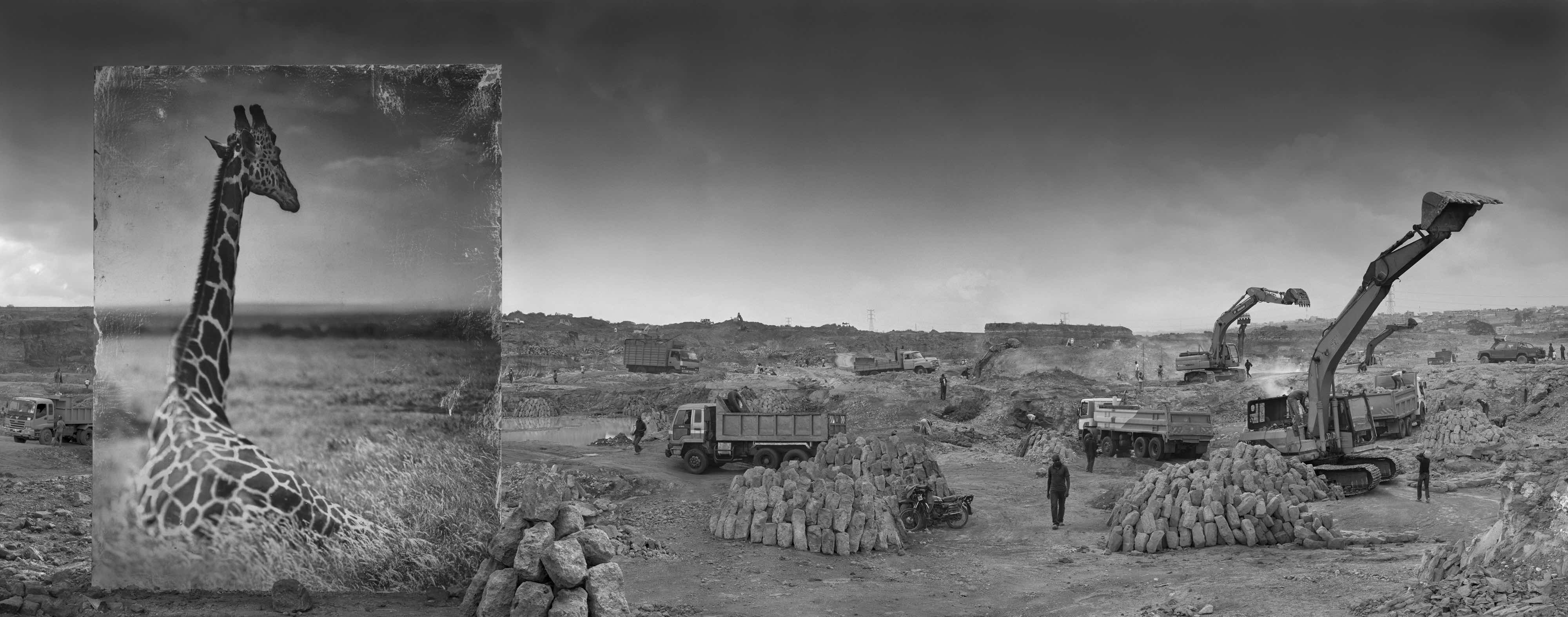
‘Quarry With Giraffe’
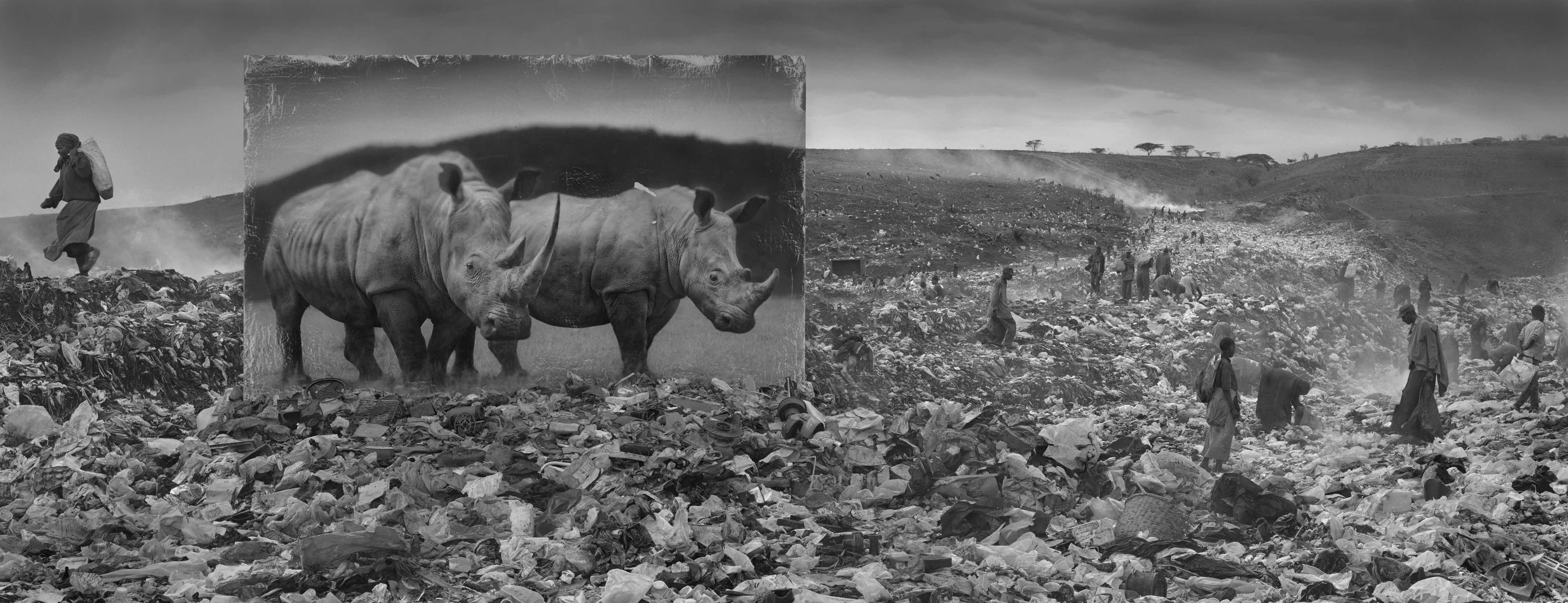
‘Wasteland With Rhinos’
Could you share a story behind creating one of your images?
It drives me crazy when people think that the panels were just dropped in in Photoshop. So I’d like to mention one photo in particular, because for me, it confirms the superiority of real life, compared to Photoshop.
In ‘Underpass With Elephants’, 2015 (Lean Back, Your Life is On Track), I wanted just one person, probably a child, to see the animals in the panel, while all around, nobody else did. But I never imagined that this tiny boy on the right, a child of one of the many homeless people sleeping out on the land beneath this underpass, would wander into frame, fascinated by these giant elephants, and touch them with what appears to be a stick in his hand.
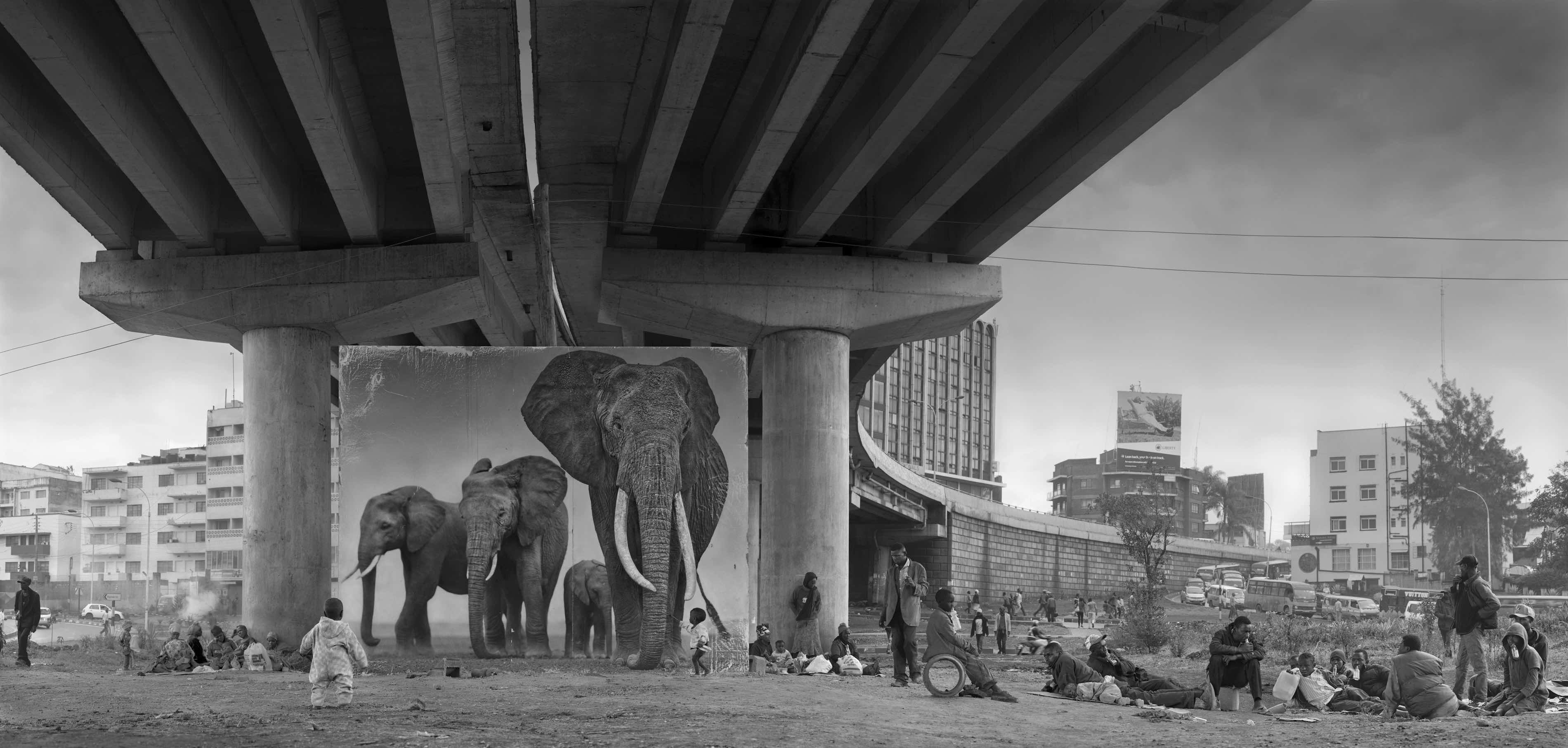
‘Underpass With Elephants’
I never imagined the cruelly juxtaposed billboard beyond, featuring a well-to-do middle class African man leaning back in his garden chair, with the tag line beneath: Lean Back, Your Life is On Track. I never imagined that the elephants would look so trapped between the two gargantuan concrete pillars, the matriarch appearing to be looking almost sympathetically at the humans also rendered homeless. I never imagined that her trunk would appear to be practically resting on the ground in front of the panel, not confined to the panel itself.
I never imagined all the homeless children sniffing glue. It’s hard to see clearly on a computer screen, but all those kids, some as young as 6 or 7 years old, were high on glue from the bottles hanging from their faces.
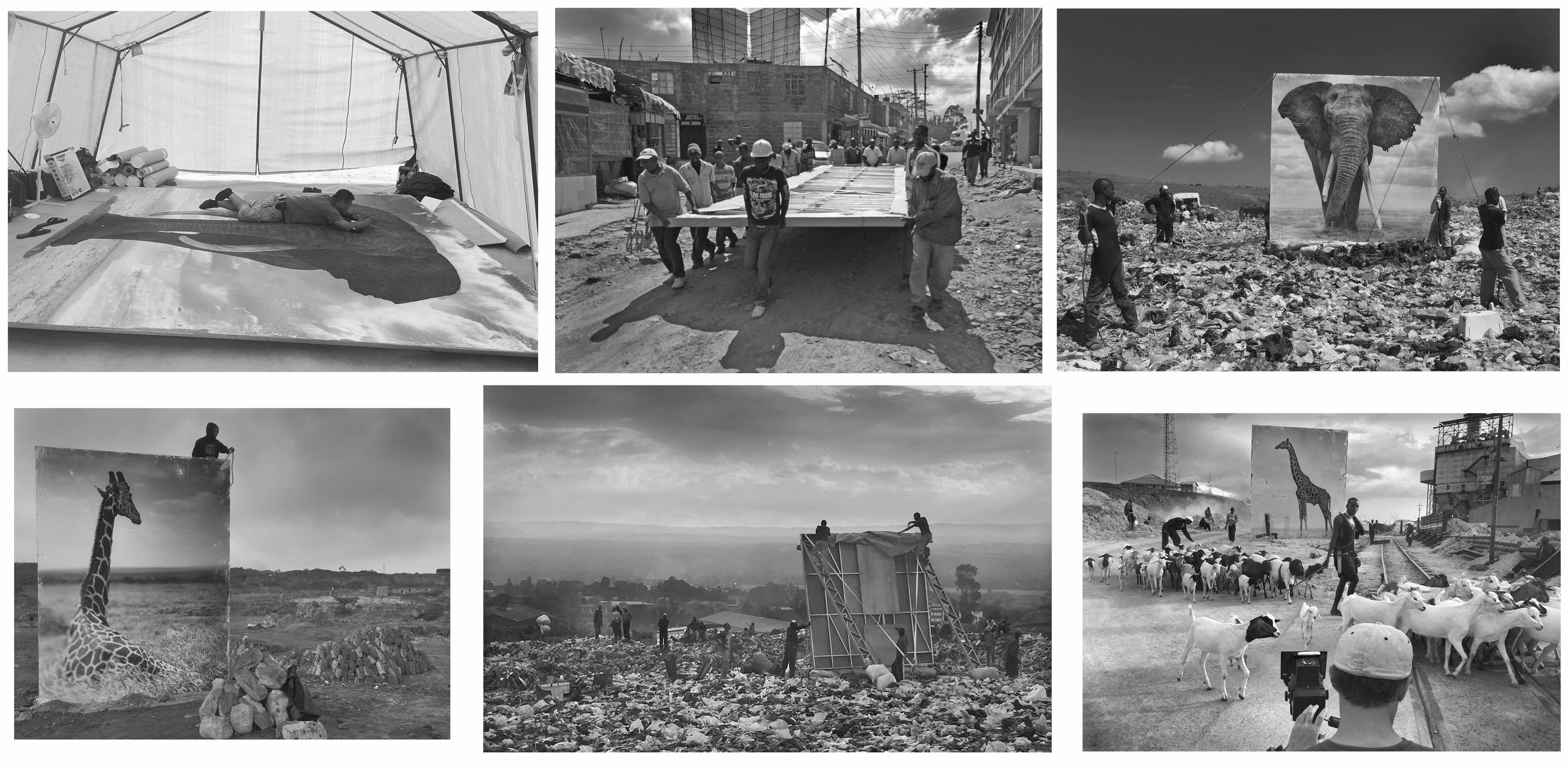
‘Making of Inherit the Dust’
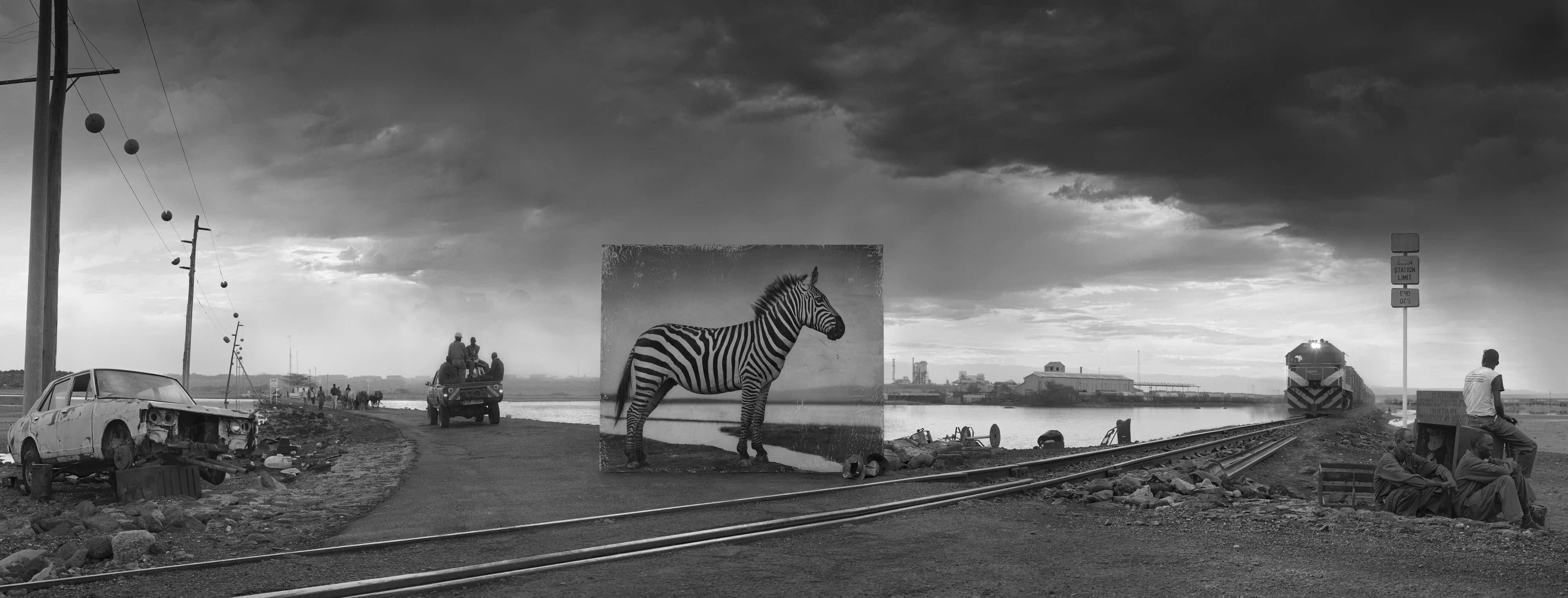
‘Road To Factory With Zebra’
How effective do you feel art projects like this can be in making change?
Good question. Honestly, I really don’t know how effective they can be. But one has to try and at least hope to be an incremental cog in the wheel of change, part of a cumulative awareness and outcry that eventually filters its way through to government and industry, where policy changes can be made to improve the planet in a meaningful way.
Nick Brandt’s Inherit The Dust is out now, published by Edwynn Houk Editions.
Inherit the Dust will be presented at PhotoLondon Art Fair at Somerset House, 19-22 May, by Atlas Gallery.
You might like
Activists slam “pervert glasses” in new guerrilla campaign
Everyone Hates Elon — Stickers have appeared on the London Underground network, criticising the wearable technology’s covert filming capabilities.
Written by: Isaac Muk

Behind the curtain at Alternative Miss World 1981
Olympia glamour — Running a subversive take on the traditional beauty pageant, the Andrew Logan organised event prioritised underground creativity and invention. Photographer David Corio went behind the scenes at its biggest edition.
Written by: Miss Rosen

New exhibition highlights British radical living over 200 years
Earthly Paradise — Taking place at the William Morris Gallery, it explores the homes and lives of artists, writers, musicians and more, as well as the conditions that allowed them to thrive.
Written by: Isaac Muk

What life on the Strait of Hormuz is really like
Southern Winds — Bandar Abbas based photographer Morteza Niknahad has been capturing the diverse communities and stories of his local region since he first picked up a camera. His new series highlights the human impact of war.
Written by: Isaac Muk

Pink Floyd’s Roger Waters joins team of new Palestinian resistance documentary
Freedom Theatre — Directed by Rishi Pelham, the film spotlights a theatre operating in the Jenin refugee camp.
Written by: Ella Glossop

Just Stop Oil holds first protest in 17 months
No new drilling — Having previously said that it was “hanging up the hi-vis”, the climate activist group has blocked a road outside Parliament to protest Andy Burnham opening the door for new oil and gas extraction licenses in the North Sea.
Written by: Ella Glossop


