Portraits of life, death and desolation on the Western Cape
- Text by Mischa Frankl-Duval
- Photography by Pierre Crocquet

Knysna became a prosperous centre of industry in the nineteenth century. But some of its residents were left behind.
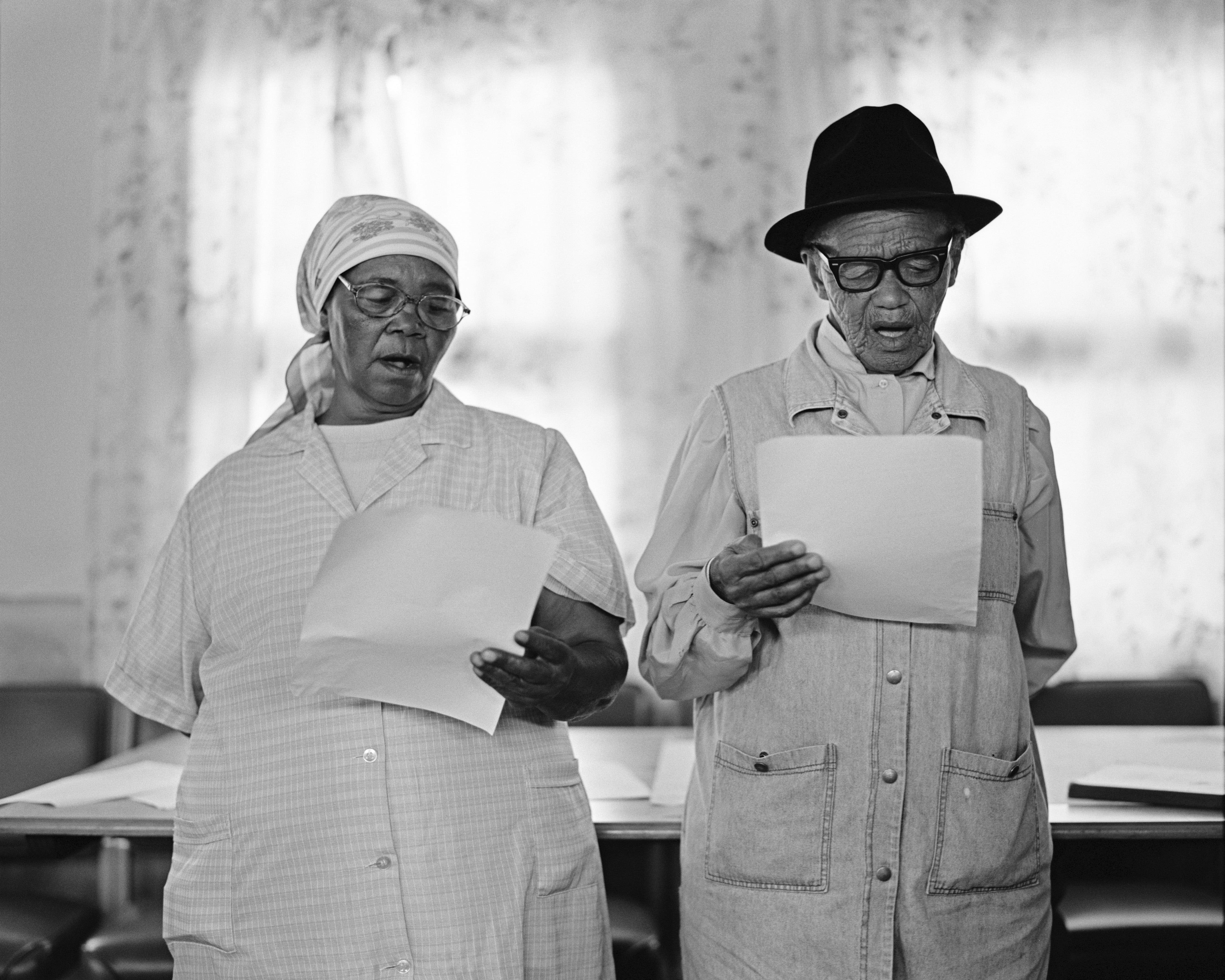
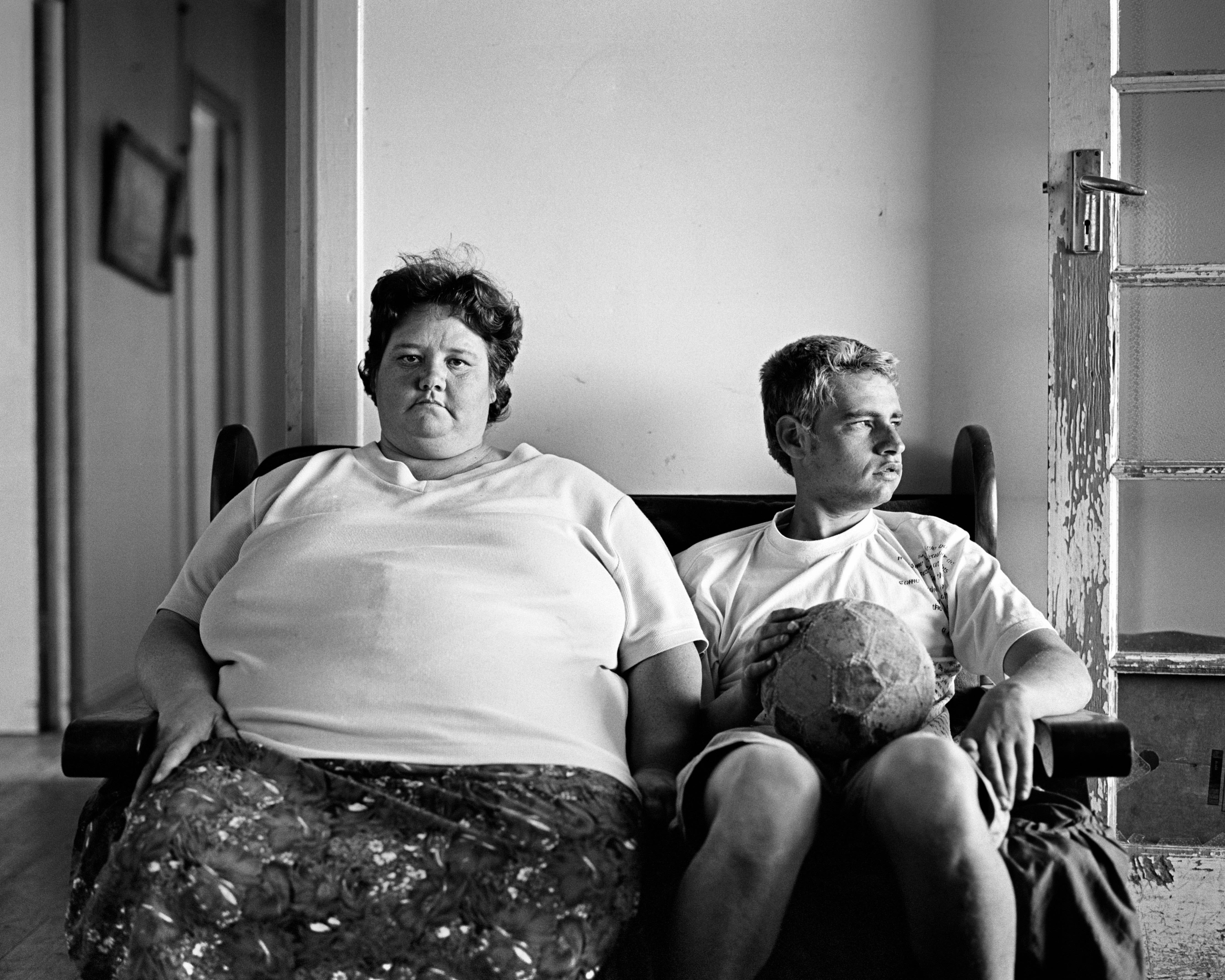
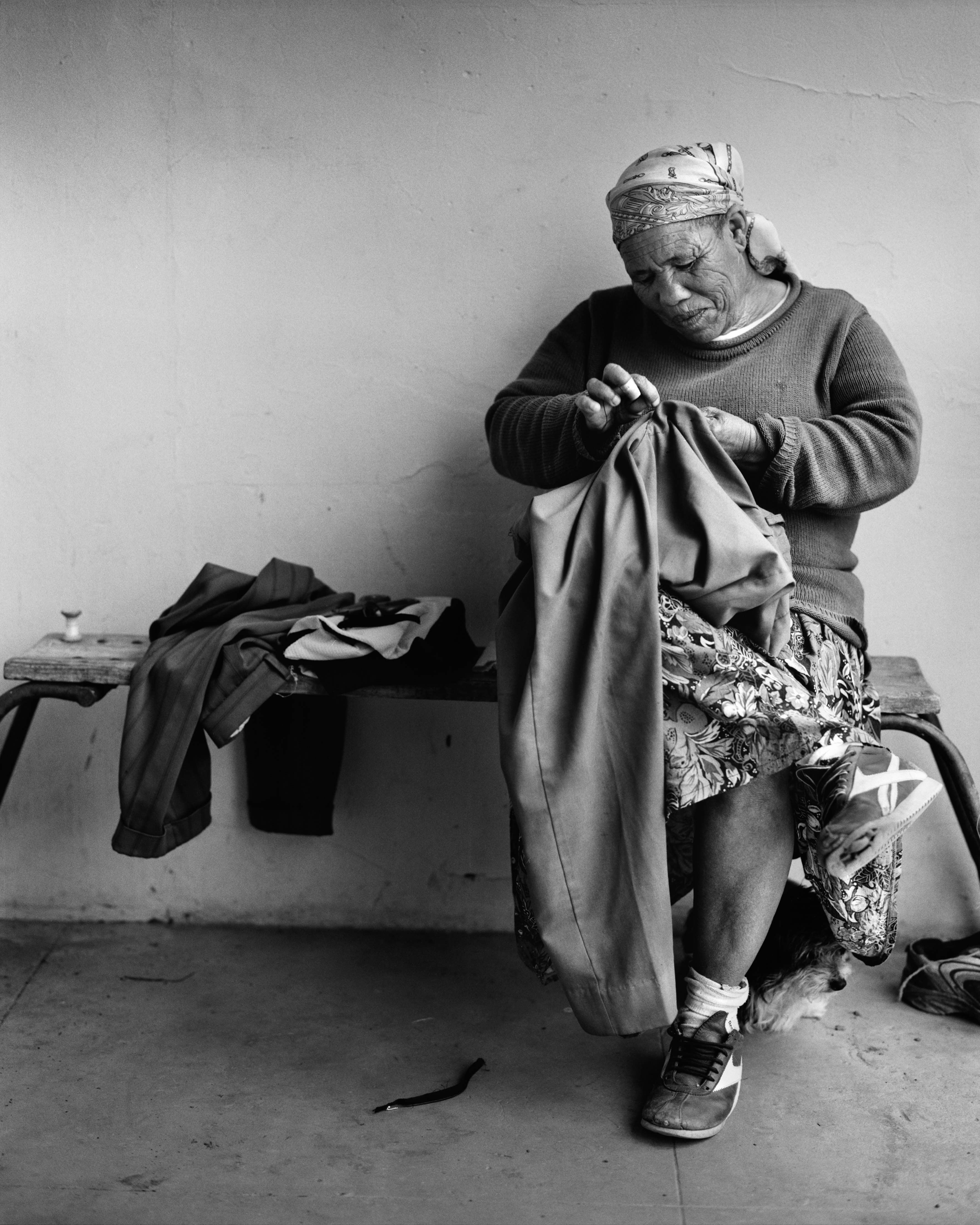
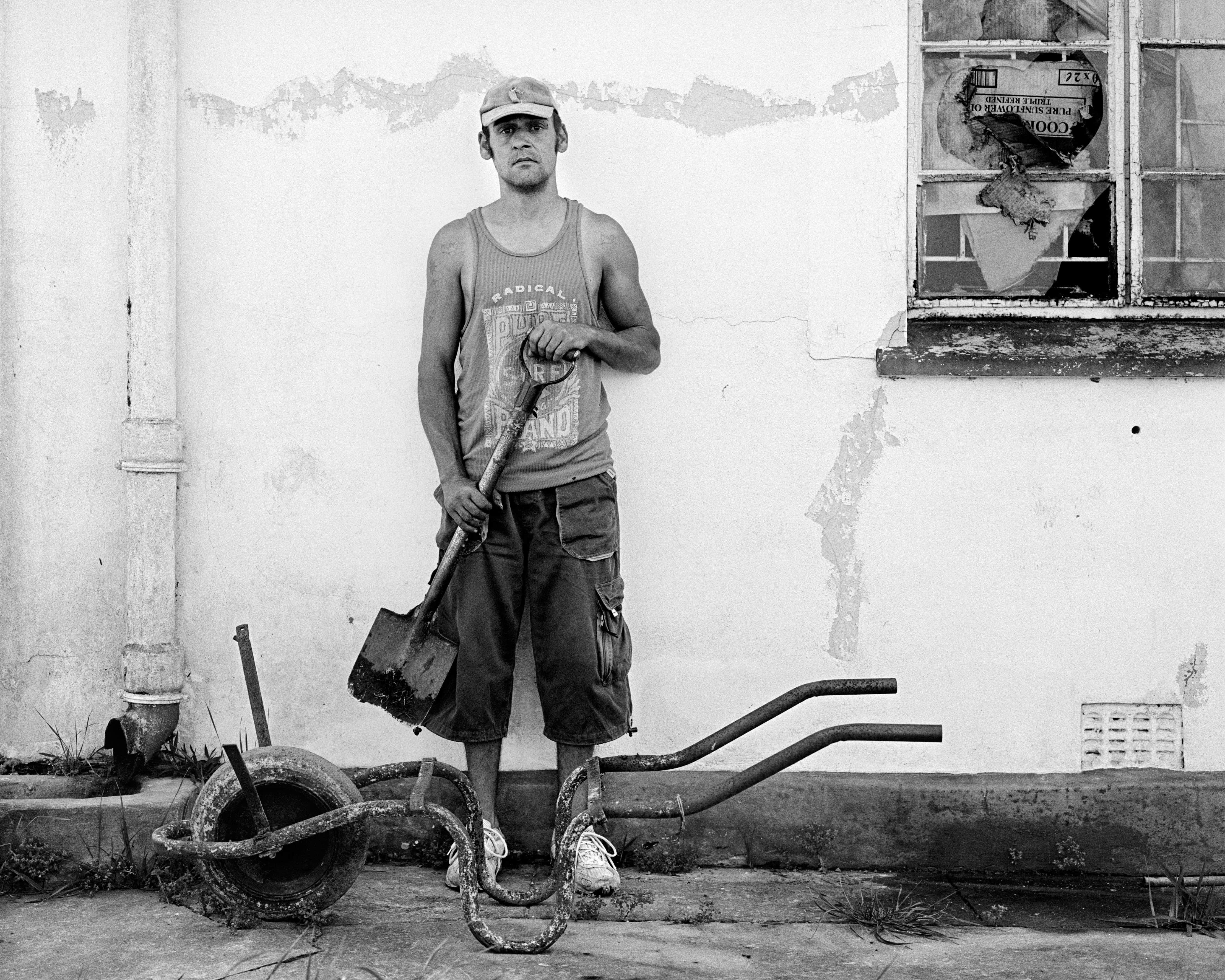
Though their work made the area’s prosperity possible, the woodcutters of Knysna forest received no share of the spoils. Exploited for generations by timber merchants, they continued to live in dreadful poverty. When logging of the indigenous forest was outlawed in 1939, the newly-jobless woodcutters were relocated to the remote village of Karatara.
Long isolated from wider society, a number of the woodcutters’ descendants developed severe mental and physical disabilities. Life in the community remains difficult.
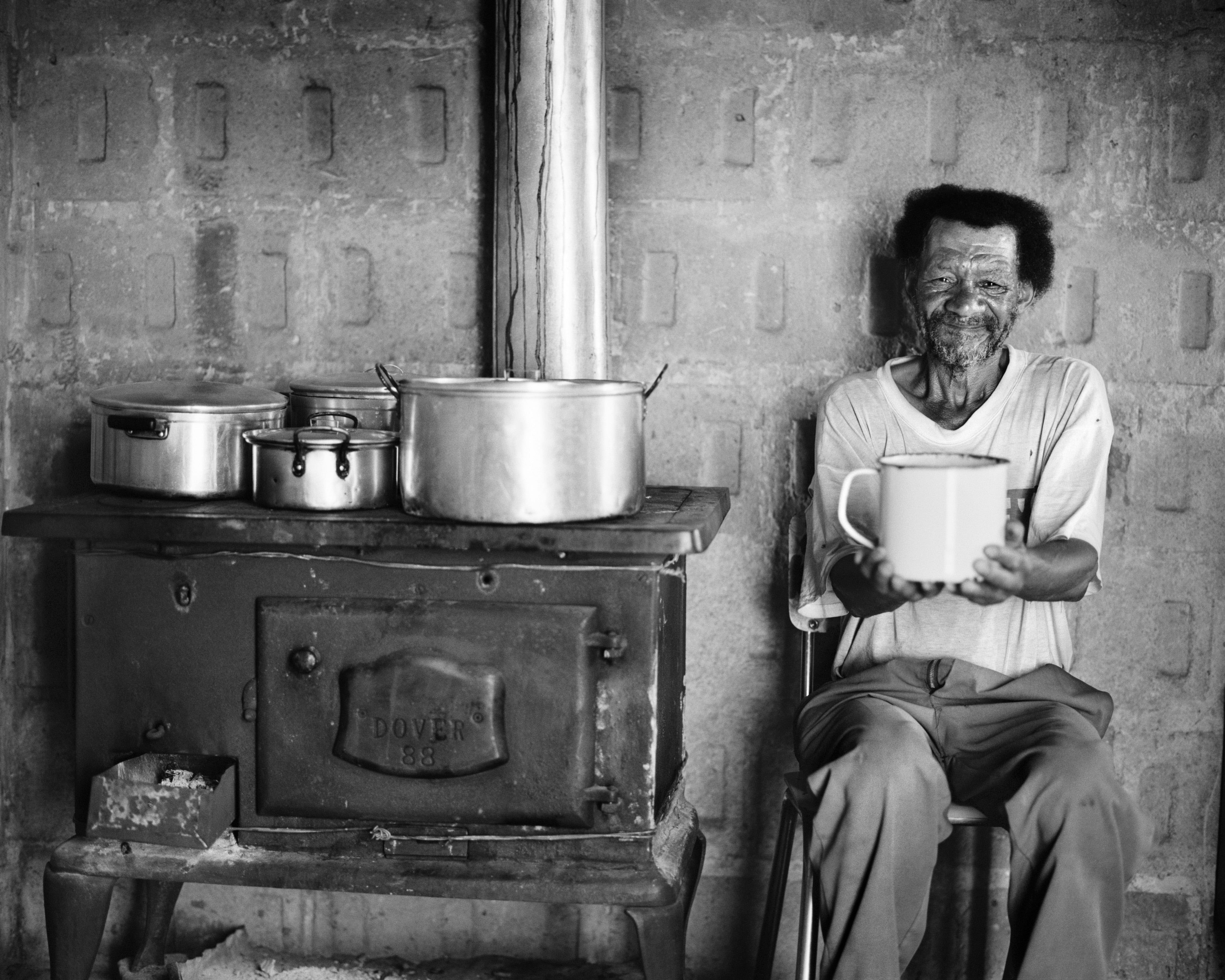
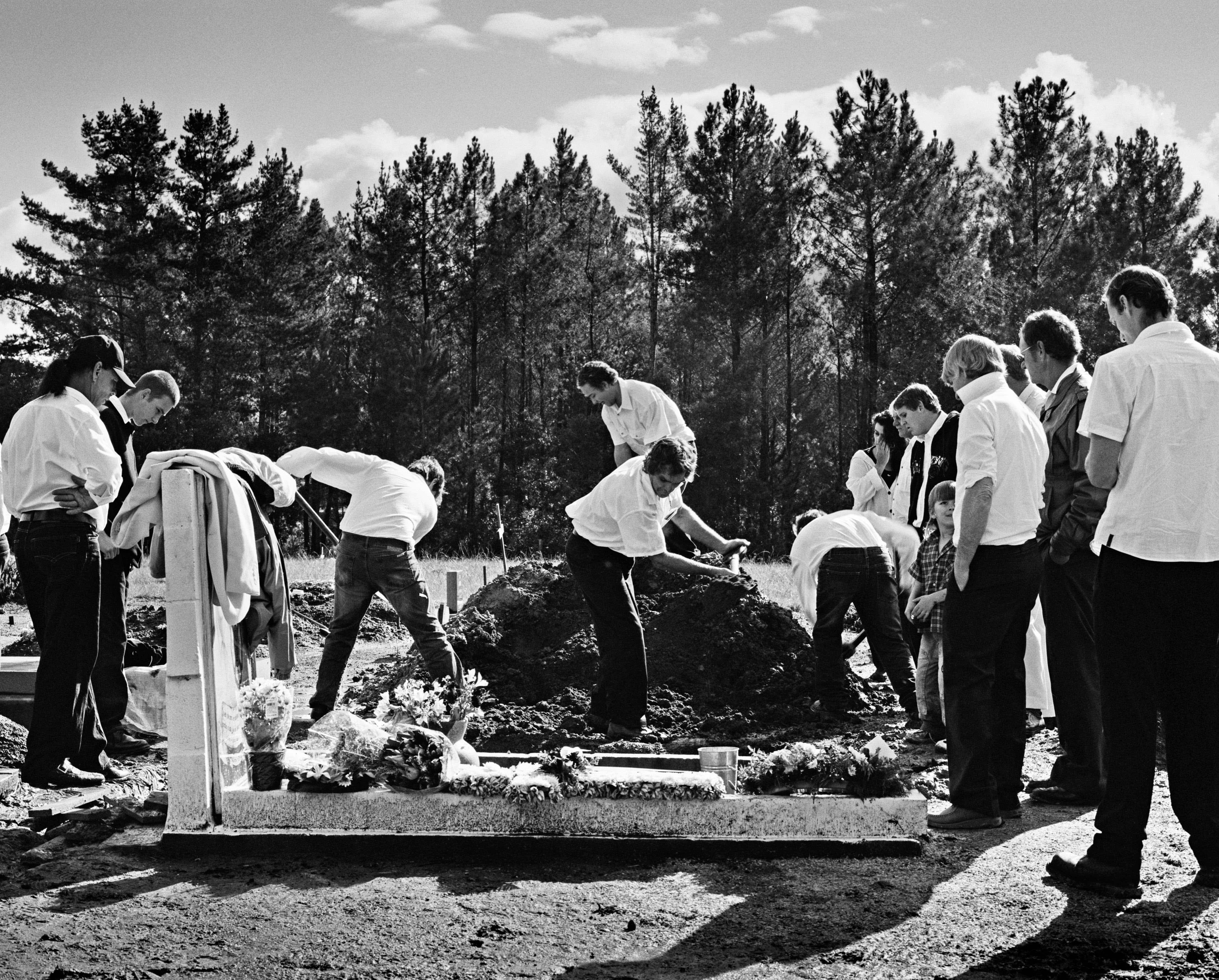
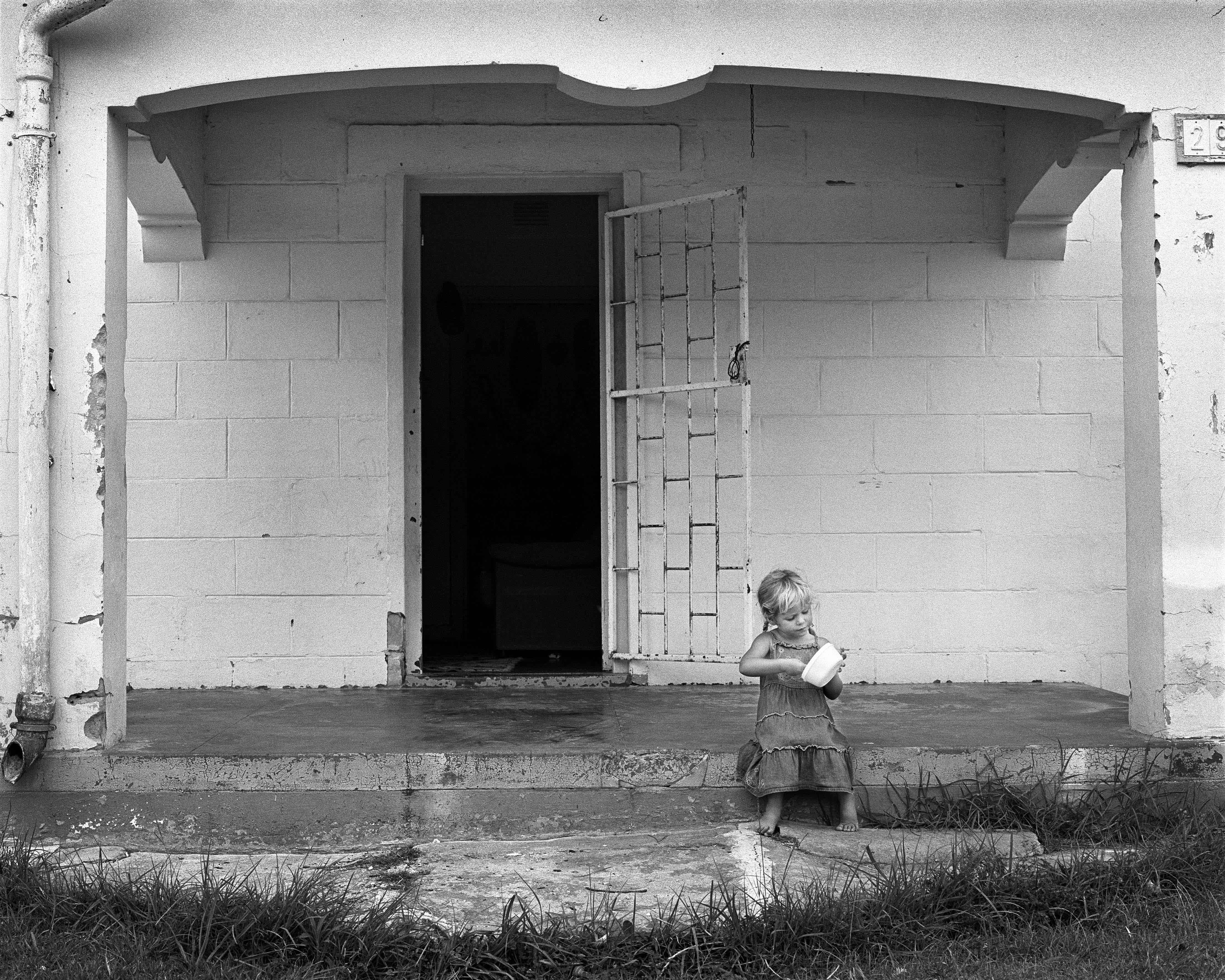
Pierre Crocquet first encountered the woodcutters’ descendants during childhood holidays to the region, and developed an instant fascination with them. Years later, they became the subject of his first major documentary series. Having primarily shot street scenes on 35mm film, Crocquet turned to 6×7 medium format for Enter Exit, a decision reflective of a new seriousness in his work.
Crocquet photographed the residents of Karatara over two years, painting a frank, all-encompassing portrait of the community. He didn’t shy away from the cruellest aspects of life in the Cape – death, disability, poverty – though the series is not without warmth or humour. In one shot, a weather-beaten worker extends a vessel to the photographer in hospitality. In another, an elderly woman nonchalantly sips tea, a pig’s head nestling in a bowl on her table. Elsewhere, a man with no legs smiles in front of a clothesline weighed down by several pairs of jeans.
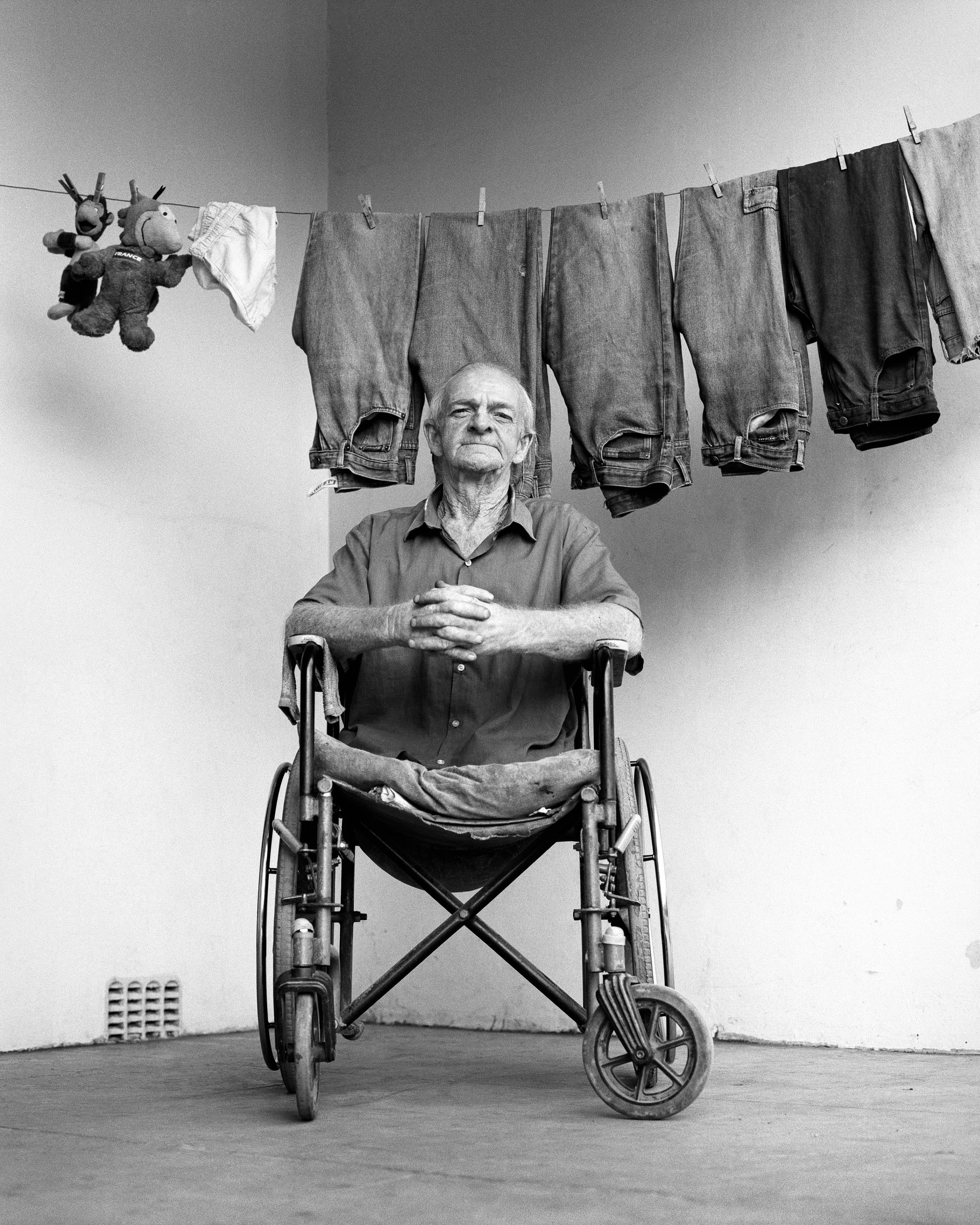
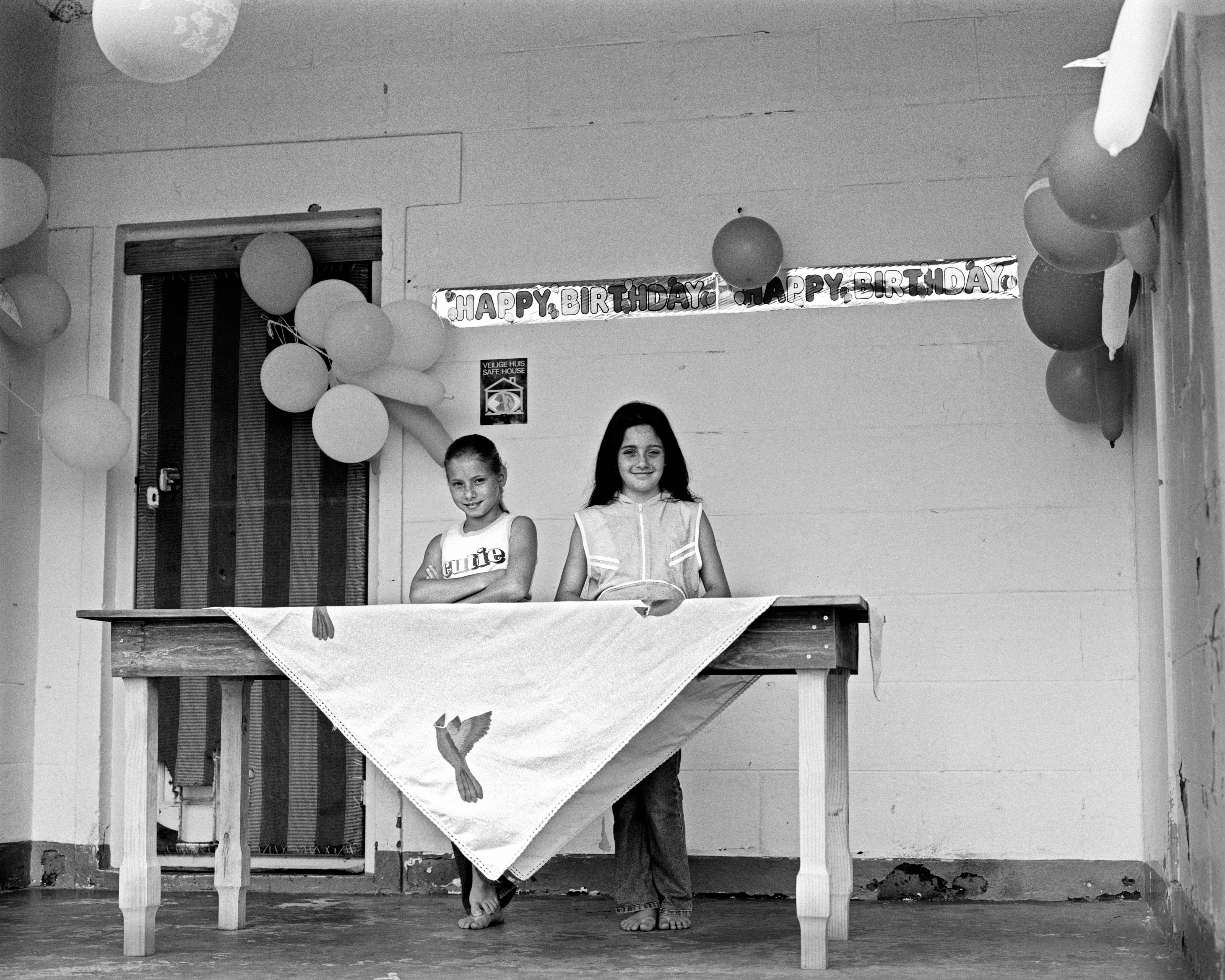
Crocquet, who was killed in a hit and run accident in 2013, left the images untitled, but his field notes, jotted on the back of his initial prints, give clues as to his conversations with his subjects. On the photo of an amputee farmhand is written simply “I walked far”, and “trouble at home.”
Ten years on, a number of Crocquet’s subjects are dead. His portraits of a dwindling population have become more poignant as the residents of Karatara continue to move on.
Crocquet’s own legacy is kept alive by his sister Jeannine, who lovingly organises and shares photos from his archive. His work is still exhibited internationally, and is collected in five books, but social media has spread it further still. Jeannine shares Pierre’s work on Instagram, reddit and Facebook, and on each of those platforms, his work is consistently popular.
“It’s really quite organic,” says Jeannine, “it goes quiet for a while and then something springs up and there is interest again. The role it has played in bringing awareness to the work is phenomenal.”
Though Pierre’s photographs are popular online, and acclaimed in certain quarters, Jeannine believes they are less well-known than they should be. Some of her brother’s work will be shown as part of a major exhibition at Johannesburg’s Standard Bank Gallery in 2018. Further down the line, Jeannine hopes to re-publish some of her brother’s early street work in a large, affordable volume, making it readily accessible to a new generation of readers.
As a specialist in South African art reference, she is well placed to manage Pierre’s catalogue. Little surprise, it holds a particularly important place in her heart.
“It makes me feel really fantastic, quite honestly” she says. “Constantly working with the images, the scribblings on the contact sheets, going through his many notebooks… it keeps him very much alive. It’s a way of communicating with him about something that was extremely important to him.”

See more of Pierre Crocquet’s work on his official website.
Enjoyed this article? Like Huck on Facebook or follow us on Twitter.
You might like

On the set of ‘La Bamba’, lost Latino legend Ritchie Valens’s biopic
The overnight rockstar — The Chicano rock & roll star exploded overnight in the late ’50s, but just as quickly he was gone, killed in a plane crash along with Buddy Holly. An ’80s biopic saw him immortalised on the big screen, which photographer Merrick Morton captured behind the scenes.
Written by: Miss Rosen

Louis Theroux’s ‘Manosphere’ shows men aren’t the problem, platforms are
No Ws for Good Men — The journalist’s new documentary sees him dive headfirst into the toxicities and machinations of the male influencer economy. But when young creators are monetarily incentivised to make more and more outrageous content, who really is to blame?
Written by: Emma Garland

In the 1960s, African photographers recaptured their own image
Ideas of Africa — An exhibition at the Museum of Modern Art explores the 20th century’s most important lensers, including Seydou Keïta, Malick Sidibé and Kwame Brathwaite, and their impact on challenging dominant European narratives.
Written by: Miss Rosen

Reynaldo Rivera’s intimate portrait of queer Latino love
Propiedad Privada — Growing up during the AIDS pandemic, the photographer entered a world where his love was not only taboo, but dangerous. His new monograph presents inward-looking shots made over four decades, which reclaim the power of desire.
Written by: Miss Rosen

In photos: The newsagents keeping print alive
Save the stands — With Huck 83 hitting shelves around the world, we met a few people who continue to stock print magazines, defying an enduringly tough climate for physical media and the high street.
Written by: Ella Glossop

Inside Bombay Beach, California’s ‘Rotting Riviera’
Man-made decay — The Salton Sea was created by accident after a failed attempt to divert the Colorado River in the early 20th century. Jack Burke reports from its post-apocalyptic shores, where DIY art and ecological collapse meet.
Written by: Jack Burke


