Discovering Ramadan celebrations in the ancient Ethiopian city of Harar
- Text by Alex King
- Photography by Jonathan Rashad

“For me, the best thing about Ramadan is that it brings people together,” explains Egyptian photojournalist Jonathan Rashad. “Friends and family you don’t see often, to meet during Iftar (when the fast is broken) and eat together.”
While on assignment for UNICEF in Ethiopia in July 2015, Jonathan took a day out to witness celebrations of the Muslim Holy Month of Ramadan in the ancient city of Harar.
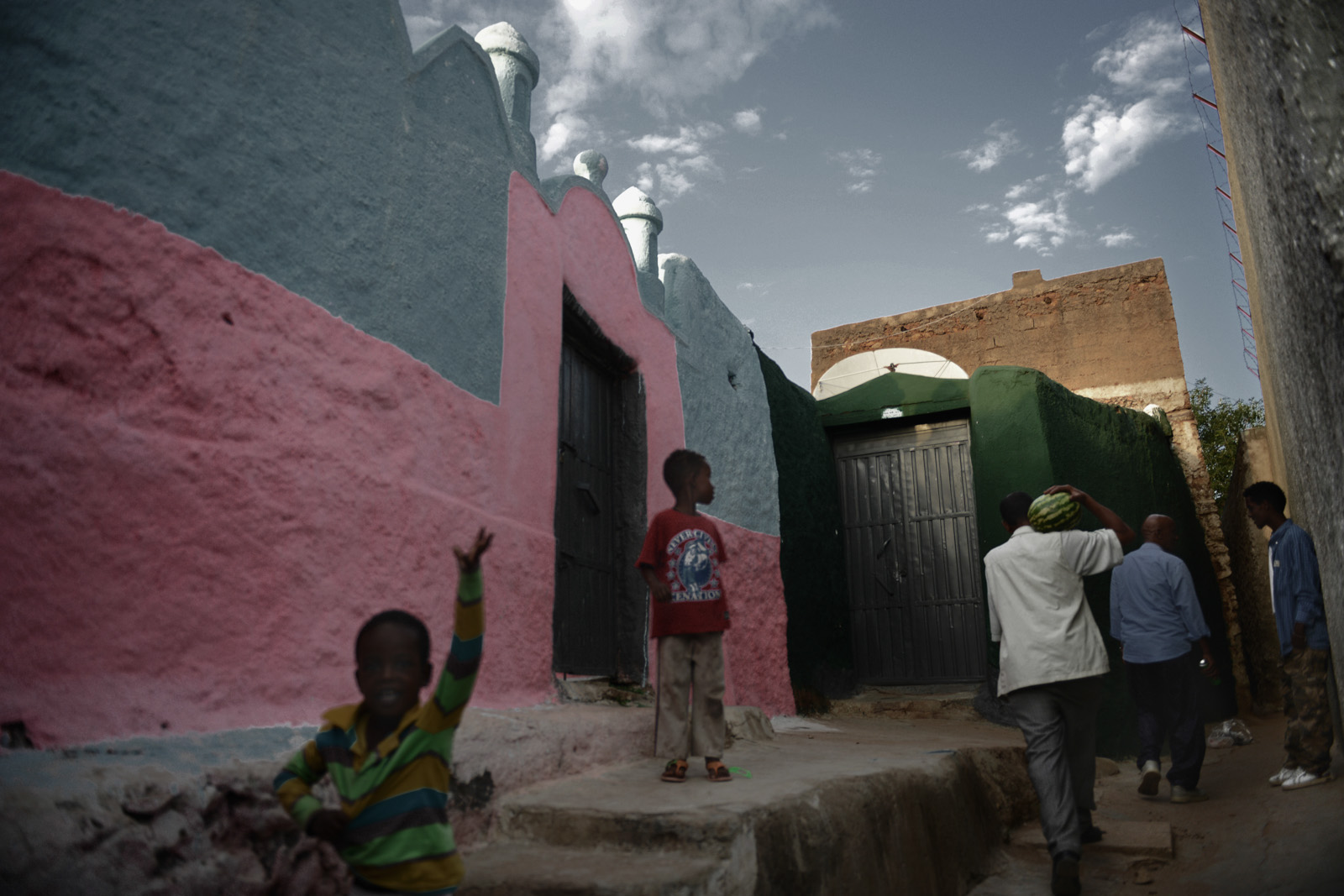
Ethiopian Muslims walk into their homes before Iftar time in Harar, Ethiopia

An Ethiopian Muslim family eats during Iftar time outside a mosque in Harar
“On the way to Dire Dawa, a city in the Oromia region, I stopped for one day in Harar,” Jonathan remembers. “It was a great decision, I fell in love with the city. I was struck by the structure of the old historic wall surrounding the city, the colours of scarfs and dresses the residents wore, the structure of the mosques and shrines, the tiny alleys of the city and how we were treated – they treated us like family.”
Harar was once an important centre of Islamic culture and religion in the Horn of Africa during the late Middle Ages. Home to a total of 184 mosques and shrines, Harar is considered the fourth holy city of Islam. Its famous wall was built in the sixteenth century by Emir Nur ibn Mujahid to protect against attack from the neighbouring Christian Ethiopian Empire, but today Muslims and Christians share the city in peace.
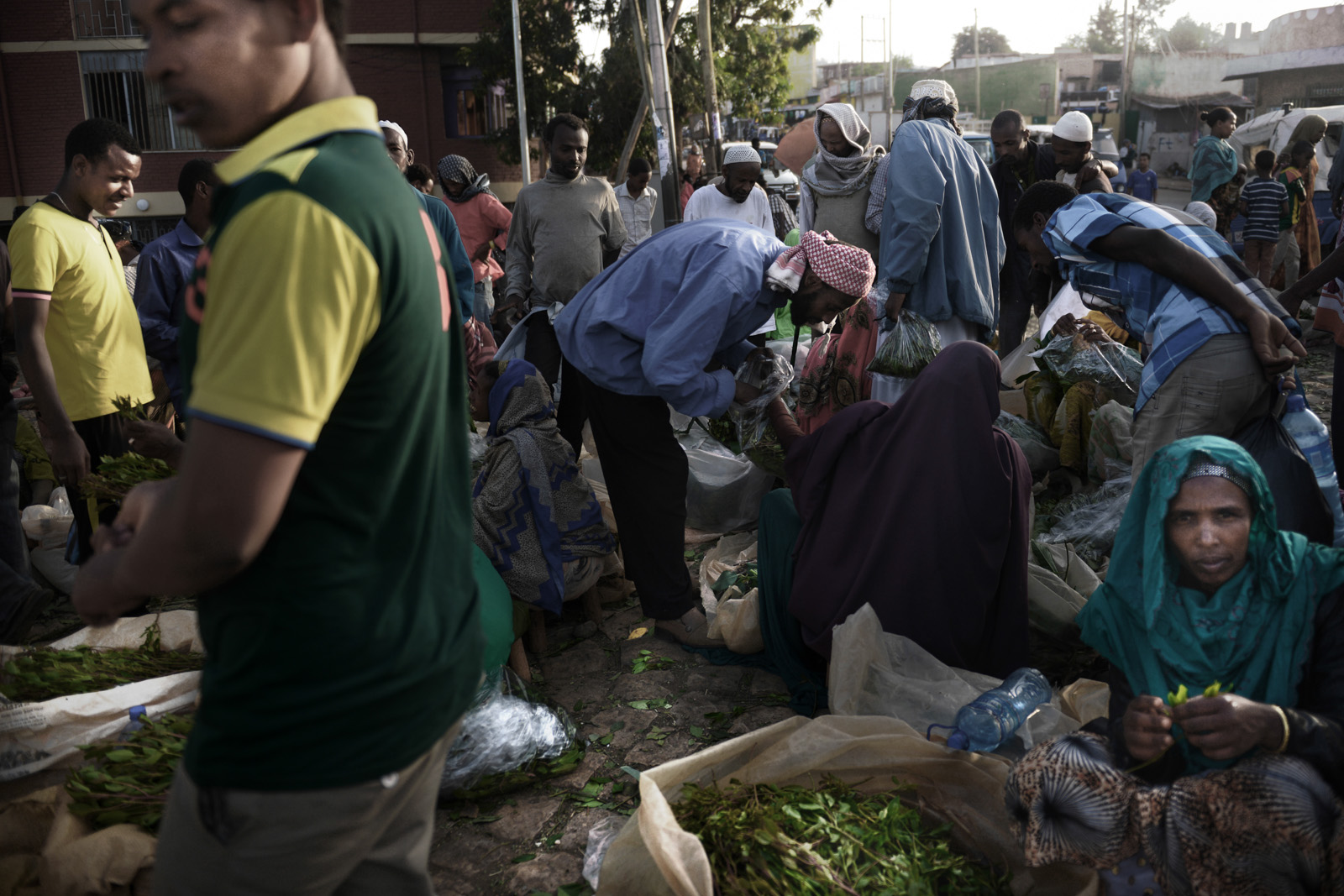
A Khat market in Harar, Ethiopia during Ramadan. Even though Yemen is the most known country for consuming Khar, Ethiopia was allegedly the first country to ever grow the plant, which is said to cause excitement, loss of appetite and euphoria.

Street vendors sell drinks to observant Muslims before Iftar in Harar
Jonathan was interested to see the differences between how Ramadan was observed in Harar and in Cairo, where he’s based. “In Egypt, there are very specific Ramadan-related traditions,” he explains. “People hang lanterns around the streets, a cannon is fired to notify observant Muslims with Iftar time, kids decorate their schools before the Holy Month begins and rich people offer free food to the poor at Iftar. In Harar, I saw none of this. Ramadan was not seen on the street. It was seen instead inside the house of the observant Muslims and near the mosques.”

Ethiopian Muslims pray at a mosque in Harar

An Ethiopian Muslim family in their home at Iftar time
Although still a predominantly Muslim city, Harar has a far more relaxed attitude to the observance of Ramadan than Jonathan is used to at home. “In Cairo, the bars and hotels ban selling alcoholic drinks to Egyptians during Ramadan,” he explains. “But in Harar, bars were still operating and I got to try the beer produced in the city, known as Harar Beer. It was totally fine to eat or drink on the street, but in Cairo it’s almost a taboo to drink or eat on the street before Iftar time.”

A bartender at a bar in Harar, Ethiopia during Iftar time. Even though Harar is conservative, the city produces its own beer and has a few bars.

An Ethiopian poses for a photo while chewing Khat at his place in Harar
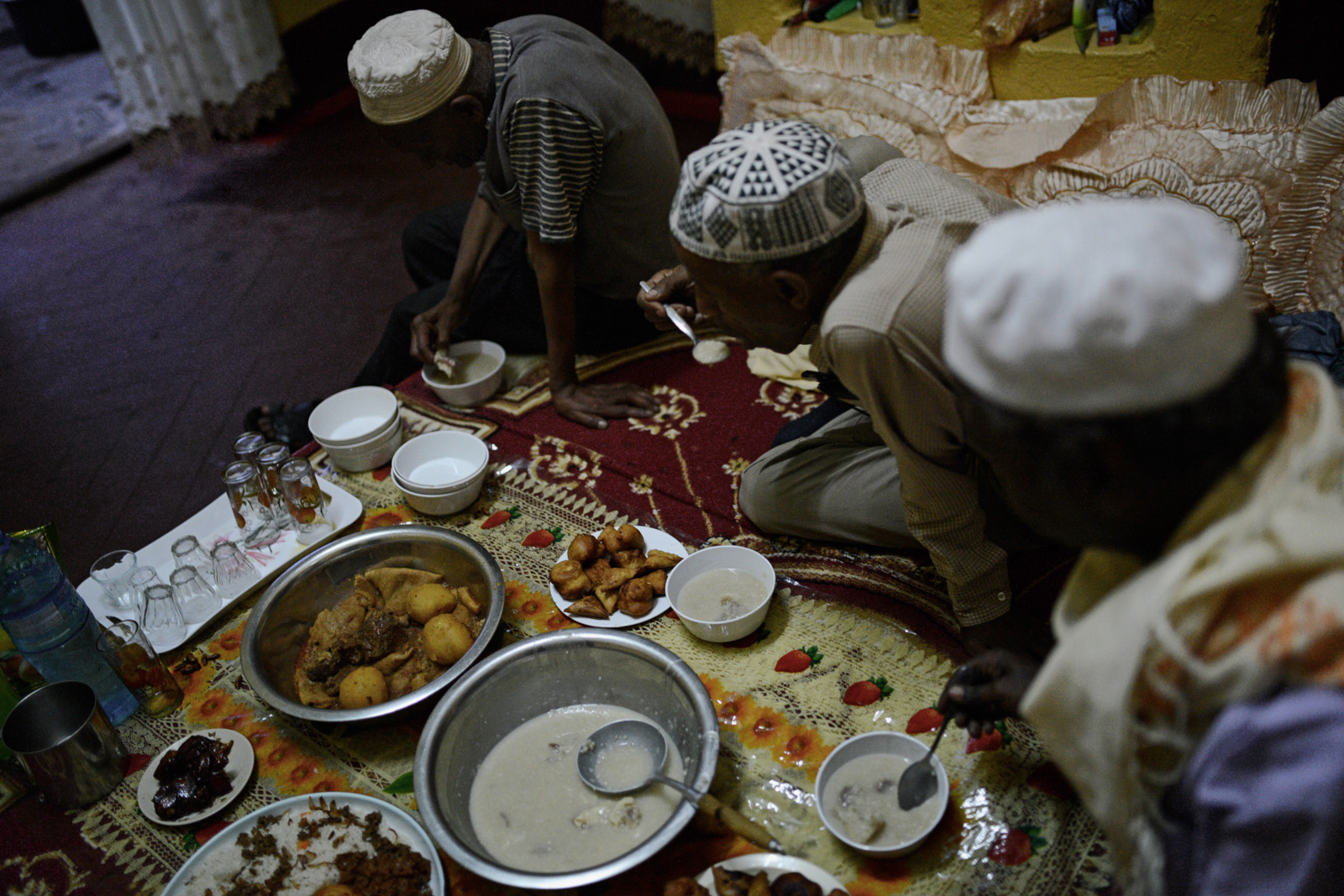
An Ethiopian Muslim family eats during Iftar time inside their home

An Ethiopian Muslim prays inside a mosque during Tarawih prayers. Tarawih are extra prayers performed by Sunni Muslims during Ramadan.
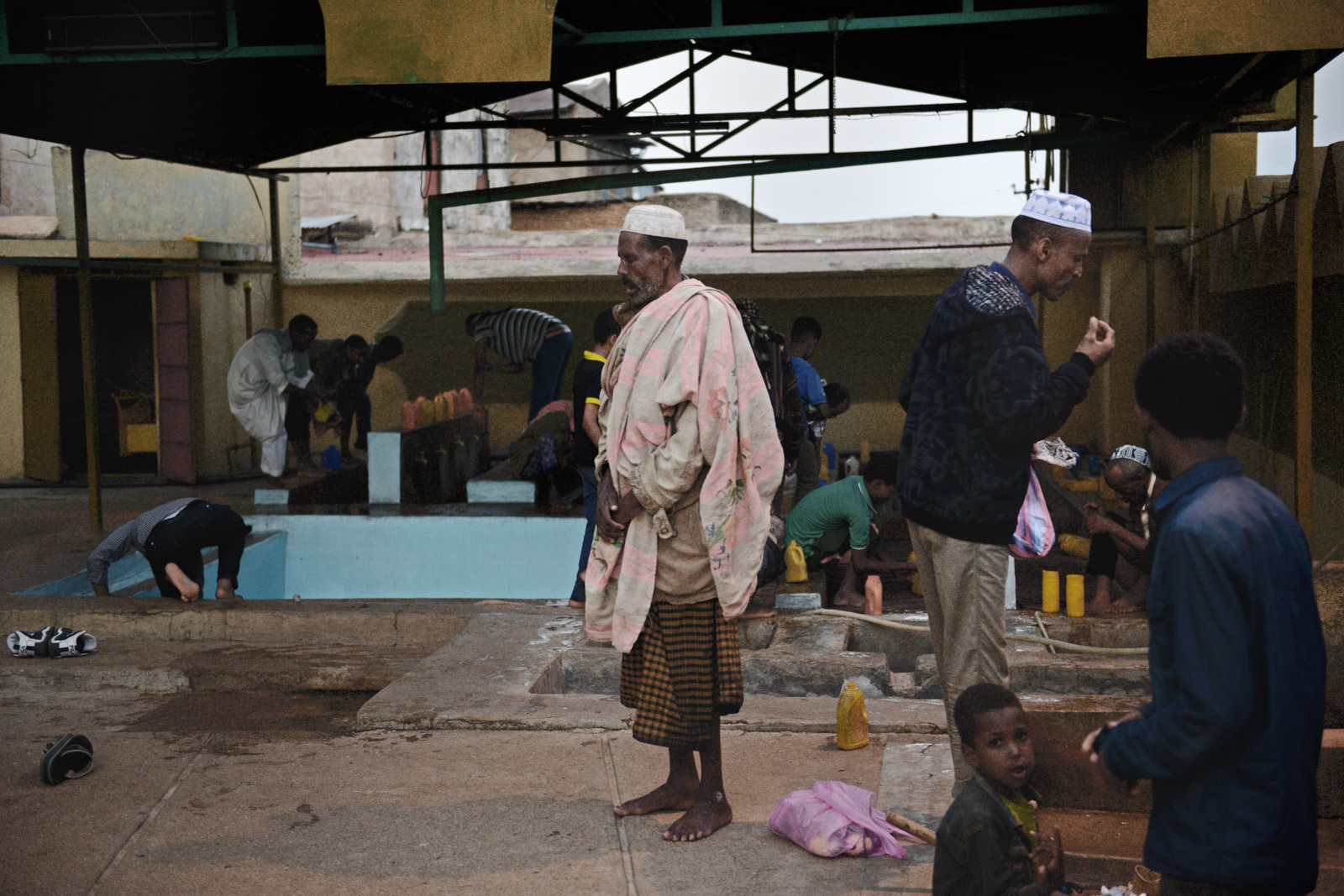
Ethiopian Muslims perform Wuḍū at a mosque in Harar. Wuḍū is an Islamic obligatory procedure for washing parts of body (hands, mouth, ears, head, feet) before prayer.

Ethiopian Muslims pray at a mosque during Ramadan

A grocery market in Harar during Ramadan

An Ethiopian street vendor sells Khat in a grocery market in Harar. Even though Yemen is the most known country for consuming Khar, Ethiopia was allegedly the first country to ever grow the plant.

An Ethiopian Muslim cooks at her place in Harar

An Ethiopian child stands by a mosque in Harar during Iftar time
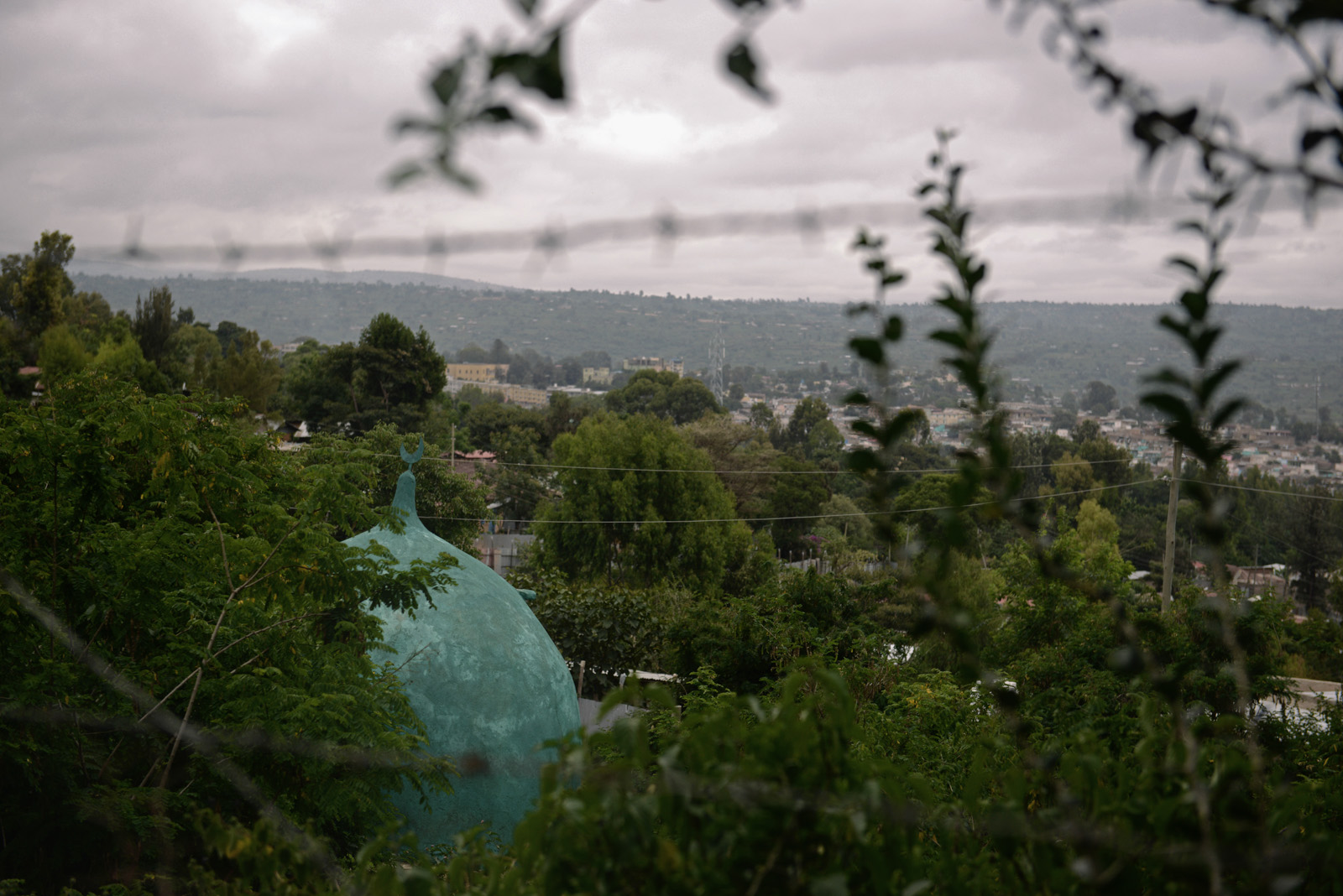
An Islamic shrine that overlooks the Ethiopian city of Harar
Find out more about Jonathan Rashad’s work.
Enjoyed this article? Like Huck on Facebook or follow us on Twitter.
You might like

Photographing America’s 20th century rebels
Rebels With a Cause — A new monograph looks back at Jean-Pierre Laffont’s extensive archive documenting counterculture, art, activism and more, shaping the country as it is today.
Written by: Isaac Muk

A chaotic portrait of an ’80s American farming family
Holy Cow! — Melonie Bennett grew up on a farm in Maine in the ’80s, and documented her family’s idiosyncratic daily life. She presents those humorous, everyday memories in a new exhibition and photobook.
Written by: Miss Rosen

Exploring girlhood and land ancestry in Sudan’s cotton fields
Cotton Queen – A new feature debut from filmmaker Suzannah Mirghani explores the legacy of colonialism and the fight for self-determination through the tender eyes of a teenage girl.
Written by: Roxana Diba

Portraits of gay bears through a rooftop hatch
Big Boys On My Roof™ — Growing up, Anthony Stockdale struggled with his love for bigger men. His new photo series celebrates the bear community.
Written by: Anthony Stockdale

In photos: Lives of solitude at the world’s edge
Coirón — Pie Aerts’s new photobook documents years spent in close quarters with puesteros in Patagonia – a group of aging gauchos who live almost completely isolated existences.
Written by: Isaac Muk

The raw, fledgling intimacy of Peter Hujar’s contact sheets
Hujar:Contact — A new photobook highlights the process of the legendary queer photographer, and his process of growing into the artist he ultimately became.
Written by: Miss Rosen


