Intimate portaits of Havana’s Chinese community
- Text by Huck
- Photography by Sean Alexander Geraghty

Chinese immigration to Cuba started in the 1850s. Arriving in significant numbers to work in the country’s sugar fields – some voluntarily, others against their will as slaves – the increasing Chinese population quickly set about establishing a community on the island.
By the late 1870s, there were more than 40,000 Chinese in Cuba. Havana’s Chinatown, known as ‘el Barrio Chino de La Habana’, soon became the largest in the whole of Latin America.
However, by the 1950s, things were different. The population was smaller and ageing rapidly. Following the revolution of 1959, waves of Chinese Cubans left the island, with many opting for a new life in the US. Today, el Barrio Chino is a shadow of its former self: ‘A Chinatown with no Chinese.’
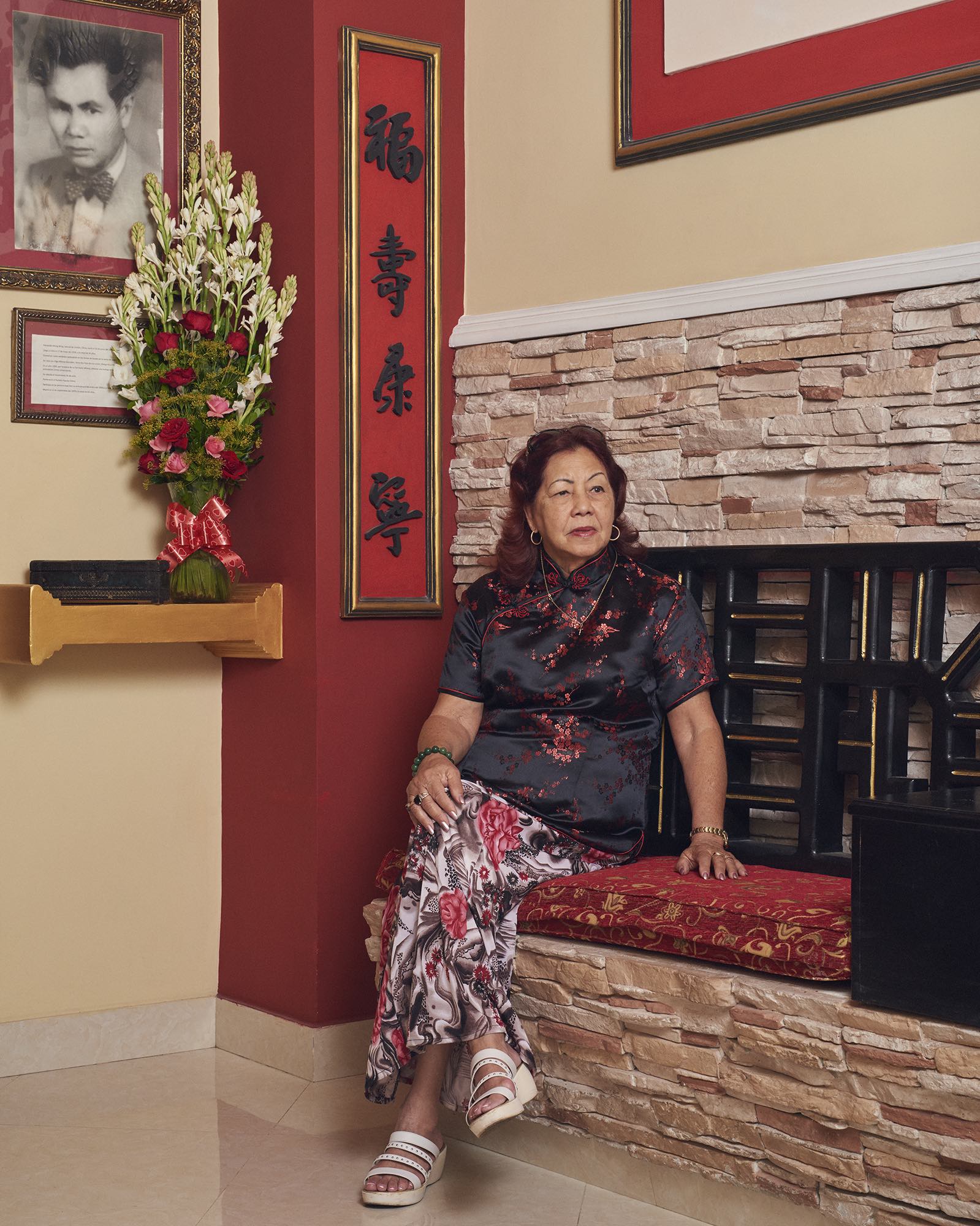
 At the beginning of 2019, having recently learned of its history, photographer Sean Alexander Geraghty visited el Barrio Chino, hoping to photograph the small community that still remained. There, he found a population of Chinese Cubans fiercely proud of their rich personal histories.
“The ageing community is slowly disappearing and their history and traditions with it,” he says. “I thought it was important to pay tribute to them and record their story in these fast-changing times. This project also asks the question, ‘What is National Identity?’ [Exploring] what is it made from, and its inherent conflict with Citizenship.”
 In the series, titled Barrio Chino, Habana, Geraghty captures individuals both in their homes and within spaces they felt represented their identity. Many of the community were second and third generation Chinese Cubans who’d never set foot in China, yet remained dedicated to preserving the culture of their relatives.
And, though Havana’s Chinatown of today may seem a shadow of its former self (“it’s definitely not what you’d expect, a lot of people are disappointed”), el Barrio Chino remains very much alive – even if not at first glance.
 “If you spend enough time and meet the community you’ll be surprised, It all happens inside the ‘sociedad’ community clubs. People there literally live like [they do] in China. From the outside it’s not so obvious, but within it’s incredibly alive.”
“Everyone hopes new generations will take over and fight to preserve the existence of the community. But pretty much everything in Cuba depends [on] the government. Lately they have invested a lot in the area which is amazing, but there is still so much to do.”


 See more of Sean Alexander Geraghty’s work on his official website.
Enjoyed this article? Like Huck on Facebook or follow us on Twitter.
You might like

Jesse Glazzard’s messy portrait of queer friends, lovers and chosen family
The Sound of Dirt and Beauty — The photographer’s debut monograph explores tender, unpolished moments shaped by the people who he surrounds himself with, while offering a window into the UK’s working-class LGBTQ+ community.
Written by: Sunny Sunday

Behind the curtain at Alternative Miss World 1981
Olympia glamour — Running a subversive take on the traditional beauty pageant, the Andrew Logan organised event prioritised underground creativity and invention. Photographer David Corio went behind the scenes at its biggest edition.
Written by: Miss Rosen

New exhibition highlights British radical living over 200 years
Earthly Paradise — Taking place at the William Morris Gallery, it explores the homes and lives of artists, writers, musicians and more, as well as the conditions that allowed them to thrive.
Written by: Isaac Muk

What life on the Strait of Hormuz is really like
Southern Winds — Bandar Abbas based photographer Morteza Niknahad has been capturing the diverse communities and stories of his local region since he first picked up a camera. His new series highlights the human impact of war.
Written by: Isaac Muk

Nick Haymes’s intimate portrait of his family’s life
Chronograph — Over 25 years, the photographer documented his son’s lives as they grew into adults. The resulting photobook is an exploration of the passage of time, as well as the optimism of youth.
Written by: Miss Rosen

Kristina Rozhkova’s scatty, confronting portrait of captivity
Gut Feeling — The Russian artist’s 2024 arrest and subsequent detention opened her eye towards the omnipresent dynamics of power and control. Her new photobook is a stark exploration of being trapped.
Written by: Isaac Muk


