The eerie impact of humanity on nature, in photos
- Text by Miss Rosen
- Photography by Otto Olaf Becker

For more than 30 years, German photographer Otto Olaf Becker has been documenting the earth’s landscape. His work explores the impact of overpopulation on natural resources – including land, water, food, energy, and heavy metals – in remote corners of the earth, where few see what is happening in real time.
After completing his work in Greenland, Becker headed south to Malaysia and Indonesia to explore the devolution of forests under human stewardship. This led to his book Reading the Landscape (Hatje Cantz), selections from which will be on view at ClampArt during The Photography Show presented by AIPAD. Here, Becker shows us beauty, tragedy, and farce in a three-act narrative.
Reading the Landscape opens as the Bible does, with the sublime grandeur of nature, before introducing haunting scenes of destruction that suggest a war fought — and lost. Becker concludes with images made in Singapore, where nature is rendered impotent and reimagined as décor.
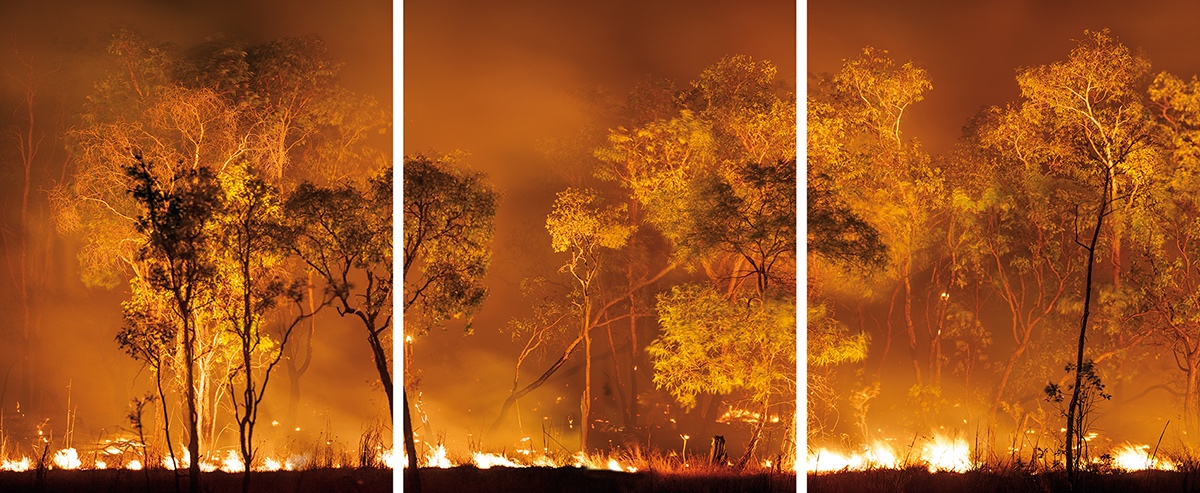
“Bushfire lit to clear land, Australia 2008,” 2008,
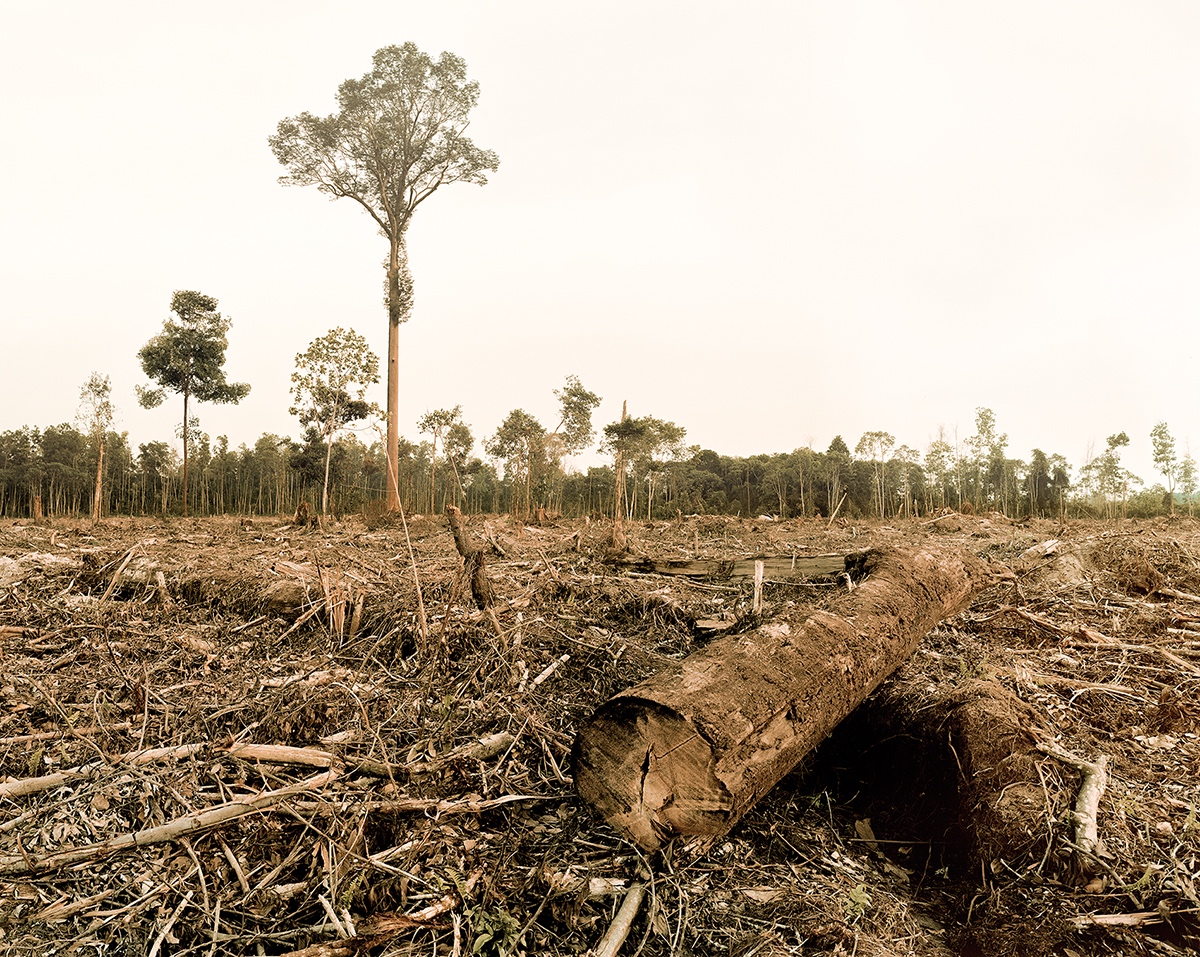
Deforestation, Riau area, Sumatra, Indonesia 10/2013
“We are educated to experience a nature that is a complete invention by human beings,” Becker says. “It is like Disney; it’s not real. There’s an image of a nature trail in the botanical garden, and they arrange the flowers and plants in a way you would never find this combination in nature, but it looks good. They even have speakers where you can listen to the sound of birds. It’s kitsch: overdone and wrong.”
For Becker, the experience of untouched primary forests has transcendent power that extends to the photograph. “One reason that I took photographs of the untouched primary forest is you can only miss things you came to know,” he says.
“It is incredible to walk through a primary forest and hear the animals, see the beauty of nature. A lot of people don’t have this experience. In the future, if we don’t have these things anymore, people will not miss it because they do not know it.”
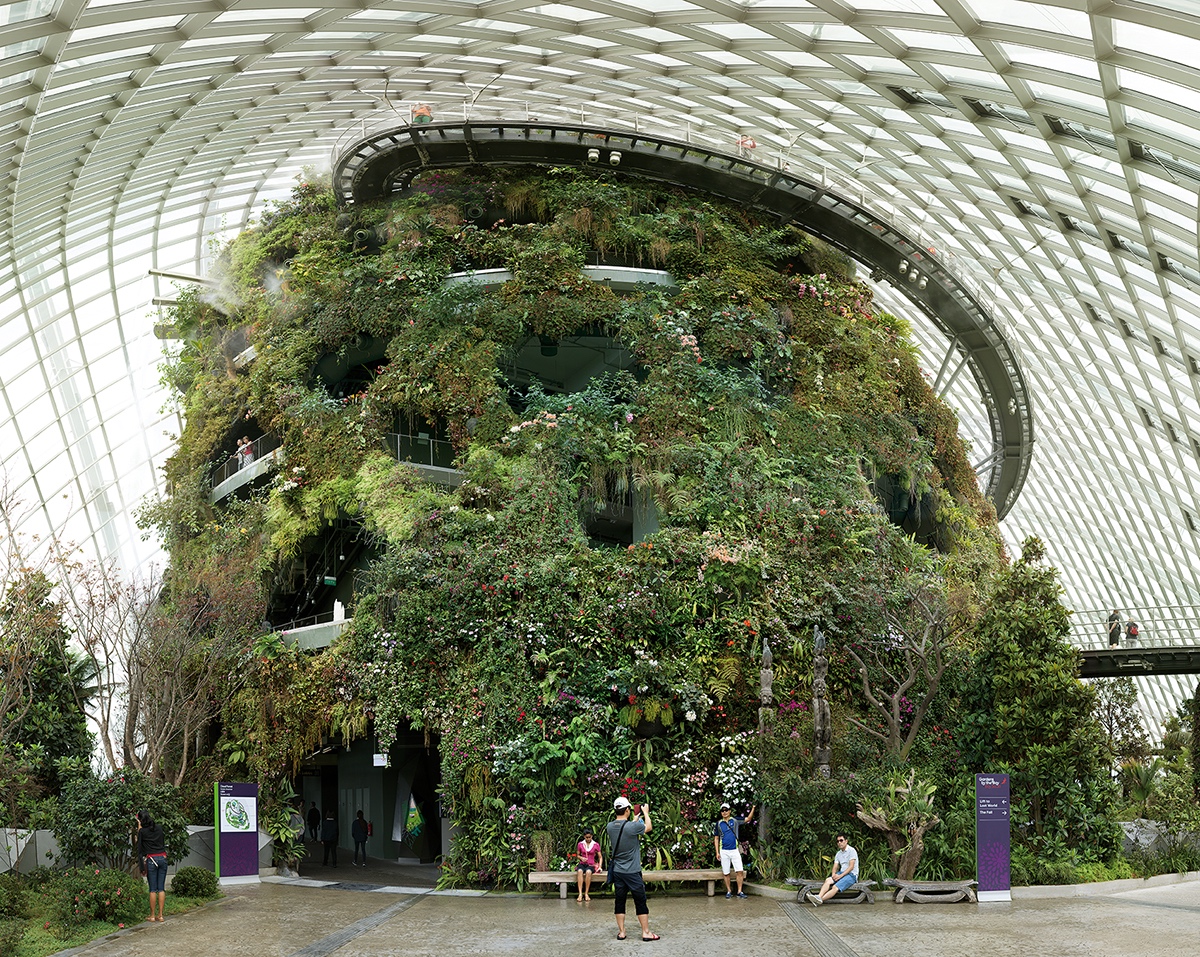
Cloud Forest, Gardens by the Bay, Singapore 10/2013
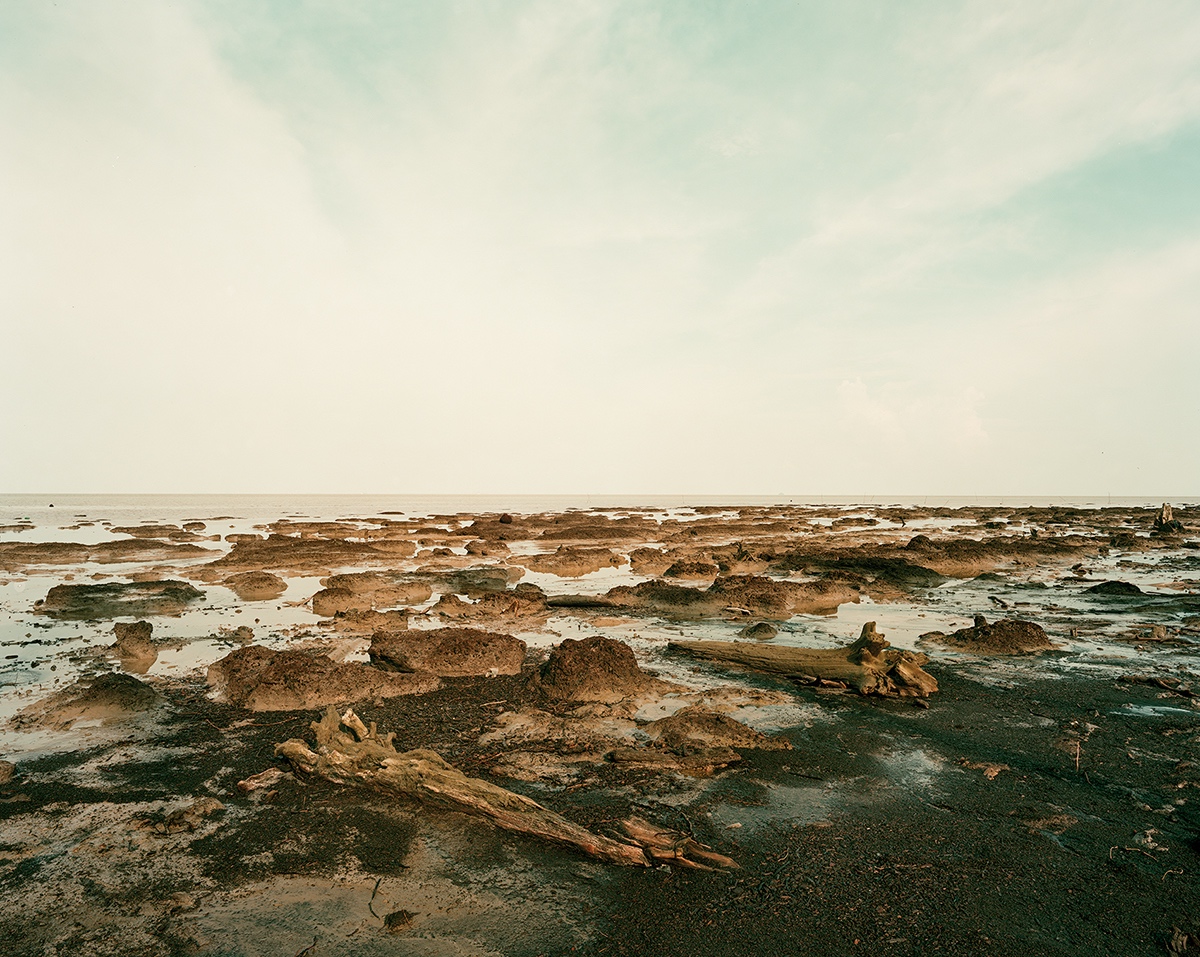
Erosion after logging of mangroves 05 Rangsang Island, Riau area, Sumatra, Indonesia 11/2013
Instead, we may acclimatise to the artificial installations, despite their ultimate environmental impact. “In Singapore, there is a hotel completely decorated with plants – but it’s not good for the plants; they die and have to be replaced again and again. They are just decoration. We have lost contact with nature.”
Despite the devastation Becker has witnessed, he remains an optimist: “I see all over in the world that the people understand we have climate change and we have to change something but we have to work together and the problem is to work together worldwide.”
“We will not be able to solve this problem quickly. We will solve it the more we feel the consequences. When everyone is feeling the consequences, then everyone understands the need to change something. It still needs time.”
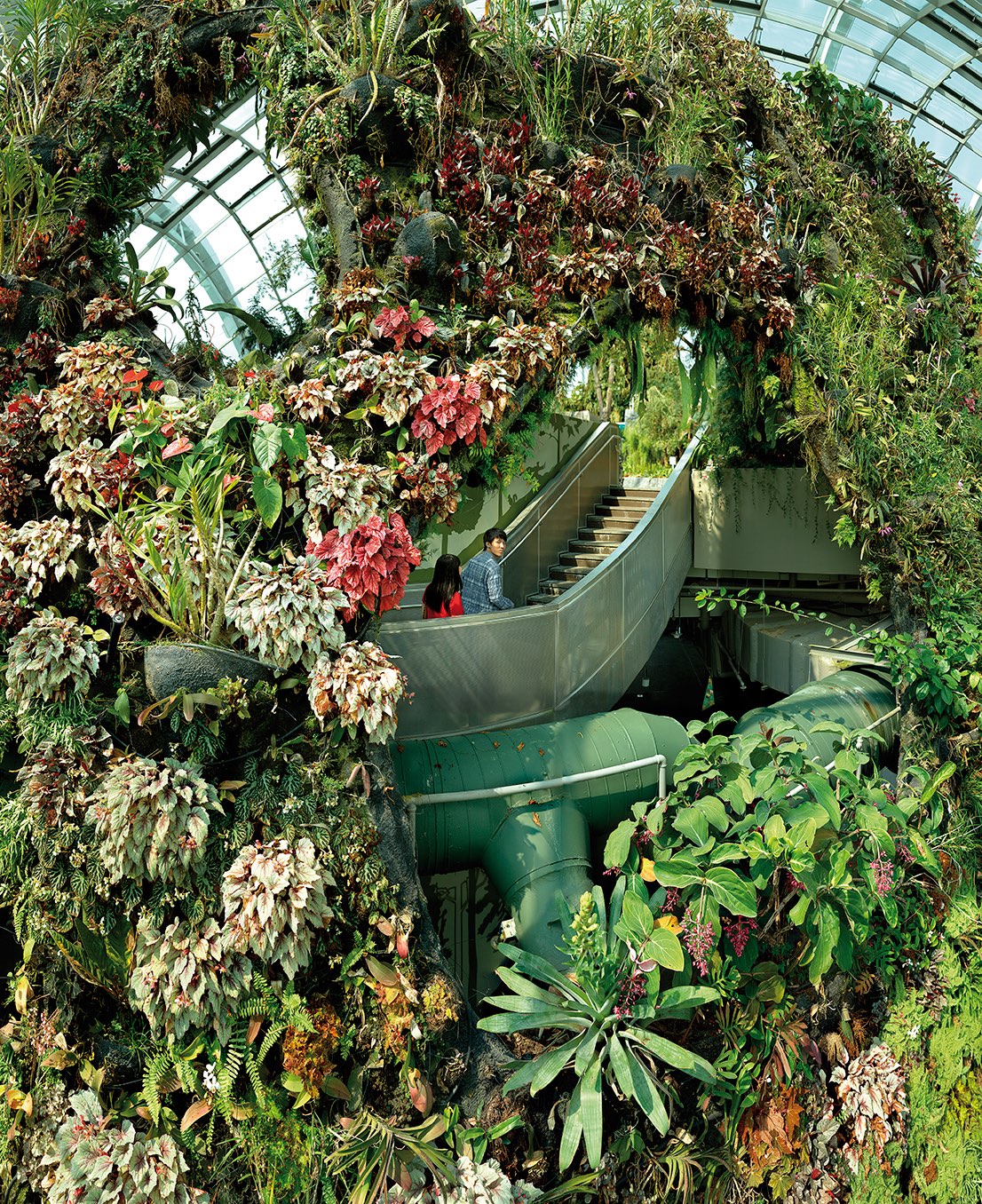
Nature trail, Gardens by the Bay, Singapore 10/2013
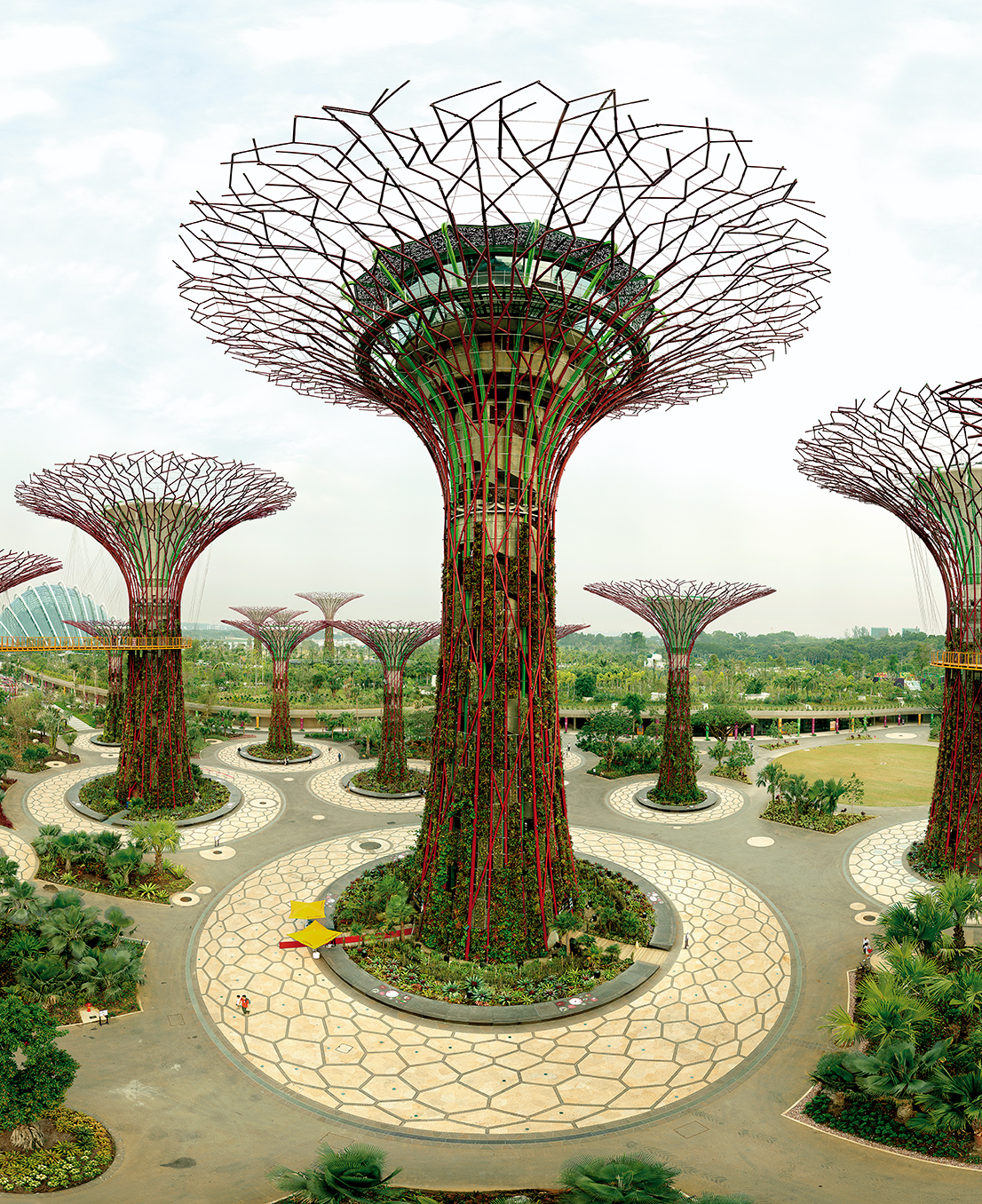
Supertree Grove, Gardens by the Bay, Singapore 10/2012
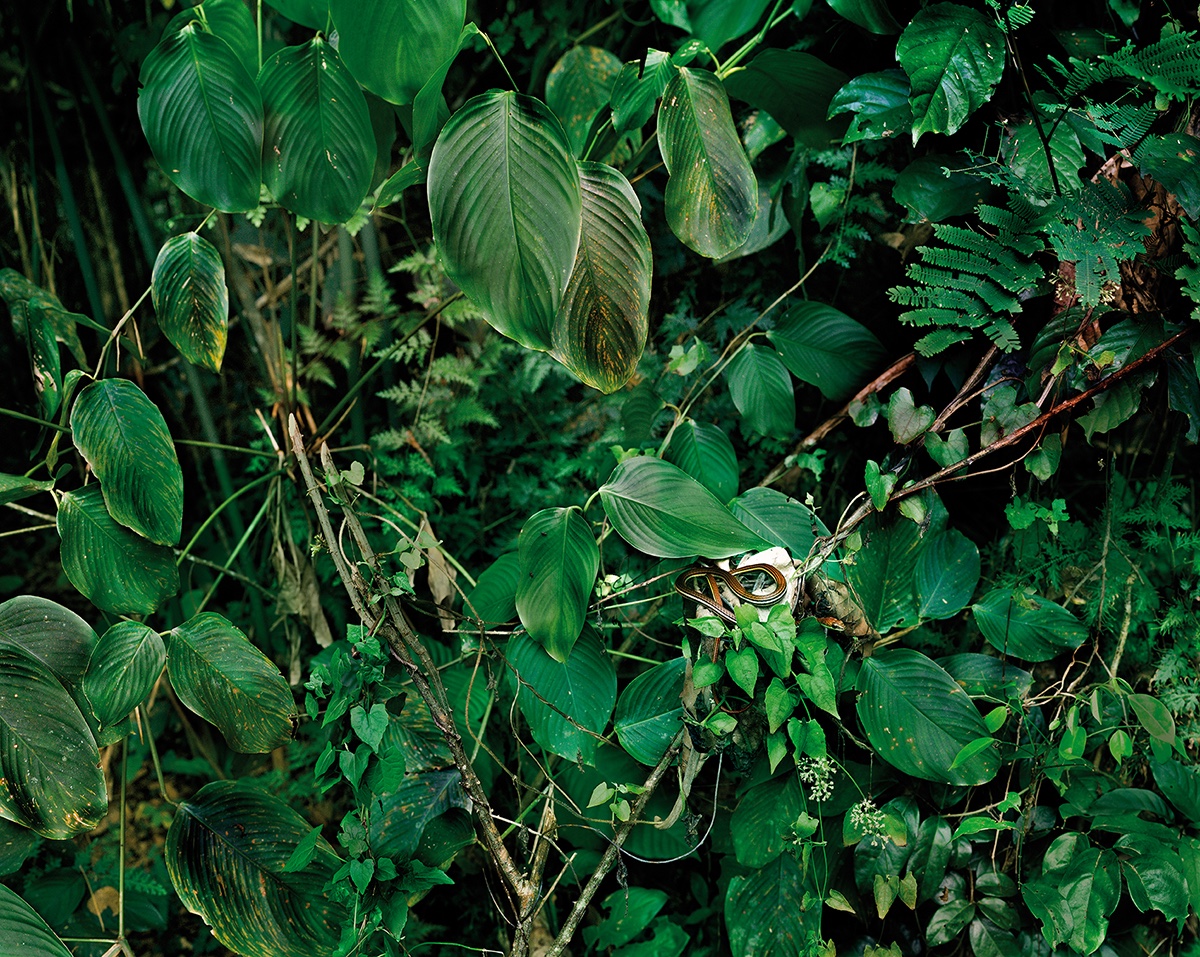
Primary forest 17, Dendrelaphis caudolineatus, 2012
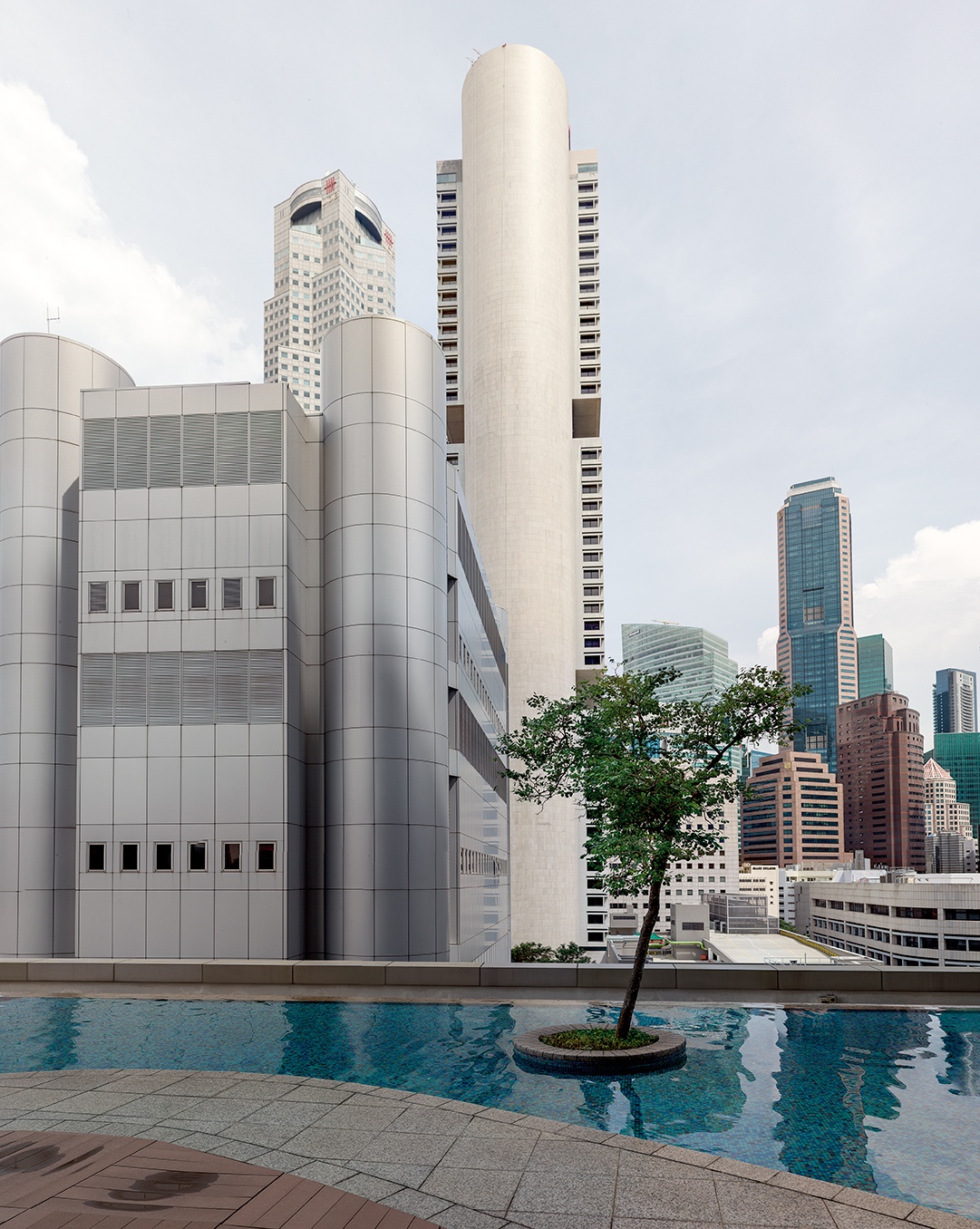
Cloud Forest, Gardens by the Bay, Singapore 10/2013,
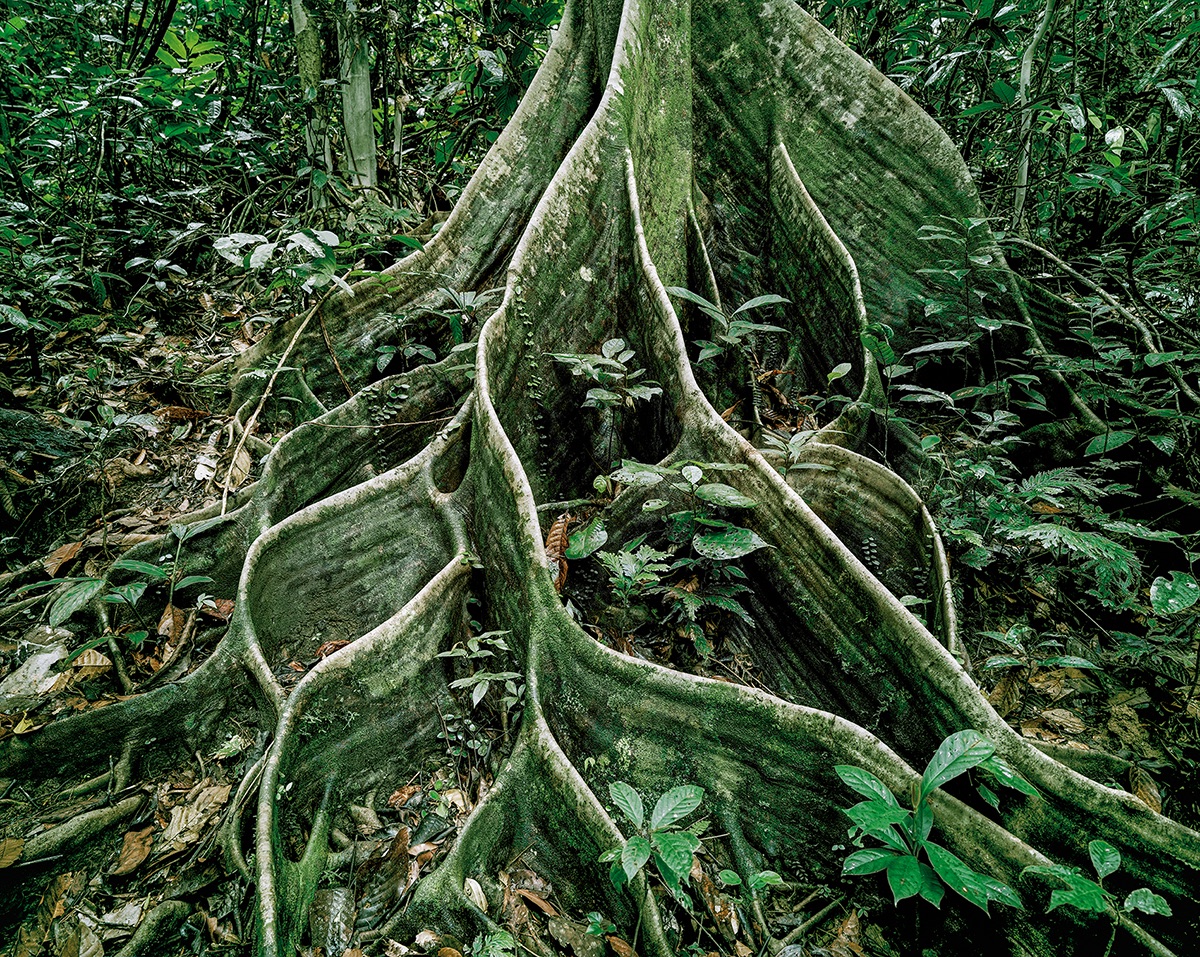
Primary forest 18, roots, Malaysia 10/2012
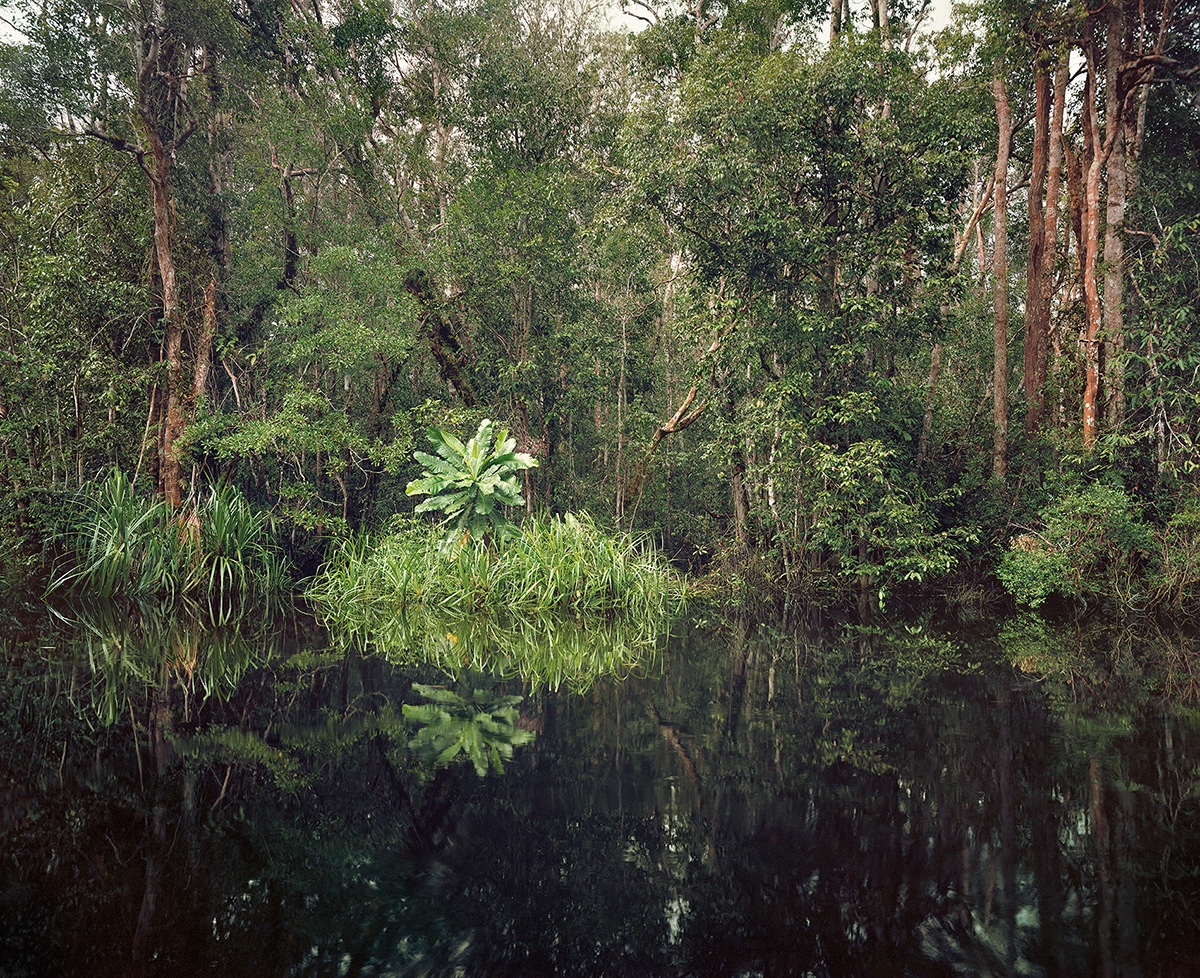
Primary swamp forest 01, black water, Kalimantan, Indonesia 03/2012
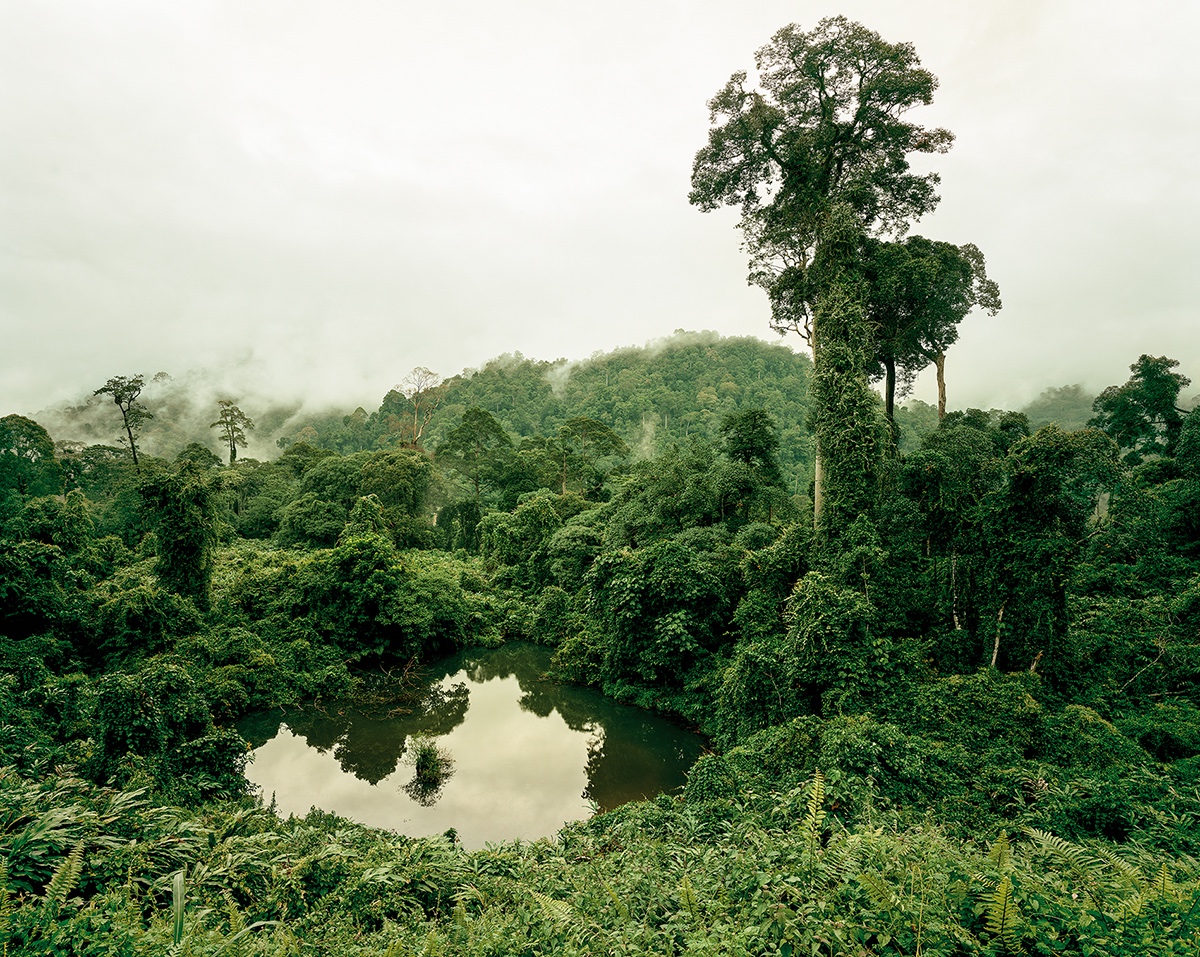
Primary forest 02, lake, Malaysia 10/2012
Reading the Landscape will be view at ClampArt during The Photography Show presented by AIPAD (April 4–7).
Follow Miss Rosen on Twitter.
Enjoyed this article? Like Huck on Facebook or follow us on Twitter.
You might like

On the set of ‘La Bamba’, lost Latino legend Ritchie Valens’s biopic
The overnight rockstar — The Chicano rock & roll star exploded overnight in the late ’50s, but just as quickly he was gone, killed in a plane crash along with Buddy Holly. An ’80s biopic saw him immortalised on the big screen, which photographer Merrick Morton captured behind the scenes.
Written by: Miss Rosen

Louis Theroux’s ‘Manosphere’ shows men aren’t the problem, platforms are
No Ws for Good Men — The journalist’s new documentary sees him dive headfirst into the toxicities and machinations of the male influencer economy. But when young creators are monetarily incentivised to make more and more outrageous content, who really is to blame?
Written by: Emma Garland

In the 1960s, African photographers recaptured their own image
Ideas of Africa — An exhibition at the Museum of Modern Art explores the 20th century’s most important lensers, including Seydou Keïta, Malick Sidibé and Kwame Brathwaite, and their impact on challenging dominant European narratives.
Written by: Miss Rosen

Cold camping in Svalbard, at the edge of the world
Longyearbyen — The Norwegian archipelago is just 800 miles from the North Pole, where temperatures languish far below freezing, but it’s also one of the world’s fastest warming areas. Steph Pomphrey sleeps on the ice with Db to find out more.
Written by: Steph Pomphrey

Reynaldo Rivera’s intimate portrait of queer Latino love
Propiedad Privada — Growing up during the AIDS pandemic, the photographer entered a world where his love was not only taboo, but dangerous. His new monograph presents inward-looking shots made over four decades, which reclaim the power of desire.
Written by: Miss Rosen

In photos: The newsagents keeping print alive
Save the stands — With Huck 83 hitting shelves around the world, we met a few people who continue to stock print magazines, defying an enduringly tough climate for physical media and the high street.
Written by: Ella Glossop


