
The untold stories of Britain’s Polish community

For the first few years of his life, Czesław Siegieda slept under the curved metal roof of a Nissen hut, on an RAF airfield turned displaced persons camp in Leicestershire. His parents, along with 250,000 other Poles, had moved to Britain in the years following the Second World War. They were members of a generation who had seen their country ravaged by war and Soviet occupation.
Over time they formed small communities, all the while believing they were only ‘temporary guests’ in Britain. At the age of 13, Siegieda took up photography. Later, inspired by the storytelling of W. Eugene Smith, André Kertész, and Josef Koudelka, his childhood hobby became a unique work of documenting the overlooked day-to-day aspects of his parents’ generation.
“They grouped together as communities and kept their familiar traditions going,” he remembers. “They formed Polish Saturday morning schools for their children so that they could teach them the Polish language, customs, traditions, that little bit of Polish history., but more importantly, their religion – prayers, catechism and so on – so that they remained within the Roman Catholic faith.”
Speaking English at school and Polish at home, Siegieda moved seamlessly between lives. “When I was a teenager a lot of people asked whether I was Polish or English, and I honestly couldn’t make up my mind. It was such a confusing question. For me, it was quite normal to switch from one to another. I never saw myself as an outsider.”

Fawley Court, Oxfordshire, England

Tadeusz, Józef and Helena, Loughborough, England
He puts his inquisitiveness down to his informal role as a translator for his widowed mother: “I realised that gave me an ability to be sensitive around people, to observe them and to understand them.”
“When my father died I realised that they’d been through a lot – and they were fairly tough people. However, I was aware that everything I was experiencing and seeing was coming to an end when these people died, which is why I tried to take as many photographs when I could.”
The story of the first generation of Poles to live in the UK is little heard, much less seen. Siegieda explains how the community tended to look inwards, in part because of the racist prejudice they faced, but also because they saw themselves as guests in a foreign country, even as their children came to feel British and as the prospect of returning to an independent Poland diminished.
“They were biding their time without really knowing if it would come around,” he adds, finally. “When the Iron Curtain came down I didn’t really detect a sense of relief, I think they were so used to being in this country – their lives were formed in this country, their homes were here now – that they didn’t express any great wish to go back to Poland.”

Annual Corpus Christi Event, Laxton Hall, Northamptonshire
Laxton Hall, Northamptonshire

Józef waiting to go to church for his First Holy Communion, Loughborough, England

Laxton Hall, Northamptonshire

Pitsford Hall, Northamptonshire

St Briavels Polish Scout House, Gloucestershire, England

Pitsford Hall, Northamptonshire, England

Christmas nativity play rehearsal, Polish Social Club, Loughborough, England

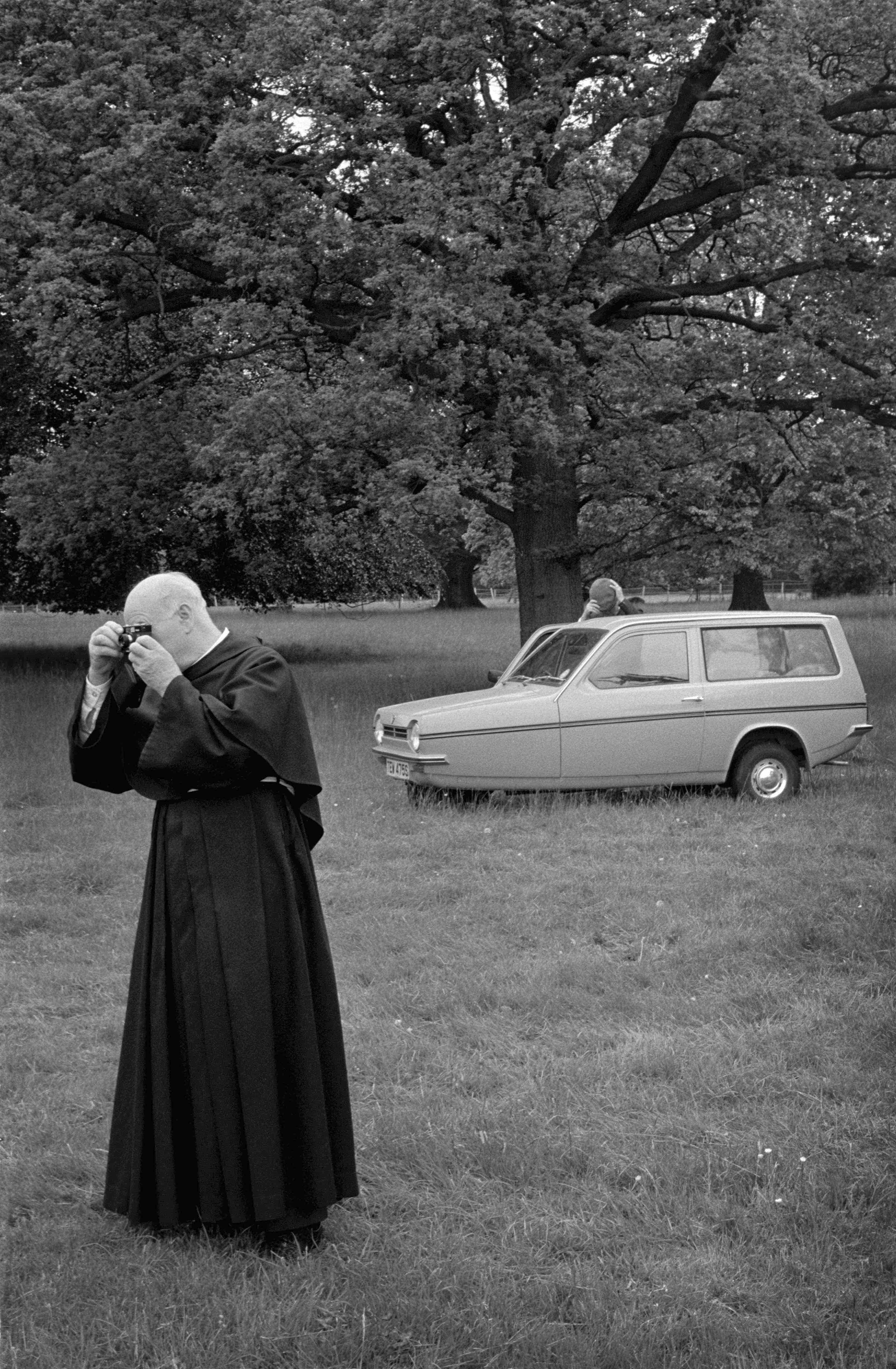
Polish priest on his way to a funeral, Loughborough, England
Polska Britannica will be published by RRB on April 6.
See more of Jacob Charles Wilson’s work on his official website.
Enjoyed this article? Like Huck on Facebook or follow us on Twitter.
You might like

What went down at Huck’s 20th birthday party
84 issues and counting — We took over east London’s Jaguar Shoes with friends old and new to celebrate two decades and our new issue, with Tony Bontana taking the decks for a special set.

Photos of friends, lovers and afters in Berlin’s party scene
Dreams and How to Keep Them – Vincent Wechselberger’s new monograph documents a decade of hedonism in the German capital, and the people he met along the way.

Inside the Los Angeles scene kid revival
The Rawring ’20s — For the cover of Huck 84, photographer Alexis Gross and writer Anna Zanes meet the latest faces of scene, who are finding freedom to express themselves through its technicolour, unafraid aesthetic.

Introducing our new issue of Huck Magazine: It Starts With Us
Huck 84 — For our second 20th anniversary issue, we spotlight 20 people and groups providing the world with a hopeful future.

The sharp rise of video game photography
Point, shoot — As the entertainment medium’s fidelity levels increase and developers build more powerful tools, a growing community of gamers are pushing the boundaries of image making in virtual worlds. Vicky Jessop meets people at the forefront of the emerging artform.

Joyous photos from the heart of the UK’s radical free festival movement
Common Grounds — The photographer has been capturing British counterculture for the past half century. A new exhibition looks at his archive sitting at the intersection of music, community and grassroots protest.


