Capturing West Coast skaters, the Victorian way
- Text by Biju Belinky
- Photography by Jenny Sampson

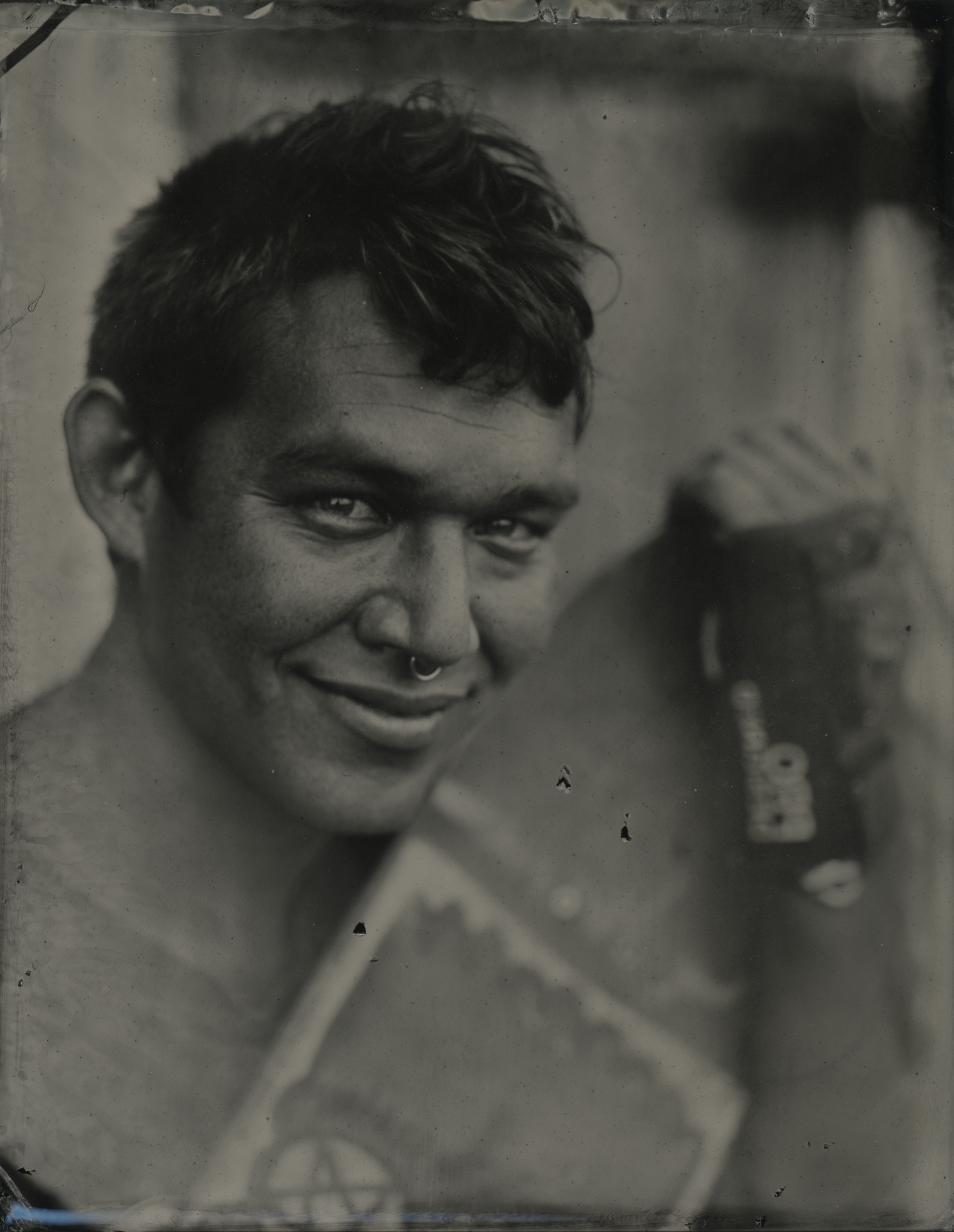
Tintype is a century-and-a-half old Victorian photographic process that requires the subject to keep very still for a few seconds – which is why it’s surprising Berkeley-based photographer Jenny Sampson decided to use it to capture skaters for her latest book named after the subculture.
With an intro by pro-skater and writer Bret Anthony Johnston, over 70 portraits capture the intricacies of the skating scene of the West Coast – through seven years of images, multiple states and skateparks, beyond tricks and stereotypes.
“I loved photographing people in more candid ways and I imagined inconspicuously hanging out and photographing –their gestures, postures, interactions,” Sampson tells me. “Skaters attracted me. I always kind of thought of them as rebellious, and I think I wanted to be rebellious as well, but I was afraid to be. I never got up the courage to approach the skaters at that skate park.”
These photographs remained an idea until 2010 when she finished building her own portable darkroom – something which would allow her to develop tintypes on the go. From that moment on, the series started developing (both literally and figuratively). We caught up with her to find out more about the project.

What do you think makes skating such a unique scene?
I think that skating is a powerful equaliser. It’s a club that anyone can belong to. Of course it has been a male-dominated scene for a long time, however, there are so many girls and women skating now. There is a camaraderie that exists at the skateparks, and the seemingly unspoken rules are respected. I’ve observed skateparks that are the ‘home away from home’, where teens congregate every day after school and older folks hang out with them as their mentor. I’ve observed older, experienced skaters literally pick up six-year-olds who have fallen attempting a trick (while said six-year-old’s mother is on her mobile). I’ve observed guys talking and skating together, seemingly old friends, but then learn that they just met.
What are some misconceptions about the scene that you would like to dispel?
This idea that they are troublemakers and rebellious – at least in the sense that being rebellious is a bad thing. Skaters are lawyers, educators, directors of creative writing at upstanding universities, writers, musicians, politicians, students – the list is endless. They are a group of people who are true to themselves, supportive of each other, impressively disciplined and self-driven, empowered and creative.

 How did you pick your subjects for this series?
I would ask anyone whose attention I could garner if I could make their portrait. Once someone would agree to sit for me, I felt like I won the lottery. They were willing, patient and often excited about the process since many only knew digital photography. For my portraits, they had to sit for a few minutes in front of my large camera, which is the absolute opposite experience of their style of photographing. Then, as with most people who have never been tintyped before, when they saw their seemingly holographic, silvery faces emerge in the potassium cyanide fixer, they were blown away – and then quickly back to the ramp.
You’ve used tintype for a lot of your projects – what do you like about this particular method?
The wet plate collodion process is magical, and there are many reasons beyond that as to why I love this technique. The tactile and analog qualities of the process; the way it forces me to slow down and immerse myself in the process, engaging with my subjects in a more personal way. The end result is a unique object.


 Skaters by Jenny Sampson is available for pre-order now, via Daylight Books.
Biju Belinky is Huck’s staff writer. Follow her on Twitter.
Enjoyed this article? Like Huck on Facebook or follow us on Twitter.
You might like

The raw, fledgling intimacy of Peter Hujar’s contact sheets
Hujar:Contact — A new photobook highlights the process of the legendary queer photographer, and his process of growing into the artist he ultimately became.
Written by: Miss Rosen

Jesse Glazzard’s messy portrait of queer friends, lovers and chosen family
The Sound of Dirt and Beauty — The photographer’s debut monograph explores tender, unpolished moments shaped by the people who he surrounds himself with, while offering a window into the UK’s working-class LGBTQ+ community.
Written by: Sunny Sunday

Behind the curtain at Alternative Miss World 1981
Olympia glamour — Running a subversive take on the traditional beauty pageant, the Andrew Logan organised event prioritised underground creativity and invention. Photographer David Corio went behind the scenes at its biggest edition.
Written by: Miss Rosen

New exhibition highlights British radical living over 200 years
Earthly Paradise — Taking place at the William Morris Gallery, it explores the homes and lives of artists, writers, musicians and more, as well as the conditions that allowed them to thrive.
Written by: Isaac Muk

What life on the Strait of Hormuz is really like
Southern Winds — Bandar Abbas based photographer Morteza Niknahad has been capturing the diverse communities and stories of his local region since he first picked up a camera. His new series highlights the human impact of war.
Written by: Isaac Muk

Nick Haymes’s intimate portrait of his family’s life
Chronograph — Over 25 years, the photographer documented his son’s lives as they grew into adults. The resulting photobook is an exploration of the passage of time, as well as the optimism of youth.
Written by: Miss Rosen


