A portrait of life in South Africa’s ‘white-only’ squats
- Text by Phil Kneen
- Photography by Phil Kneen

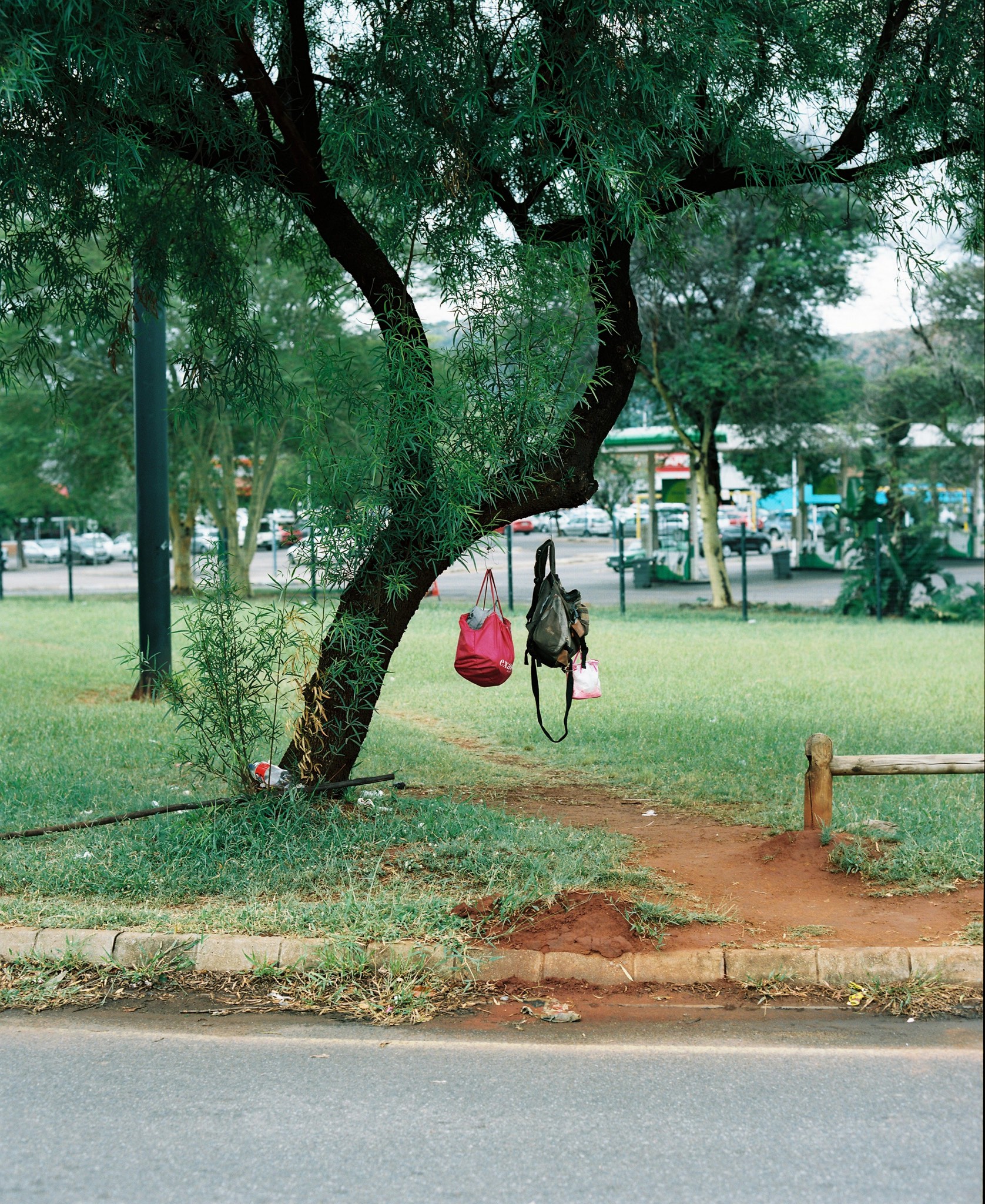
Plakkerskamp is a photo series that documents both the white squatter camps and white-only communities that have developed in South Africa. These images, taken around Pretoria and Johannesburg, represent a fraction of the estimated 450+ squatter camps in the country.
I grew up, and still live, on the Isle of Man. I’m based and work out of Peel, a small fishing town on the west coast of the Island.
In 2015, I spent a couple of weeks over Christmas living with and documenting migrants in the Jungle – the enormous makeshift camp that grew to a population of 7000, situated on the outskirts of Calais, France. After publication, I noticed a few comparisons made to the townships and white squatter camps in South Africa. I was aware of the former, but not the latter.
I went to South Africa to document people in a situation that has gone broadly unreported throughout the rest of world. I like to approach any project – whether it’s an individual portrait or a long-term photo-essay – without any preconceived ideas or rigid outlines. So the only real preparation was booking flights, arranging accommodation in Pretoria and organising a fixer.


My fixer, BJ, would approach anyone who I wanted to photograph and introduce himself and then introduce me. Afrikaans is the first language of most of these people – although a few did speak English – so most of the explaining was done by BJ. The majority of people we approached agreed to be photographed, although some less enthusiastically than others. Anyone who didn’t want to be involved would calmly say, “Nee dankie” (no thank you). On a few occasions, after someone had refused, I’d shake their hand, smile and say thank you, and then the next minute I’d be inside their home, photographing them and whatever else I liked.
By far, the most prominent misconception was that, on entering the squatter camps, I’d be greeted with hostility and suspicion. It’s understandable given some of the local news coverage these people have received. As a result, the prominent concern that the residents had was that they didn’t want images used on social media to depict them in a negative or derogatory light, so openness and honesty about why I was making the images were important from the outset.

I didn’t address racism with anyone that I photographed. However, it did enter conversations I had with white South Africans who I met during my stay. The general opinion didn’t vary a great deal: Black Economic Empowerment (BEE) is a programme launched by the South African government to redress the inequalities of Apartheid. It aims to give previously disadvantaged groups employment, but it appears to have caused more divisions. Many of the people I photographed believed that white, blue-collar workers were being replaced by black workers, regardless of experience or qualification.
An opinion which resonates throughout the world is that the white South Africans – predominantly Afrikaners – in some way ‘deserve everything they get’ for their treatment of black South Africans over 50 years of Apartheid. But what’s undeniable is that wherever you look around Pretoria and Johannesburg, the situation could not be any further away from Nelson Mandela’s vision of a ‘Rainbow Nation.’
I class myself as a documentary photographer, and I went to South Africa to document people in a situation that has gone broadly unreported throughout the rest of world. I only want to ‘show’, regardless of any political or historical bias. Viewers can, and will, come to their own conclusions.


Enjoyed this article? Like Huck on Facebook or follow us on Twitter.
You might like

Reynaldo Rivera’s intimate portrait of queer Latino love
Propiedad Privada — Growing up during the AIDS pandemic, the photographer entered a world where his love was not only taboo, but dangerous. His new monograph presents inward-looking shots made over four decades, which reclaim the power of desire.
Written by: Miss Rosen

In photos: The newsagents keeping print alive
Save the stands — With Huck 83 hitting shelves around the world, we met a few people who continue to stock print magazines, defying an enduringly tough climate for physical media and the high street.
Written by: Ella Glossop

The quiet, introspective delight of Finland’s car cruising scene
Pilluralli — In the country’s small towns and rural areas, young people meet up to drive and hang out with their friends. Jussi Puikkonen spent five years photographing its idiosyncratic pace.
Written by: Josh Jones

The last days of St Agnes Place, London’s longest ever running squat
Off the grid — Photographer Janine Wiedel spent four years documenting the people of the Kennington squat, who for decades made a forgotten row of terraced houses a home.
Written by: Isaac Muk

How Japan revolutionised art & photography in the ’60s and ’70s
From Angura to Provoke — A new photobook chronicles the radical avant-garde scene of the postwar period, whose subversion of the medium of image making remains shocking and groundbreaking to this day.
Written by: Miss Rosen

Artifaxing: “We’ve become so addicted to these supercomputers in our hands”
Framing the future — Predominantly publishing on Instagram and X, the account is one of social media’s most prominent archiving pages. We caught up with the mysterious figure behind it to chat about the internet’s past, present and future, finding inspiration and art in the age of AI.
Written by: Isaac Muk


