Photos capturing the fragility of the American Dream
- Text by Isaac Muk
- Photography by Thomas Hoepker

Nearly six decades ago, in 1963, a young and fresh-faced Thomas Hoepker was working as a staff photographer at West Germany-based magazine Kristall. Backed by the enviable budget of a 20th-century print publication, Horst Mahnker, then editor-in-chief, asked him a simple question: “Do you feel like discovering America?”
Naturally, Hoepker did. Armed with a camera and partnered with writer Rolf Winter, he set off on a three-month road trip that took them from the east coast to the west and back again, capturing shots of the people in giant metropoles, folks of the rural backcountry and the small towns in between.
The photographs, shot on black and white film, range from the disturbing – a body lying in a pool of blood at an intersection – to the perfectly mundane. Yet all of the shots contain his signature sense of irony, playfulness and incisive critiques of society.
“His photography is very much influenced by the humanist photographers of the ’50s, as well as the later Magnum photographers – who were much more interested in what we call der kleine mann auf der strasse,” says Freddy Langer, the editor of recently published photobook The Way it Was. “It means ‘the less important people of the street’.”

Parade, San Francisco
Focusing on the daily lives of Americans in the 1960s, the shots demonstrate the fragile nature of the American dream by exploring communities lying on the margins of US society. “He’s much more on the side of poorer people than the rich ones, and has never been interested in glamour,” Langer explains.
These photographs came under scrutiny a little over 10 years ago when it emerged that the editor-in-chief who had sent out Hoepker on the trip, Horst Mahnker, had in fact been deeply involved in Nazi Germany’s Third Reich. “The criticism was that [Mahnker] picked photographs [to be published] to make the United States not look as golden and as beautiful as other magazines would do at the time,” says Langer. “But I’ve seen around 600 of these photographs – and they are all like that.”
The Way it Was collates hundreds of photographs from this three-month journey across the states, and juxtaposes them with big, bright colourful shots. These were taken on a more recent road trip in 2020 that Hoepker went on, just three years after being diagnosed with Alzheimer’s disease.
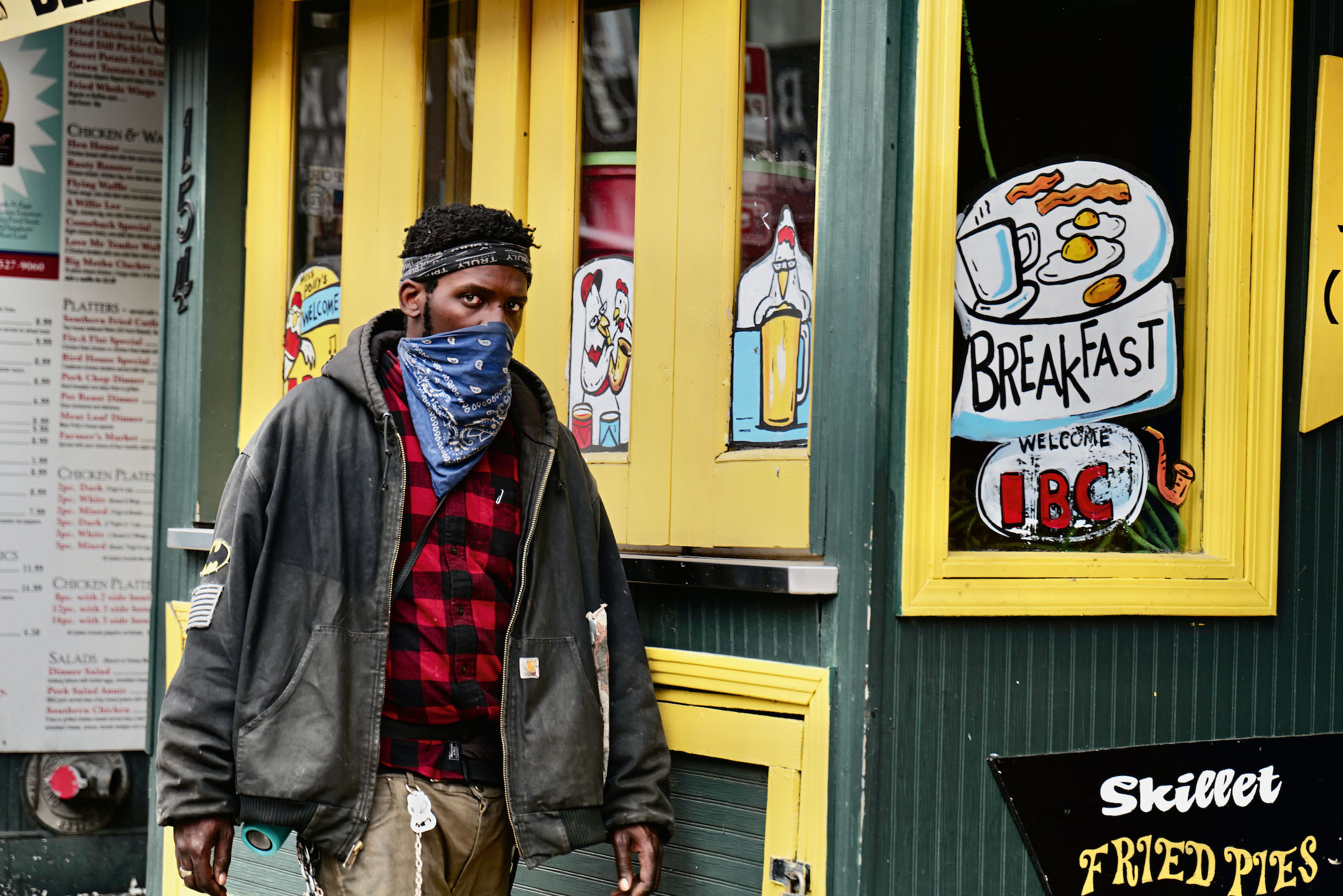
Memphis, Tennessee

Clarksdale, Missisippi
Instead of partnering with a writer, this time he travelled with his wife, Christine Kruchen, in a motor home as they yet again went from coast to coast. Despite his fading memory, one thing that hasn’t wavered is his love and eye for a good shot. “Thomas is still looking for pictures and can still manage his camera,” says Kruchen, with Hoepker sitting by her side, grinning as she is talking.
“Where is my camera?” he asks.
“Oh, it’s behind you,” Kruchen replies, as he turns and reaches for his trusty Leica, and proceeds to take shot after shot of the computer screen he is staring into.


Alabama, Woman in a roadside diner with a juke box at her side, 1963
The bright and coloured photographs of the 2020 road trip still retain much of the humour, social commentary and eye for the unusual as the black and white stills, despite being taken 57 years later and within a world gripped by a pandemic.
Like the first road trip, the disparate nature of the country remains. “I remember vividly in Hollywood, Alabama, how the more conservative religious folks were speaking,” says Kruchen. “Like waiting for the eastern sky to open.”
“For our thinking, it’s so weird – but it symbolises so much the divide in the United States, and the division between people living in those places like Hollywood, Alabama and the coasts in LA or New York,” she adds. “There are worlds in between, literally.”

Las Vegas, Nevada

Children playing in a car wreck in the Mississippi Delta, 1963
The Way it Was by Thomas Hoepker is published by Steidl.
Follow Isaac Muk on Twitter.
Enjoyed this article? Like Huck on Facebook or follow us on Twitter and Instagram.
You might like

Louis Theroux’s ‘Manosphere’ shows men aren’t the problem, platforms are
No Ws for Good Men — The journalist’s new documentary sees him dive headfirst into the toxicities and machinations of the male influencer economy. But when young creators are monetarily incentivised to make more and more outrageous content, who really is to blame?
Written by: Emma Garland

In the 1960s, African photographers recaptured their own image
Ideas of Africa — An exhibition at the Museum of Modern Art explores the 20th century’s most important lensers, including Seydou Keïta, Malick Sidibé and Kwame Brathwaite, and their impact on challenging dominant European narratives.
Written by: Miss Rosen

Reynaldo Rivera’s intimate portrait of queer Latino love
Propiedad Privada — Growing up during the AIDS pandemic, the photographer entered a world where his love was not only taboo, but dangerous. His new monograph presents inward-looking shots made over four decades, which reclaim the power of desire.
Written by: Miss Rosen

In photos: The newsagents keeping print alive
Save the stands — With Huck 83 hitting shelves around the world, we met a few people who continue to stock print magazines, defying an enduringly tough climate for physical media and the high street.
Written by: Ella Glossop

Inside Bombay Beach, California’s ‘Rotting Riviera’
Man-made decay — The Salton Sea was created by accident after a failed attempt to divert the Colorado River in the early 20th century. Jack Burke reports from its post-apocalyptic shores, where DIY art and ecological collapse meet.
Written by: Jack Burke

The quiet, introspective delight of Finland’s car cruising scene
Pilluralli — In the country’s small towns and rural areas, young people meet up to drive and hang out with their friends. Jussi Puikkonen spent five years photographing its idiosyncratic pace.
Written by: Josh Jones


