Photos celebrating 48 years of hip hop and its pioneers
- Text by Miss Rosen
- Photography by Bryan, 1986, by Manuel Acevedo

“Never in my wildest dreams as a kid from the South Bronx did I think that photography would bring me around the world,” says photographer, author, and activist Joe Conzo.
Coming of age in 1970s New York, Conzo’s worldview was shaped by his grandmother, Dr. Evelina Antonetty, who was fondly known as “The Hell Lady of the Bronx” for the work she did on behalf of the Puerto Rican community; his mother, community Lorraine Montenegro; and his father, Joe Conzo Sr., legendary bandleader Tito Puente’s personal manager and confidante.
Conzo witnessed the city’s infrastructure collapse under the weight of “benign neglect”, which denied basic government services to Black and brown communities across the United States, while landlord-sponsored arson reduced city blocks to rubble. He quickly learned the best way to create change was through collective action.
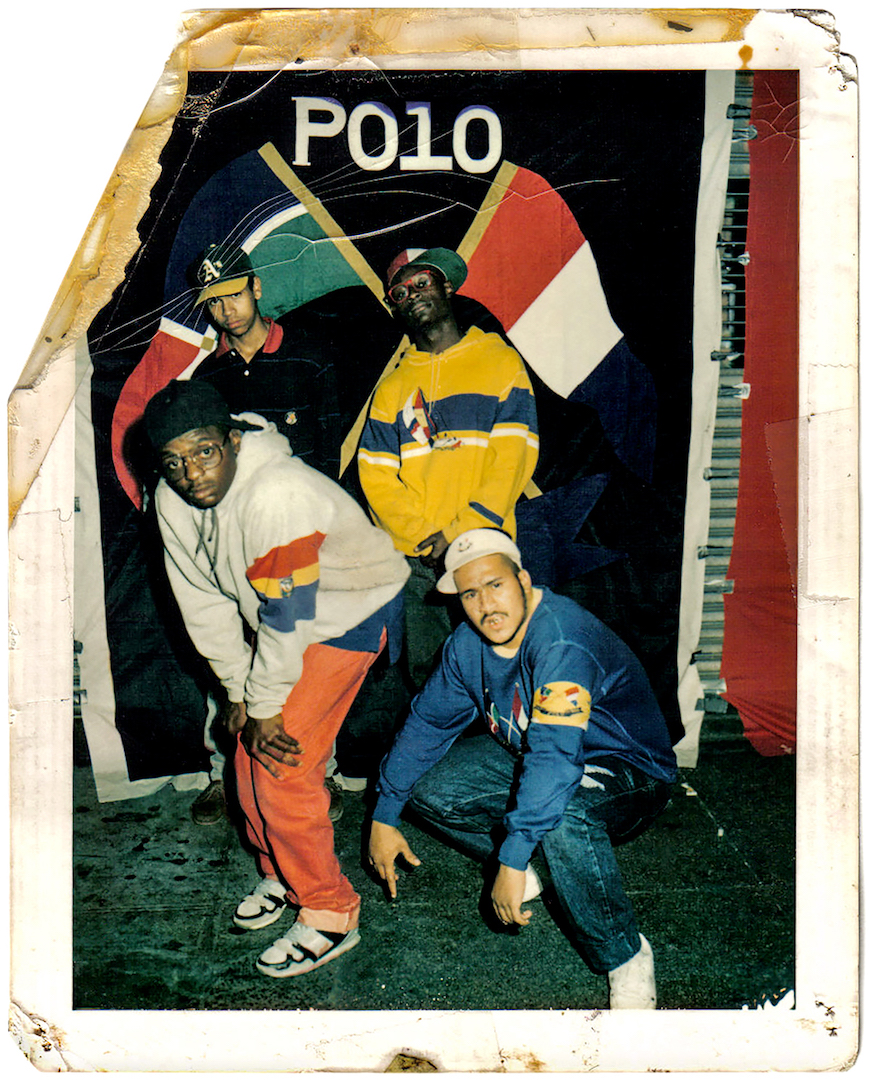
Thirstin Howl III, ‘Cross Flags’ Forty Deuce, 1988
Necessity being the mother invention, hip hop was forged by a group of teens who understood the only way to have what they needed was to become the change they wanted to see in the world. As one of the most desolate landscapes in the United States, it’s no small wonder hip hop was ‘born in the Bronx’ — which is also the title of Conzo’s seminal first monograph reissued earlier this year by 1XRUN.
As the first photographer to document hip hop culture, capturing life in the South Bronx between 1976 and 1986, Conzo is a pioneer alongside the MCs, DJs, graffiti writers, B-Boys and B-Girls who built a DIY scene that has since evolved into a billion dollar industry.
Now taking on the role of curator, Conzo collaborated on The Elements (1XRUN) – a collection of limited edition prints by photographers including Martha Cooper, Henry Chalfant, Manuel Acevedo, and Ricky Flores, graffiti legends Tats Cru, and MCs Grandmaster Caz and Thirstin Howl III, among others.

Sal & Mickey Abbatiello, The Fever: 365 Nights of Hip Hop
Conzo says The Elements was his opportunity to give back to the community. “Making art accessible and affordable to the average person that loves the culture is so important,” he says.
“Hip hop is a way of life. It’s the essence of peace, love, understanding, knowledge and respect – and you incorporate that into the way you live and treat other people. It keeps you young at heart.”
Now 58, Conzo fell in love with photography as a child, and honed his talents in his teen years alongside members of the Cold Crush Brothers as their official photographer. Whether photographing performances at high school gyms, block parties in the South Bronx or local protests, Conzo amassed a singular archive of an era.

Thirstin Howl III, ‘Undefeated Mask Men’ Forty Deuce, 1989
His went largely unseen until 2001 when Henry Chalfant got in touch to license images for the documentary film From Mambo to Hip Hop: A South Bronx Story — a small act that would change Conzo’s life. His work was immediately embraced, allowing him to finally live his childhood dream of becoming a photographer, traveling the globe, photographing legends, selling art, and books.
With The Elements, Conzo celebrates the culture by honoring those who built it, artists and fans alike. “Everybody and I mean everybody — race, color, creed, gender, whatever you want to identify with — can see themselves in some form or fashion in Hip Hop,” he says. “It is constantly evolving.”

Joe Conzo, Jr., Cold Crush Brothers and Joe Conzo at Broadway International, 1983, Polaroid Print.

Japanese Print by Manuel Acevedo, 1986

Posed Studio Shot of Grandmaster Caz by Joe Conzo Jr., 1984

Biggie Rolling Dice by Manuel Acevedo, 1994

G Man Sets Up For The Jam. 3rd Avenue and 144th St. The Bronx by Henry Chalfant

Jay and the Boombox by Ricky Flores, 1984.
A selection of prints from The Elements are available on 1XRUN’s official website.
Follow Miss Rosen on Twitter.
Enjoyed this article? Like Huck on Facebook or follow us on Twitter.
You might like

In photos: Lives of solitude at the world’s edge
Coirón — Pie Aerts’s new photobook documents years spent in close quarters with puesteros in Patagonia – a group of aging gauchos who live almost completely isolated existences.
Written by: Isaac Muk

The raw, fledgling intimacy of Peter Hujar’s contact sheets
Hujar:Contact — A new photobook highlights the process of the legendary queer photographer, and his process of growing into the artist he ultimately became.
Written by: Miss Rosen

Is Field Maneuvers the most fun time ever? Yes probably
Collective joy — Huck’s art director Samuel White went to the 2026 edition, braving a wet start and interviewing FLINTA* collective and arm wrestling legends Uhaul Dyke Rescue in the process.
Written by: Samuel White

Jesse Glazzard’s messy portrait of queer friends, lovers and chosen family
The Sound of Dirt and Beauty — The photographer’s debut monograph explores tender, unpolished moments shaped by the people who he surrounds himself with, while offering a window into the UK’s working-class LGBTQ+ community.
Written by: Sunny Sunday

Behind the curtain at Alternative Miss World 1981
Olympia glamour — Running a subversive take on the traditional beauty pageant, the Andrew Logan organised event prioritised underground creativity and invention. Photographer David Corio went behind the scenes at its biggest edition.
Written by: Miss Rosen

New exhibition highlights British radical living over 200 years
Earthly Paradise — Taking place at the William Morris Gallery, it explores the homes and lives of artists, writers, musicians and more, as well as the conditions that allowed them to thrive.
Written by: Isaac Muk


