Understanding David Hoyle, Britain's finest avant-garde anti-drag queen
- Text by Biju Belinky
- Photography by Holly Revell

David Hoyle is a force to be reckoned with. Not just because of the unrelenting energy brought to every stage he steps on, but mostly for his ability to turn pain into power in a way that’s seamless – so bare and honest that it can make even the uninitiated uncomfortable.
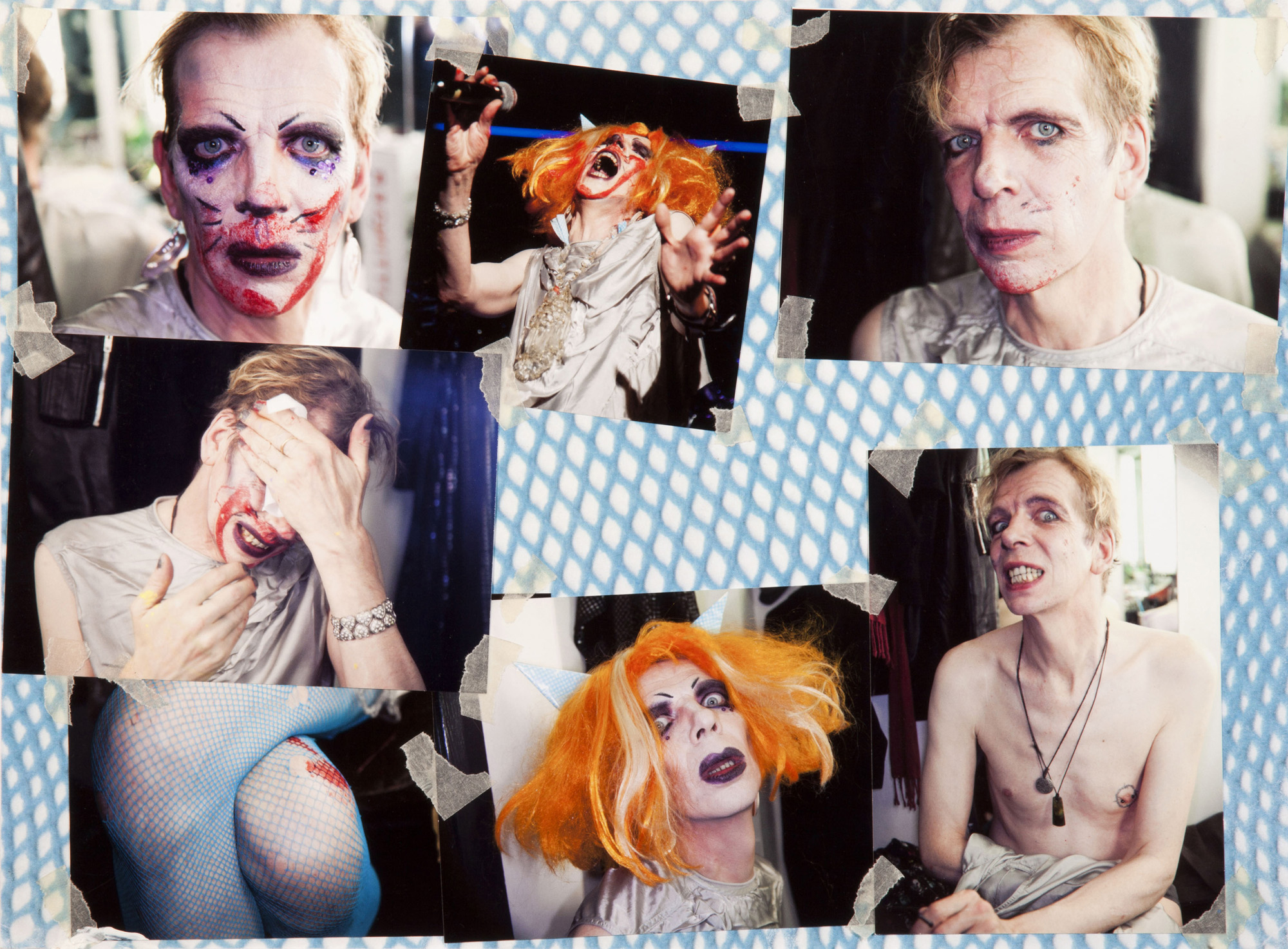
Standing in front of an audience with a face smudged in makeup that will only get messier throughout the evening, Hoyle sports his signature look that goes miles past gender – anti-drag, it’s called – a form of organised chaos bringing together a subversion of preconceived ideas of femininity, a touch of surrealism, and a strong distaste for all that is binary and bourgeois.
Dragging his words with a piercing stare, Hoyle has been using performance to discuss complex subjects since the 1990s, addressing class, homophobia, materialism, racism, nationalism and trauma with a scathing mix of well-researched humour and unwavering intensity.
Outside of his persona, David is soft-spoken and relatively subdued, but still extremely honest and upfront. On stage and off, the Blackpool-born artist speaks openly about having been bullied to the point of a mental breakdown at the age of fourteen, as well as his relationship with mental health, drugs, self-harm and alcohol.
His honesty and unapologetic approach to queerness led him to become an unmatched icon in the British LGBTQ scene. An outsider among the outsiders, David’s life as an artist has been through various phases, going from BBC-level fame through a self-imposed hiatus and back to the stages of legendary LGBTQ London venues, never losing his energy on the way.
Above all, David’s life shows that, for him, being an artist isn’t an occupation, but a necessity – it’s second nature.
It’s this dichotomy and complex history that photographer and friend Holly Revell is looking to immortalise in print. Featuring images taken over the past eight years, collages of memorabilia from performances and previously unseen artworks, David Hoyle: Parallel Universe promises to be not only a biography, but also a documentation of the experience of a performance – going from preparation to the height of adrenaline onstage and back to reality.




You can help David Hoyle: Parallel Universe become a reality through Kickstarter.
Enjoyed this article? Like Huck on Facebook or follow us on Twitter.
You might like

New documentary spotlights Brixton’s community in the face of gentrification
Beyond Brix & Mortar — With property prices rising by 1,700% since the ’80s, the film explores the rich cultural history of the area’s Afro-Caribbean community, and the threat to the area’s soul.
Written by: Sydney Lobe

In photos: Euphoric joy at the UK’s biggest ever anti-racism march
Together — 500,000 people marched through central London on Saturday to protest the far right and racism, followed by a packed House Against Hate rave taking place in Trafalgar Square.
Written by: Isaac Muk

Reynaldo Rivera’s intimate portrait of queer Latino love
Propiedad Privada — Growing up during the AIDS pandemic, the photographer entered a world where his love was not only taboo, but dangerous. His new monograph presents inward-looking shots made over four decades, which reclaim the power of desire.
Written by: Miss Rosen

In photos: The newsagents keeping print alive
Save the stands — With Huck 83 hitting shelves around the world, we met a few people who continue to stock print magazines, defying an enduringly tough climate for physical media and the high street.
Written by: Ella Glossop

In Glasgow, a queer bike shop is reshaping cycle culture
Dynamo CIC — The sport and industry is often dominated by men, and particularly men with money. But through empowering their community to learn DIY repairs and share resources, Dynamo is creating an alternative vision for riding.
Written by: Alice Austin

The last days of St Agnes Place, London’s longest ever running squat
Off the grid — Photographer Janine Wiedel spent four years documenting the people of the Kennington squat, who for decades made a forgotten row of terraced houses a home.
Written by: Isaac Muk


