Radical counterculture and the artist you haven't heard of
- Text by Adam White
- Photography by Jeff Keen, screenshot from Cartoon Theatre of Dr. Gaz

Jeff Keen was one of the most important voices in British countercultural art throughout the 1960’s and 1970’s… though you probably haven’t heard of him. A pioneer in experimental film, Keen employed animation, stop-motion, photography and electroacoustic sound to create wildly frenetic shorts. Now two of his films are being screened alongside his photography and a collection of previously unseen ephemera at London’s Hales and Kate MacGarry galleries.
Cartoon Theatre of Dr. Gaz (1976), playing at Kate MacGarry, is a blistering mash-up of pulpy 1950’s monster-movies and Keen’s own experiences in World War II. Tasked with trialling experimental tanks and engines during the conflict, Keen would later invoke the brutalist, panic-driven hysteria of the time period into his work. The film sees toys and objects explode, melt and burn, while his friends and family enact strange theatrical performances on a makeshift set. At the heart of it is his mad scientist alter ego, whom he dubbed Dr. Gaz. It’s the theatrical madness of war, condensed into an expressive 12-minute short.

Photo: Jeff Keen, Jackie Keen as Roberta the Robot, c.1972/2016, photograph, 92 x 60 cm
Over at the Hales Gallery is Rayday Film (1968-1970, 1976), a short directly inspired by the pop art of comic books of the time (though Keen was quick to insist that he wasn’t a pop artist). Named after Amazing Rayday, a counterculture magazine Keen had edited in the early ’60s, it’s a messy bombardment of visual effects, poetry and sound, comprising of a cast of archetypal superheroes and supervillains.

Photo: Jeff Keen, The Way West, c. 1973, mixed media, 60 x 40 cm
Keen’s aesthetic was ahead of its time, experimenting with visual collage and avant-garde DIY animation long before they became standards in experimental cinema. Modern observers will also likely spot his influence in the visual identity of classic MTV, all erratic weirdness and rapid-fire editing. “When words fail, use your teeth!” he once said, highlighting works that feel chewed-up, spat-out and glued back together. “If teeth fail, draw in the sand,” he added. “Art must happen.”

Photo: Jeff Keen, screenshot from Cartoon Theatre of Dr. Gaz
While Keen was a regular on the 1960’s beat scene, performing and screening his work in ‘happenings’ alongside William Burroughs and Allen Ginsburg, he never crossed over to become a household name. Perhaps his repertoire was too diverse, too inexplicable or inaccessible in its form. But coming off a successful series of exhibits at the Tate Modern and the Brighton Museum throughout 2012 and 2013, it feels right that his work is becoming increasingly more visible. Particularly at a time when an aggressive counterculture is so desperately needed.

Photo: Jeff Keen, Cartoon Theatre of Dr Gaz, c.1976, pen/paint on paper, 29.5 x 21 cm

Photo: Jeff Keen, Albino Ray Performance, c.1976/2016, photograph, 92 x 60 cm
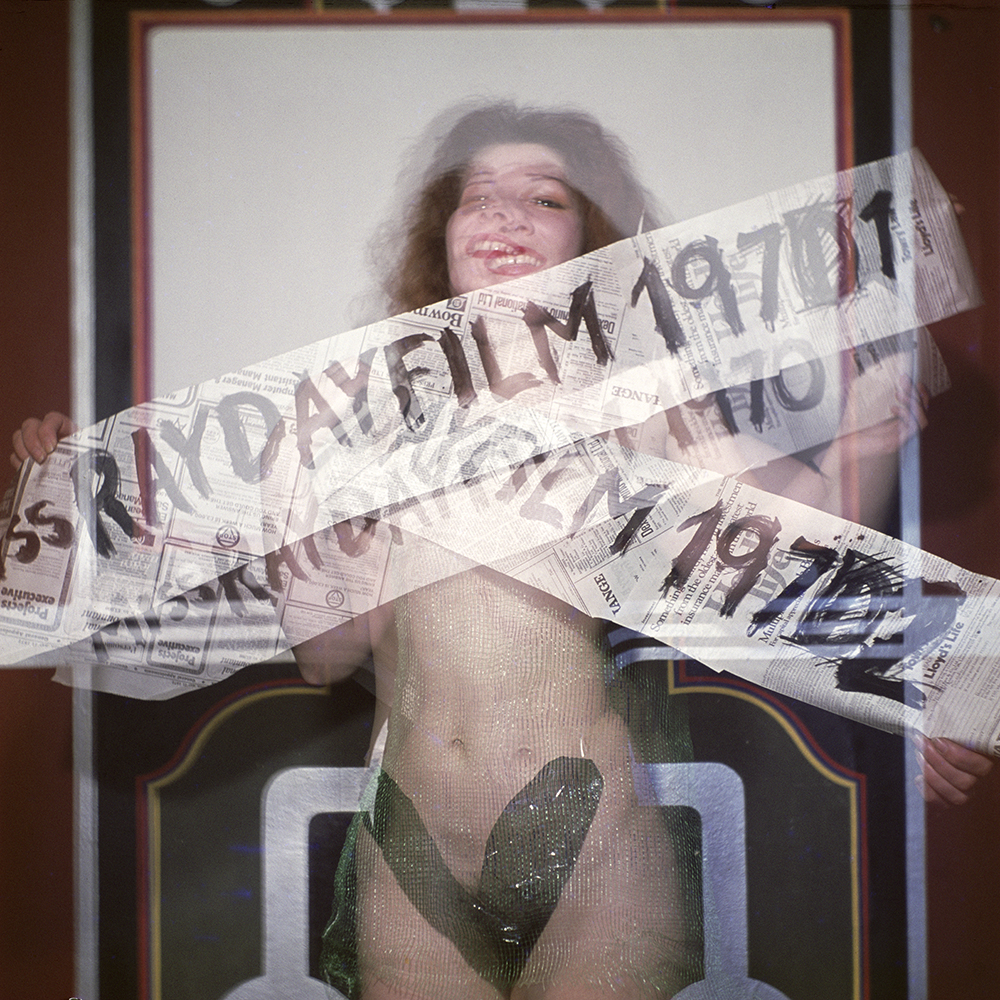
Photo: Miss Rayday Film, 1972/2016, photo – Jeff Keen
Courtesy of the Jeff Keen Archive and Hales Gallery. Copyright of the Jeff Keen Archive.

Photo: Kate MacGarry

Photo: Kate MacGarry
Cartoon Theatre of Dr. Gaz runs at Kate MacGarry, and Rayday Film at Hales Gallery, both until 27 February.
Enjoyed this article? Like Huck on Facebook or follow us on Twitter.
You might like

Joe Bloom’s View From a Bridge
More stories, more human — The artist and creator of the vertical video generation’s most loved storytelling platform explains the process behind creating the show, and the importance of bucking trends.
Written by: Isaac Muk

When David Wojnarowicz became Arthur Rimbaud
Arthur Rimbaud in New York — In 1978, the American artist and his friends donned masks to pay tribute to the French poet, who was born a century before him. Miss Rosen traces the differing yet parallel lives of the queer revolutionaries.
Written by: Miss Rosen

On the set of ‘La Bamba’, lost Latino legend Ritchie Valens’s biopic
The overnight rockstar — The Chicano rock & roll star exploded overnight in the late ’50s, but just as quickly he was gone, killed in a plane crash along with Buddy Holly. An ’80s biopic saw him immortalised on the big screen, which photographer Merrick Morton captured behind the scenes.
Written by: Miss Rosen

Louis Theroux’s ‘Manosphere’ shows men aren’t the problem, platforms are
No Ws for Good Men — The journalist’s new documentary sees him dive headfirst into the toxicities and machinations of the male influencer economy. But when young creators are monetarily incentivised to make more and more outrageous content, who really is to blame?
Written by: Emma Garland

In the 1960s, African photographers recaptured their own image
Ideas of Africa — An exhibition at the Museum of Modern Art explores the 20th century’s most important lensers, including Seydou Keïta, Malick Sidibé and Kwame Brathwaite, and their impact on challenging dominant European narratives.
Written by: Miss Rosen

Reynaldo Rivera’s intimate portrait of queer Latino love
Propiedad Privada — Growing up during the AIDS pandemic, the photographer entered a world where his love was not only taboo, but dangerous. His new monograph presents inward-looking shots made over four decades, which reclaim the power of desire.
Written by: Miss Rosen


