Surreal photos of solitude in the American desert
- Text by Huck
- Photography by Fei Alexeli

“It’s simplicity that you do not experience anywhere else,” says Greek photographer, Fei Alexeli, about her time spent travelling around the American desert. “You’re not defined by your surroundings; there’s no scripted society that you fit into. When you’re in the desert, it feels like you can be anyone”.
After voraciously consuming American media from a young age – from Hollywood movies about road trips, to ‘Americana’ music and Jack Kerouac’s On The Road – Alexeli finally made the trip to California in 2019, and again in 2020. “It was like stepping onto a new planet,” says Alexeli of travelling from Greece to the US desert. “In Greece, we have these mountains and greenery, and it’s very lively.” The dessert, by comparison, was stunningly sparse and isolated.
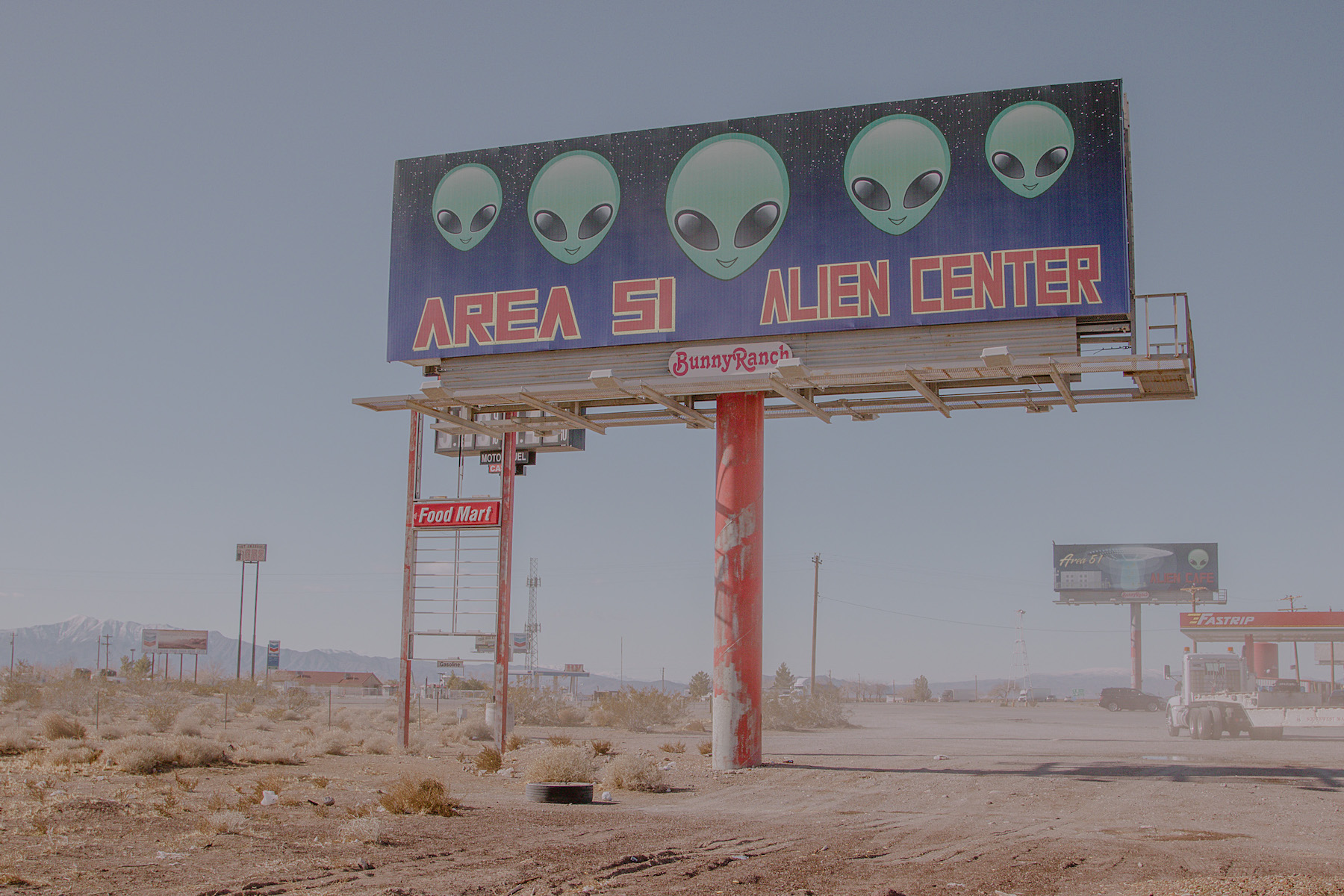

On both trips, Alexelli drove through the American desert with her camera in tow, shooting photos that now form part of a series entitled ShowTown. “My first time (in the US), I was on my own, so the vastness of the dessert was very overwhelming,” she recalls.
“I guess I was looking for some kind of freedom in the desert, but there are also so, so many layers of culture to discover.” Being there at the time of Donald Trump’s presidency was, Alexeli says, “super intense”: she’d often see the former president’s face emblazoned across trailers and flags.


What’s striking about Alexeli’s pictures is just how empty the landscape seems, a setting that imbues her images with an eerie quality. Often, the structures she photographed were abandoned and left empty – particularly in the country’s ‘ghost towns’ – with citizens and tourists nowhere to be seen. “There were often moments where I felt completely alone,” she says.
There are thousands of these ‘ghost towns’ across America, where once-thriving communities have dwindled over the decades, some due to economic hardships, while others were immediately evacuated. These derelict buildings in Alexeli’s photographs – which sit at the mercy of time and nature – offer an intriguing glimpse at the past.
Alexeli says the series is very much ongoing, and she plans to travel back to America when the pandemic ends. But next time, she wants people to feature in her photographs. “People who go to live in the desert is something that I find super fascinating – like, I want to know why,” she says. But for Alexeli, the appeal of going as a visitor is clear: “Being there, you just feel the essence of freedom.”


Follow Fei Alexeli on Instagram.
Enjoyed this article? Like Huck on Facebook or follow us on Twitter.
You might like

Shawn Walker’s layered, psychedelic vision of Harlem’s streets
From BeBop to Illusion — Using glass as a means to illuminate the city’s different layers, the longtime photographer and filmmaker is publishing his first monograph at the age of 86.
Written by: Miss Rosen

Washing strangers’ feet at Houghton Festival
Pedilavium — As part of artist Henry Krokatsis’s performance piece at the weekender, we sat down with over 30 others to clean the dusty digits of passersby, while reflecting on the power of collective ritual and human connection.
Written by: Isaac Muk

Inside Yoshiwara, Japan’s oldest red light district
Asasuka soaplands — Despite numerous fires and harshening sex work laws, the centuries old area continues to persevere in East Tokyo. Manami Okazaki traces its history and meets people who shape its present.
Written by: Manami Okazaki

Gold-tinged togetherness as Londoners flock to Primrose Hill for the solar eclipse
Celestial gathering — Ella Glossop photographs the once in decades event from one the city’s most popular gathering spots, and the community spirit that encapsulated the moment.
Written by: Ella Glossop

Surveying community and resistance in LGBTQ+ nightlife
Sex, Clubs Dissent — A new book collates queer nightlife photography over the past 50 years, and the people who found refuge and safe spaces after dark.
Written by: Miss Rosen

In photos: Electric nights in ’70s Japan
Tokyo–Koza — Keizō Kitajima’s new photobook explores the explosion of party culture of Tokyo and Okinawa during an era of rapid change in the country, as well as its stranger turns.
Written by: Miss Rosen


