Cubans are online and hustling despite restrictions and censorship
- Text by Catherine Hickey
- Photography by Tom Law

Zenaida has been running her casa particular in Cuba for a fair few years now. We first meet when she picks me up at the local bus station, holding a sign bearing my name. It’s a professional touch, as taxi drivers hustle arriving passengers for their onward ride. We’re on the east of the island, having travelled hundreds of miles to be here.
Running casa particular, or guesthouses, is pretty common in Cuba. As the number of tourists arriving in Cuba increases faster than the infrastructure needed to accommodate them, Cuban’s are filling in the gap – and making a healthy profit in the meantime.
“Come with me,” she laughs, pushing her way through the crowd as we speak, “those taxi drivers will eat you alive. I’ve got a taxi waiting for you across the road.” Her smile is reassuring, as friendly as anyone I’ve met – but she’s not the man called Rodrigo who I’d been expecting to meet. “You’ll be staying with me as Rodrigo’s house is full,” she says, matter-of-factly. I’m happy to go with her, although it appears that I don’t have much choice.
 We jump into a taxi with Zenaida – it turns out the man driving us is her friend. With the scenery rushing past outside, I turn my attention to the two strangers sitting in the front.
Deep in conversation, they’re both covered in bling jewellery, a sign that they’re doing better than most on the island. Many Cubans struggle to buy even the most basic of clothes, thanks to the U.S. trade embargo, although they all somehow find a way to keep oozing style. With the car slowing down, the driver charges me $6 for a $3 ride, and I realise they’re working together. They’re playing a game, and they’re winning.
It’s normal for Cubans to work closely with their friends and family; helping each other out makes it less hard to get by. In a country where the average salary is just US$25 (although it’s worth remembering that education, healthcare and food rations are all provided free by the state), there’s a culture of you scratch my back and I’ll scratch yours.
As I jump out the car I feel slightly anxious, it transpires that Zenaida’s guesthouse is in fact on the outskirts of the city, nestled on the side of a busy main road. It’s not quite what I’d been expecting. She offers me breakfast, and guides me through the attractions in the area from her chair. Clearly a businesswoman, she cheekily recommends that I make day trips to the beach (which is 45 minutes away by taxi), rather than stay in one of the many beachside hotels, offering a discount to entice me.
I ask where the nearest internet café is, a must know for any visitor, and clearly feeling more comfortable around me Zenaida lets me into a secret.

Zenaida’s guesthouse
Zenaida actually used to have internet access in her home, she reveals proudly, and it lasted for over three years. I’m pretty surprised. Cubans rarely have access the internet in their homes; a cocktail of poor infrastructure and strict government controls means approved internet cafes and designated Wi-Fi hotspots are the only places to get online. Unsurprisingly they’re busy – you can wait for hours in the scorching heat to send an email or jump onto Facebook.
Zenaida, however, found a way around this. Foreigners working in Cuba are able to get internet access in their homes, and this got Zenaida thinking. A few years ago, just as she was starting out with her business, Zenaida met a Bolivian woman, and cunningly offered to rent her a room. Through this young woman, who soon became a friend, Zenaida was able to get internet in her house (she doesn’t go into much detail, it’s her “trade secret” she says jokingly).
Over the past year the government has been slowly increasing internet across the country, but Cuba still has one of the lowest internet penetration rates in the world. According to estimates, less than 30 per cent of the population have access, and the internet when accessed is censored. You only need to look at the case of Cuban blogger, Yoani Sanchez, to see this in action.
The government are exercising caution when it comes to expanding access to the internet, and social media. After it came to light that one social networking site in Cuba, Zunzuneo, was receiving funds from the US government, the authorities came down hard. Zunzuneo, which was created in 2010 by the United States Agency for International Development, was seemingly an attempt to encourage young Cubans to spur a “Cuban Spring”.
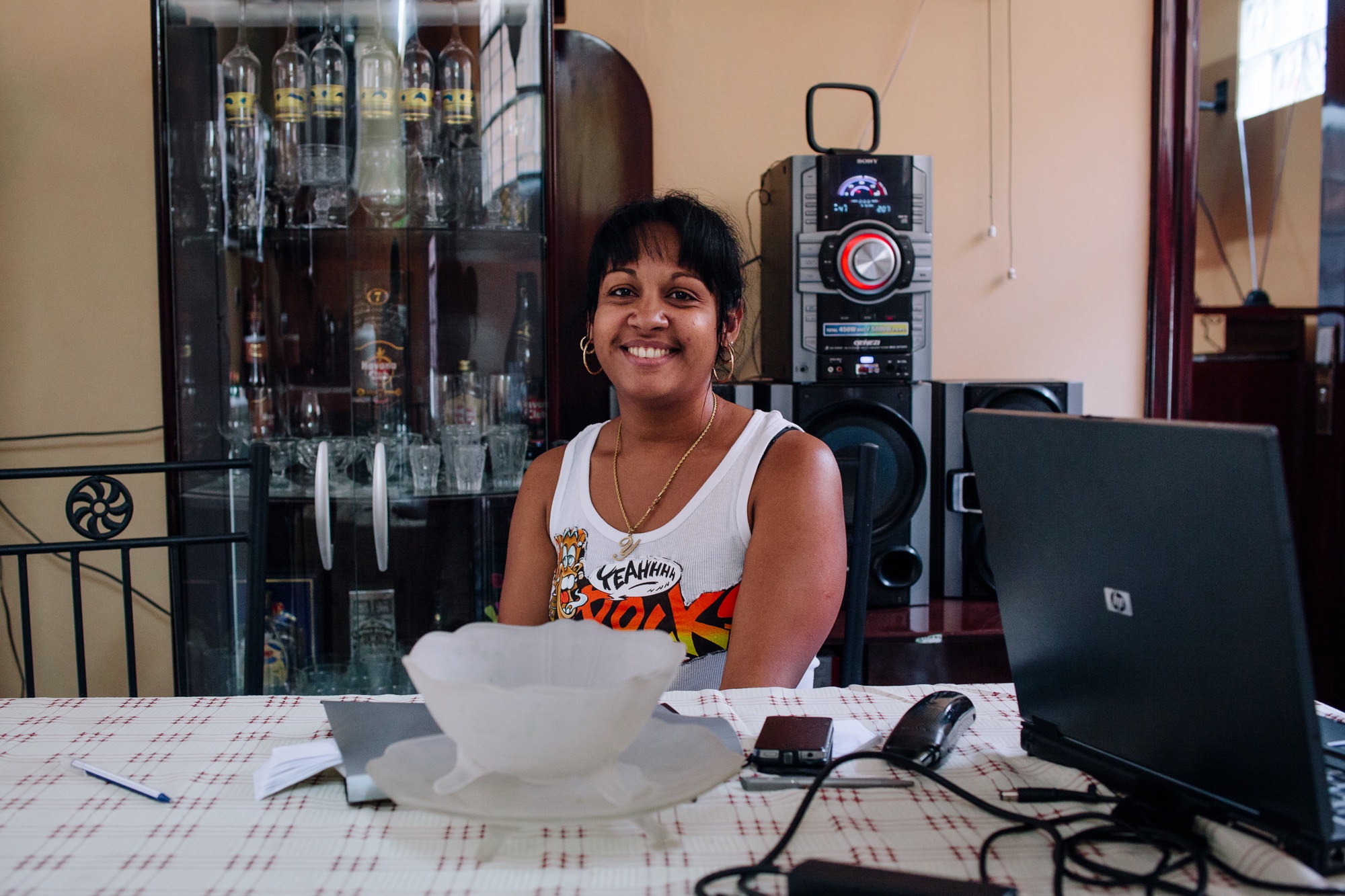
Zenaida
Despite tight controls, the internet has been essential in allowing Zenaida’s small business to thrive. The web has created a platform for her to target international tourists through sites like Airbnb, and with a connection in the house she could beat the competition by responding faster than her competitors. The constant access also meant she could with a Dutch website designer to make herself a site – with the capability of taking bookings and advance payments online, a significant achievement given U.S. restrictions on banking to Cuba complicate these types of transaction.
Frustratingly for Zenaida, her Bolivian tenant left Cuba year, taking with her this special corridor to the web. Now Zenaida has to head her nearest internet cafe every other day to check her emails and website, meaning she may well be losing her edge on the competition.
Her trips to the official hotspots don’t come cheap – it costs almost $5 for two hours surfing. “It’s the cost of doing business,” she sighs acceptingly, but it’s eating into her profits. Despite the setback, Zenaida’s doing pretty well for herself; a night in one of her rooms costs the same as a Cuban state worker’s monthly salary – and fortunately her casa particular is almost always booked. “A US citizen has made a reservation for two whole weeks,” she tells me proudly. “Once I had a student from Canada who was supposed to stay for a week and ended up staying for a few months.”
Zenaida says that although the government is changing the rules for internet access and improving IT infrastructure, any significant effect will take time, and she reckons that having widely available affordable internet in Cuban homes is still a long way off.
Just as I feel like we’re just starting to bond, chatting away about the power of the internet, she turns to me with a grin. “So it’s US$25 per night. How long are you staying?”
Enjoyed this article? Like Huck on Facebook or follow us on Twitter.
You might like

In photos: Lives of solitude at the world’s edge
Coirón — Pie Aerts’s new photobook documents years spent in close quarters with puesteros in Patagonia – a group of aging gauchos who live almost completely isolated existences.
Written by: Isaac Muk

The raw, fledgling intimacy of Peter Hujar’s contact sheets
Hujar:Contact — A new photobook highlights the process of the legendary queer photographer, and his process of growing into the artist he ultimately became.
Written by: Miss Rosen

Jesse Glazzard’s messy portrait of queer friends, lovers and chosen family
The Sound of Dirt and Beauty — The photographer’s debut monograph explores tender, unpolished moments shaped by the people who he surrounds himself with, while offering a window into the UK’s working-class LGBTQ+ community.
Written by: Sunny Sunday
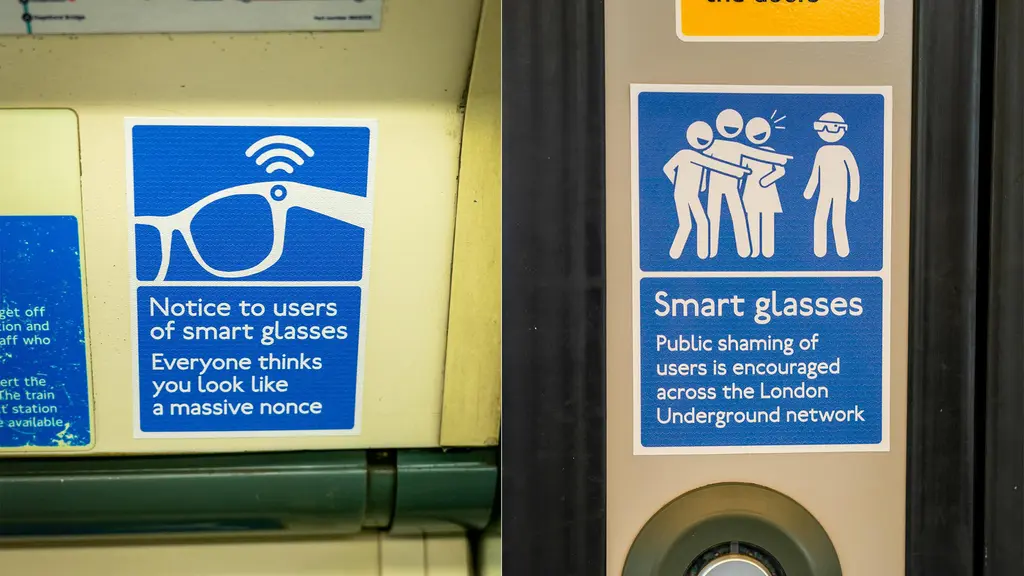
Activists slam “pervert glasses” in new guerrilla campaign
Everyone Hates Elon — Stickers have appeared on the London Underground network, criticising the wearable technology’s covert filming capabilities.
Written by: Isaac Muk

Behind the curtain at Alternative Miss World 1981
Olympia glamour — Running a subversive take on the traditional beauty pageant, the Andrew Logan organised event prioritised underground creativity and invention. Photographer David Corio went behind the scenes at its biggest edition.
Written by: Miss Rosen

New exhibition highlights British radical living over 200 years
Earthly Paradise — Taking place at the William Morris Gallery, it explores the homes and lives of artists, writers, musicians and more, as well as the conditions that allowed them to thrive.
Written by: Isaac Muk


