Aram Sabbah: “The whole world is hypocritical”
- Text by Isaac Muk
- Illustrations by Moira Letby

To a Land Unknown — One of Palestine’s first ever, and most prominent skaters has made his acting debut, playing a refugee in Athens in Mahdi Fleifel’s new feature film. We caught up with him in our culture newsletter to hear about it.
This Q+A was first featured in Huck’s culture newsletter. Sign up to the mailing list here for more exclusive interviews, cultural dispatches and monthly recommendations.
To a Land Unknown, a new feature film directed by Mahdi Fleifel, opens with Aram Sabbah skating. He’s making his acting debut, playing the character of Reda – a Palestinian refugee in Athens – and the camera follows him as he navigates the streets to meet his cousin Chatila. The pair, dreaming of making it to Germany and opening their own café, are doing what they can to find money for fake passports, be it through fair or (mostly) foul play.
The first time I interviewed Aram was in September 2023. It was for a story (which you can, and should, read here) that reflected on 10 years of pioneering skate crew SkatePal, who introduced skateboarding to Palestine, and particularly the West Bank, which has now grown into a thriving, resilient scene. Having stumbled across an early skateboarding session in Ramallah as a young teenager organised by SkatePal founder Charlie Davis, Aram had become one of the country’s first skaters, and eventually SkatePal’s on the ground regional manager.
Of course, within less than a month, the October 7 massacre happened, and Israel began the military onslaught that has seen the situation in Gaza go from oppressive to full-blown famine. At the same time, Israeli settler campaigns in the West Bank have intensified, with the New York Times recording this week that attacks have hit a record high.
To a Land Unknown is ultimately a story about life for refugees outside of Palestine. In 2021, it was estimated that there were 9.17 million Palestinian refugees worldwide, but over the past 19 months, that number is sure to have risen steeply – each with their own stories and struggles away from their homeland. I caught up with Aram, who is recovering from an operation on his tooth, to hear about his role in the film, spotlighting refugee stories, and the current view from the West Bank.
Hi Aram, nice to talk again. What are you up to today?
I’m in Ramallah, West Bank. I’m about to have breakfast, take my antibiotics and watch another 10 episodes of House.
Congratulations on To a Land Unknown. How did you come to be a part of it?
I didn’t know about the film until probably four or five days before they started shooting. They already had two actors for the role, but one bailed and the other wasn’t able to get a visa to come from Jordan, and they contacted me. My friend worked as the boom operator and sound mixer on the set, and he spoke to Mahdi and said: “You met Aram once, don’t you think Aram would work?” And Mahdi was instantly like: “Yeah, I think he would work.” And he called me and convinced me somehow.
Had you ever considered acting before or even thought about it?
Honestly yeah. Since I was a kid. I used to do impressions of my family and small things like that. I do like acting, and now I had this opportunity to be in a feature film that’s shot on 16mm film – it’s insane, a once in lifetime opportunity.
The film obviously opens with you skating, was that your idea?
Mahdi said: “Bring your board and we can try to fit it in.” I didn’t actually bring a skateboard with me. To be honest, I was hesitant, but they brought one and we gave it to the actor who plays the Palestinian kid in real life after we finished the film.
What drew you to the character of Reda, and how much of his struggles can you relate to?
Other than being Palestinian, to be honest I don’t think I can relate to the details of his character, and the way that he lived his life. I’m blessed; I’ve never had to leave Palestine forcibly – I’m still here. Reda was forcibly made to leave with his parents, and they had to go and live in a refugee camp in Lebanon. And then he wanted to leave to go and see a better life, and the first time he left he thought Greece was a good idea, then got hooked on drugs and had to go back again with his cousin Chatila.
In retrospect I think [I could relate] with his feelings of being sensitive. He’s a hypersensitive guy that wants everything to be okay, and wants things to be going well, and wants to make sure that the kid is okay, and everyone is okay. When he does fuck up and loses money, and tries to get the money back, he does things that he doesn’t want to, but he knows out of morality that he has to do it and bring the money. I think that’s where I linked with him, but going and selling himself and doing these things was really hard to do and I felt really bad about myself doing so.
“They don’t need more money, they need the great powers to stop the whole thing that’s happening and the starvation that Israel has been forcing on the Gaza Strip for two fucking years.” Aram Sabbah

The film is ultimately story of desperation, and what that can do to people. And I thought that was interesting, because refugee narratives, in the news and media, and culture, tend to be so black and white. Why was it important to portray the complexity of the refugee experience?
Ah man, it’s really important to be honest. Mahdi did a great job to portray this story as it is. He has a documentary background and that showed a lot – he’s kind of documenting these two characters going through things. Even though it’s scripted, it shows these issues that we face on a daily basis as Palestinians and other countries in the world where people are forced to leave and become refugees. And people see it as it is, instead of making Palestinians heroic – these stories still happen, and they are happening, and the idea of the film is that you have to shed a light on it and stop it, rather than looking at a fantasy.
I thought it was interesting that it wasn’t made entirely clear from the start that Reda and Chatila are Palestinian refugees – of course there are hints, but it isn’t shoved down the viewers’ throats.
Yeah, I don’t really know the thinking behind it, but from things like the music score when we enter, the dialects, etc., there are certain things as Arabs you’d see it and say: “Right, they’re Palestinians.” And you’d know their history by a couple of words. I think [Mahdi] doesn’t have to be like: “Ah, look, two desperate Palestinians in Athens – watch them.”
Read next: Three heart wrenching poems from Gaza
It breaks my heart that we have to talk about this, but of course Gaza is starving right now. As a Palestinian in the West Bank, what has that been like to be close to?
It’s insane hypocrisy. There’s nothing you can do, and when you can, you try to send money to people. And even if they have money, there’s nothing for them to buy to eat. They don’t need more money, they need the great powers to stop the whole thing that’s happening and the starvation that Israel has been forcing on the Gaza Strip for two fucking years. It’s getting to the point where the whole world is [being] hypocritical, living day by day as if it’s normal – it’s not normal and it’s fucking with a lot of people’s mindsets.
We as Palestinians try to live and act like we love life and our life is life. But fuck this man, it’s insane and it’s unacceptable. Even for us in the West Bank, life is kind of normal compared to for people in Gaza, but it’s just hypocrisy trying to shift things towards making it a better day for them. We do, but it’s not the actual action that’s needed.
What do you think people who read this can do to help?
They have to start moving. I know for some people when they’re going to read it, they love the idea but hate the action. But they have to move to the borders to stop it themselves – being in the streets and protesting for the past two years did change a couple of things, but didn’t change what it’s really like on the ground in Gaza. They have to shut down the companies that support this ongoing genocide in Gaza. Israel is still bombing, stopping everything, holding checkpoints, raiding. On the ground nothing is happening.
To a Land Unknown is in US cinemas now.
Isaac Muk is Huck’s digital editor. Follow him on Bluesky.
Buy your copy of Huck 81 here.
Enjoyed this article? Follow Huck on Instagram and sign up to our newsletter for more from the cutting edge of sport, music and counterculture.
Support stories like this by becoming a member of Club Huck.
You might like

Meet the crew who introduced skateboarding to Palestine
Celebrating the ten year anniversary of SkatePal, whose skatepark builds and free skate lessons have helped nourish an emerging skateboarding scene in the West Bank.
Written by: Isaac Muk

The skatepark providing refuge to Amman’s youth
In a city sorely lacking in public space, 7Hills skatepark is transforming the lives of people in Jordan’s capital.
Written by: Aisha Kherallah and Tom Critchley
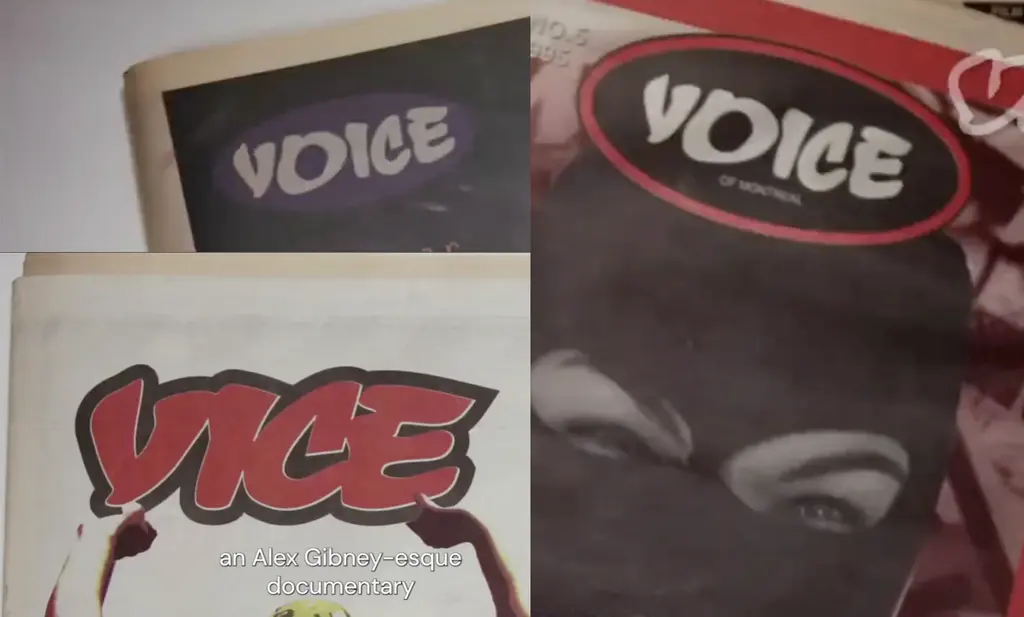
A new documentary traces the rise, fall and cratering of VICE
VICE is broke — Streaming on MUBI, it’s presented by chef and filmmaker Eddie Huang, who previously hosted travel and food show Huang’s World for the millennial media giant.
Written by: Ella Glossop

Ed Templeton’s new Toy Machine skate deck sets KKK on fire
Burning racism — It comes via his long running skate company and features a cartoon graphic of a klansman alight on a cross, as well as a broken swastika.
Written by: Isaac Muk

Line-up Announced for Palestine Benefit Concert at Wembley Arena
Together for Palestine: Greentea Peng, Jamie xx, Paloma Faith, Damon Albarn and more will join the major Gaza fundraiser at Wembley this September.
Written by: Ella Glossop

The Lebanese football team uniting the displaced
‘When I play, I forget everything’ – In Lebanon, a small local football team is healing the rifts of a fractured community, uniting expats, outcasts and refugees from across the Middle East.
Written by: Adib Chowdhury


