Meet the London charity using art and music to tackle youth violence
- Text by Isaac Muk
- Photography by Art Against Knives

Art Against Knives — For 15 years, the group has been inspiring Barnet’s young people through creativity and possibility. Following their recent win at the Youth Music Awards, we caught up with Katy Dawe and Rickardo Stewart to hear about their story.
Walk along East Finchley’s High Road at the right time, and you’ll hear glimmers of sound coming from one its frontages. Samples being chopped and layered, synth melodies being programmed, or vocalists nailing the delivery of their key line. UKG tracks being mixed into grime, trap into jungle, or anything in between.
The LAB is a music studio run by Art Against Knives, a charity based across the north London borough of Barnet. It first opened in 2015, five years after the organisation was founded, and features production equipment, DJ decks and recording microphones. Each week, staff members – who are producers and musicians, while also being specialist youth violence workers – run workshops and foster a space for young people to write and record music, all while receiving mentoring and conflict support services.
Supporting over 150 young people a year, The LAB just one project within Art Against Knives’ wide-ranging portfolio, which has included setting up nail bars to help young people upskill, podcasting workshops and a print shop selling art created by youth and the wider creative community. The group’s work, as its name suggests, aims to create spaces where young people can go to make music and art, and engage in creativity to drive positive change, while keeping them away from serious youth violence.
Earlier this month, Art Against Knives won the Social Action Award for The LAB at the Youth Music Awards. In the wake of their success, we caught up with the charity’s co-founder Katy Dawe and head of quality + innovation & serious youth violence specialist Rickardo Stewart to hear about Art Against Knives’ 15-year-long story, the demonisation of specific sectors of art and music, and working in a misunderstood area.

Congratulations on the Youth Music Award. How was the night for you?
Katy Dawe: Very good, though Rickardo and I didn’t go. We’ve been around for a long time, and these moments don’t happen very often, so it’s nice to make sure people who are doing the work get to go out there and enjoy it. Because of the nature of our work, and the complexities of the day-to-day, as a staff member it’s easy to feel like you’re not connected, so three of the team were there and it was really nice. I was actually watching from my bed. We’ve got our trophy now – we’re not overly fussed about this stuff, but when it happens it is important to pause and recognise.
How was Art Against Knives founded?
KD: We’re really happy to share our story, but it does feel important to caveat that Art Against Knives isn’t rooted in one person’s story, or a founding story, because it’s actually everyone’s story. We like to be explicit about that, even though we are happy to share ours. So, when I was 20 and at [London art college] Central Saint Martins, my best mate was attacked and stabbed, and was left paralysed. It’s quite deep and complex, but he was white, and the response from the art and fashion world that we were in was very different to what it would have been if that was a young, racialised person.
I think that’s an important part of the story, because the support propelled the conversation into a world that perhaps didn’t feel personally connected to youth violence. The whole point of Art Against Knives was thinking about how to leverage this support, and what would happen if you could galvanise the energy behind the art and fashion world, and start investing it in young people’s ideas for change. I was only 21 at the time, and the values that the charity started with are really true today, which is to say that we don’t have the answers – young people in the community do. So, we go to them and make sure that we’re investing in them and putting them in the lead.
Starting Art Against Knives was also about addressing the root causes and systemic reasons [behind serious youth violence]. It’s not about looking at an individual to change, it’s about looking at the context that these individuals are living in. I know that sounds quite obvious now, but in 2008 that was not a conversation that was had – it was about increasing stop and search, increasing metal detectors in schools, and it was about changing individual behaviour. It felt like we were the only voice in challenging that. And when we started the charity, we were thinking ultimately about how to shift power to young people and the communities.
How do you think that’s gone over the past 15 years? Do you think young people are building their own spaces that mean you don’t feel like you need to intervene as much?
KD: Sadly, no. We would say that access to space, resource and opportunity feels scarier and worse than it did in 2008. We are standing here knowing about what’s needed, with research and evidence – which says that young people don’t have enough access to consistent safe spaces. The conversation still focuses on universal community spaces, such as libraries or youth centres, but that doesn’t mean it’s safe for young people who are socially excluded because of race or gender. The question is still: What is a safe space? How do we make it possible for young people to define that for themselves and create their own space?
Rickardo, how did you come to be involved in Art Against Knives?
Rickardo Stewart: I came on board very early on, around 2010 or 2011. It was through a mutual friend who was connected to the graffiti art world who had done a bit of time in prison, and when he came out, he was putting his efforts into positive change. My journey in a nutshell is very similar to a lot of young people that we’re privileged to work with – systematic oppression, poor education, growing up in poverty, seeing domestic violence, and a sense of being alienated and excluded. You know, always being stopped and searched, and having friends end up in prison. So a big shift happened in my life when I wanted to do something positive, and I started learning about the youth and community world. I joined Art Against Knives, and we saw massive gaps – whether that’s with location, within systems, in work like children’s services and local authority, and as Katie said in that raw energy within art and creativity. The final thing is that we really cared, you know. It’s a privilege to work with a lot of the people we do, in the areas that we do.
KD: Meeting Rickardo was how we came to be in Barnet. When I met Rickardo, we were originally in Hackney and Tower Hamlets. Rickardo is from Barnet, and he told me to come and see where he was working, because they had nothing in terms of proximity to the arts and infrastructure – there are a lot of issues, but it’s a really conservative borough.

It’s often considered a more affluent area – does that mean people forget that there’s young people who need help with access to the arts?
RS: There are pockets of deprived, isolated areas in the borough of Barnet. It’s the second largest borough in London, but there are estates – Grahame Park, Dollis Valley, Strawberry Vale – small areas that statistically have high levels of unemployment and housing crises, where there are high percentages of people living in temporary accommodation. My interest was in the intersections of poverty and deprivation and then waving the flag of creativity and art. Turning nothing into something. I would say that was our magic formula. That manifested into Art Against Knives rocking up to these estates with nail varnish, glitter, paints, spray paints and studios.
KD: Turning up with nail polish was actually what we did when Rickardo was working on Dollis Valley. He said to me: “Come up, because I’ve got loads of young guys here, but also loads of young girls and women. There’s no one else here doing anything for them.”
RS: There were many women in these areas that were so hopeful, determined, strong and courageous, who had strength and wit, but unfortunately the world and systems we’ve seen play out led them to [over time] become removed from employment, or opportunities to develop professionally. And the nail bars were to say: “Here’s the loop. If the world is the matrix, here is the little side door.”
KD: A couple of people turned to 25, 30 pretty quickly. It was their idea to set up a nail bar on the estate, and they called it Dollis Dolls Nails. That’s the original Art Against Knives model, which is create safe spaces, co-designed by young people and rooted in their community. And they told us that people were feeling consistently let down by things that start and then stop, so one commitment was that if we were going to be there, we would be there consistently – one day a week, every week for 48 weeks of the year. It’s been the same with The LAB, and now that’s been 10 years this year.
The other important part of that model is that we wanted to create spaces where young people are in the position to be able to say what they are struggling with. If you’re a victim of domestic abuse on the Dollis Valley Estate, for example, you’re expected to turn up at Colindale Police Station on the other side of the borough and say that you’re a victim. So, we wanted to find out what would happen if we embedded that support into creative spaces, so that young people could access it through that process without having to go anywhere else that they might not want to. That’s our model and what we’re still doing now – all our staff are trained domestic violence workers, mental health specialists, anything and everything because it’s what young people need, and we’re able to do that through the creative process.
RS: For The LAB project, we saw a massive gap for young people who were saying that they wanted a free recording studio, or a place to make music. It was a no-brainer. We enable young people to explore and experiment, whether that’s becoming a DJ, or teaching them about lyrics, words, vocabulary, music, even science and maths that goes into the hardware and software [that creates music].
“Turning nothing into something. I would say that was our magic formula.” Rickardo Stewart, Art Against Knives
It sounds like in some ways you are taking on the role of a youth club, which over the past decade seen funding slashed. But they have been breeding grounds for a lot of the UK’s music and culture – a lot of grime and drill crews first met in youth clubs. Do you feel like you’re filling those gaps, as they have shut down across the country?
KD: It’s important to say that we don’t see or position ourselves as a youth club. But it is essentially a youth space for young people. It does feel so scary that there isn’t funding for this space, when we know that this is what young people need to stay safe. They need spaces to build positive relationships and understand each other.
We could talk about it for days, and it’s exhausting for us to constantly have to make this case. We’ve had young people come through our doors every week for 15 years, and we’re able to show what can be achieved – many of them, including Daniel who was at the Youth Music Awards, is now employed on the team full time. This work takes time and you need to be consistent, which is such a basic formula yet it’s the first thing to be cut. The sadness is that we all know that in society we need these third spaces, yet it’s treated as a privilege or something nice to have. But this is fundamental. Give everyone access to community spaces.
RS: We made an impact report called A Blueprint for Creating Change. It’s a little blueprint where we are share best practices, insights and inspirations, which practitioners and organisations can adapt for their communities. It’s not one size fits all – just because The LAB works over here doesn’t necessarily mean it will work in southwest London.
Having these spaces is crucial. But I think one of the reasons it might not seem so fundamental to some, is that a lot of narratives around Black music especially are that it’s dangerous. I’m thinking about the media panic around grime and drill when they first started emerging. How damaging are these narratives to the work that you do?
RS: For those who aren’t in that world, those rappers are essentially journalists. They’re describing what’s going on in their everyday lives, and unfortunately that does involve violence and crime. On the flip side, as a practitioner myself, I really encourage the listeners to listen – not so much hear the music – bur really listen to what these individuals are saying. Listen to what’s beneath the glamour and glory, the bling, and all the violent stuff – there’s a lot of Black excellence, and a lot of raw Black talent, but we also hear war cries. The youth are crying out for survival and help.
I think a lot of these rappers don’t get the credit they deserve for how innovative they are and how well they use their imagination. Basquiat said: “Art is how we decorate space, music is how we decorate time.” You look back at drill, grime and UK rap, or even American hip-hop – rap has had such a massive impact on culture, fashion, art and identity. Like all things, it can be harmful, but there can be positives, and a big part of our approach is to use to positives. In education, they are still teaching Shakespeare, but I think we need Kendrick, Nas and Akala to be part of their GCSEs.
It’s harder than ever to be an artist in this day and age. Rent is harder to pay than it was decades ago, touring is more expensive than ever, and streaming has ripped away the revenues made from recording. What would you say to young people, who want to take up art or music? Should they still have a go anyway?
RS: 100%. In the dark, is when we shine brightest.
KD: There’s an idea that there’s only one trajectory. Which is that when you go through a creative project or space, that you’ve got to become a successful artist. But so much of what we do is about channelling skills that you learn in this space and take it elsewhere. Having the ability to think creatively and critically can open any door, and we need to recognise that.

Learn more about Art Against Knives and support the organisation here.
Youth Music funding enables organisations such as Art Against Knives to run spaces like The LAB and support young people year-round.
Isaac Muk is Huck’s digital editor. Follow him on Bluesky.
Buy your copy of Huck 82 here.
Enjoyed this article? Follow Huck on Instagram and sign up to our newsletter for more from the cutting edge of sport, music and counterculture.
Support stories like this by becoming a member of Club Huck.
You might like

Inside the UK grime scene, where creative talent thrives
Huck Film: My Element — An original new film by Huck explores the growing influence of grime music, examining the genre through the eyes of five artists, DJs and political MCs.
Written by: Grace Shutti

Portraying three generations of poverty in England
In 1992, photographer Craig Easton was dispatched to Blackpool to meet the ordinary people demonised by Conservative Party policies and rhetoric. There he got to know the Williams family, whose lives he would document over the next 14 years.
Written by: Isaac Muk

Sports Banger is throwing a party to mark 90 years since the Battle of Cable Street
“Fascists hate dancing” — The October event will bring DJs, live music, sound system culture and anti-fascist politics together in East London.
Written by: Ella Glossop

Is Field Maneuvers the most fun time ever? Yes probably
Collective joy — Huck’s art director Samuel White went to the 2026 edition, braving a wet start and interviewing FLINTA* collective and arm wrestling legends Uhaul Dyke Rescue in the process.
Written by: Samuel White
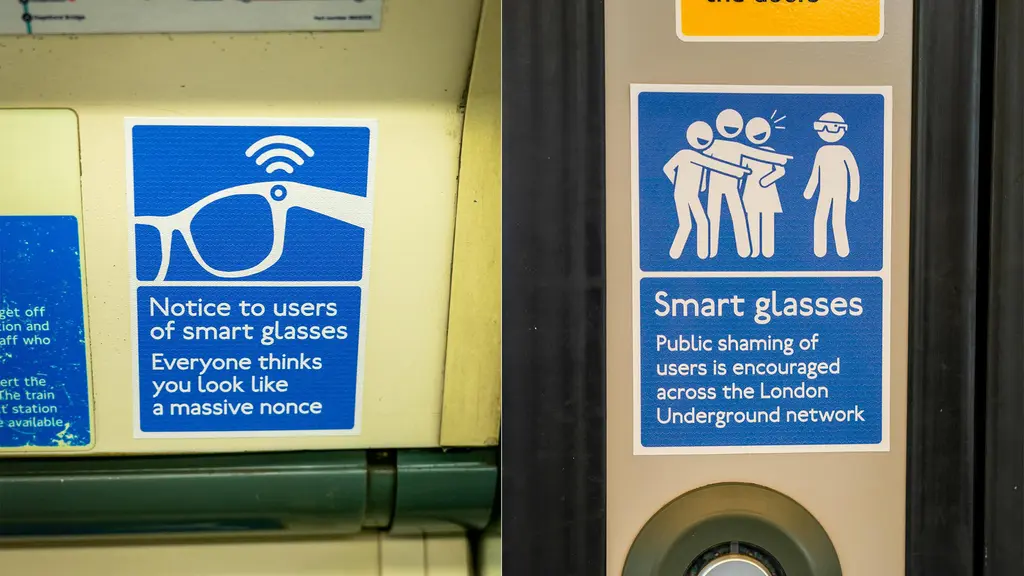
Activists slam “pervert glasses” in new guerrilla campaign
Everyone Hates Elon — Stickers have appeared on the London Underground network, criticising the wearable technology’s covert filming capabilities.
Written by: Isaac Muk

Behind the curtain at Alternative Miss World 1981
Olympia glamour — Running a subversive take on the traditional beauty pageant, the Andrew Logan organised event prioritised underground creativity and invention. Photographer David Corio went behind the scenes at its biggest edition.
Written by: Miss Rosen


