The true impact of big tobacco, in photos
- Text by Huck
- Photography by Rocco Rorandelli

Every year, nearly 6 trillion cigarettes are smoked around the world by over 1 billion people. Roughly 20% of the world’s population is classified as smokers feeding a tobacco industry worth $888 billion, a figure greater than the GDP of the Netherlands.
This gargantuan industry made up of farmers, manufacturers, lobbying and marketing firms, is the subject of Bitter Leaves, a new project from Italian photographer Rocco Rorandelli exploring the scale of tobacco’s grip on our society and environment.
Over the course of a decade, Rorandelli travelled the world documenting the impact of the tobacco industry on public health, the economy, and the environment. From the tobacco fields of India to walking the conference halls of Germany, Bitter Leaves lays out how the tobacco industry has infiltrated public life and presents the startling photography alongside the even more unnerving testimony of scientist Dr Judith MacKay.
For Rocco, the project was as much a personal endeavour as a professional one. Losing his father to cancer caused by a lifetime of chain-smoking pushed Rocco to explore the impact the industry has on people up and down the supply chain.
“What I found interesting is that when you talk about smoking we usually focus on the health dangers it has on smokers but we don’t look at the other issues,” he explains. “The strength of the industry is the simplicity of cigarettes. They’re designed very sleek and clean and totally far from the reality that you can breathe and see in the fields, but also in other areas like manufacturing or marketing.”
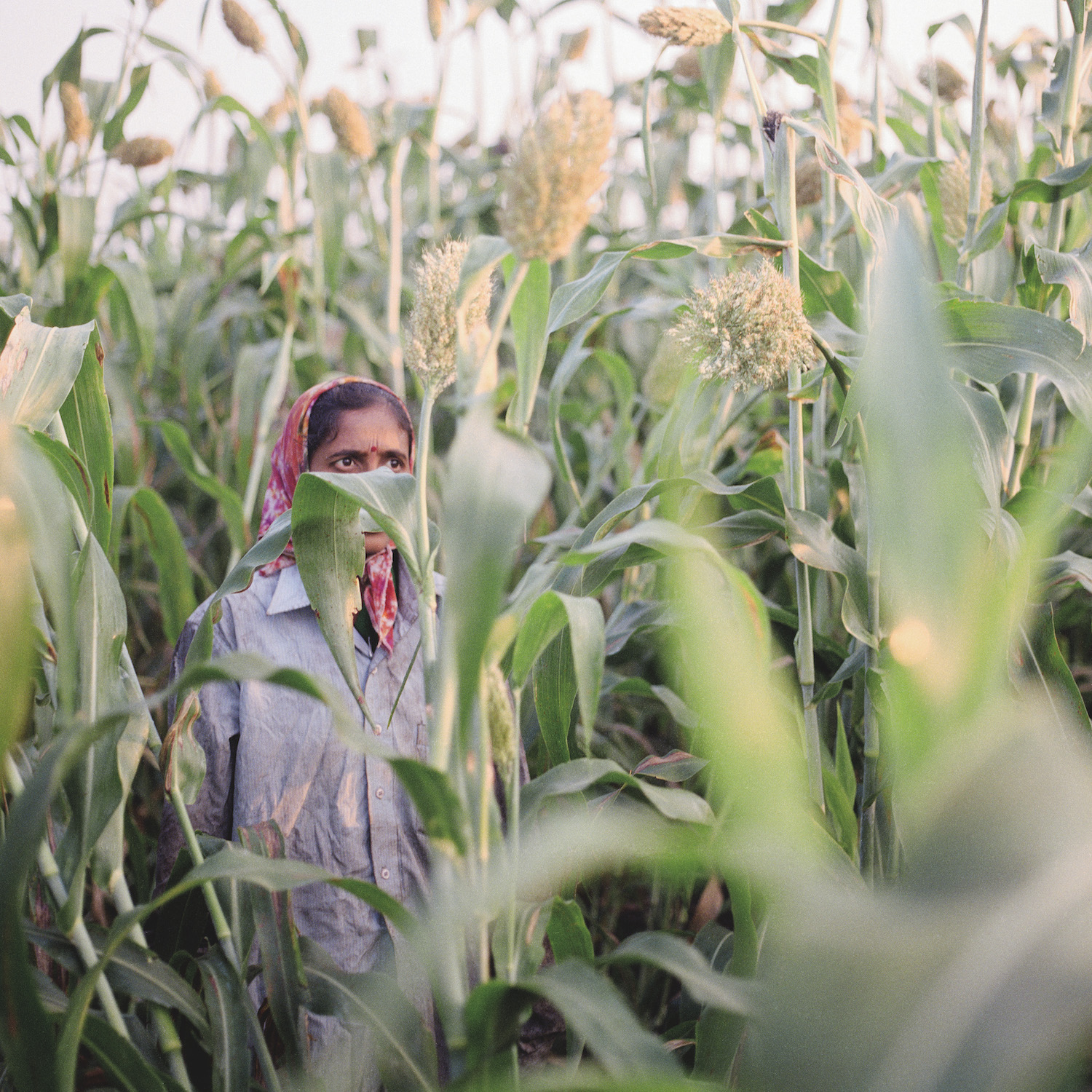
Nipani, India. Tobacco labourer Dipali Lohar in a mixed field with bidi tobacco and sorgum. This technique helps farmers reduce their dependency on tobacco.
Rocco’s work took him around the world, to traditional tobacco-growing regions like the Southern United States, as well as closer to home in Italy and Bulgaria. It was his time in Asia though which demonstrates the reach of tobacco’s major players.
“Asia is the big player today for tobacco,” he says, “you can see how powerful and ingrained in society they are. They build roads and restore temples, but at the same time once you travel out into the countryside where the crop is actually grown you will see that the wealth is not spread evenly.”
“Landowners will praise the industry but their workers and undocumented labourers will tell you how hard it is, how they wish there was an alternative.”
Having worked in photojournalism for a number of years now, Rocco is hardened to the realities he documents but even he was struck by how “extremely unfair” the system is. “It’s frustrating to know that when you’re out there with people your work is probably not going to help them. Especially when you see kids working in the fields, it’s even worse.”
Still, he hopes that his work will help open our eyes to the reality behind every cigarette we smoke, “to not just trust the appearances and to be a little more critical about what we are given.”

Jakarta, Indonesia. An underage smoker. More than 30% of Indonesian children start smoking before the age of ten, often propelled by lax tobacco control policies, aggressive marketing strategies and low cigarette costs. Over 165 million people smoke in Indonesia, accounting for more than one-third of the population. Indonesia has the highest rate of underage smokers in the world.

Yuxi, China. The Hongta cigarette factory production line. The company claims that this is the world’s most advanced cigarette production line, with fully automated robots. In the Yuxi factory, more than 135 billion sticks are produced per year, covering 12% of China’s total production. China is the largest producer of cigarettes in the world.
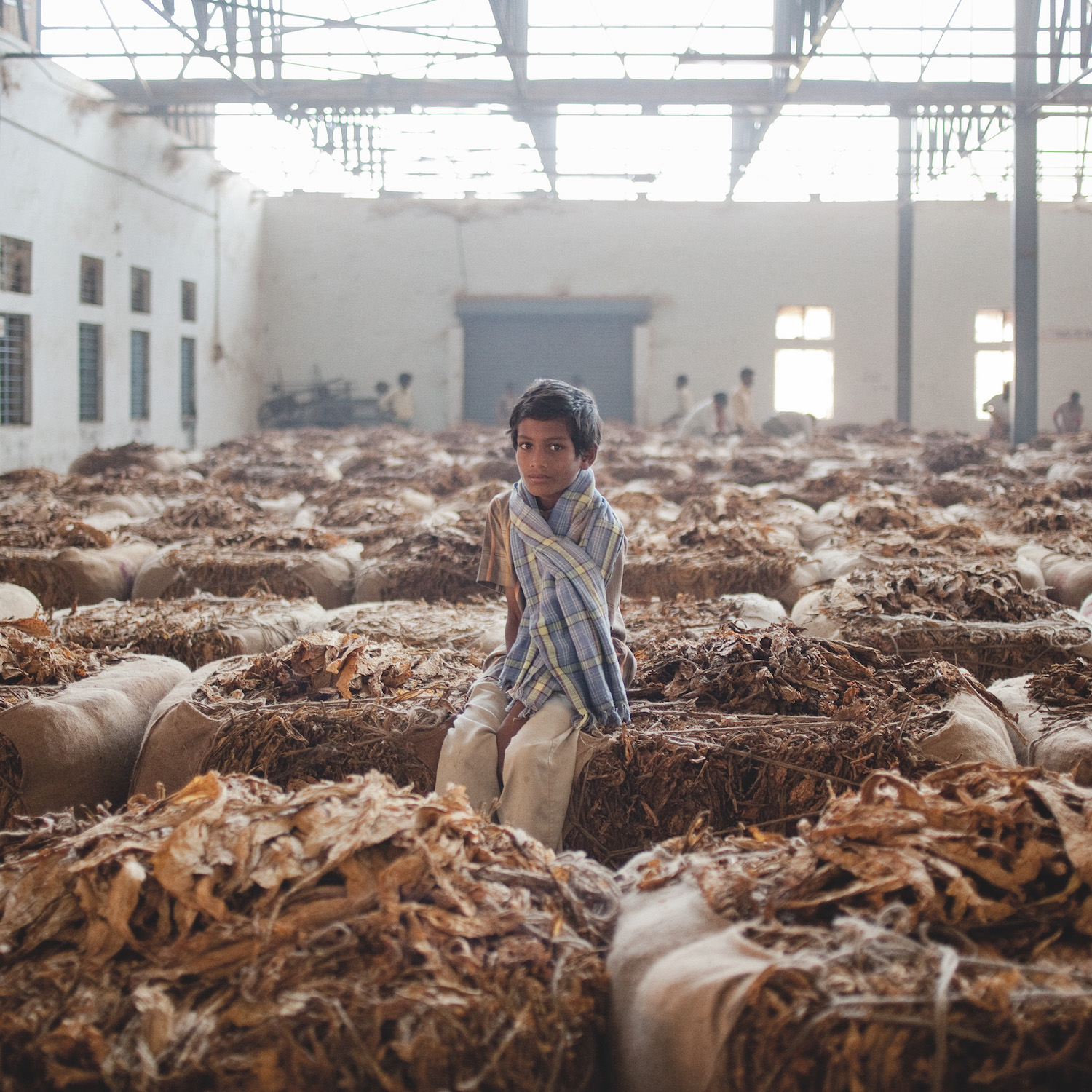
Periyapatna, India. A farmer’s child sitting on a tobacco bale on the floor of a tobacco auction house. According to the UN’s International Labour Organization (ILO), about 1.3 million children work in tobacco fields, with the number increasing in certain countries like India and Zimbabwe. A recent study estimates more than 1.7 million children work in India’s bidi rolling industry. The UN’s Sustainable Developmental Goals (SDGs) aims to reduce the number of children engaged in tobacco farming by providing alternative livelihoods.
Bitter Leaves is available from GOST Books for £30.
Enjoyed this article? Like Huck on Facebook or follow us on Twitter.
You might like

Queer resistance & sun-soaked solidarity at the world’s largest trans pride march
Our Future, Our Fight — Over the weekend, over 150,000 people marched at the London Trans+ Pride, with the parade ending at Trafalgar Square for the first time in history.
Written by: Ella Glossop

In photos: Black Texas life since emancipation
Kinship & Community — A new photobook and exhibition showcases the rich culture, history and community of African American folks in the Lone Star State, whose existence in the region predates colonial Britain.
Written by: Miss Rosen

Youthful joy & end-of-era poignancy at a London school prom
Leavers — For several years, Lewis Khan documented young people as they celebrated the last of their school days and the completion of their exams. The series is now collated in a new self-published photobook and short film.
Written by: Zoe Whitfield

Harry Gruyaert’s vintage, kaleidoscopic scenes of New York
A Sense of Place — For 50 years, the Belgian photographer and Magnum Photos member has been capturing NYC’s colourful chaos. A new photobook and exhibition showcase his unique, technicolour view of the city.
Written by: Miss Rosen

In the pit at one of the UK’s last stock car & banger speedways
Stock Car Racing Isn’t Dead — Photographer Liam McCarthy spent time in and around the Arlington Raceway’s circuit, capturing the diehard community that keeps the sport alive.
Written by: Isaac Muk

Inside Lower Duck Pond, the nicest town on the internet
/r/HaveWeMet — With a population of 2,500 and no fixed location, the subreddit is a space for roleplaying citizens to solve mysteries, host fictional events and ultimately connect. In an internet that’s often divided and toxic, Vicky Jessop hangs out in one of its most wholesome corners.
Written by: Vicky Jessop


