A photographer's chaotic path toward realising his dream
- Text by Brendan Hoffman
- Photography by Brendan Hoffman / Getty Images

My trip to Eastern Ukraine changed everything. When I arrived in 2014, I had never covered war. I had never seen someone die. I was married and living in Moscow. None of those things are true anymore.
I moved to Moscow from the US in the summer of 2013 because my wife and I had talked about it for years. I find Russia interesting, misunderstood and not covered well by most media.
Having spent my entire career in Washington DC, I wanted to photograph the real world – real people affected by the realities of life – not just men in suits speechifying.

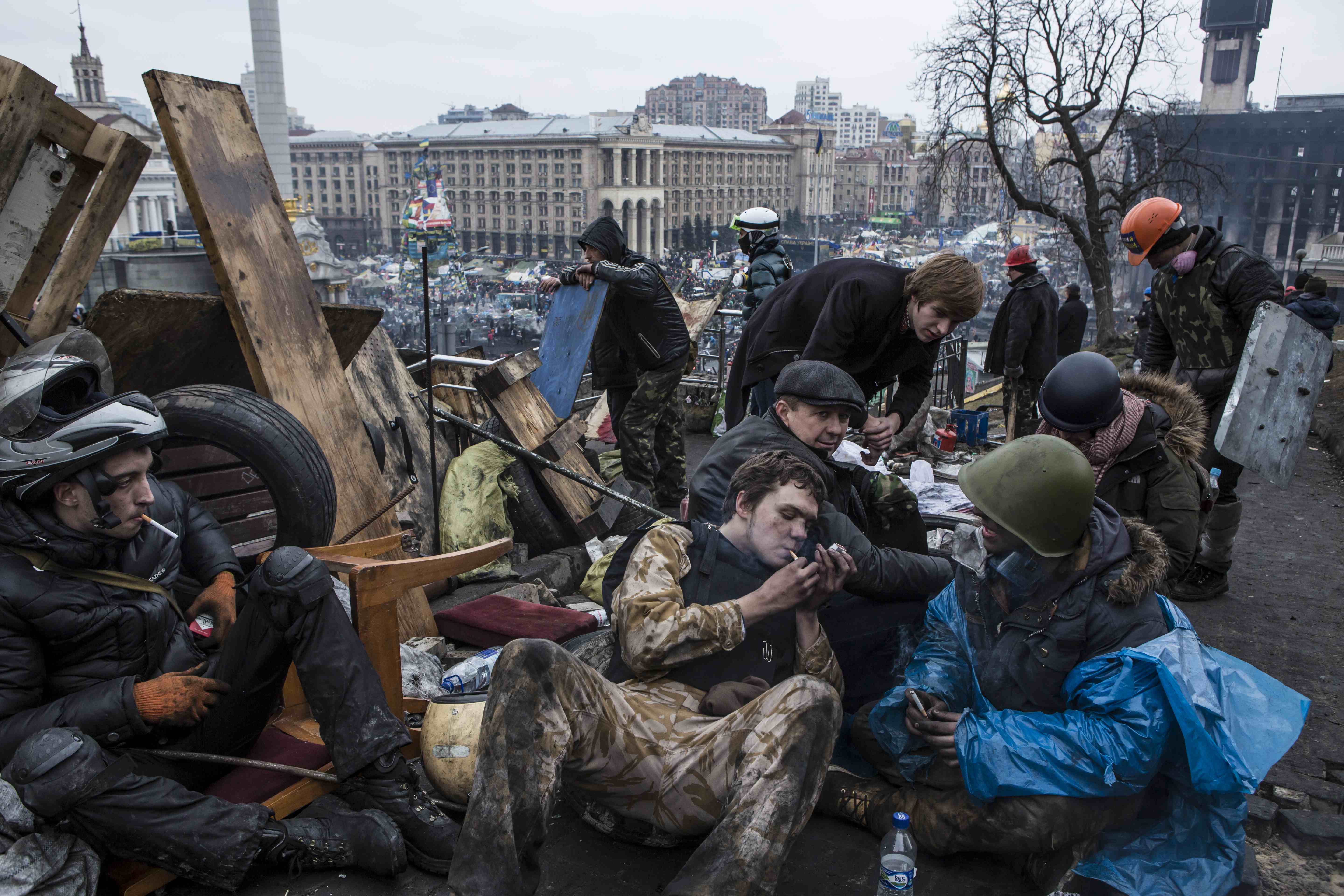
But by December, I was frustrated. I started questioning everything, not only my decision to move to Russia, but my life in photography too. Then, on my way home from a particularly difficult trip, I caught news of the protests in Kiev.
I emailed my editor at Getty as soon as I could to see if she wanted me to cover it. She said yes and I was there by the following day. For the next two weeks, I lost myself in work. It was difficult but inspirational, and it felt good to make pictures I was proud of again.

I returned to Kiev a few more times during January and February, and I was there on the morning of 20 February 2014, Ukraine’s bloodiest day, when government snipers shot and killed more than 80 people. I watched men die in the lobby of a hotel. It was the first time I had seen anything like it.
I thought the story was over, but then came Crimea and, by late April, the conflict had spread to the East. I decided to go; as a freelancer based nearby, it was my best chance at getting assignments. I lined up a fixer and got on a plane. It was the day after my wife and I had returned from vacation. I ended up staying in Donetsk for almost six weeks.

The work was frustrating, terrifying, boring and just plain weird. But most of all, it was satisfying. I finally had the chance to cover a war, a career milestone. My decision to come to Moscow felt prescient. I had no choice but to see it through. Or else, why did I move across the ocean? Why even bother calling myself a photojournalist?
Meanwhile, a few things happened. In my absence, my wife grew miserable – a longstanding and understandable concern. The only solution was to return home and miss the story, which would have made me miserable. We’d been down this road before.
At the same time, totally unexpectedly, I found myself drawn to the fixer I had hired when I first arrived in East Ukraine. We were no longer working together but she was still around, working with Danish TV.


My mind went in circles trying to figure out if it all came down to circumstances or if these feelings were real. I was photographing funerals and dead bodies and having guns pointed at me on a daily basis and that can do very strange things to a person’s brain. A million disparate thoughts went through my head as I groped for an explanation.
What if I wasn’t as happy at home as I thought I was? What if dodging bullets makes all other risks look minor and survivable, even if they’re toxic? I struggled to reconcile my conflicting values. Weeks of anguish passed. In the end, I took the biggest chance of all and went with my heart. I still think this was the right choice.


I’ve returned to Eastern Ukraine twice since then, including to cover the Malaysia Airlines plane crash. I arrived 18 hours after it happened and saw horrific things.
Later, I nearly lost it during a radio interview, which came as a relief; I’m glad to know I can still be affected by horror. I live mostly in Kiev now, and though I lost much of the comfort I once had, the contours of my life are much closer to what I imagined for myself.

This article first appeared in Huck 46: The Documentary Photography Special II. Buy it in the Huck Shop or subscribe to make sure you never miss another issue.
Check out the portfolio of photographer Brendan Hoffman.
Enjoyed this article? Like Huck on Facebook or follow us on Twitter.
You might like

In photos: Black Texas life since emancipation
Kinship & Community — A new photobook and exhibition showcases the rich culture, history and community of African American folks in the Lone Star State, whose existence in the region predates colonial Britain.
Written by: Miss Rosen

Inside Parkuir: the art project queering sport, space and our bodies
Lie and play — Founded by Maria Laudes and Guiu Gimeno, it provides a framework for engaging, subverting, and celebrating the small details that make people unique – and queer.
Written by: Molly Lipson

Youthful joy & end-of-era poignancy at a London school prom
Leavers — For several years, Lewis Khan documented young people as they celebrated the last of their school days and the completion of their exams. The series is now collated in a new self-published photobook and short film.
Written by: Zoe Whitfield

Harry Gruyaert’s vintage, kaleidoscopic scenes of New York
A Sense of Place — For 50 years, the Belgian photographer and Magnum Photos member has been capturing NYC’s colourful chaos. A new photobook and exhibition showcase his unique, technicolour view of the city.
Written by: Miss Rosen

In the pit at one of the UK’s last stock car & banger speedways
Stock Car Racing Isn’t Dead — Photographer Liam McCarthy spent time in and around the Arlington Raceway’s circuit, capturing the diehard community that keeps the sport alive.
Written by: Isaac Muk

Inside Lower Duck Pond, the nicest town on the internet
/r/HaveWeMet — With a population of 2,500 and no fixed location, the subreddit is a space for roleplaying citizens to solve mysteries, host fictional events and ultimately connect. In an internet that’s often divided and toxic, Vicky Jessop hangs out in one of its most wholesome corners.
Written by: Vicky Jessop


