In Pictures: Coming of age as a Sudanese refugee in Australia
- Text by Shannon Jensen
- Photography by Conor Ashleigh

Achingol Mayom drew stares on her first day of school in 2003. She was seven years old and the only Sudanese immigrant in her class in Newcastle, Australia. “Everyone seemed quite intrigued because I was very tall,” she recalls. “Did you used to live in a hut?” her classmates inquired.
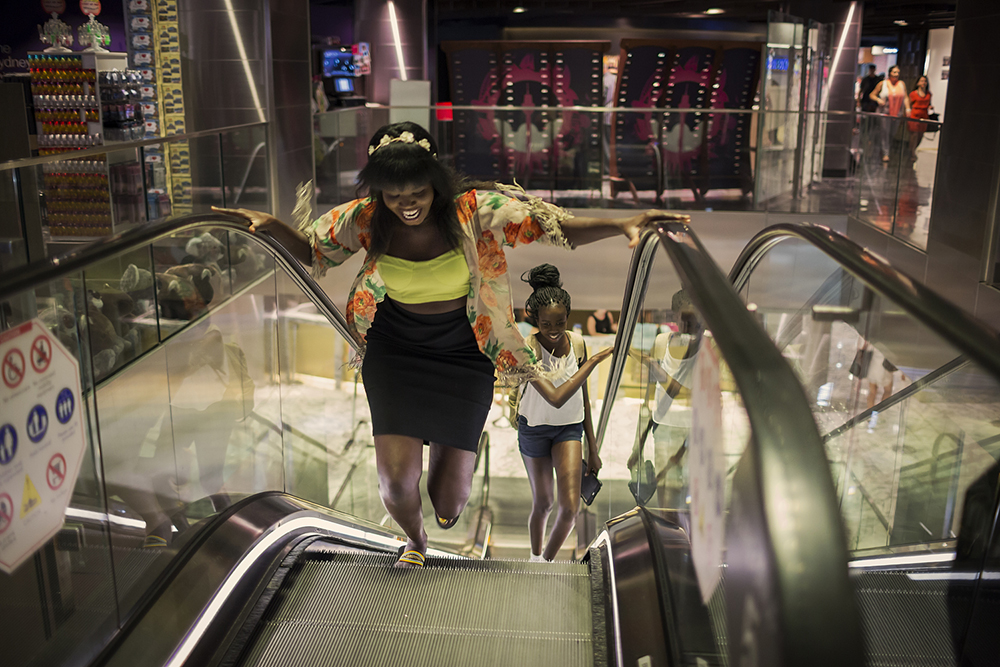
At that time, the second Sudanese civil war was entering its twentieth year, ceaselessly ravaging the dusty towns and undeveloped wilderness of the south. Achingol’s mother had fled from their family home near Rumbek, a provincial town in central South Sudan, in 1993. She sought safety across the border in Kenya’s Kakuma refugee camp, where Achingol was born two years later.
The Mayoms – Achingol, her mother, four brothers and a cousin – were among the 19,000 Sudan-born refugees resettled in Australia between 2002 and 2011, the year that South Sudan achieved its independence. The arrival of the Mayoms and other Sudanese families was largely met with openness and curiosity in Newcastle, a white, suburban town two hours north of Sydney, but the major challenge of navigating a new culture remained. How does one embrace the opportunities of a new life while preserving one’s heritage? This was a particularly tricky question for young arrivals like Achingol, who were coming of age and forging their identities in the midst of this upheaval.

In most ways, the young generation happily embraced Australian life, which sometimes led to misunderstandings with their more conservative parents. Achingol had trouble getting permission to go to classmates’ birthday parties in primary school. She recalls that even as she grew older, “When you say ‘I am going out with my friends,’ they look at you like ‘Oh my god, what happened to my daughter?’ They don’t realise that this is just what you’re supposed to do growing up.”
Conor Ashleigh, a twenty-seven-year-old documentary photographer from Newcastle, became friends with Achingol’s older brother Akolde when they moved into his neighbourhood when he was sixteen. “I feel like the younger generation lives with a lot of challenges, just to meet their own expectations of succeeding in a new land, let alone other people’s expectations,” says Conor, who has been documenting the community from the inside since 2010. “They are doing the best they can to succeed in whatever way success means to them.”


The adolescent South Sudanese diaspora has developed their own strong sense of community within suburban Australia. Young men tend to gravitate towards basketball, and the tournaments become major occasions for the whole community to come together. Cultural traditions are performed but adapted as necessary: talcum powder is used instead of ash to smear on the body for a traditional Dinka dance.
The easiest way for the youth to demonstrate a commitment to their heritage is to speak their native tongue. Achingol’s mother, like many South Sudanese parents, ensured that her children spoke Dinka at home, even though it is unlikely that they will ever return to South Sudan. Another young refugee, Atong Atem Yaak, explains, “People are embarrassed when they aren’t very good at speaking Dinka because it’s a very tangible way of holding on to your culture. Nobody wants to seem like they’ve forgotten their culture.”

Achingol adeptly navigates between these three spheres of her life: family, the young diaspora community and her Australian school friends. She feels at ease in each environment, but they are different in a way that she finds hard to explain.
When people ask Achingol where she is from, there is no simple answer. “I’m from Kenya but my family is from Sudan,” she replies. She has now spent more than nearly thirteen of her twenty years in Australia and considers herself to be Australian. It’s almost impossible for her to imagine what life might have been like if her family had not settled here: “I’m sort of glad that I’m here so I don’t really think about it. I don’t see any other way of living other than being in Australia.”

This article originally appeared in Huck 53 – The Change Issue.
Grab it in the Huck Shop now or Subscribe today to make sure you never miss another issue.
Enjoyed this article? Like Huck on Facebook or follow us on Twitter.
You might like

Inside Parkuir: the art project queering sport, space and our bodies
Lie and play — Founded by Maria Laudes and Guiu Gimeno, it provides a framework for engaging, subverting, and celebrating the small details that make people unique – and queer.
Written by: Molly Lipson

Inside Lower Duck Pond, the nicest town on the internet
/r/HaveWeMet — With a population of 2,500 and no fixed location, the subreddit is a space for roleplaying citizens to solve mysteries, host fictional events and ultimately connect. In an internet that’s often divided and toxic, Vicky Jessop hangs out in one of its most wholesome corners.
Written by: Vicky Jessop

Tender portraits of women serving life sentences in America
Looking Inside — While working as a public defender attorney in New York State, Sara Bennett found dilapidated prisons and forgotten people. Her new photobook harnesses the power of images and shines a humanising light on those imprisoned for serious crimes and their reintegration into society, while asking questions of the USA’s incarceration system.
Written by: Miss Rosen

Activists replace Union Jacks with ‘Tax The Rich’ flags in Farage’s Clacton
Take Back Power — It comes after the Reform UK leader resigned as an MP and triggered a by-election in the constituency, following scrutiny over a £5 million donation that he had not declared.
Written by: Ella Glossop

Tish Murtha’s searing documentation of broken Britain
Vandalism on a Grand Scale — Capturing youth unemployment and poverty in north-east England during the ’80s, the photographer never lived to see her work published. A new photobook by British Culture Archive brings her eye-opening work to light.
Written by: Miss Rosen

The London sword fighters reviving medieval combat
Schola Gladitoria — Studying ancient textbooks and techniques, the historical European martial arts community duel with centuries old systems of engagement. Mads Jensen swings a blade in an Ealing church to find out more.
Written by: Mads Jensen


