Crisis after crisis, Athens remains resilient in its beauty
- Text by Jade Jackman
- Photography by Dimitris Lambridis

Greece: seemingly a country of contradictions. Sparkling blue waters, histories of magic and mythicism are foundational to the country, but recent years have painted a different picture. Their financial crisis, which started circa 2007, brought forward painfully haunting images of families sobbing over their disappearing livelihoods.
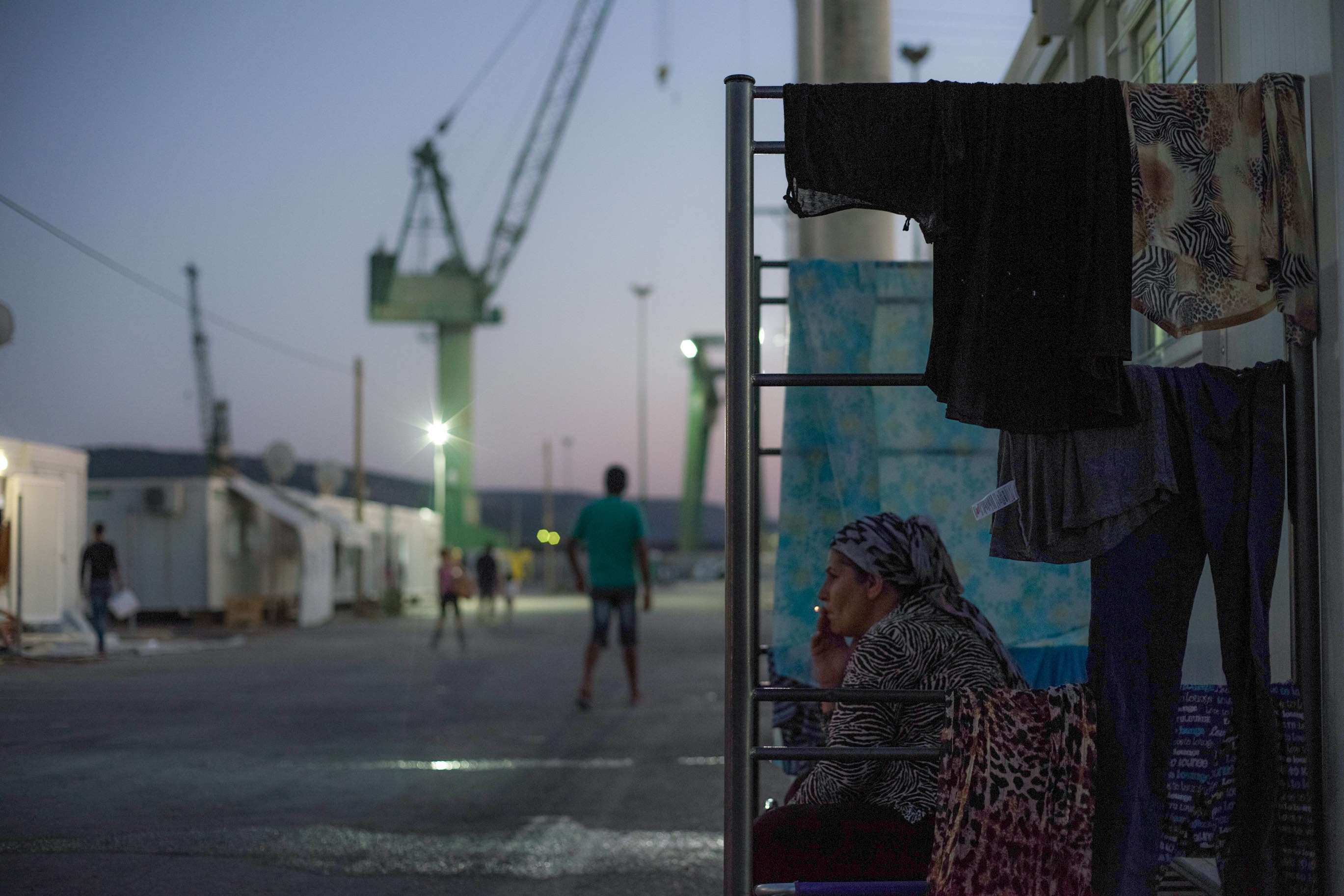
 Seasons changed, but the international journalistic community stayed; Greece had become the centre European of the ‘refugee crisis’. As more and more people began to document the refugees’ perilous odyssey to Greece, the stark orange lifejackets against the darkness of the sea became almost the stock image to depict it. But, for me, another image cut right to core of their migration to Greece.
Greek documentary photographer, Dimitris Lambridis, captured the striking redness of a woman’s headscarf as she sits alone, lit up by the lights of that ancient city, Athens.
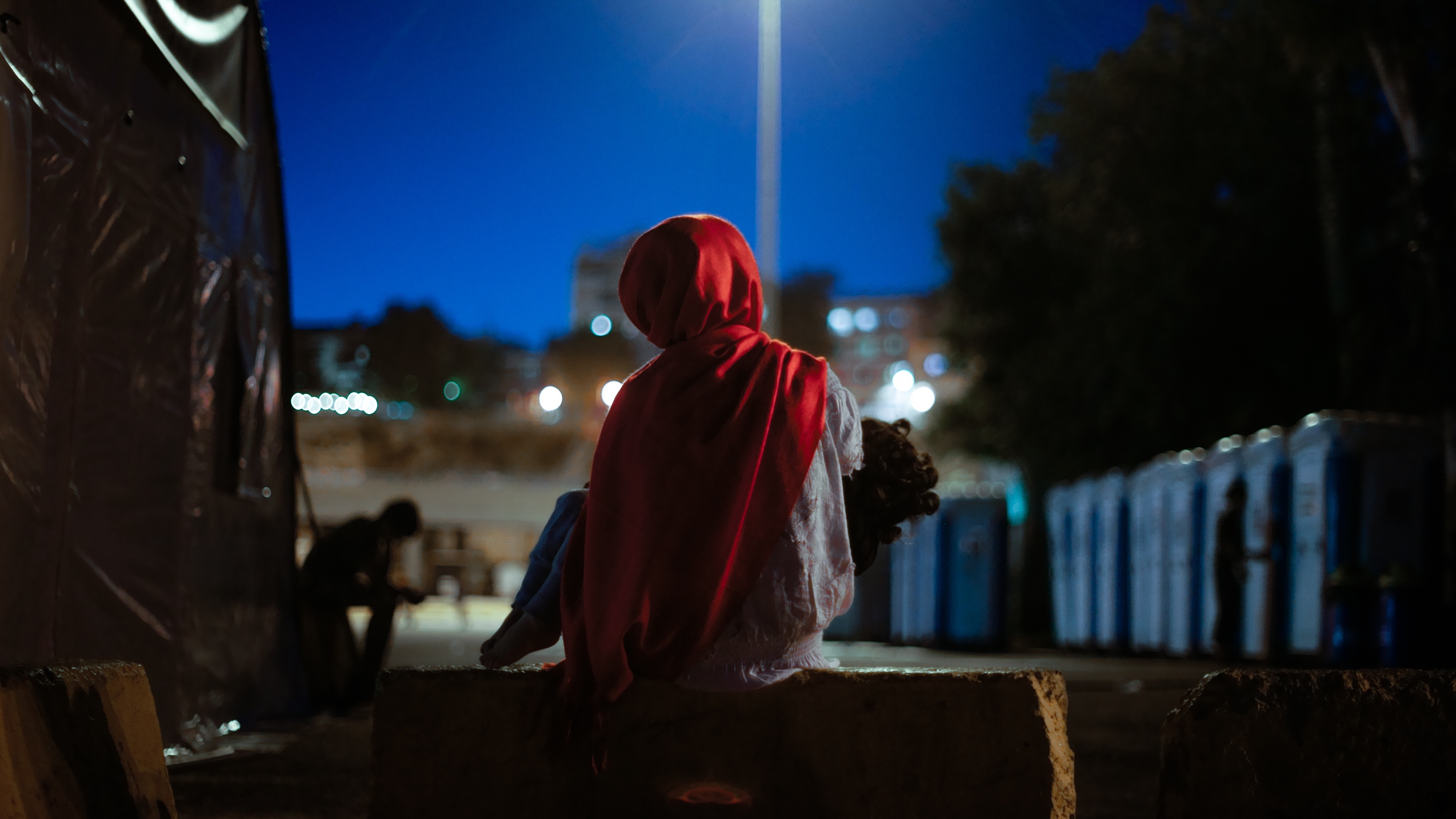
At first, you hardly notice the silhouette of the child that she cradles in her lap. Solitarily, she sits waiting, waiting for something to change. The slowness of the image documents the reality of being a refugee when the borders are closing around you, leaving you lost, bored and alone in a new place.
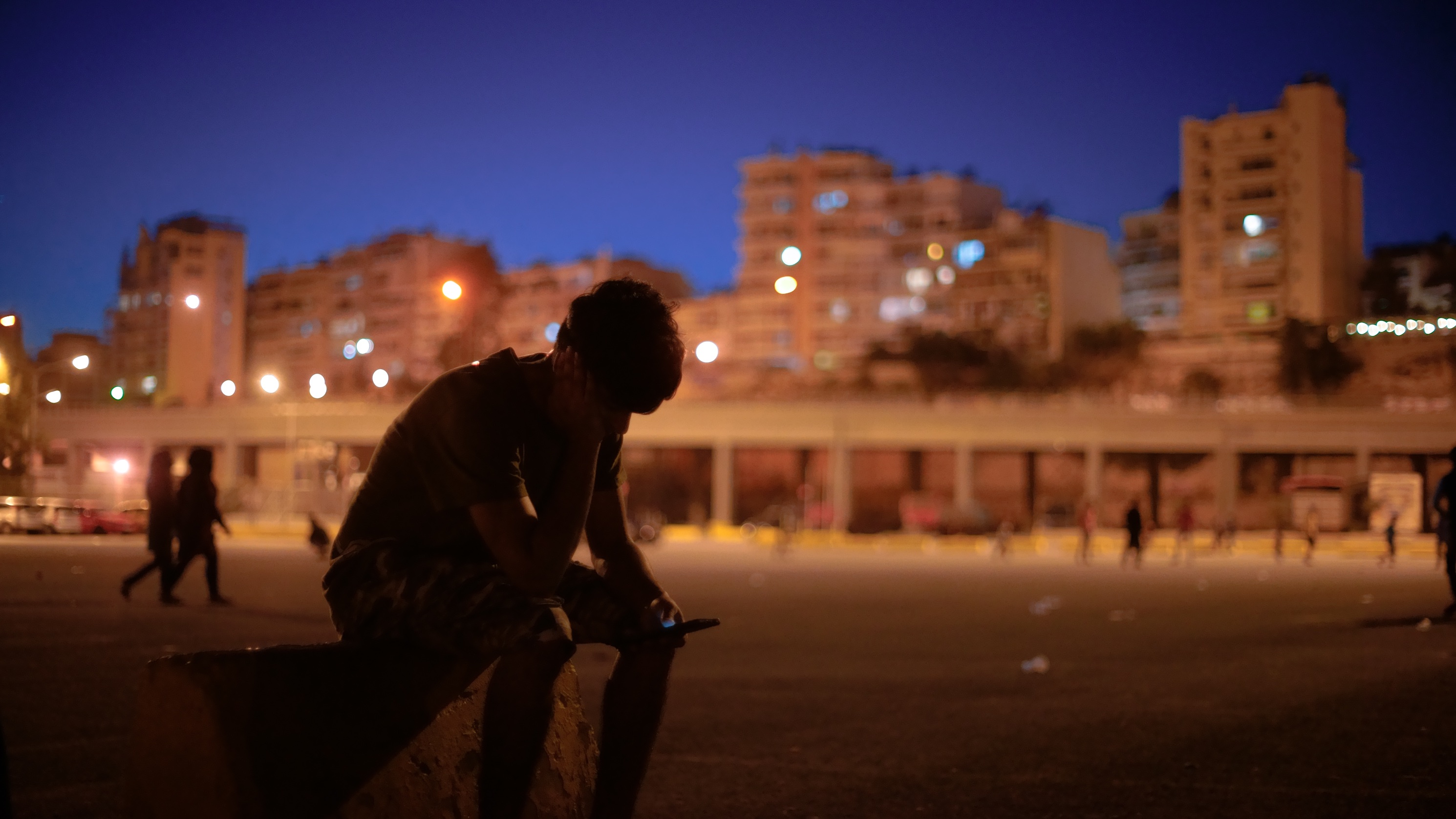
Through his eye for light, Lambridis can sense a mood in the stillest of moments. In one of his images, a refugee named Ahmed, pulls his hands up engulfing his face in shadows as he cries. While the viewer can quickly understand what is happening, it affords his subject some privacy in a personal moment. After acknowledging the sensitivity of this image, the question was posed to Lambridis as to whether there had been a time when he felt that he shouldn’t have his camera out.
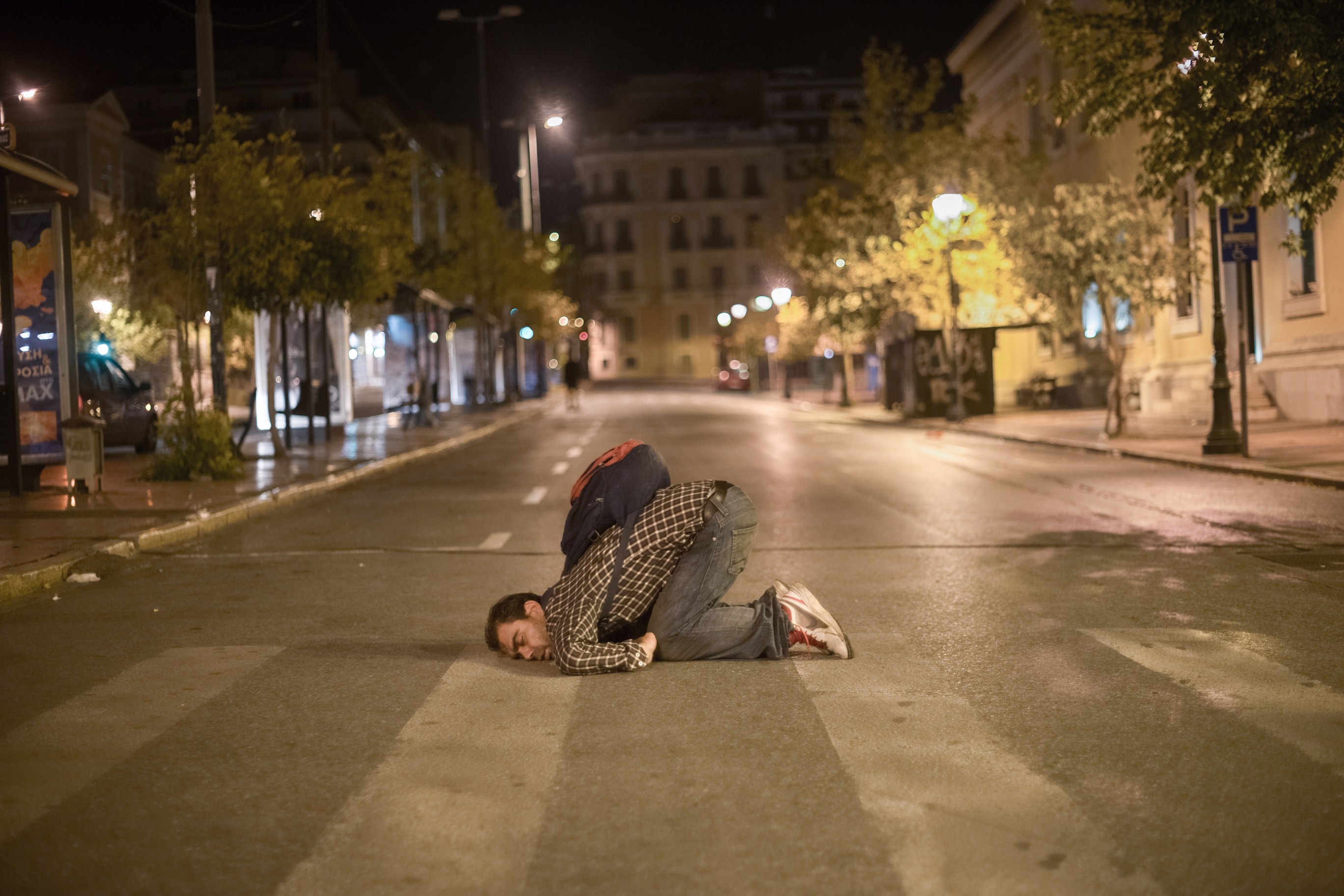
According to Lambridis, this is an intuition that documentarians gradually develop over time. But there is one image that raised questions for him. From his collections shot in Greece, he captured a man slumped completely passed out, on his knees outside of the Athenian Law School; an area where drug addicts can generally be found. But after shooting the photo he picked up the man and placed him in a bus stop chair as he felt it would be “morally wrong to leave him there”.
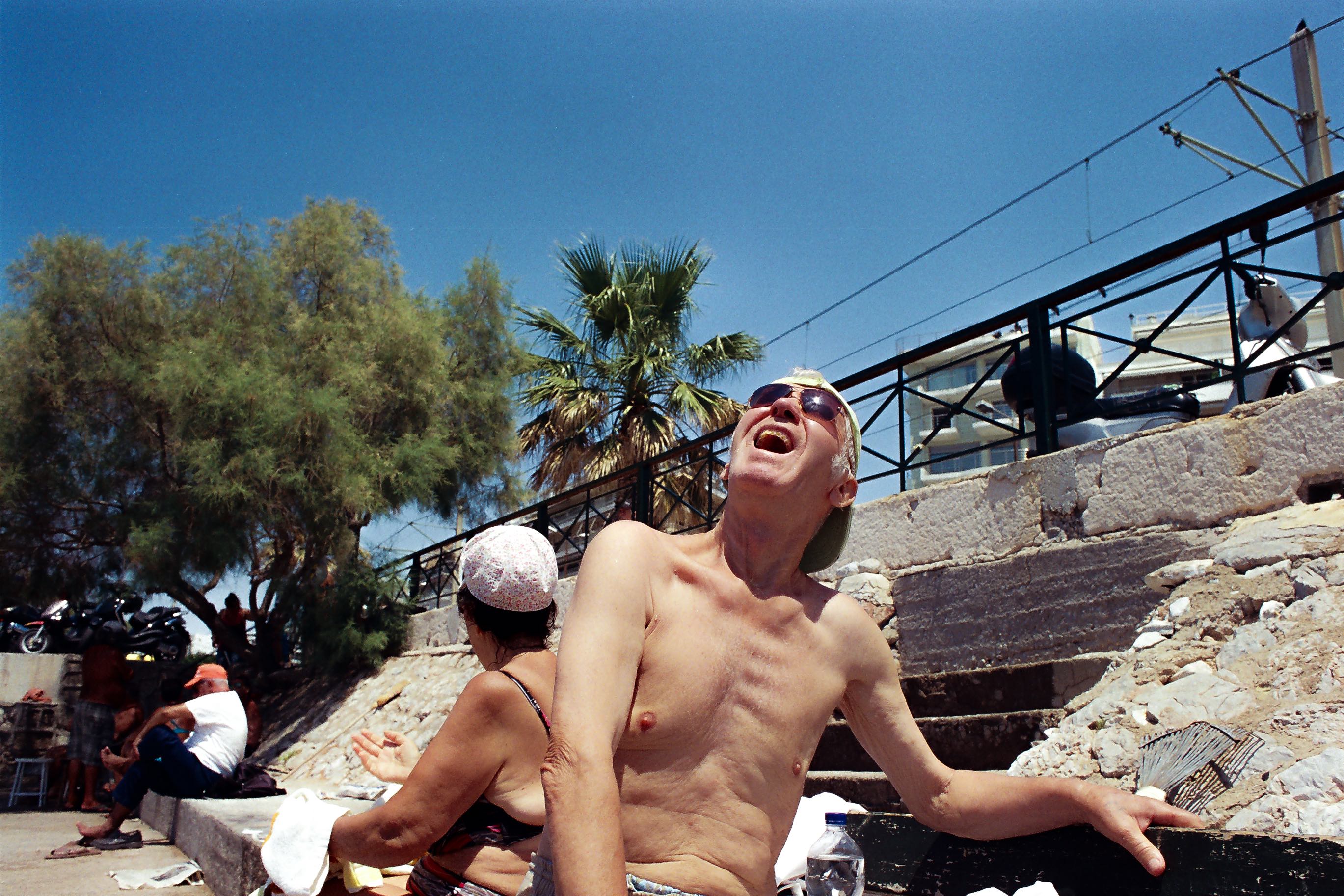
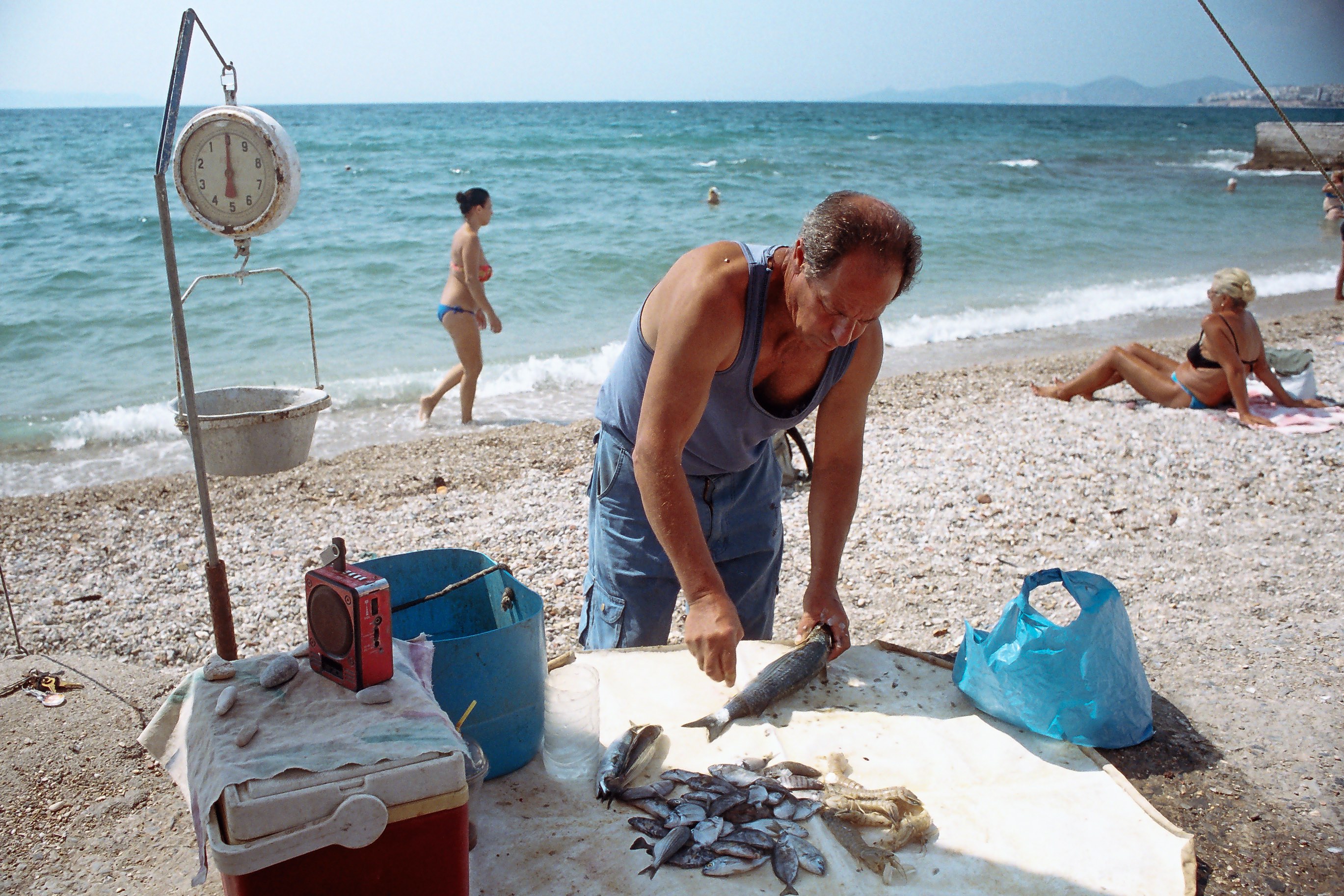
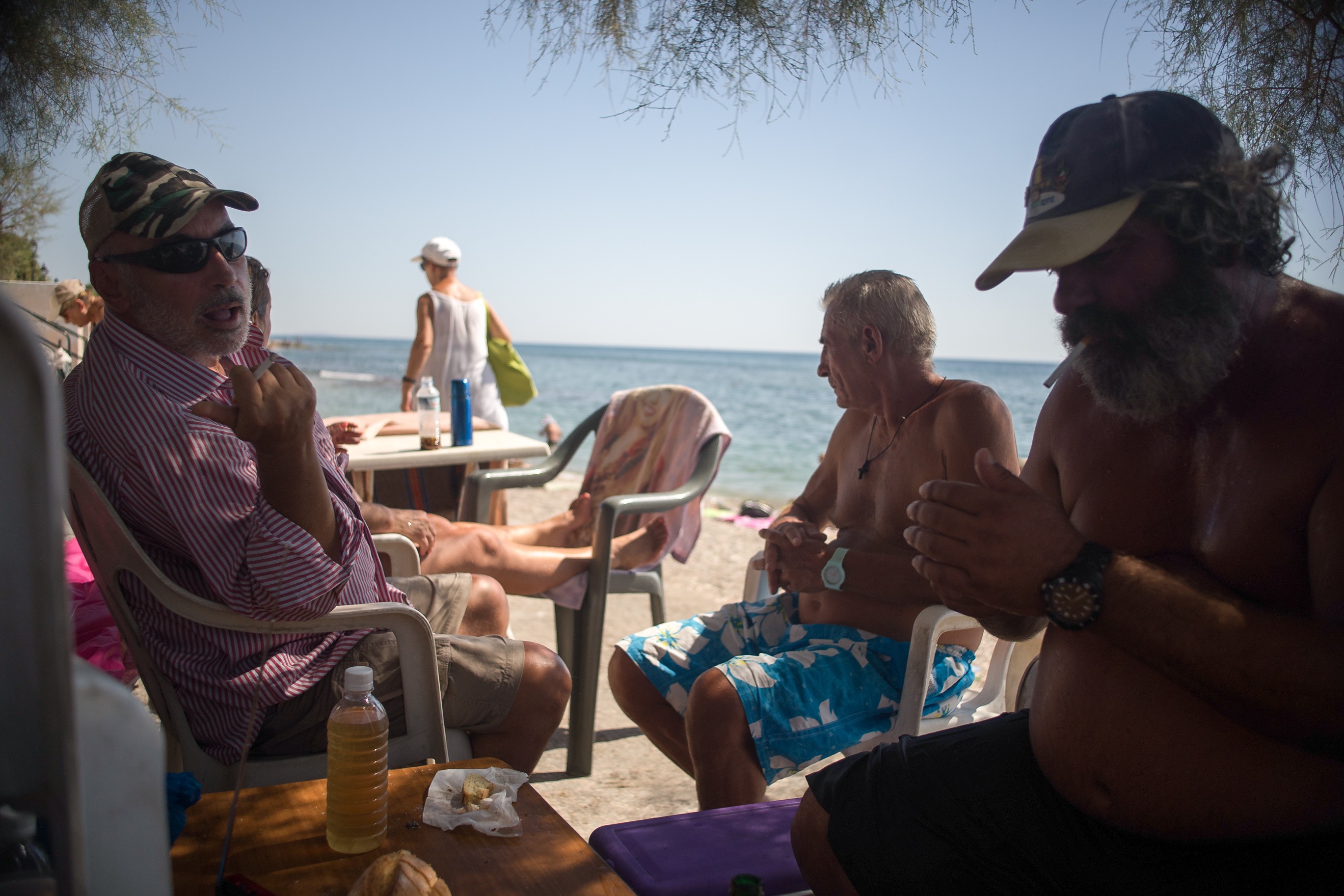
However, what is most appealing about Lambridis’ photography of Greece is his fondness for the people “who experienced the good days of Greece in the late 20th century”. This has led him to follow the longstanding traditions of his culture: people enjoying the sea, fishermen and religion. Although he acknowledges the change and suffering that families experience, he likes to focus on the things that have not altered, despite the financial crisis, as it shows the adaptability and resilience of the Greek people.
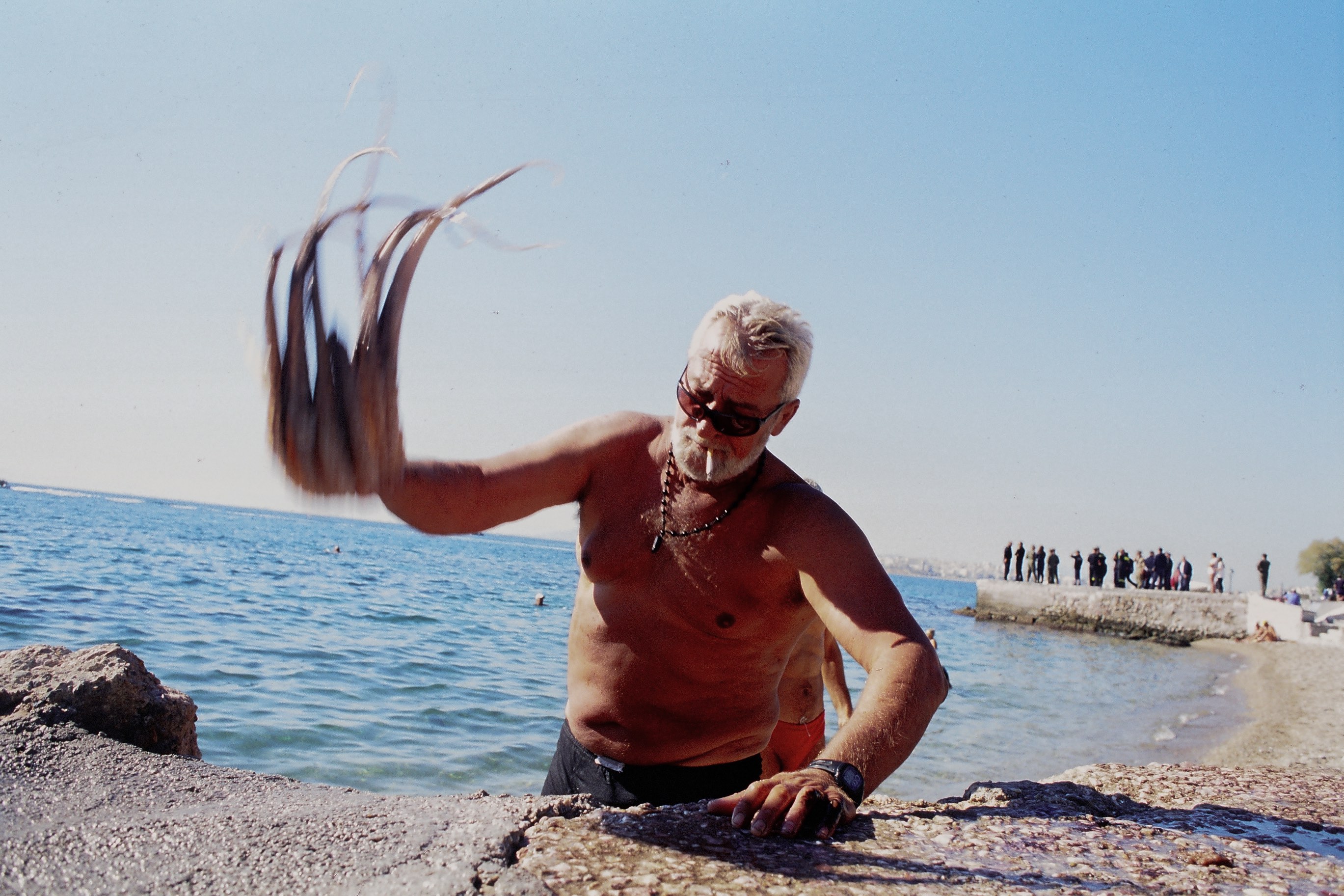
In one of these photographs, a man now gold thanks to many years in the bright Greek sun, swiftly moves to slam down an octopus. This sense of ease, and appreciation, around water is certainly a theme that runs through many of Lambridis photos of Athens.
When placed next to his photos of the refugee crisis, the sea is still present. In an almost directly comparable motion, a young refugee precariously leans off the edge of a port throwing a crate back into waves. In both the images, there is shared comfort with the water. Neither subject appears unfamiliar. Placed in conjunction with one another, these photos provide a sense of coherence as their subjects are united through their relationship to the coastline.
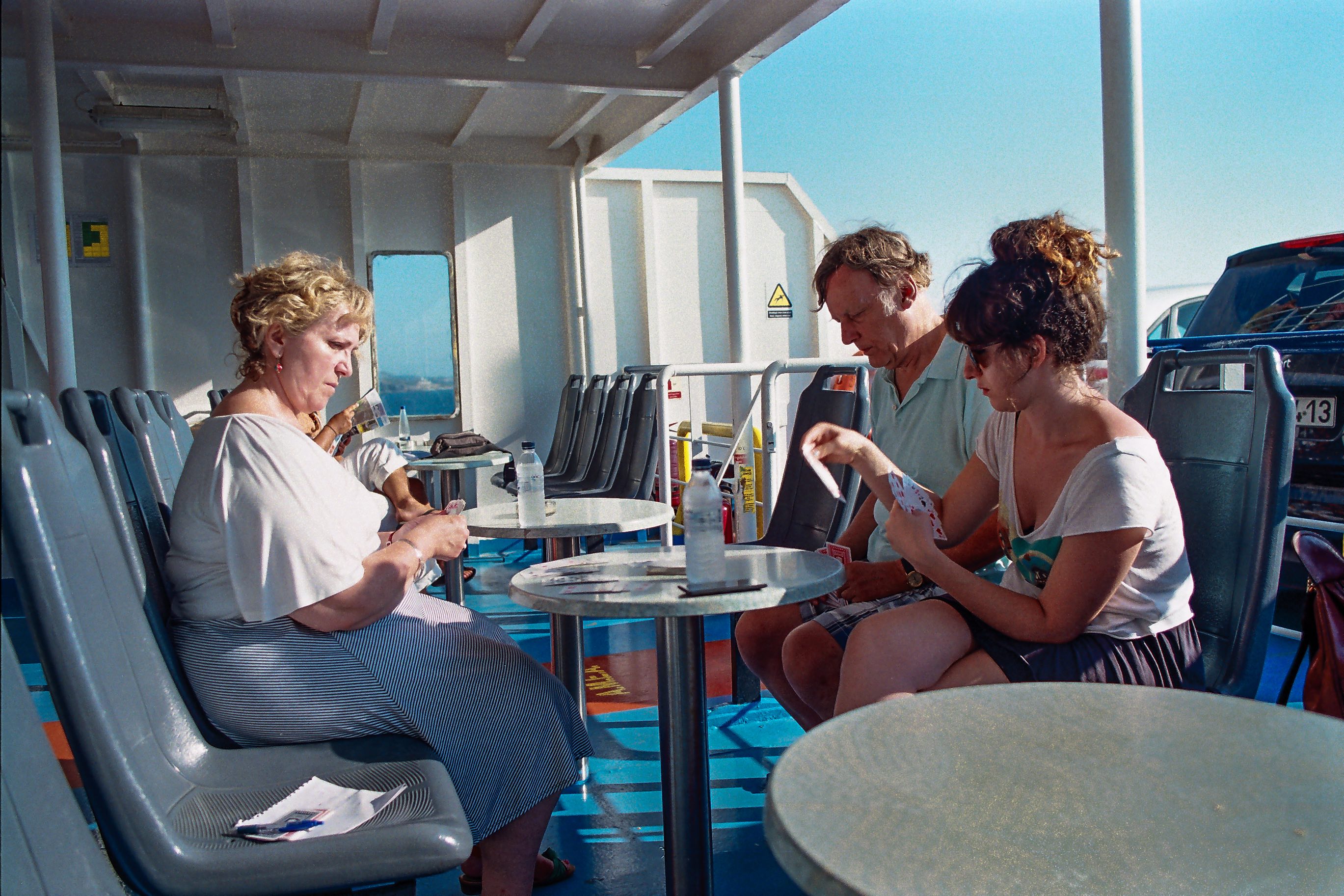
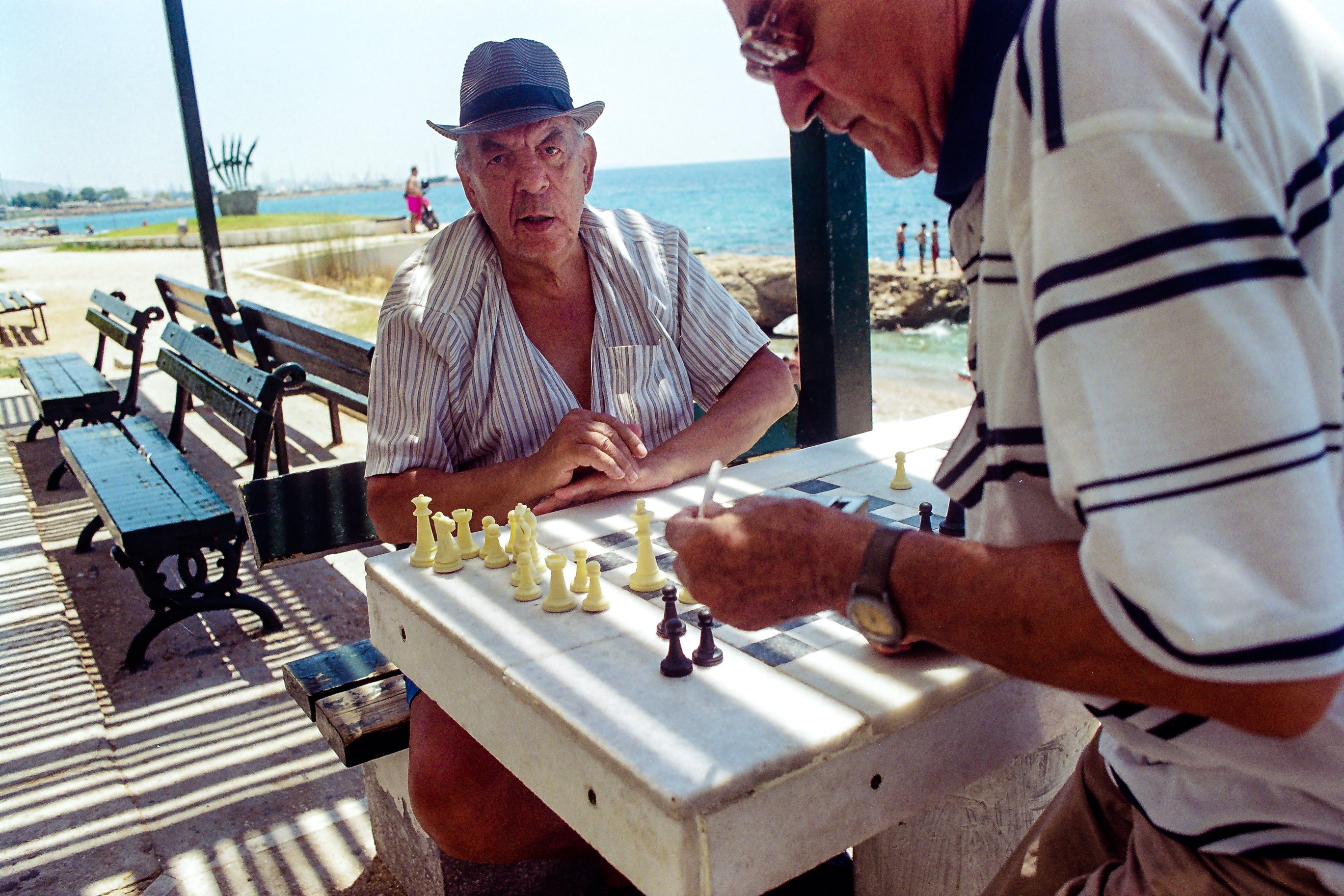
Through a thematic consideration of his work, Lambridis provides a sense of reliability between people who might otherwise believe they have little in common. For him, “that is the psychological part. This sense of unity is where people can relate.”
“In some way, most families in Greece have what could be seen as a ‘refugee’ background or have lived through the dictatorship which was not too long ago. While the old can be worried, scared an resentful, others are still struggling to understand what is going on here. So, relatability is essential. It prevents people adopting a defensive attitude and allows people to connect and help one another.”
Enjoyed this article? Like Huck on Facebook or follow us on Twitter.
You might like

In photos: Black Texas life since emancipation
Kinship & Community — A new photobook and exhibition showcases the rich culture, history and community of African American folks in the Lone Star State, whose existence in the region predates colonial Britain.
Written by: Miss Rosen

Youthful joy & end-of-era poignancy at a London school prom
Leavers — For several years, Lewis Khan documented young people as they celebrated the last of their school days and the completion of their exams. The series is now collated in a new self-published photobook and short film.
Written by: Zoe Whitfield

Harry Gruyaert’s vintage, kaleidoscopic scenes of New York
A Sense of Place — For 50 years, the Belgian photographer and Magnum Photos member has been capturing NYC’s colourful chaos. A new photobook and exhibition showcase his unique, technicolour view of the city.
Written by: Miss Rosen

In the pit at one of the UK’s last stock car & banger speedways
Stock Car Racing Isn’t Dead — Photographer Liam McCarthy spent time in and around the Arlington Raceway’s circuit, capturing the diehard community that keeps the sport alive.
Written by: Isaac Muk

Inside Lower Duck Pond, the nicest town on the internet
/r/HaveWeMet — With a population of 2,500 and no fixed location, the subreddit is a space for roleplaying citizens to solve mysteries, host fictional events and ultimately connect. In an internet that’s often divided and toxic, Vicky Jessop hangs out in one of its most wholesome corners.
Written by: Vicky Jessop

A major Nan Goldin exhibition is coming to London
You Never Did Anything Wrong — Opening at the Hayward Gallery in November, the show will debut a new film from the artist and activist, alongside a slate of recent work.
Written by: Jack Dennison-Thompson


