Daido Moriyama and the aesthetics of punk
- Text by Miss Rosen
- Photography by Daido Moriyama Photo Foundation. Courtesy of Michael Hoppen Gallery

Born in 1938 in Osaka, Japan, Daido Moriyama has become one of the pre-eminent fine art photographers of our times. As witness to the changes that transformed Japan after World War II, Moriyama used the camera to expose a side of his native land that few outsiders know, creating a body of work that is gritty and jarring, yet profoundly beautiful.
Moriyama first arrived in Tokyo in 1961 and began working as a freelance photographer in 1964. It was during the ’60s that he developed his distinct style, stripping the photograph down to its bare bones, embodying the pure D.I.Y. ethos of punk in visual form and providing a fresh new way of seeing the world.
He first came to the attention of the world in 1974, when his work was included in the New Japanese Photography exhibition at the Museum of Modern Art, New York. Since then, his profile has continued to grow, with his work influencing generations of artists who can’t help but imitate the iconoclastic master of the form.

Japan Theater, 1967
In the mid 00s, British gallerist Michael Hoppen traveled to Japan, where he met Moriyama and purchased 97 vintage prints in one go. “I don’t think I had ever bought so much material but to see so much incredible work,” Hoppen remembers. “I got this weird sensation what it must have been like when Walker Evans had approached Harry Lunn or Robert Frank had approached one of the other dealers in New York.”
“I kept about 35-40 prints back and put them in a box and forgot about them. I put them on a shelf and said, ‘Okay, we’re not going there for a bit.’ We opened the box last year and I fell in love with the prints again. We thought they would make a terrific show to coincide with Another Kind of Life at the Barbican; it’s all about outsiders who look in at the world and interpret it in their own particular way through their lens.”
These historic prints from photographer’s oeuvre will be on view in Daido Moriyama at Michael Hoppen Gallery, London, from February 22 through March 29, 2018. These early photographs, dating back to 1966, pre-date the 1972 publication of Bye Bye Photography, the seminal monograph which put Moriyama on the map.

Misawa, Aomori Prefecture, 1971 **NFS-GC, 1971
“He is, in principle, a deconstructivist,” Hoppen explains. “He has this way of making pictures that have a grittiness and are fairly unique… He ends up in a sense completely deconstructivist, not even looking through the viewfinder. He starts to drift into images and reexamines them once the film is processed. It’s almost like Pollock dripping paint on a canvas; you see where it’s going and it becomes almost hypnotic and you follow the paint. As you are watching the film developing that leads you to where it has to go.”
By doing away with the lush greyscale and perfect compositions of his contemporaries, Moriyama re-envisions the photograph in its purest, most element form. “Daido is the most brilliant editor,” Hoppen adds.
“He knows what to strip out and what to leave in front of people so working with him is just a delight. As far as the way we curate the show, it falls into place very naturally because Daido likes things crashing into each other. He doesn’t like that sort of flow that is like a symphony; Daido is much more punk. It is jarring, it’s gritty, it’s got lots of spaces, big flashes and bangs. It’s shocking – but it keeps you alive and it keeps you awake.”

A Journey to Nakaji 6 (Photogram 4 Kiss)”, 1985, 1985
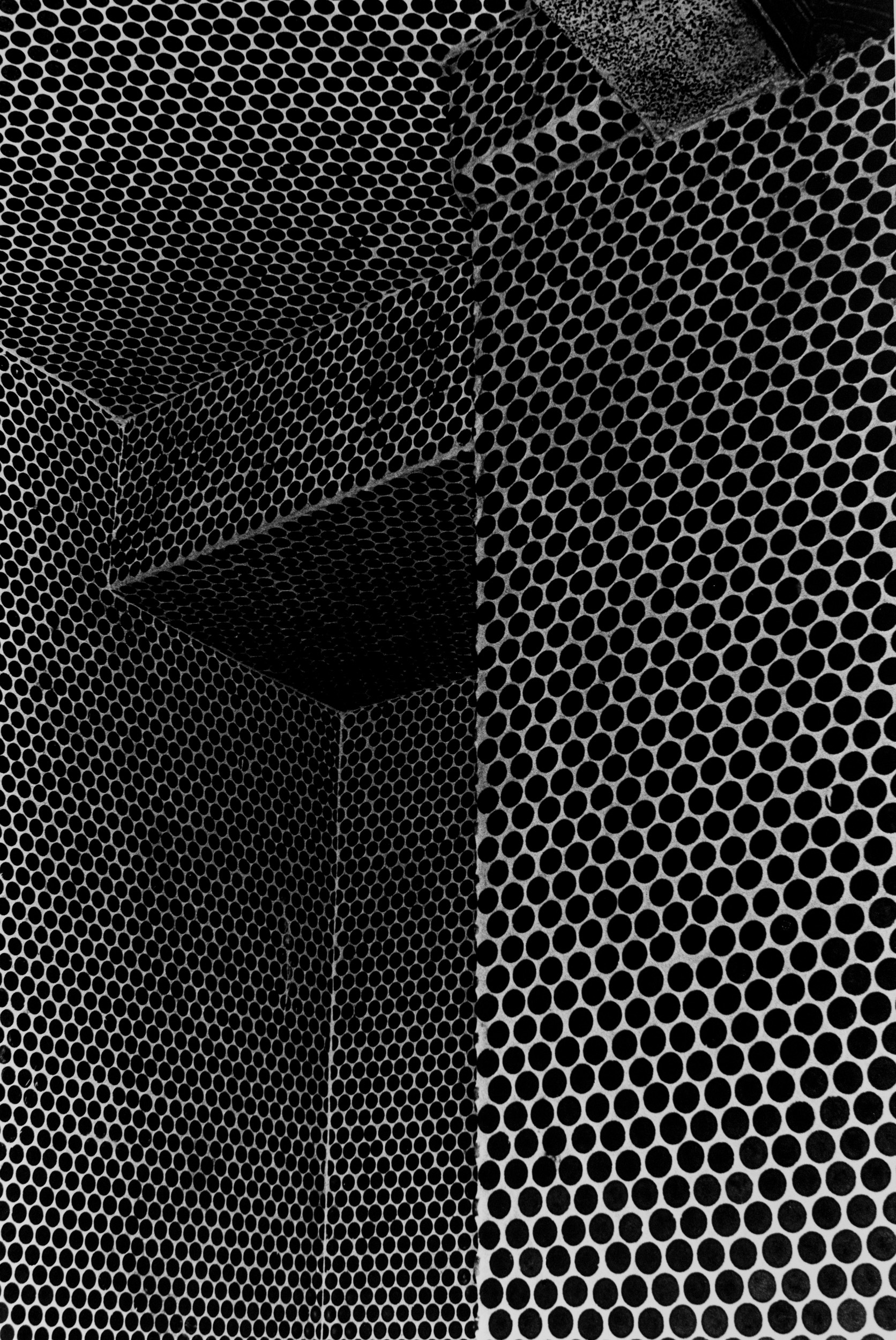

Tenjo Sajiki theater group, 1968 (drawings on womens backs and man)

“Light and Shadow 4: Hat”, 1982, 1982

“Light and Shadow: On the Road (Boots)”, 1981, 1981
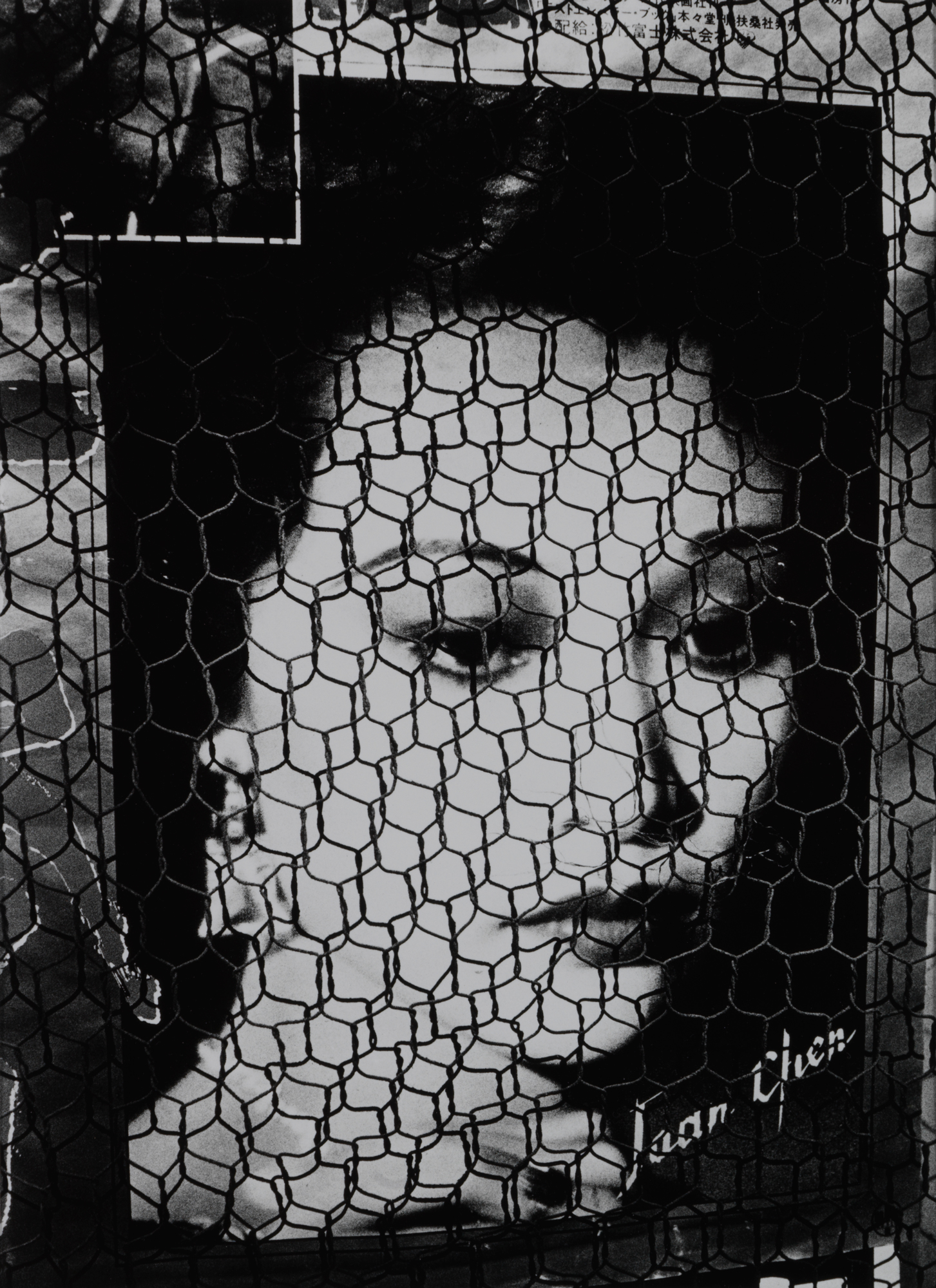

Provoke no. 2, 1969

Hawaii, 2007/2008, 2007/2008

“Pachinko”, 1982, 1982

Shinjuku, 2002, 2002
Daido Moriyama runs at the Michael Hoppen Gallery until March 29, 2018.
Follow Miss Rosen on Twitter.
Enjoyed this article? Like Huck on Facebook or follow us on Twitter.
You might like

In photos: Black Texas life since emancipation
Kinship & Community — A new photobook and exhibition showcases the rich culture, history and community of African American folks in the Lone Star State, whose existence in the region predates colonial Britain.
Written by: Miss Rosen

American Football: The One With The Feelings
Many moons — The Midwest emo architects transformed a college experiment into a coming-of-age soundtrack. 25 years on, their latest iteration sees them bottle the same magic for the ups and downs of middle life.
Written by: Tracy Kawalik

Youthful joy & end-of-era poignancy at a London school prom
Leavers — For several years, Lewis Khan documented young people as they celebrated the last of their school days and the completion of their exams. The series is now collated in a new self-published photobook and short film.
Written by: Zoe Whitfield

Harry Gruyaert’s vintage, kaleidoscopic scenes of New York
A Sense of Place — For 50 years, the Belgian photographer and Magnum Photos member has been capturing NYC’s colourful chaos. A new photobook and exhibition showcase his unique, technicolour view of the city.
Written by: Miss Rosen

In the pit at one of the UK’s last stock car & banger speedways
Stock Car Racing Isn’t Dead — Photographer Liam McCarthy spent time in and around the Arlington Raceway’s circuit, capturing the diehard community that keeps the sport alive.
Written by: Isaac Muk

Inside Lower Duck Pond, the nicest town on the internet
/r/HaveWeMet — With a population of 2,500 and no fixed location, the subreddit is a space for roleplaying citizens to solve mysteries, host fictional events and ultimately connect. In an internet that’s often divided and toxic, Vicky Jessop hangs out in one of its most wholesome corners.
Written by: Vicky Jessop


