Imprisonment, illness, internal strife: Deo Kato’s mammoth run for justice

- Text by Olivia Fee
- Photography by Deo Kato (courtesy of)

STEPS — Spanning 17 months, 21 countries and two continents, the Ugandan born athlete ran from Cape Town to London to raise awareness of racism and migration stories, while trying to find his own place in the world. A new film explores his obstacle-filled path and what he learned along the way.
For most people, a marathon is an endpoint. For Deo Kato, it became a unit of measurement. Over 17 months between July 2023 and December 2024, Kato ran from Cape Town on the southern tip of Africa, to London, England – the equivalent 313 consecutive marathons.
It’s a mammoth, barely comprehensible physical feat, covering 8,262 miles (13,000km), 21 countries, 11 Mount Everests in altitude gain, and two continents. But perhaps even longer was the journey he embarked on within, raising deep questions about belonging, identity and what it means to move through the world as a Black migrant searching for home.
As a child, Ugandan-born Kato moved to the UK with his twin sister to join his mother in London. Struggling to find his place in the new world, running became a release, and a way to find calm. Eventually, he upturned his life, with the idea first coming in the wake of the murder of George Floyd and the ensuing global Black Lives Matter protests, which sharpened Kato’s reflection on his own identity and race. Using the run to challenge how Black migrants are perceived and treated across borders, he aimed to publicly start a conversation about the everyday realities Black people face, while pushing back against dominant narratives of migration that dominate headlines and politics.
Of course, running across continents wasn’t easy, but he also faced unexpected challenges – serious illness, run-ins with the law that included him being jailed for weeks in South Sudan, as well as racist abuse as he moved through Europe. Yet he persevered through the most challenging of conditions, eventually making it to the finish line on December 23, 2024. Now, a new film, STEPS, which premiered at Kendal Mountain Festival, and screens at Rich Mix on Thursday, January 29, reflects on the incredible feat, as well as the things he learned along the way. Directed by Huck’s own Phil Young, it features reflective scenes of Kato using footage captured during the year and a half he was on the road, as well as interviews with experts and people who know him the best.
Currently training for the London Marathon and preparing for even longer distance races this year, we caught up with Kato to chat about his childhood, continuing on even at his lowest points, and how the aftermath of the run was perhaps its most challenging part.
Read next: Dora Atim: “Bravery is going off piste”
Let’s start at the beginning in Uganda. What was your favourite memory from growing up there?
There are a few, but the main one is with my grandad, who I used to visit during school breaks. He would take us out in the forest and we’d get to be in nature and explore. We’d hunt and be playful, and it was so incredible.
Those are some of my earliest and most beautiful memories that I had with nature, but also with family and being able to explore with my grandad and all my other relatives as well.
After you moved to the UK with your sister, what was your favourite memory that you can pinpoint from growing up in the UK?
There are quite a lot for the UK, so it’s difficult to pin it down. I would say when me and my twin sister first arrived in the UK and reunited with my mother. That was a really beautiful moment for me.
How did you see running when you were younger compared to how you see it now?
When I was young in Uganda, running was more about play and enjoying the environment, the landscape, and the area you were in. We didn’t actually see it as running. It was just something that you did as part of your normal daily life. When I came to the UK, I realised in England you use running as a sport, and it becomes competitive. That becomes really challenging when you’re dealing with others and you have to prove yourself so much. Sometimes in schools it’s used as a punishment as well, and that wasn’t as fun as I remembered it to be.
So I fell behind the people I was competing with. I didn’t see myself as a good runner in any way. But as I grew up, I became more involved in running and I realised that it benefits my mental and physical wellbeing so much, and that I could also use it to impact others and change lives. I realised running is beautiful.
Considering your childhood was split between two countries, where do you feel home is now?
Oh, you’ve hit me with such a difficult question. I would say I divide home up. Whenever I’m away from London, I’m always having that pull to come back, but Uganda is also a part of my home and I have very fond memories there. So there’s always these things that draw me back to these areas. So these are my homes, as you say. More than just one place.
Read next: The rogue runners taking on New York state


Let’s talk about your journey – it took you 17 months. Was there a particular moment on the way where you felt like you were really going to give up?
There was definitely more than one. In Tanzania, when I had food poisoning during the rainy season, the climate was really difficult to run in, and my illness – that was a time where I considered stopping. And then in Uganda, I was facing logistical issues of how to navigate the landscapes, avoid the challenges of war, and not having vehicles to be able to continue the journey. All these issues were overwhelming, and it became extremely difficult to say: “I can continue to do this.” Then when I reached Europe I became so lonely and challenging because I didn’t have anybody with me.
There was also another issue. I was constantly stopped and asked: “Where are you going? What are you doing? Why are you here?” It became too much to deal with. So I really considered: “Even if I’m so close to the finish line now, maybe I should just stop here.”
I want to talk about the dangers you faced in Sudan, and your experience with being stopped and taken at one of the checkpoints. What was going through your mind when you realised that they weren’t going to let you continue past?
I was in disbelief. I was questioning everything, trying to analyse every single movement I had made, who I spoke with, and what could have led to me being taken away. There was no way of contacting me. I was with my driver and I was extremely worried, because I was responsible for him and he had come on this journey because of me. Now he’s ended up in this position where he doesn’t know when he’s going to get out or what’s going to happen to us.
In the film you talk about a man you met while being held, and how he contacted your loved ones when he was released to let them know where you were. What would you say to him now if you could see him?
I would say thank you from the bottom of my heart. I think if I was to see him in a different location and we were both calm, we could enjoy ourselves or just have a laugh. I think that would be an incredible experience for me to actually be there and just stand together in a different place. Because mentally when we were together, we were at a very low point. I would just be so grateful for him.
You mentioned a stark difference in the way you were treated in Europe compared to Africa. Do you think being treated with much more suspicion in Europe deterred you or spurred you on?
I think it was a bit of both. It became so frustrating, being stopped all the time. It made me paranoid because I was constantly looking over my shoulder. Sometimes I’d even have dreams that I was being stopped. At those points I felt like stopping. But I also wanted to prove them wrong. I wanted to show them that I could keep going and finish. And then they’d see in the media that what I was doing was for a greater purpose.
“It became so frustrating, being stopped all the time. It made me paranoid because I was constantly looking over my shoulder. Sometimes I’d even have dreams that I was being stopped. At those points I felt like stopping. But I also wanted to prove them wrong.” Deo Kato

Being away from normal daily life for that long forces you to be alone with your thoughts for a long time. Do you think the way you see yourself changed after completing the run?
I am constantly changing to be honest. I think I have definitely dramatically changed. The past year has been very much about recovery and understanding things I’ve gone through, and how I could have dealt with them better. I think the main one is actually being a bit more aware of who I am, what I stand for and my inner self-belief, which has grown even more.
How did you find the physical and mental recovery when you returned back to London after all this time?
Initially, the main thing was relief and not having to continue or wake up every single day and keep going another 40 – 50km. Then as time went on, while the physical body healed, it then became the mindset that was getting a lot more difficult. I became paranoid of what was happening or going on. I realised that finishing the journey is one thing, but then the journey extends to what happens after. Once you’ve hit your goal, what comes next? What am I doing to feel motivated? Then the lows come because I’m not driving for the same goal purpose when I was completing the run. I was completely driven and now I don’t have that drive as much.
So the aim was to actually find ways of feeling like there’s still a purpose. It’s not the same as it was before, now the purpose has changed. The storytelling has now become more important, rather than before when it was more about the physical movement. So I’m learning as I’m growing and I’m learning as I evolve.
If your purpose has now changed, what would you say your purpose is now?
I think my purpose is still the same, but now it’s more the storytelling side of that purpose. How am I able to bring the story to a wider audience, so they know that these are some of the issues that we have to face? At the end of the day, we are all the same people.
That’s the message that I’m continuing to put out there, so people know that it’s not the physical that divides us, it’s actually the humanity that keeps us together.
What’s the biggest impact you can see now after doing the run?
I think the biggest impact is that people have more belief in what they can do and what they can achieve. They believe in themselves, and believe they are able to complete something that they once felt that they couldn’t do. I’ve had people messaging me saying that because of my journey, what I did, and how I overcame so many issues, they now believe that they can overcome issues in their own personal life that they didn’t think they could do.


I want to talk about making the film and documenting the run. Did this process of making the film change the way you saw yourself doing the run?
The process changed the way I viewed my run. I think it was another journey I’ve been going on, because the physical part of doing the run is one thing and then the storytelling part is just as difficult or even harder.
I then have to sit with myself, realise everything I’ve been internalising and then tell it. Things that I hadn’t been willing to share and open up about, now I need to tell the story and be vulnerable.
Were there times in your journey that you didn’t want to document for the film?
Yeah, there definitely were times. My breakup with my partner at the time, I didn’t actually document that. There were definitely other personal issues, like family passing away during the journey, that I didn’t want to document or tell anybody about. I felt like if I was to tell others, they would be able to tell me that I needed to stop and come back. I wanted to stay focused because I knew if I did stop, that would be an even greater failure on my part. I would feel even worse at the end of it. At the end of the day, I would have achieved nothing.
What is the main thing that you want people to take away from the film?
I hope that people will be able to resonate with the story; the story isn’t so much about the physical, it’s more about belonging and how we are represented within the society that we live in. And the challenges of being an immigrant – they are also humans and people. So to understand that immigrants face the same issues that everybody else does, but they’re resilient and they’re powerful, and we need them in our society. That’s the message I want for people to take away.
STEPS is produced by TCO and directed by Phil Young. A screening will take place on Thursday, 29 January at Rich Mix Cinema in Shoreditch, followed by a live Q&A with Kato and Young.
Olivia Fee is a freelance journalist. Follow her on Instagram.
Buy your copy of Huck 82 here.
Enjoyed this article? Follow Huck on Instagram for more from the cutting edge of sport, music and counterculture.
Support stories like this by becoming a member of Club Huck.
You might like

Tender photos of a maligned Cape Town neighbourhood
Sarah Stacke’s photos aims to give a different perspective of a South African neighbourhood known primarily as a community plagued by gang violence.
Written by: Isaac Muk
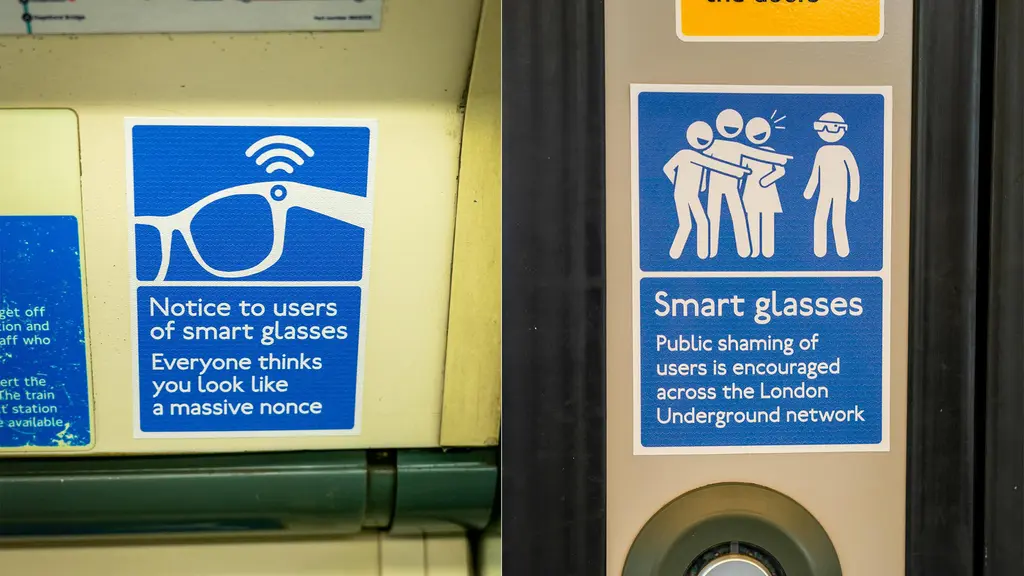
Activists slam “pervert glasses” in new guerrilla campaign
Everyone Hates Elon — Stickers have appeared on the London Underground network, criticising the wearable technology’s covert filming capabilities.
Written by: Isaac Muk

Behind the curtain at Alternative Miss World 1981
Olympia glamour — Running a subversive take on the traditional beauty pageant, the Andrew Logan organised event prioritised underground creativity and invention. Photographer David Corio went behind the scenes at its biggest edition.
Written by: Miss Rosen

Dan Lacey: “BMX is forever evolving”
Overground — Steph Pomphrey caught up with the two-wheel legend after his latest meet in east London, chatting about fatherhood, music and action sports within the outdoor industry.
Written by: Steph Pomphrey

The battle for the soul of lockpicking
Under locksport and key — In recent years, breaking locks for fun has grown from a niche hobby into an activity followed by millions of people. As it has matured, so have tensions over who sets the rules.
Written by: Jack Dennison-Thompson

New exhibition highlights British radical living over 200 years
Earthly Paradise — Taking place at the William Morris Gallery, it explores the homes and lives of artists, writers, musicians and more, as well as the conditions that allowed them to thrive.
Written by: Isaac Muk


