Dizraeli
- Text by Ed Andrews
- Photography by Ed Andrews

“I wrote my first rap when I was nine and I’ve been taking it seriously since then,” proclaims rapper, spoken-word artist and playwright Dizraeli over a cold chicken salad in a trendy East London eatery. “Hip hop is quite purist though. If you get a guitar out or do anything apart from jump around on stage with a fitted cap on, you don’t necessarily fit.”
By not quite fitting in to his chosen genre, this 30-year-old from Bristol has transcended the world of beats and rhymes and established himself as a loquacious performance artist with a political edge.
In 2007, he won BBC Radio 4’s Poetry Slam contest and the following year, he and fellow wordsmith Baba Brinkman won the Spirit of the Fringe award at the Edinburgh Fringe Festival for their dystopian hip hop play, The Rebel Cell. He’s also written plays for the Battersea Arts Centre and a young offenders and youth group in Brighton.
For the last three years, he’s been performing with his “rag tag” seven-piece ensemble, Dizraeli and the Small Gods, fusing folk and hip hop with conscientious stories of love, woe and social ills.
On the verge of the release of their new album, Moving in the Dark, HUCK sat down with Dizraeli to talk politics, personas and more…
HUCK: There’s a thread of performance and activism through you work. Would you say you are driven to spread a message?
Dizraeli: I don’t know what it says about me but I have always loved performing. I wanted to be an actor when I was younger. I did the National Youth Theatre and I’ve always been interested in the storytelling side of rap. [When I was younger] I spent a long time feeling like I was some sort of missionary preaching some evangelical love, peace and understanding message, and quite an angry anti-establishment message. I was very, very angry. I was nineteen when the Twin Towers were attacked. From that time, there was a lot of horrific shit going down; Afghanistan was invaded, Iraq was invaded. I was at demonstrations, I was tear-gassed, roughed up by police and I was at the G8 summit in Gleneagles where there was a lot of violent stuff going on between [police and protestors], so a lot of my earlier work reflects that.
What role does music have in activism?
As an artist you have a responsibility to be honest and not to posture and pretend to be something you are not. I used to think that as an artist, you had to find a universal message of what’s right and wrong, and it was my duty to shake as many people by the shoulders and tell about. But then I started to realise that I didn’t know everything and had a very limited understanding of the world around me, which was driven by me being born into a fairly middle-class area in Bristol. I’ve had a broad range of people come through my life, but what the fuck do I know? I’ve scratched the surface at most. So I started thinking about my own experience as that’s the part of the world I understand. What can I describe about my own life and how can I find universal truths by looking at those details? What I came to realise was that by looking at the small personal stories, tiny droplets of existence, I could find a much more universal truth because everyone lives through these things, worries and anxieties. I clambered off my high horse basically and started to talk about real shit a bit more.
Is political discourse always a good thing in music?
I think so. I think the problem is with rappers who set themselves up as a political emcee and don’t do their homework or just read some David Icke shit online. There’s a dangerous trend in hip hop to make ill-formed statements about the way the world works. It’s partly ill informed because people [smoke] too much skunk, and spend their life on YouTube watching Inside Job documentaries and stuff about how the world is run by giant lizards. Man, you don’t need to invent shit like that: the world is already astonishingly fucked up. That kind of depresses me so I’m reluctant to associate myself with that. But at the same time, be aware of what’s around you and do your homework. The artist does have a duty to enquire into human nature.
Often though with politics, there is no solution to any argument, just those who are the most powerful get their own way.
Yeah, the winner gets to tell the story. That’s one way in which hip hop has been really cool as it’s often the losers who are telling the stories. Some hip hop could educate people a lot about what it’s like to deal with poverty and be at the bottom of the pile and be discriminated against – a lot of things that the people who do hold the reins on a policy level have never experienced. David Cameron could do with listening to some more hip hop.
Is talking about an issue as a performer the same as doing something about it?
I don’t know. We live in a world of words, concepts and language. Manipulation of language is a very powerful thing and words have started wars, and diplomacy has ended wars. Paradigms are created by culture and culture is created by the people who live in it, including artists, so it can be a very powerful thing. But I don’t think if I’m going to make a song about how David Cameron is a bit of a knob he’s going to step down from office. But if I make an intelligent song about how why I believe the private schooling system should be abolished, that may have some impact on how some people think about it. Maybe it will get to the ears of someone who will one day make a policy. Who knows? I’m under no illusion of my words being a blazing torch of truth that lifts the veil of illusion from the eyes of the listener, but I want to contribute.
In the video to your recent single, Never Mind, you’re walking around with a balaclava and bunny ears. What’s the story behind that?
The original idea was a naked dude except for balaclava and bunny ears. I’m well into nudity. I like honesty really and there’s nothing more honest than being naked. There’s no hiding. The balaclava is a subversive symbol but also tempered by the bunny ears that are ridiculous. It’s a neat little sideways symbol of things we like. It means vulnerability, honesty, subversion and silliness.
There’s a dichotomy there where you talk about creating a persona, but also about the artist being honest…
As a hip hop artist, you adopt a name that isn’t yours and there’s a certain amount of persona in that. It’s through being on stage. If I was just me on the stage all the time, then it would be quite a boring show. I might just sit down and have a think for twenty minutes. You’ve got to force certain sides of your personality. There’s always an element of theatre, but there’s an element of theatre in any conversation you have with anyone. I don’t think it’s any less real than that.
Moving in the Dark is out on March 25 on ECC Records.
You might like

Is Field Maneuvers the most fun time ever? Yes probably
Collective joy — Huck’s art director Samuel White went to the 2026 edition, braving a wet start and interviewing FLINTA* collective and arm wrestling legends Uhaul Dyke Rescue in the process.
Written by: Samuel White
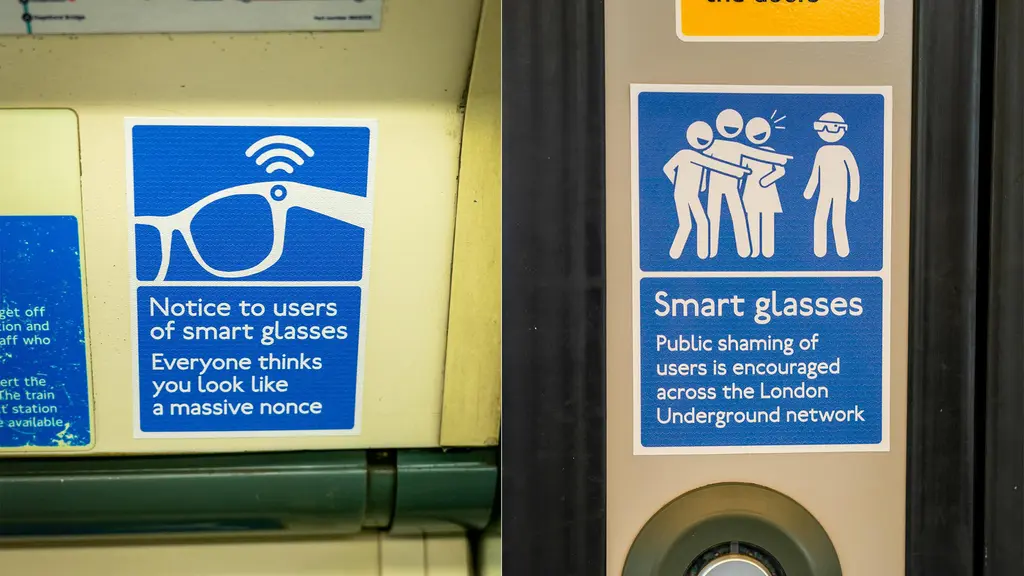
Activists slam “pervert glasses” in new guerrilla campaign
Everyone Hates Elon — Stickers have appeared on the London Underground network, criticising the wearable technology’s covert filming capabilities.
Written by: Isaac Muk

New exhibition highlights British radical living over 200 years
Earthly Paradise — Taking place at the William Morris Gallery, it explores the homes and lives of artists, writers, musicians and more, as well as the conditions that allowed them to thrive.
Written by: Isaac Muk

Pink Floyd’s Roger Waters joins team of new Palestinian resistance documentary
Freedom Theatre — Directed by Rishi Pelham, the film spotlights a theatre operating in the Jenin refugee camp.
Written by: Ella Glossop

Green Man is more than a music festival
Planting roots — For nearly a quarter century, the fiercely independent weekender has been flying the flag for Welsh arts and music. As an ecosystem now bubbles around it, Anna Stafford meets the people who keep the fire burning.
Written by: Anna Stafford

Just Stop Oil holds first protest in 17 months
No new drilling — Having previously said that it was “hanging up the hi-vis”, the climate activist group has blocked a road outside Parliament to protest Andy Burnham opening the door for new oil and gas extraction licenses in the North Sea.
Written by: Ella Glossop


