For Magnum photographer Eli Reed, respect opens the door to human stories
- Text by Oliver Lunn (interview)
- Photography by Eli Reed / Magnum Photos

“My first experience of taking a photograph was at high school. I bought myself a present – a Kodak 104, amateur thing, no adjustments – and got really interested in photography, looking at Creative Camera magazines, photographic manuals, and a lot of magazines from overseas, which featured Magnum photographers. Then when I went to art school I changed from a paintbrush to a camera and the paint became the film.
“I don’t really think about the relationship with my subjects. It’s just like making contact with someone, there are different ways of exchanging information; sometimes it’s non-verbal, when you make eye contact with a person and make them feel like you’re taking them seriously. I pay attention to people and what’s going on with them.
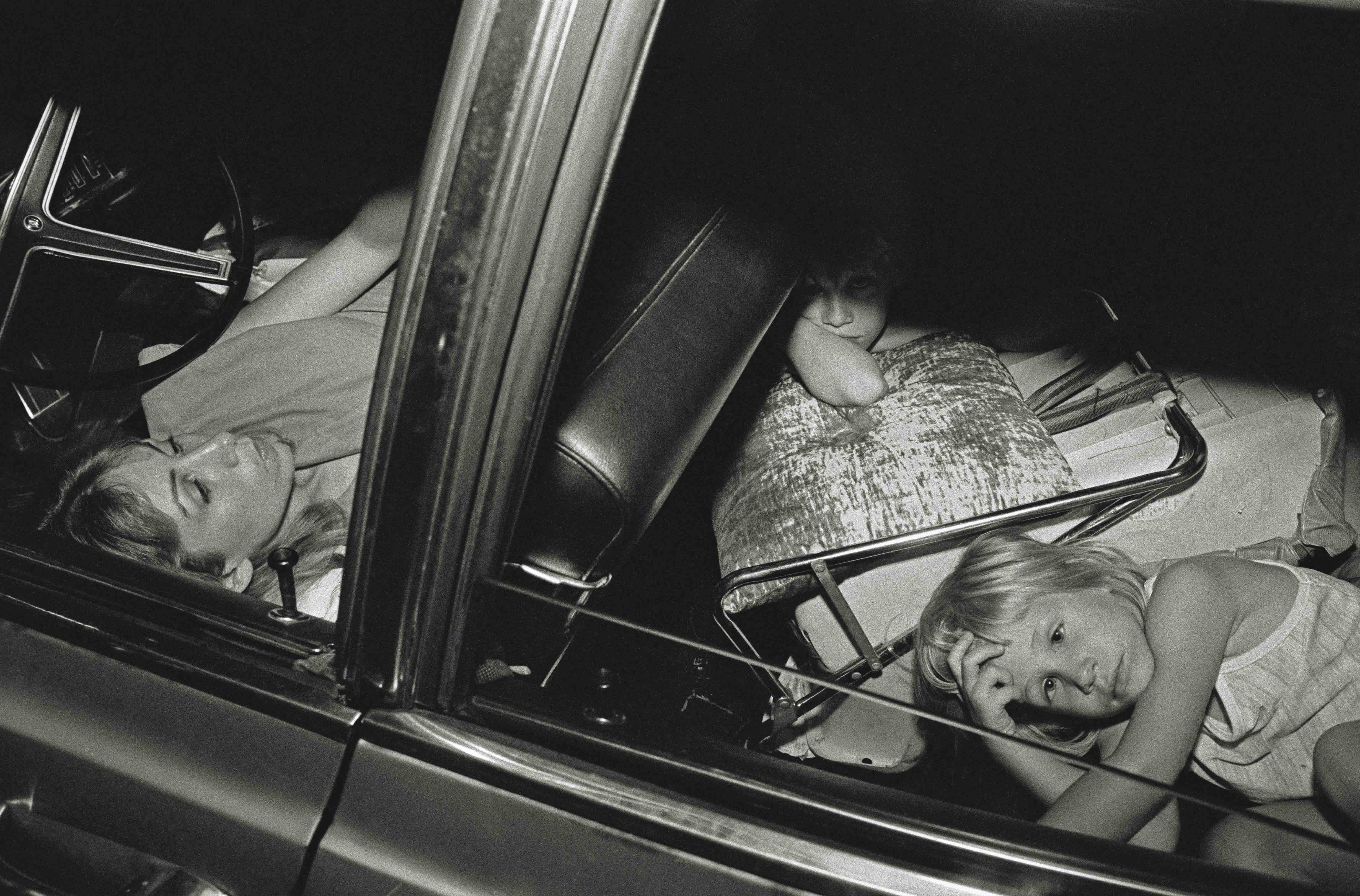
“Photography is always a collaboration, because you [the photographer] give them [the subject] something too. You give them respect as a person, hopefully. People have the right to be treated with respect. I think some photographers think of their subject as their subject, and that’s one way of going about it, but I’m engaged, I do a lot of reading about a lot of different things and I usually have an awareness of what’s going on around me. I’m always interested in what people are doing, whether it’s good or bad things. I want to know why they do what they do.
“You can go into a situation looking for a fight or you can go with the flow and do the best you can. There are so many roads to travel on and I just try to travel on the road that’s reasonable. I’m obsessed with what I see and you do your best to engage with the world and see what’s really happening out there. My new retrospective, A Long Walk Home, is about what it is to be a human being. How can you learn anything about that unless you’re paying attention to the people and things around you?

“Not all people want to be photographed. I remember one class I took at the International Center of Photography a long time ago, this one student said, ‘Oh, black people love to be photographed.’ It irritated the hell out of me. Anybody loves to be photographed when they’re being treated with respect and not just as some kind of subject, and that’s obviously how he thought of it… No one is obligated to cooperate with your need to photograph them. If someone really doesn’t want to be photographed, leave them alone. You may get a signal or warning about that. Depending on the situation, you may get a chance to explain why you are trying to take their picture or even have the opportunity to convince them. But pay attention to warning behaviour. If it’s a no, then walk away.
“When I’m shooting, I give myself directions. When I get into it deeper, I tell myself: try to be where the picture is happening and let the pictures take you. The best thing to do sometimes, at least for me, is just walk the streets and listen to the music on your phone. Maybe I’ll see something, maybe I won’t. Whatever happens I always have a camera with me. You know, what’s a writer without a pen or something to write on? You have your camera at all times. And as soon as you start overthinking something you might be missing things that are so obvious. The only real method is to get close enough to make an image that allows you and the viewer of the image to get inside the moment. It is not necessarily a collaboration unless you and the subject have some kind of communication.
“By the very nature of [photography] work you’re pretty much on your own a lot. Basically you’re one with the camera. If you have ten different photographers standing next to each other, you’ll have ten different ways of looking at the subject.”
Images courtesy of Magnum Photos. Eli Reed: A Long Walk Home, introduction by Paul Theroux, is published by University of Texas Press.
This article originally appeared in Huck 52, The Documentary Photography Special III.
Grab a copy now to read all fifty stories in full. Subscribe to make sure you don’t miss another issue.
You might like

In photos: Black Texas life since emancipation
Kinship & Community — A new photobook and exhibition showcases the rich culture, history and community of African American folks in the Lone Star State, whose existence in the region predates colonial Britain.
Written by: Miss Rosen

Inside Parkuir: the art project queering sport, space and our bodies
Lie and play — Founded by Maria Laudes and Guiu Gimeno, it provides a framework for engaging, subverting, and celebrating the small details that make people unique – and queer.
Written by: Molly Lipson

Youthful joy & end-of-era poignancy at a London school prom
Leavers — For several years, Lewis Khan documented young people as they celebrated the last of their school days and the completion of their exams. The series is now collated in a new self-published photobook and short film.
Written by: Zoe Whitfield

Harry Gruyaert’s vintage, kaleidoscopic scenes of New York
A Sense of Place — For 50 years, the Belgian photographer and Magnum Photos member has been capturing NYC’s colourful chaos. A new photobook and exhibition showcase his unique, technicolour view of the city.
Written by: Miss Rosen

In the pit at one of the UK’s last stock car & banger speedways
Stock Car Racing Isn’t Dead — Photographer Liam McCarthy spent time in and around the Arlington Raceway’s circuit, capturing the diehard community that keeps the sport alive.
Written by: Isaac Muk

Inside Lower Duck Pond, the nicest town on the internet
/r/HaveWeMet — With a population of 2,500 and no fixed location, the subreddit is a space for roleplaying citizens to solve mysteries, host fictional events and ultimately connect. In an internet that’s often divided and toxic, Vicky Jessop hangs out in one of its most wholesome corners.
Written by: Vicky Jessop


