How a high-flying city worker found her calling in the wilderness
- Text by Ellie Ross
- Photography by Theo McInnes (Main image: Ian Corless)

Finding yourself alone in the middle of a desert at night with not even a mobile phone for company, let alone Google maps for navigation, would leave most of us feeling lost. But for Elisabet Barnes, it was when she finally started to find her way.
Back in London, she’d seemingly had the perfect career as a high-flying management consultant: good money, sweet benefits, strong LinkedIn profile. Yet she felt untethered, struggling to locate an inner compass she so badly needed to point her in the right direction.
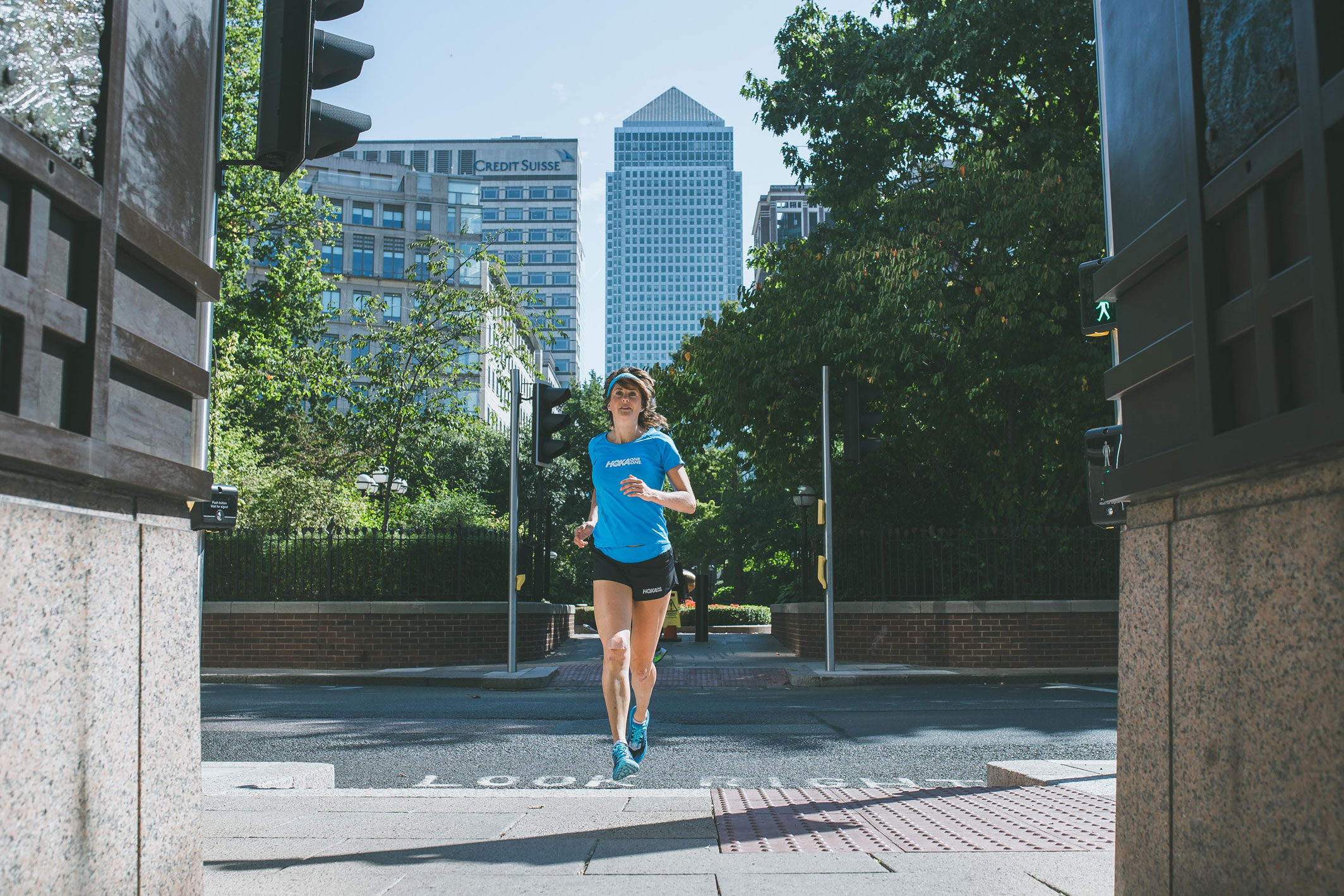
“I was working really long hours,” she says. “My only focus was my next promotion. I was a top performer and had a great career path outlined – but I also felt lost. It wasn’t what I was passionate about, I got into it because it was the right thing to do, an expectation.”
Then her father died suddenly. “He just didn’t wake up one day. He was fit and I thought he had another 20 years in him. Nothing prepares you for that. It was really hard.”
This, coupled with her mother’s Alzheimer’s diagnosis and her husband getting cancer, triggered a change. “It was the wakeup call I needed. I was just working. Life was passing me by. That was the catalyst for everything.”

She gave up her city job and entered the Marathon de Sables, an epic, but gruelling, race through the Sahara Desert, where midday temperatures clock around 48 degrees Celsius and the apparently endless dunescapes can disorient and mentally torment even the most focused of competitors.
Yet Elisabet loved it. “I just had a great time in the desert,” she says. “I felt free. The landscape is mesmerising. It’s so vast and arid, yet beautiful, and it makes you feel really tiny. You realise how powerful nature is. For the first time in my life I was doing something I was passionate about.”
She liked it so much she entered it again; she’s now run it four times and actually won it twice. Does the piercing temperature not make it an incredibly inhospitable place to run? “The heat can be tough but it’s also pretty cool to observe the effects of it as the ground gets really hot and you can see mirages or heat shimmer on the horizon,” she says.
But then handling harsh environments and framing that experience in a positive way is pretty much in her DNA. Elisabet comes from a family with world-class orienteering credentials, that is the lo-fi art of racing through unfamiliar terrain using a map and a compass.
Her uncle, Jan Kjellström, introduced the sport to the UK, while her grandfather, Alvar Kjellström, was also a skilled orienteer and cross-country skier. He invented the modern compass, through his company Silva, to help him fare better at those twin passions.
Growing up in Sweden, Elisabet loved ice-skating and cross-country skiing, but as she grew older sport slipped off her radar. “I rebelled quite a lot as a teenager. Rock concerts and partying became more interesting and I fell out of sport and became a bit unfit,” she says.

Then at uni, she started running and quite enjoyed it. But after her studies, she fell into a job in a management consultancy, where the hours were long and she had to travel a lot. Soon running fell by the wayside.
“Work really took over,” she says, and she soon found herself living a life which could not have been more different from that of her adventurous forefathers.
But giving up a big money career is a real risk. Did she worry she’d regret it? “I’ve taken a lot of risks to get to where I am – I left a stable career and comfortable life for one that’s more uncertain but definitely more interesting. That’s how I want to live my life. Why would I want to make safe choices and arrive safely at death?”
Instead, she revels in running through deserts in the dark. She says, “The nights are spectacular with black star-filled skies and if you’re lucky, a full moon. Running the night stage is a completely unique experience as I am often on my own during those hours. Just me, my head torch and the stars.”
During the days, she is almost hypnotised by the hostility of the desert wilderness. “I am able to draw a lot of energy from the magical environment, like the intense sun and the vast sand dunes that are almost like a sea.
“It provides a sense of tranquillity, yet has a very powerful energising effect if you let it. I can’t actually explain what happens, but you think the very simple life you lead there. The time for reflection helps you realise things about yourself, good and bad, and act on those.”
“You go back to basics with no shower, no wifi and no phone. You focus on eating, sleeping, running – and surviving. This makes you see things from a different perspective, and realise what’s important in life. Okay, I never have more than three toenails intact, but I also meet some amazing people and get to travel to the most incredible places on the planet.”
Read more Huck x HOKA ONE ONE stories here. If you run, or are thinking about making running part of your life, you can learn more about the innovative SpeedGoat 2 trainers Elisabet wears at hokaoneone.com
Enjoyed this article? Like Huck on Facebook or follow us on Twitter.
You might like

Inside Parkuir: the art project queering sport, space and our bodies
Lie and play — Founded by Maria Laudes and Guiu Gimeno, it provides a framework for engaging, subverting, and celebrating the small details that make people unique – and queer.
Written by: Molly Lipson

The real life mermaids of Florida’s Weeki Wachee Springs
Old Florida — A relic of pre-Disney tourism in the state, the show – which sees women perform athletic underwater tricks in a natural spring – has been running since 1947. Jack Burke attends, while reflecting on the fragility and fantasy of old America.
Written by: Jack Burke

“You leave your ego at home”: Inside fell running’s culture of community
Winner Gets Cake: After the Stickle Grind 650 in Great Langdale, runners and spectators gathered for a screening of a film by Rab and TCO. We spoke to the athletes about rivalry, community and why fell running keeps pulling them back to the hills.
Written by: Ella Glossop

In photos: NO NOISE Running obsessives
Six runners. Six relationships with the road shaped by pain, obsession, defiance and something close to devotion. Their stories, in photos.
Written by: Sunny Sunday

Inside the minds of running obsessives with Dr Peter Olusoga
Challenge, discomfort and flow: What it takes to build resilience on the road.
Written by: Huck

The age of NO NOISE Running
In a culture flooded with distraction, obsessive runners are taking it back to the basics.
Written by: Anna Holbrook


