Evocative photos capturing the final months of Yugoslavia
- Text by Miss Rosen
- Photography by Miro Kuzmanovic

At the end of the 1960s, photographer Miro Kuzmanovic’s parents left Yugoslavia in search of a better life. They moved to Austria where they had children and then returned to their homeland in Bosnia with a dream of building a future for their family. But things didn’t work out quite as they had planned.
For decades, Yugoslavia was plagued by unresolved political, economic, and social problems. With the death of President Tito in 1980, the shared idealism of communism gave way to nationalist divisions present before the country was forged in the shadows of the Second World War.
Growing up in a Serbian-Ukranian family, Kuzmanovic did not share the ethnic anxieties of many at that time and enjoyed a peaceful childhood. In 1989, the fall of the Berlin Wall brought the promise of change – and unrest. Ethnic tensions began tearing at the fabric of the nation. When the first Balkan War began in 1992, Kuzmanovic’s family were among the 60,000 Bosnians who fled to Austria.

“The experience of forced migration shaped me,” says Kuzmanovic, who took up photography at the time to create memories of the world he was leaving behind. While leaving Bosnia by bus, he made photos of the landscape, using the camera to mediate the feelings he couldn’t put into words.
“Then photography was just a reflex, a need to remember, but now looking back, I’m realizing how vital it is,” he says. “Photography is an instinct; the rationale only comes later when I look at the work and the meaning reveals itself to me.”
With the publication of Signs by the Roadside, Kuzmanovic brings together scenes of his departure with his return, which began in 2008 after former Bosnian Serb leader Radovan Karadzic was arrested in Belgrade after more than ten years on the run. “That triggered in me the awareness of how emotionally close everything still was,” Kuzmanovic says.
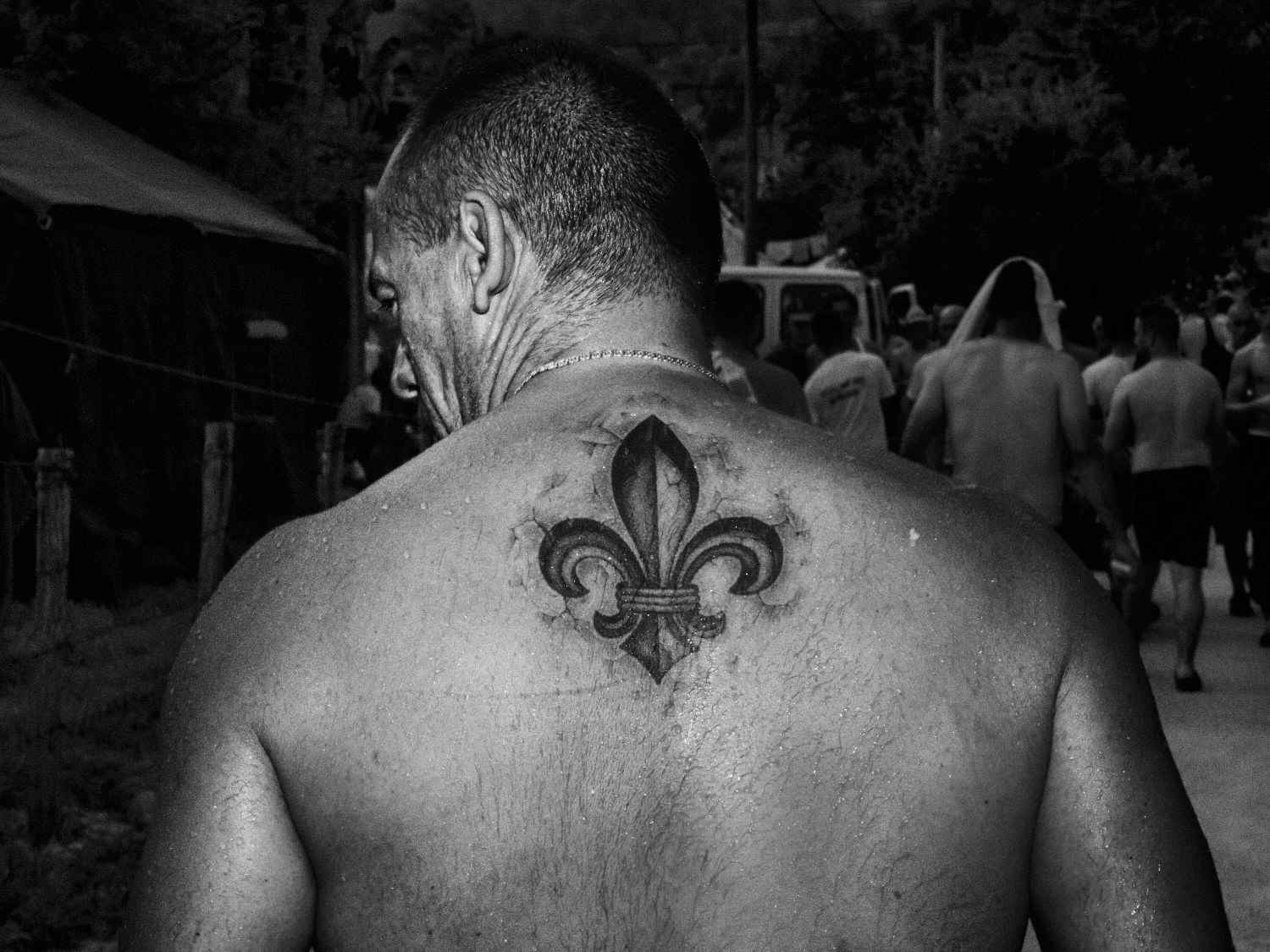
“The wounds of the civil war were deep-seeded, ethnic tensions pervasive, the region still struggled with social and religious conflicts. As a result, memory and history have become a new battleground. Associations that were not part of my conscious memory were awakened.”
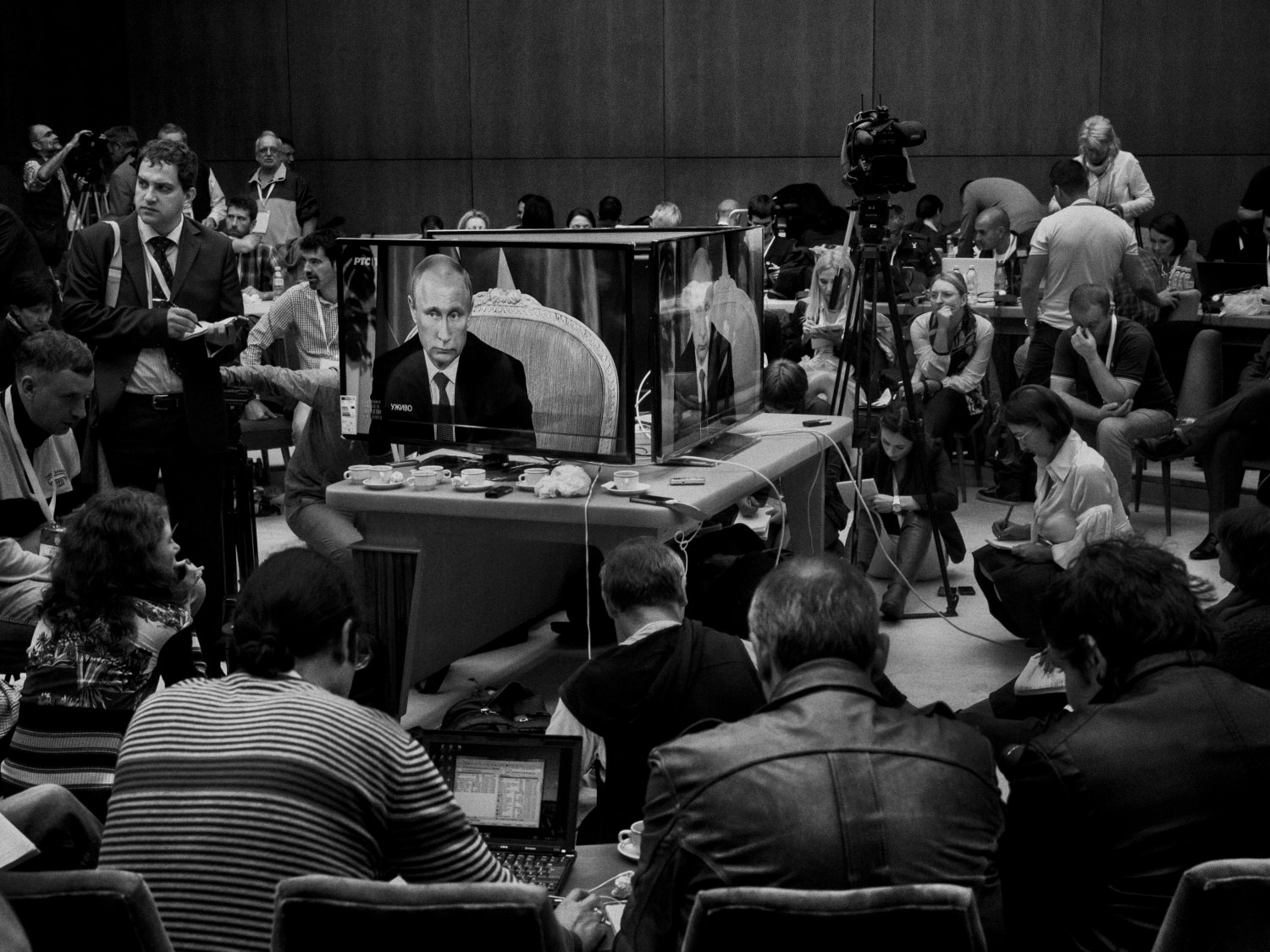
Between 2008 and 2017, Kuzmanovic traveled across Bosnia, Serbia, Croatia, and Kosovo trying to make sense of it all. Searching for answers, Kuzmanovic traveled to the International Criminal Tribunal for the former Yugoslavia in The Hague, where he collected and rephotographed documentation of the war, creating what he describes as “ritual snapshots”.
“I used photography as a tool to investigate, explore and understand my own history. With the help of images, it could recount how Yugoslavia fell apart,” Kuzmanovic says.

As the book progressed, telling the story of his journey became more important than the photographs themselves. In light of the current Ukrainian refugee crisis, Kuzmanovic feels a duty to share his experiences navigating the long-term impact of losing one’s homeland, youth, and identity to senseless acts of war.
“It was some sort of therapy,” he says. “For many years I only wanted to forget, maybe because it’s too traumatic to tell the story of a forced migration.”



Signs by the Roadside is available on Miro Kuzmanovic’s official website.
Enjoyed this article? Like Huck on Facebook or follow us on Twitter and Instagram.
You might like

In photos: Black Texas life since emancipation
Kinship & Community — A new photobook and exhibition showcases the rich culture, history and community of African American folks in the Lone Star State, whose existence in the region predates colonial Britain.
Written by: Miss Rosen

Youthful joy & end-of-era poignancy at a London school prom
Leavers — For several years, Lewis Khan documented young people as they celebrated the last of their school days and the completion of their exams. The series is now collated in a new self-published photobook and short film.
Written by: Zoe Whitfield

Harry Gruyaert’s vintage, kaleidoscopic scenes of New York
A Sense of Place — For 50 years, the Belgian photographer and Magnum Photos member has been capturing NYC’s colourful chaos. A new photobook and exhibition showcase his unique, technicolour view of the city.
Written by: Miss Rosen

In the pit at one of the UK’s last stock car & banger speedways
Stock Car Racing Isn’t Dead — Photographer Liam McCarthy spent time in and around the Arlington Raceway’s circuit, capturing the diehard community that keeps the sport alive.
Written by: Isaac Muk

Inside Lower Duck Pond, the nicest town on the internet
/r/HaveWeMet — With a population of 2,500 and no fixed location, the subreddit is a space for roleplaying citizens to solve mysteries, host fictional events and ultimately connect. In an internet that’s often divided and toxic, Vicky Jessop hangs out in one of its most wholesome corners.
Written by: Vicky Jessop

A major Nan Goldin exhibition is coming to London
You Never Did Anything Wrong — Opening at the Hayward Gallery in November, the show will debut a new film from the artist and activist, alongside a slate of recent work.
Written by: Jack Dennison-Thompson


