
People often ask me how I prepare to cover a war. Physically, I try to stay in shape, because I know I’ll be running with heavy equipment, a bullet-proof vest and a helmet. Being able to move quickly might save my life. When I pack my bags, I keep things pretty spartan. Aside from all the photography equipment, I always take a sleeping bag, a flashlight, a knife – and of course, ear plugs. The pragmatic preparations are pretty cut and dry, but mentally and emotionally there is no preparation. Even with experiences in war zones, certain scenes always leave a lasting impression.

When I first went to Syria, we were welcomed by the guerillas because they wanted us to show the rest of the world what the government was doing. Over time, it’s become harder to gain access because some people have seen that the presence of journalists hasn’t helped their situation. In general, I’ve found Syrians incredibly hospitable, and that goes for the guerrillas too. It’s easy to forget that before the war, many of them were bakers, teachers or shop owners who simply felt compelled to take up arms. Because they weren’t professional soldiers, I think they felt a certain kinship with guys like me, a kinship that was strengthened because we shared food and shelter.


I believe the only way to tell the story of a war is through the personal histories of the people who suffer through it, because it’s easy to forget that wars are fought and experienced by people like you and me. A good example was a man named Ibrahim Qashush, a forty-two-year-old firefighter, husband and father of three. During the demonstrations that started the revolution he wrote a couple of anti-government songs. Not long after, they found his body floating in the Orontes river with the vocal chords torn out of his throat. The government of Bashar al-Assad thought they could literally silence the revolution, but it had the opposite effect. Now, every Friday after prayers, two boys named Abderraman and Asma lead the protests.


Getting the human stories is often complicated by the conditions of war. The longer the conflict goes on, the more dangerous it has become for foreign observers. When guerrilla groups from Al Qaeda got involved the threat of kidnapping shot up, so now we can’t go anywhere without a specially assigned guard detail. My nights are usually spent editing and sending photos to HQ, if the internet is working. One surprising upside is that the food is pretty good in Syria because a lot of it comes in from Turkey.


I’m often afraid when I work, but I look at fear as a defence mechanism that allows me to know how far I can go before things become too dangerous. All conflicts come with their own unique set of risks, but the most difficult thing to deal with, by far, is the pain of others. I encounter pain everywhere in Syria, the hospitals, the funerals, the refugee camps, and it never gets any easier to witness.
Despite the emotional toll, I love my job. I love that it lets me travel, get to know other cultures and act as a witness to events that influence world history. Of course, it’s very difficult, and when I’m not working I like to just spend time at home, resting, eating well, and seeing friends. I don’t find it difficult to reintegrate into ‘normal’ life, but I do find, after spending some time at home, I get an itch to go back to Syria.
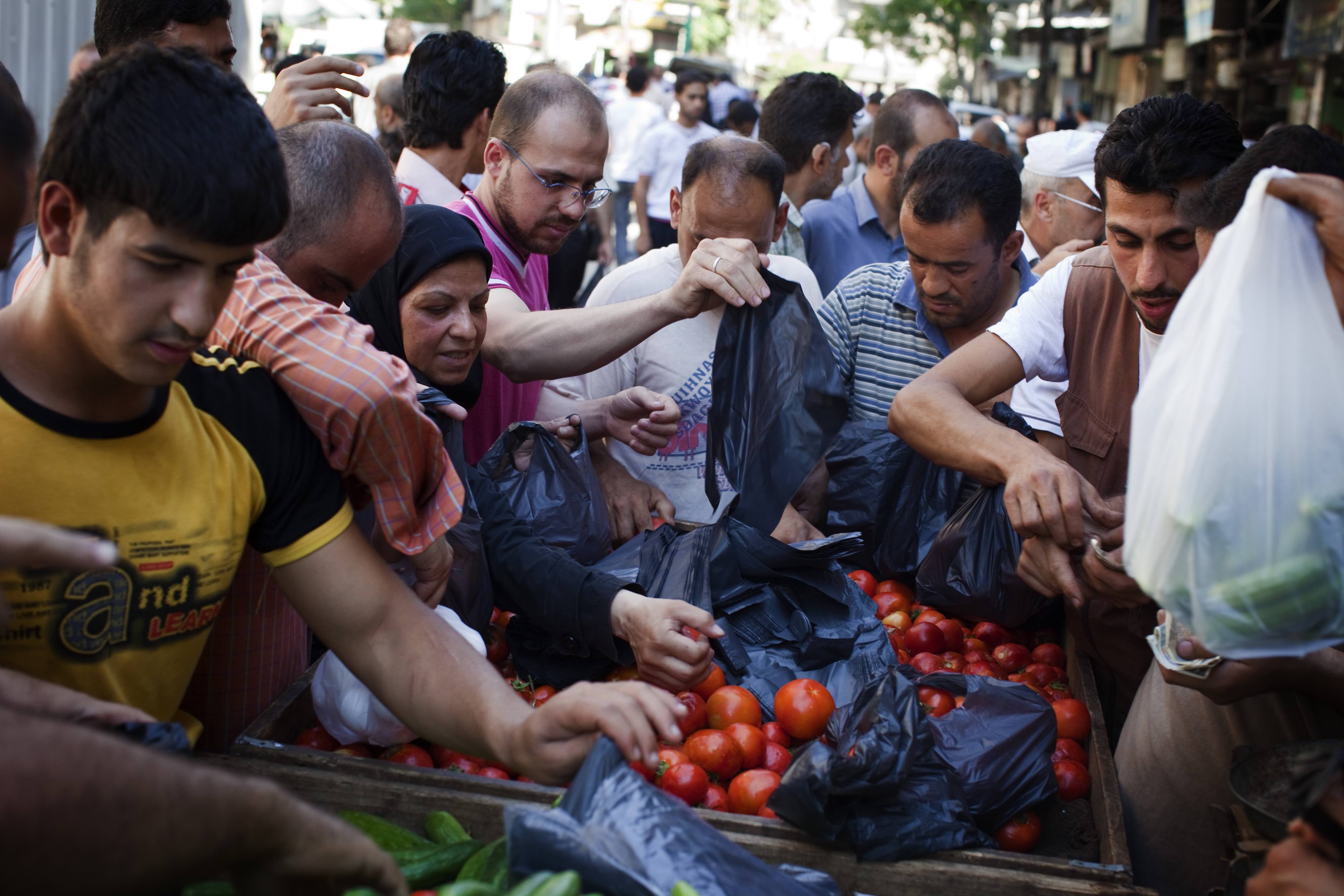


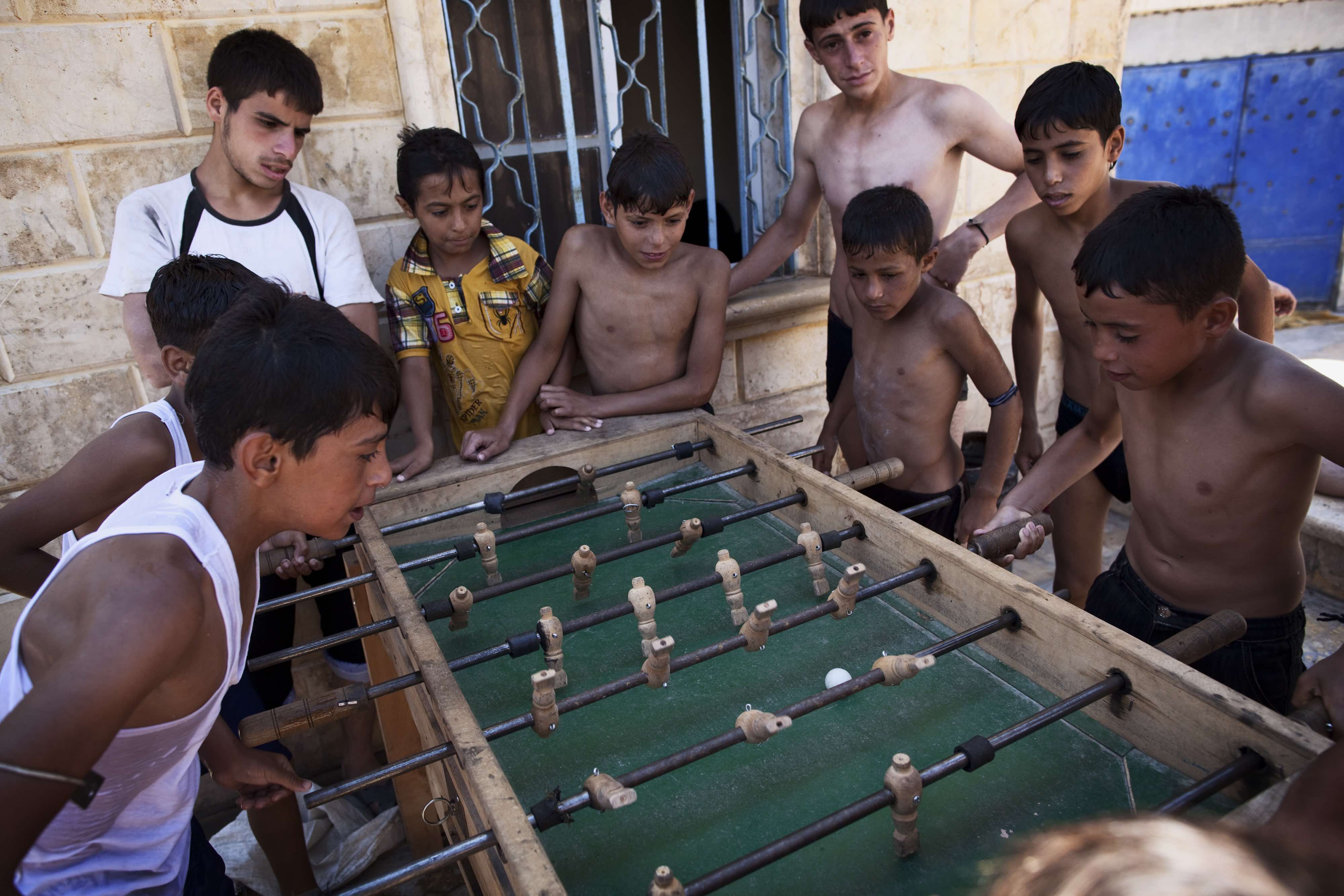
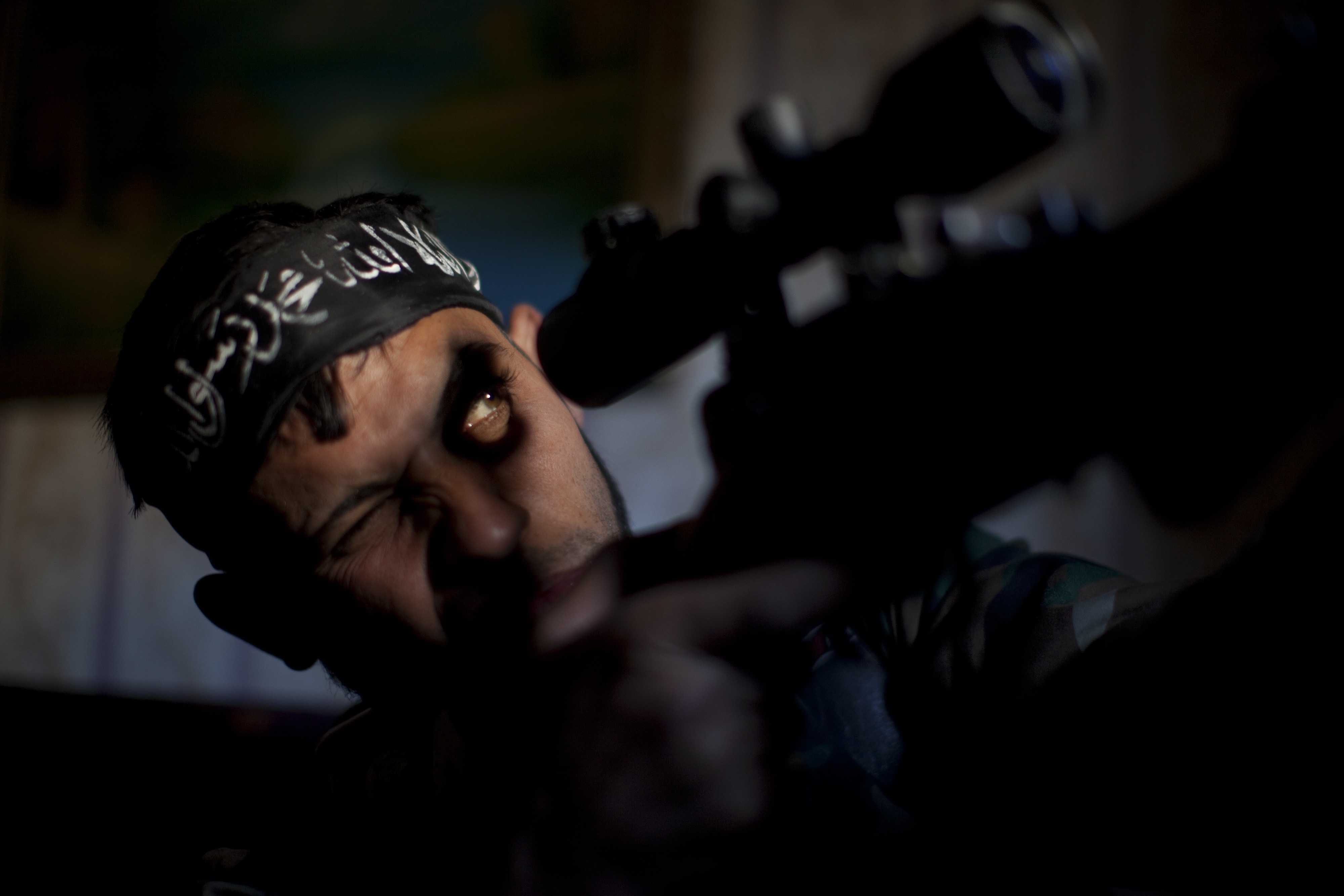
JM Lopez’s work in Syria has been shortlisted in the Lifestyle category 2015 Sony World Photography Awards.
This article originally appeared in Huck 41: The Documentary Photography Special in from November 2013.
You might like

In photos: Black Texas life since emancipation
Kinship & Community — A new photobook and exhibition showcases the rich culture, history and community of African American folks in the Lone Star State, whose existence in the region predates colonial Britain.
Written by: Miss Rosen

Youthful joy & end-of-era poignancy at a London school prom
Leavers — For several years, Lewis Khan documented young people as they celebrated the last of their school days and the completion of their exams. The series is now collated in a new self-published photobook and short film.
Written by: Zoe Whitfield

Harry Gruyaert’s vintage, kaleidoscopic scenes of New York
A Sense of Place — For 50 years, the Belgian photographer and Magnum Photos member has been capturing NYC’s colourful chaos. A new photobook and exhibition showcase his unique, technicolour view of the city.
Written by: Miss Rosen

Inside Lower Duck Pond, the nicest town on the internet
/r/HaveWeMet — With a population of 2,500 and no fixed location, the subreddit is a space for roleplaying citizens to solve mysteries, host fictional events and ultimately connect. In an internet that’s often divided and toxic, Vicky Jessop hangs out in one of its most wholesome corners.
Written by: Vicky Jessop

A major Nan Goldin exhibition is coming to London
You Never Did Anything Wrong — Opening at the Hayward Gallery in November, the show will debut a new film from the artist and activist, alongside a slate of recent work.
Written by: Jack Dennison-Thompson

Sepia splashed memories of Britain’s ’90s squatting and free party scene
Bygones — Moving into a Hackney squat at the age of 19, Tom Hunter spent years living on London’s edges, while documenting the vibrant, creative community and culture that it enabled. Huck’s art director Sam White chats to him about the freedom that existed, the collectivism and what’s been lost over the decades since.
Written by: Samuel White


