
The internet lost its shit this week when the North Devon Journal – that cutting edge tome of cultural hipness – announced that controversial formaldehyde-loving YBA artist Damien Hirst had successfully acquired planning permission to build a new 750-home town near Ilfracombe, Devon.
The potential eco town – which some are calling ‘Sharkshire’ in reference to Hirst’s big taxidermy fish – will have shops, a new primary school and health care facilities as well as sports pitches, woodlands and allotments. Local residents are concerned the housing will be unaffordable and will swamp their local services but councillors for the area seem pretty starry-eyed on Hirst’s vision, which could feature topiary to rival Edward Scissorhands’ suburb.
But Hirst is not the first ‘artist’ to try his hand at utopia. Here are five more towns built by beret-wearers.
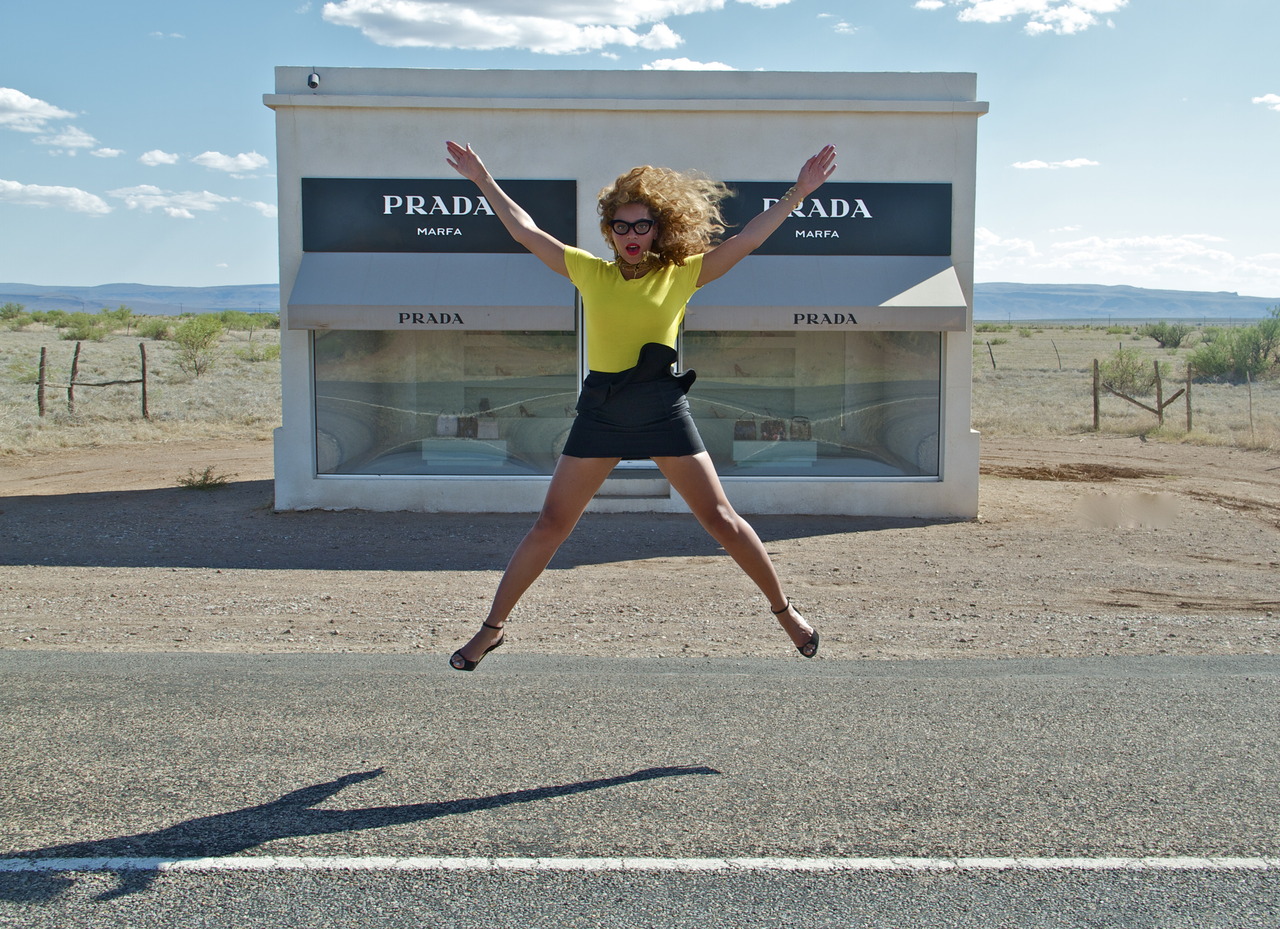
Marfa
Marfa is a small desert town in far west Texas which minimalist artist Donald Judd bought up in small pieces in the 1970s and 1980s and transformed into a creative mecca, where DMT-smoking bohemians, conservative Mexican-Americans and hard-ass border control police, can all live together in beautiful harmony. See Larry Clark’s 2013 film Marfa Girl for a curious exploration of that social phenomenon. Since SXSW set up ship in Austin in the late 1980s, Marfa has become an iconic stop-off point for Californians driving to and from the festival who want to take a selfie next to the abandoned Prada shop. None have done it as well as Beyonce. (Update: a reader would like us to make clear that we know this is an art installation not an actual Prada shop.)
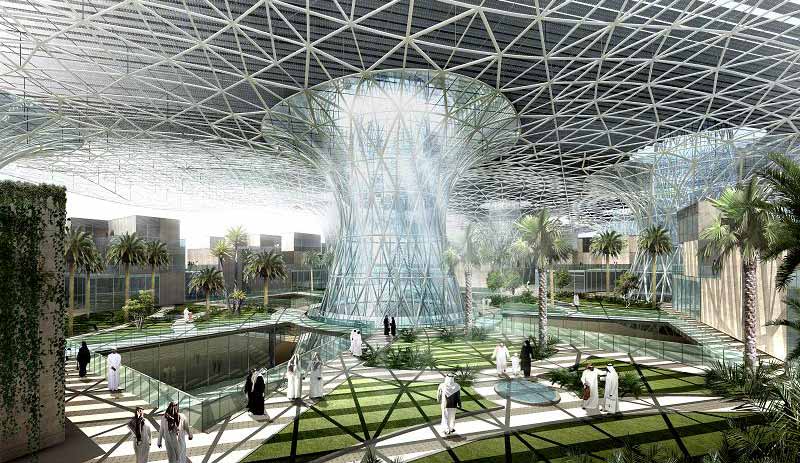
Masdar City
Masdar is a futuristic eco city that sits on a seven-square kilometre patch of empty desert next to Abu Dhabi airport in the United Arab Emirates. The city was established in 2006 by renewable energy company Masdar and is being designed by British architects Foster + Partners. When it’s finished, around the mid 2020s, it’ll be workplace and home to some 50,000 people with more expected to commute in from elsewhere. Inspired by traditional settlements in the area, Masdar will keep cool through innovative architecture – and not ice cap-melting air con – placing houses in angles that will shade each other and wrapping buildings in glass-reinforced concrete to replicate traditional ‘mashrabiya’ screens. Kinda like The Jetsons meets Lawrence of Arabia. On acid.
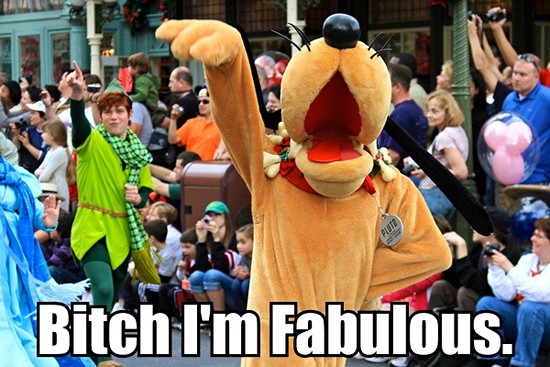
Disneyworld
When cartoonist Walt Disney bought up 27,443 acres of Floridian swamp land – under the guise of dummy corporations called suitably playful things like Reedy Creek Ranch Corporation – the local authorities in the area had little clue that he intended to create a fantasy land that would become the most visited vacation resort in the world. Roughly the same size as San Francisco, Disneyworld is home to a number of theme parks, water parks, hotels, villas and other attractions that combine to make you feel like you’ve fallen through the looking glass. It has its own boardwalk – a pseudo Atlantic City on a lake – colleges and education centres where you can study, highways and petrol stations, all flying the Mickey Mouse flag.
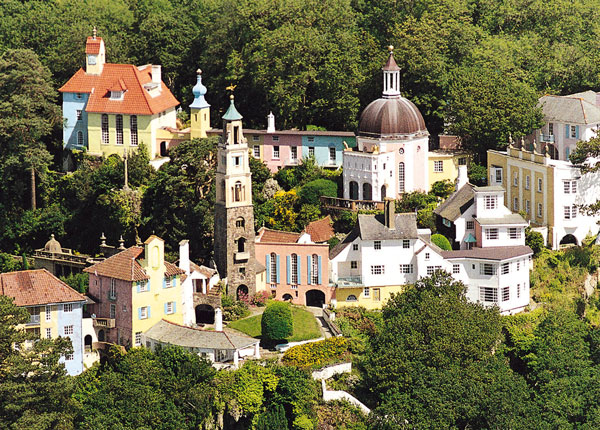
Portmeirion
A beautiful Italian toy town in the hills of North Wales designed by architect Sir Clough Williams-Ellis. According to architecture critic Lewis Mumford, Portmeirion is “a gay, deliberately irresponsible reaction against the dull sterilities of so much that passes as modern architecture today, prompted by the impulse to reclaim for architecture the freedom of invention – and the possibility of pleasurable fantasy – it had too abjectly surrendered to the cult of the machine.” Basically, it is well nice. And unexpected. And gay.
Jonestown
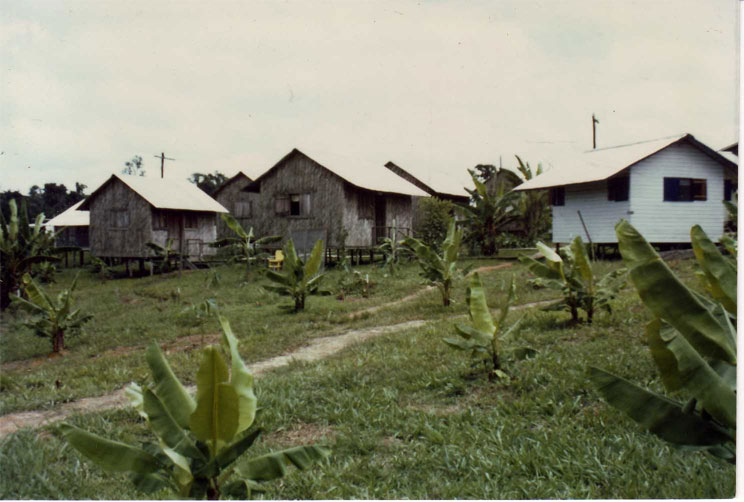
Okay, Jim Jones was a disturbed, genocidal cult leader not an artist, but Jonestown is an interesting example of a town built entirely out of a philosophical vision and perhaps worth a mention despite its terribly tragic fate. Built as a ‘socialist paradise’ to house members of the Peoples Temple – a New Religious Movement founded in 1955 by Jim Jones – Jonestown was granted a lease of over 3,800 acres of jungle land west of the Guyanese capital of Georgetown in 1974. Temple members worked six days a week on operational tasks to keep the town running smoothly and partook in political and religious debates at night. As Jim Jones’ mental health deteriorated the town became quite corrupt and living conditions also deteriorated. On November 18, 1978, 909 Americans were led to their death – poisoned by cyanide – in a mass suicide that Jones suggested was necessary to reject capitalism. Don’t drink the kool-aid.
You might like

Kristina Rozhkova’s scatty, confronting portrait of captivity
Gut Feeling — The Russian artist’s 2024 arrest and subsequent detention opened her eye towards the omnipresent dynamics of power and control. Her new photobook is a stark exploration of being trapped.
Written by: Isaac Muk

Washing strangers’ feet at Houghton Festival
Pedilavium — As part of artist Henry Krokatsis’s performance piece at the weekender, we sat down with over 30 others to clean the dusty digits of passersby, while reflecting on the power of collective ritual and human connection.
Written by: Isaac Muk

The anti-tourism guides revealing Lisbon’s true, radical heart
We Hate Tourism Tours — The Portuguese capital sees millions of people visit a year, against a backdrop of political turbulence and a housing crisis fuelled by short term holiday lets. Jack Burke meets the crew subverting their city’s perception, while bringing lesser seen stories and monuments to light.
Written by: Jack Burke

The art of paying attention: How Austria’s Alps reward slowing down
Lebensgefühl — With a growing movement of art and music rooted in the area’s mountains, trees and waterfalls, the region is showcasing the importance of the human relationship to nature.
Written by: Sophie Lou Wilson

Inside Parkuir: the art project queering sport, space and our bodies
Lie and play — Founded by Maria Laudes and Guiu Gimeno, it provides a framework for engaging, subverting, and celebrating the small details that make people unique – and queer.
Written by: Molly Lipson

A major Nan Goldin exhibition is coming to London
You Never Did Anything Wrong — Opening at the Hayward Gallery in November, the show will debut a new film from the artist and activist, alongside a slate of recent work.
Written by: Jack Dennison-Thompson


